We have watched “good enough” cases fail at the exact wrong time, like a latch that pops after a rough trunk ride or foam that holds humidity against metal overnight. That risk gets real instantly when travel enters the picture, since TSA reported intercepting 6,678 firearms at airport checkpoints in 2024 and said about 94 % were loaded.
This post starts with the cases that actually hold up, and shows how to choose hard vs. soft, lock it correctly for flights, and keep moisture from quietly ruining a rifle, shotgun, or pistol setup.
We also include a decision helper so you can pick the right case in 20 seconds.
Quick picks
| Product | Pick | Why it’s here | Price |
|---|---|---|---|
| Pelican Vault V800 | Best premium hard rifle case (travel, serious protection) | Big interior, strong latches, built for rough handling and checked-bag life. | Get it here |
| Pelican Vault V200 | Best hard pistol case (rugged, easy upsell) | Compact, crush resistant, foam-ready, airline-friendly size. | Get it here |
| NANUK 935 | Best hard “gear” case for pistols, optics, tools (not rifle-length) | Protective resin shell, wheeled, carry-on size category, very versatile. | Get it here |
The best gun cases of 2026
Our picks below cover real use cases: airline travel, everyday range trips, premium soft-case carry, pistols, and rugged “gear” protection for optics and tools.
If you buy the wrong case, you usually pay twice, first in damage risk, then in upgrades when the zipper, wheels, or locks let you down.
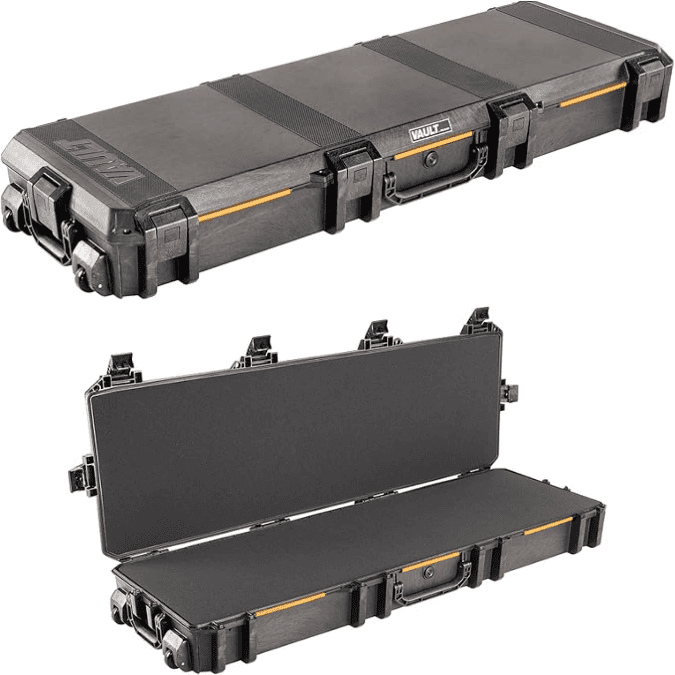
Pelican Vault V800 | Best premium hard rifle case for travel and serious protection
Key features: 53 x 16 x 6 inches of interior space, heavy-duty latches, multiple padlock hasps, and a design built for rough handling.
So this is the “stop worrying about it” category.
The V800 is big enough for common rifle setups and the shell is built for the kind of stacking and impacts that happen in real transit. It is the type of case you opt for when you do not want a zipper, a soft wall, or a thin latch deciding your day.
It also helps that the dimensions are straightforward. The interior length is long enough to cover most popular rifle formats, including AR pattern builds, as long as you measure with a muzzle device and any extended furniture in mind.
Finally, this case makes sense when flying is part of the plan. You get multiple lock points and a structure that is harder to pry than budget shells, which is the entire game for checked baggage.
Pros and cons
| Pros | Cons |
|---|---|
| Excellent interior length for many rifle setups | Large footprint, not fun for tight storage |
| Multiple lock points, travel-ready design | Costs more than “range only” cases |
| Tough latches and shell for rough handling | |
| Strong premium “one and done” positioning |
Best for: airline travel, long-distance road trips, high-value rifles, and anyone who wants a premium hard-shell default.
Skip if: the case will never leave the trunk and you want the smallest, cheapest option possible.
Pelican Vault V200 | Best hard pistol case, rugged, easy upsell
Key features: compact hard case footprint, protective foam approach, crushproof and weather-resistant positioning, and a design meant for handguns plus magazines.
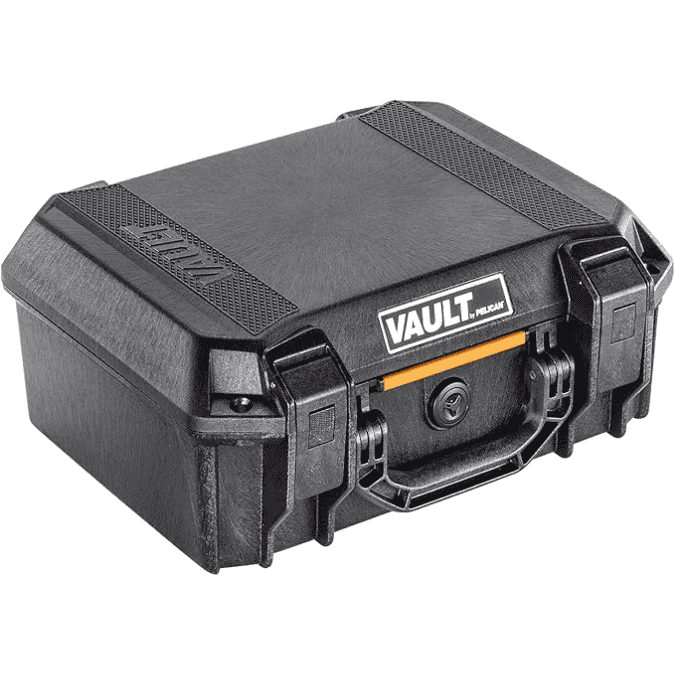
A pistol case earns its keep when it simplifies the routine. This one does. It is small enough to throw in a range bag, strong enough to protect optics and accessories, and structured enough to feel like a real “step up” from a basic pouch.
For travel, it fits the common expectation: hard-sided, lockable, and built for abuse. TSA focuses on locked hard-sided containers in checked baggage, and this form factor is exactly why compact hard cases sell well for pistols.
This is also a good upsell because it solves a problem many users discover late: pistols and accessories bounce around unless you give them a stable case.
Pros and Cons
| Pros | Cons |
|---|---|
| Compact and rugged for pistols and mags | Not sized for long guns |
| Solid hard-shell protection for travel | Foam setup takes a few minutes |
| Good upgrade from soft pistol pouches | |
| Easy add-on purchase for readers building a “range kit” |
Best for: pistols, a 9mm setup with spare mags, optics, small tools, range organization.
Skip if: you want ultra-light carry and do not need hard-shell protection.
NANUK 935 Hard Case | Best gear case for pistols, optics, tools, not rifle-length
Key features: wheeled hard case format, protective resin shell, and a size class that works for compact loadouts while staying more manageable than rifle-length cases.
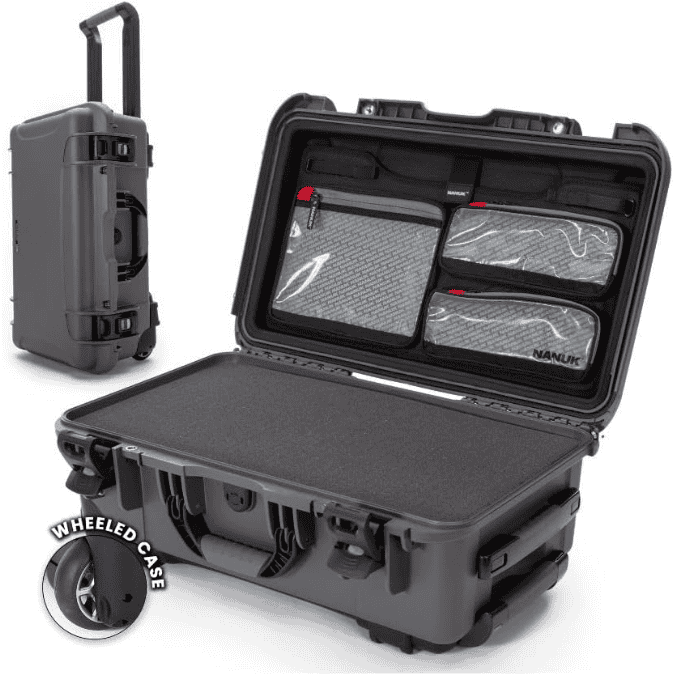
This is the case for people who treat gear like gear.
Pistols, red dots, spotting optics, ear pro, tools, and parts all travel better when they are not rolling around loose. The 935 format is built for that organized loadout style.
It is also a strong “travel brain” pick. When someone is not flying with a rifle case but still needs serious protection for valuable items, this category makes a lot of sense. NANUK also publishes detailed specs, which helps you make clean sizing decisions.
If you want one case that can shift roles across seasons, training, and different firearm setups, this is your most flexible option in the list.
Pros and Cons
| Pros | Cons |
|---|---|
| Versatile for pistols, optics, tools, and parts | Not rifle-length |
| Wheeled hard case convenience | Can get heavy once fully loaded |
| Clear published sizing and capacity info | |
| Strong “one case, many jobs” value |
Best for: pistols, optics, tools, organized kits, travel loadouts that are not long guns.
Skip if: the primary need is a rifle-length case.
Hard vs soft gun cases
Hard cases are about impact, stacking weight, and lock security. If a case might get checked, tossed, or stacked under other bags, hard wins.
Soft cases are about convenience and speed. They carry easier, store easier, and feel less “bulky” day to day. However, soft does not stop crushing forces the way a shell does.
The third category is the “gear case.” These are hard cases sized like a suitcase, not a rifle coffin. They shine when you need to protect pistols, optics, ear pro, tools, and parts in one organized setup.
Airline travel rules that matter
For flying, the rule is simple: the firearm goes unloaded, inside a locked hard-sided container, in checked baggage, and you declare it at the counter. TSA also states the passenger should retain the key or combination, except when TSA requests access for inspection.
Also worth knowing: TSA reported that they intercepted thousands of firearms at checkpoints just a couple of years ago, and the majority of them were loaded. Now that has nothing to do with checked baggage compliance, but it does explain why airline counters and TSA take the process seriously.
Here’s the practical checklist you need before the airport:
- Use a hard case that cannot be pried open at the corners. If the case has two lock points, lock both.
- Keep your key or combination. Do not hand it over unless TSA specifically requests it for inspection.
- Expect ammo limits. According to Federal Aviation Administration (FAA), airlines cap small arms ammo at 11 lb (5 kg). Delta lists this limit, and airlines commonly require proper packaging.
- Some airlines get specific about lock placement. American Airlines notes rifle cases require locks on each end.
Locks, latches, and zippers
Lock points matter more than lock brand. A case with one lock point can often be flexed at the opposite corner. A case with multiple lock hasps forces the shell to stay closed under leverage.
On hard cases, prioritize solid latches plus multiple lock locations. On soft cases, prioritize zipper quality and a lockable zipper design if you want basic deterrence.
For travel, follow the TSA guidance on retaining your key or combo.
The best lock is the one you control.
Moisture protection
A gasketed hard case helps slow moisture exchange. It is not magic. Opening the case in humid air can trap humidity inside.
The simple routine that prevents most surprises is: wipe the firearm down before storage, avoid leaving foam damp, and add a desiccant or dehumidifier when storing for more than a day or two.
If you want a quick way to explain water and dust resistance in this context, IP ratings are pretty useful. For example, IP67 is commonly described as dust-tight and able to handle temporary immersion up to 1 meter for about 30 minutes, depending on test conditions.
Decision helper
The table below will help you decide the best gun case for you.
| Your main use | Best match from this list |
|---|---|
| Flying with a rifle or you want maximum shell protection | Pelican Vault V800 |
| A rugged pistol case that upgrades the whole kit | Pelican Vault V200 |
| Protecting pistols, optics, tools, and electronics in one place | NANUK 935 |
Outro
We built this list the same way we would build our own kit: starting with the use case, then buying the case that prevents the expensive failure. For airline travel, that means a hard case with real lock points and a shell that cannot be flexed open at the corners, aligned with TSA’s locked hard-sided container requirement.
If a rifle is ever going to be checked, a premium hard rifle case is cheaper than one damaged optic.
If a gun is only going from home to truck to range, a high-quality soft case saves bulk and hassle without pretending to be airline protection.
If the pain is loose mags, tools, and optics, a compact wheeled gear case fixes the whole mess. In one move.
What you should care about: Measure the full setup before buying, use every lock point the case provides, and treat moisture control as part of ownership, not an afterthought.
Those three habits prevent most of the “I should’ve bought better” moments.
FAQs about the best gun cases
What is the best gun case for flying?
A lockable hard-sided case that cannot be pried open and that stays locked while you retain the key or combination is the standard. Declare it at check-in and follow both TSA and airline rules.
How many locks should a rifle case have for airline travel?
Use every lock point the case provides. Some airlines explicitly call out locks on each end for rifle cases, and multiple locks reduce pry risk.
Do you need TSA-approved locks on firearm cases?
TSA’s focus is that the case is locked and you retain control of the key or combination, except when TSA requests access for inspection. That guidance matters more than a “TSA-approved lock” label.
How do you prevent moisture and rust inside a case?
Wipe down the firearm before storage, avoid leaving damp foam inside, and use a desiccant or dehumidifier for longer storage windows.