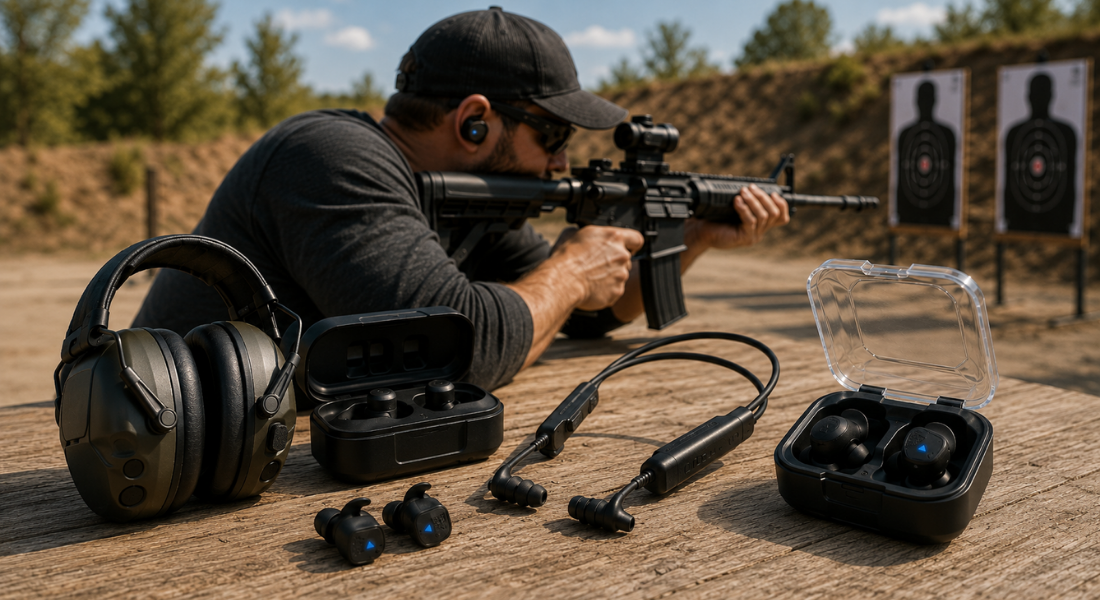
The best Bluetooth shooting ear protection overall is the AXIL XCOR Pro because it gives in-ear protection, audio streaming, hearing enhancement, and a compact charging case without the bulk of muffs. If you shoot mostly indoors, the Peltor Sport Tactical 500 is the safer everyday pick because muffs are easier to fit correctly and they pair well with foam plugs when you need double protection. For price-to-performance, ISOtunes Sport Advance BT 2.0 is the strongest value choice. Considering proper features before choosing any ear protection devices help in selecting the right earbuds or earmuffs.
Shooting doesn’t have to be a tiresome activity when you’re on the range for various hours. Bluetooth ear buds are one of the most in-demand protection devices for most shooters. Investing in the best Bluetooth shooting ear protection helps shooters to remain active on the range while enjoying music, protecting their hearing, and avoiding missing the commands.
But you must not treat Bluetooth ear buds like regular ones. The Bluetooth ear plugs for range contains multiple amazing features which makes them a priority choice for preventing hearing damage. Multiple types are available in earbuds too with the advancements in technology. Choosing the best option that suits your needs and keep your hearing protected during the shooting sessions is the primary goal. In this guide, I have reviewed the most amazing and useful options, suitable for varying users.
Best Bluetooth Shooting Ear Protection Compared
| Product | Best For | Style | NRR / Rating | Realistic Streaming Battery |
|---|---|---|---|---|
| AXIL XCOR Pro | Best overall in-ear pick | True wireless earbuds | 21-23 dB NRR / 27-29 dB SNR | Up to about 4-7 hours, depending on mode |
| Peltor Sport Tactical 500 | Best Bluetooth muffs | Electronic earmuffs | 25 dB targeted NRR | Up to about 42 hours from AA batteries |
| ISOtunes Sport Advance BT 2.0 | Best value set | Neckband earbuds | 26 dB NRR | Up to about 10 hours |
| Walker’s Disrupters | Best for suppressed shooting | True wireless earbuds | About 24 dB NRR | Up to about 6 hours |
| EARMOR M20T Pro | Best budget Bluetooth earbuds | True wireless earbuds | 30 dB NRR listing | Around 8-10 hours, listing-dependent |
My Top Picks in the Best Bluetooth Shooting Ear Protection
Axil XCOR Pro: Best In-Ear Bluetooth Overall
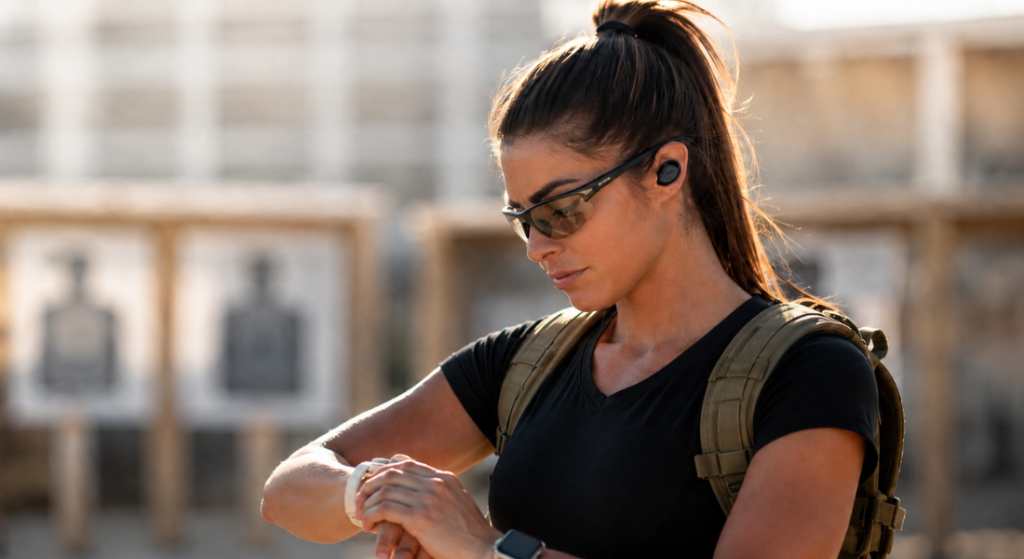
For me, AXIL XCOR Pro is the best all-around in-ear option for shooters who want compact protection, hearing enhancement, and streaming in one case.
Specifications
| Specification | Details |
|---|---|
| Type | True wireless electronic earbuds |
| Noise rating | 21-23 dB NRR depending on ear tip; 27-29 dB SNR listed by AXIL |
| Bluetooth | 5.2 Bluetooth |
| Battery | Up to 12-13 hours hearing mode, 6-7 hours Bluetooth only, around 4-5 hours using both |
| Charging | USB-C charging case; Amazon listing says the case can recharge the buds up to 3 additional times |
| Resistance | Dust, water, and wind resistant |
| Controls | Touch controls |
It is the best option as a wireless shooting ear protection when shooters don’t want to fight with the cheek weld, hat, glasses, or rifle stock. It is especially practical for outdoor ranges, clay shooting, hunting, and long sessions where full-size muffs feel hot or bulky.
The catch is fit. In-ear protection is only as good as the seal. Foam tips usually protect better than silicone tips, but they take more time to insert correctly. The XCOR Pro is suitable for users who want to test tip sizes before trusting them for hard-use range sessions.
Pros and Cons
| Pros | Cons |
|---|---|
| Compact design works well with rifles, hats, and eye protection | Not the highest NRR in this list |
| Strong feature mix for protection, enhancement, and streaming | Fit varies heavily by ear canal |
| Charging case improves range-bag convenience | |
| Good choice when you want a small set for range and field use |
Best For: Shooters who want a compact, all-in-one earbud solution for outdoor ranges, hunting, and mobile use.
Skip If: You primarily shoot indoors or want the highest possible NRR without worrying about ear tip fit.
Peltor Sport Tactical 500: Best Bluetooth Muffs
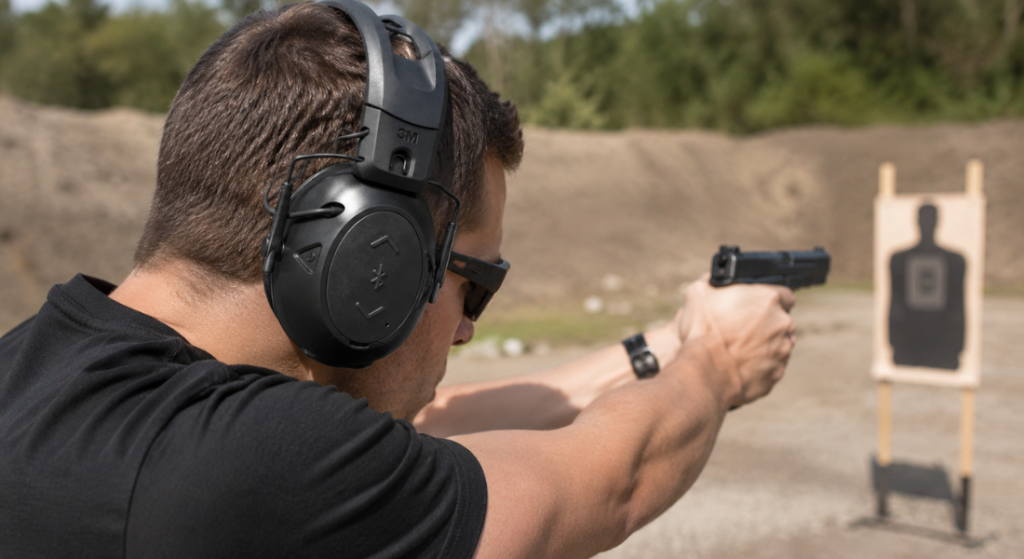
I recommend Peltor Sport Tactical 500 as the best choice when you want an easier fit, stronger perceived protection, and more reliable speech pickup than most earbuds.
Specifications
| Specification | Details |
|---|---|
| Type | Electronic over-ear muffs |
| Noise rating | Targeted 25 dB NRR |
| Bluetooth | Built-in wireless pairing for mobile devices |
| Battery | Amazon Q&A reports about 42 continuous hours |
| Power | 2 AA batteries |
| Shutoff | Turns off after about 2 hours |
| Audio features | Dynamic suppression and Clear Voice Tracking |
| Input | 3.5 mm audio jack also listed |
When shooters search for Bluetooth ear muffs shooting specifically, the Tactical 500 is the model I would put near the top because the protection is easier to get right. Earbuds depend on insertion depth. Muffs depend on cup seal, which most users understand faster.
The Tactical 500 is also better for indoor ranges when used over foam plugs. The electronics help recover speech while the plug-and-muff combination gives a bigger safety margin. The auto shutoff battery saver is also useful because range bags are where electronics go to die when users forget to power them down.
Pros and Cons
| Pros | Cons |
|---|---|
| Easier to fit correctly than earbuds | Bulkier with rifles and shotguns |
| Strong speech-focused processing | Can get warm in summer |
| Works well over foam plugs for indoor use | |
| Long AA battery runtime |
Best For: Indoor shooters, beginners, and anyone who wants simple, reliable protection with Bluetooth.
Skip If: You want something compact or plan to shoot rifles where bulky muffs interfere with stock placement.
ISOtunes Sport Advance BT 2.0: Best Value Bluetooth Set
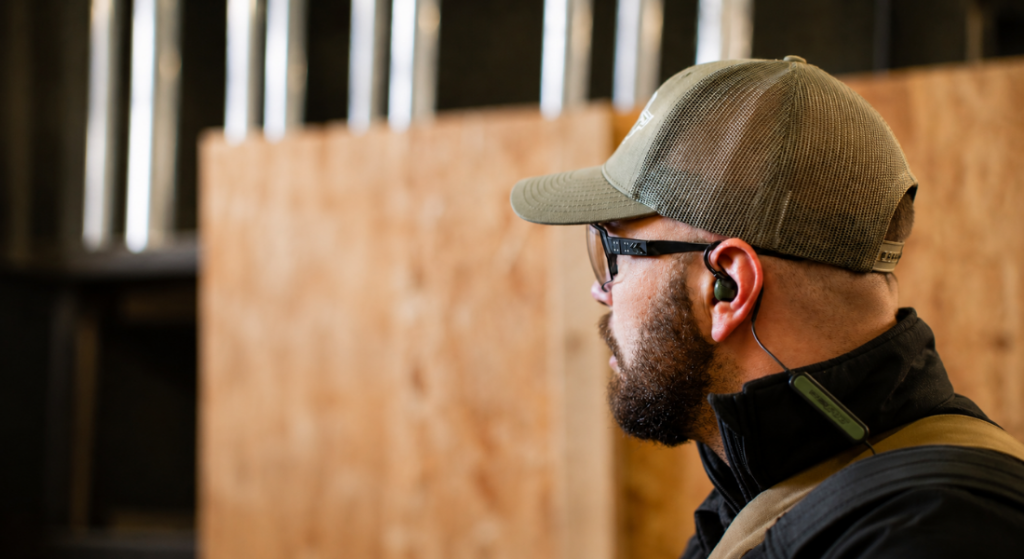
ISOtunes Sport Advance BT 2.0 is the best value because it gives 26 dB NRR, app-free simplicity, and long battery life at a mid-range price.
Specifications
| Specification | Details |
|---|---|
| Type | Neckband electronic earbuds |
| Noise rating | 26 dB NRR |
| Bluetooth | Bluetooth 5.0 connectivity |
| Battery | Up to about 10 hours |
| Ear tips | Heat-activated polyurethane foam tips |
| Controls | Inline controls |
| Use case | Shooting range, training, outdoor work, and general hearing protection |
The Advance BT 2.0 is not as sleek as true wireless earbuds, but the neckband design is practical. You are less likely to drop one bud in gravel, under a bench, or inside a range bag. That alone matters if you shoot often.
This model is also one of the easiest to recommend to users who care more about hearing protection than gadget features. The NRR is higher than many compact electronic earbuds, and the battery is long enough for a full day of range use. Music is fine, but the bigger win is predictable protection and fewer tiny parts.
Pros and Cons
| Pros | Cons |
|---|---|
| Strong 26 dB NRR for the price | Neckband is less discreet than true wireless buds |
| Good battery life for long sessions | Not as premium-feeling as AXIL |
| Foam tips create a secure seal | |
| Good value for regular range users |
Best For: Budget-conscious shooters who want strong protection and long battery life without premium pricing.
Skip If: You want true wireless earbuds or a more compact, cable-free design.
Walker’s Disruptors: Best for Suppressed Shooting
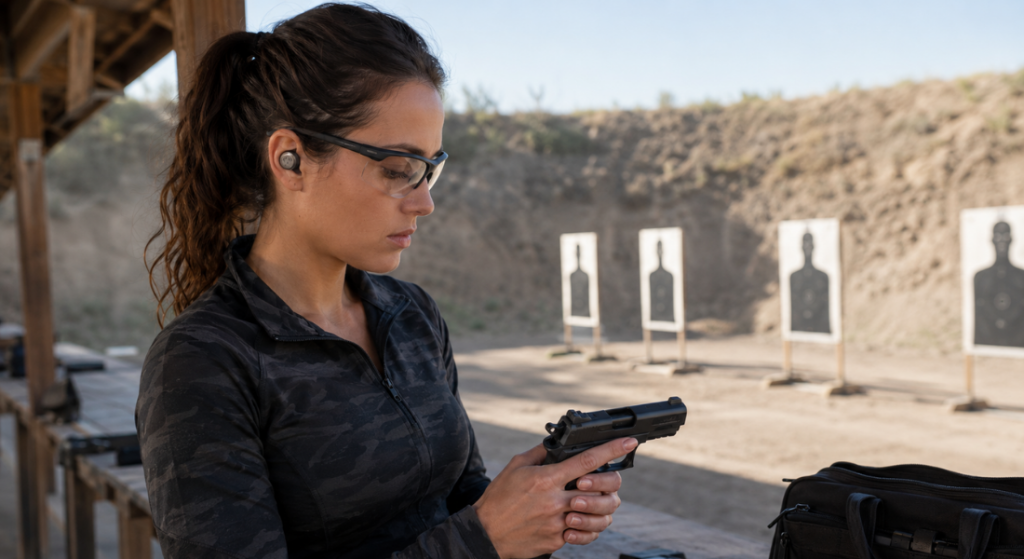
Walker’s Disrupters are best for shooters who want compact earbuds with directional awareness and enough tech for suppressed rifles, outdoor pistols, and lower-blast range work.
Specifications
| Specification | Details |
|---|---|
| Type | True wireless electronic earbuds |
| Noise rating | About 24 dB NRR |
| Bluetooth | Bluetooth pairing with mobile devices |
| Battery | Up to 6 hours with Bluetooth streaming; up to 11 hours in ambient mode |
| Case | USB charging case |
| Tips | Foam and silicone tips included |
| Sound features | 360-degree directional sound and Forward Focus mode |
| App | Walker’s Link app support listed on review/spec sources |
The Disrupters are interesting because they focus on awareness as much as protection. For suppressed shooting, that matters. You still need to protect your hearing, but you may also care more about target calls, steel feedback, movement, and nearby voices.
Do not treat these as magic earbuds for brutal indoor rifle noise. They are better for outdoor use, suppressed platforms, and shooters who value compactness. For loud brake-equipped rifles, I would still double up or choose muffs over plugs.
Pros and Cons
| Pros | Cons |
|---|---|
| Compact design works well with long guns | Battery is shorter when streaming |
| Directional sound helps outdoor awareness | Lower NRR than some competitors |
| Good feature set for suppressed range use | |
| Charging case is convenient |
Best For: Suppressed shooting, outdoor ranges, and users who prioritize awareness and compact size.
Skip If: You shoot loud rifles indoors or need maximum NRR protection.
EARMOR M20T Pro: Best Budget Bluetooth Earbuds
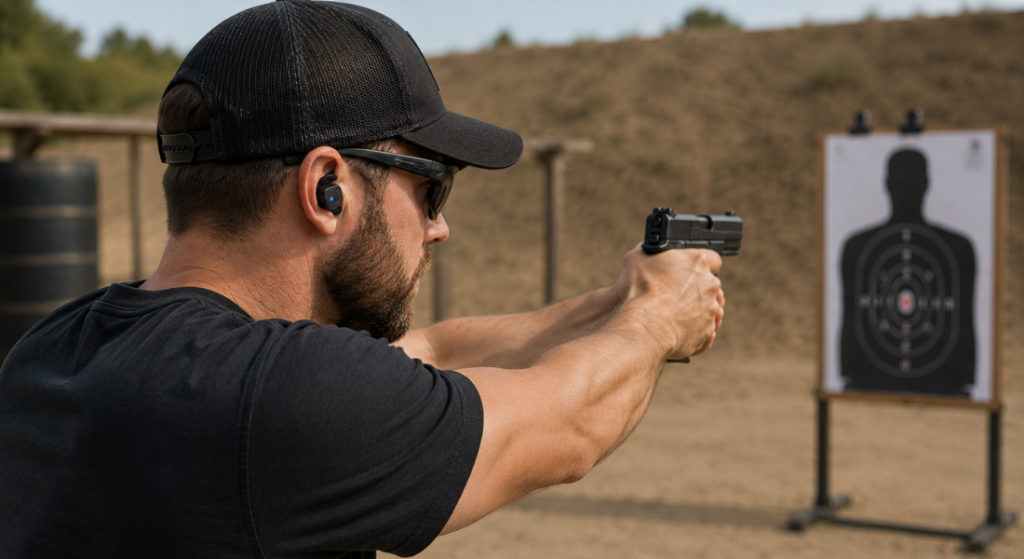
EARMOR M20T Pro is the best budget-style pick for users who want a high listed NRR, above Bluetooth 5.0 connectivity, and compact earbuds without premium-brand pricing.
Specifications
| Specification | Details |
|---|---|
| Type | True wireless electronic earbuds |
| Noise rating | 30 dB NRR listed |
| Bluetooth | Bluetooth 5.4 |
| Battery | Listings commonly show about 8-10 hours; some related listings show longer continuous-use claims |
| Reaction time | 0.001-second reaction time listed |
| Sound features | Noise canceling, sound amplification, Clear Voice Tracking |
| Resistance | Waterproof and wind resistant |
| Package detail | 5.91 x 4.06 x 2.17 inches; 4.59 ounces listed on Amazon |
If you want Bluetooth ear plugs for range use and care most about price, the M20T Pro is worth considering. The spec sheet is aggressive for the category: high listed NRR, fast reaction time, modern connection standard, and a small charging setup.
The reason it is not ranked higher is trust. With hearing protection, specs are not the whole story. Fit, testing consistency, long-term durability, and real customer feedback matter more than a flashy feature list. I would consider these for outdoor handgun sessions and casual range use before trusting them alone for harsh indoor rifle noise.
Pros and Cons
| Pros | Cons |
|---|---|
| Strong listed NRR for the price class | Newer listing, so long-term feedback is limited |
| Modern Bluetooth 5.4 spec | Battery claims vary by listing |
| Compact and easy to carry | |
| Useful call and audio features |
Best For: Budget buyers who want modern features and a high listed NRR for casual outdoor shooting.
Skip If: You need proven long-term reliability or plan to use them in harsh indoor rifle environments.
Bluetooth Earbuds vs Muffs for Shooting: Which Should You Buy?
Choose Bluetooth earbuds if you shoot rifles, wear hats, wear glasses, move around a lot, or hate hot earmuffs. Earbuds are easier to pack and usually more comfortable in warm weather. They also avoid the stock interference that happens when bulky muff cups hit a rifle or shotgun.
Choose muffs if you shoot indoors, train around other shooters, use loud rifles, or want the simplest path to a reliable seal. Muffs are faster to put on correctly. They are also easier to share, inspect, and double up over foam plugs.
The battery tradeoff is simple. Muffs usually last longer because they have more physical space for batteries. True wireless earbuds are more convenient, but streaming drains them quickly. Neckband earbuds sit in the middle: less sleek, but often better for runtime and harder to lose.
For maximum protection, especially indoors, foam plugs under electronic muffs are still the safer setup. You lose some natural sound, but electronic muffs can bring back enough speech to follow commands.
Does the Bluetooth Actually Work? Connectivity, Android vs iPhone, and Feedback
Bluetooth works, but expectations need to be realistic. These are not AirPods with ear-pro built around them. They are hearing protection devices with Bluetooth added. That means music streaming quality is usually acceptable, not audiophile-level. Voices and podcasts tend to sound better than bass-heavy music.
Android and iPhone pairing are usually straightforward, but the pain points are different. iPhone users may notice faster reconnects on some devices. Android users may have more Bluetooth menu control, but performance depends on the phone brand and Bluetooth stack. True wireless earbuds can occasionally connect one side first, lag during reconnection, or require case-reset pairing. Neckband designs are usually less fussy because the left and right channels are physically connected.
Do not assume multipoint pairing unless the product listing clearly says it. Many shooting earbuds can connect to a phone, but switching between a phone, tablet, and range device may require manual reconnection. For range use, that is not a deal-breaker. Reliability matters more than fancy device switching.
How Long Does the Battery Last While Streaming Music?
Battery life drops when you stream. That is the number to care about if you want shooting ear pro with music during long range days.
For practical use, charge earbuds the night before, keep the case topped off, and do not run music at high volume. Lower volume preserves battery and keeps your brain more aware of range commands.
Can You Take Calls and Hear Range Commands? Mic and Passthrough Quality
Yes, but call quality depends heavily on wind, gunfire timing, and microphone placement. Earbuds with beamforming or voice tracking can handle short calls, but a firing line is not a good place for long conversations. Muffs often do better for external voice pickup because they have more room for microphones and processing.
The real test is range communication clarity. Can you hear “cease fire,” your instructor, your squad, or a safety officer without pulling protection out of your ears? Peltor is strongest here because its speech processing is mature. ISOtunes is practical and clear enough for most uses. AXIL is good when the fit is right. Walker’s is strong in directional outdoor awareness. EARMOR looks good on paper, but I would want more long-term user feedback before calling it best in class.
Phone call integration is useful off the line, while setting up gear, walking to a stand, or waiting between relays. During active shooting, safety commands should always outrank calls, music, or podcasts.
Conclusion
To conclude, the best Bluetooth shooting ear protection helps you enhance your overall shooting experience. For me, the AXIL XCOR Pro is the best overall when fit is your priority, with resistance against dust, water, and wind. Their solid Bluetooth connectivity and charging longevity make them suitable for shooting environments. Understanding whether you’re a casual, tactical, or competitive shooter helps in choosing the right Bluetooth shooting ear protection. Investing in the right protective equipment and gear before you start your shooting sessions is necessary.
FAQs
Yes, but only if the seal is correct and the NRR is appropriate for the environment. For indoor ranges, choose foam plugs under electronic muffs. Indoor lanes reflect blast, and the shooter beside you may be using a short barrel, rifle caliber, or muzzle brake. Bluetooth features do not reduce noise by themselves; the physical plug or muff seal does.
Yes. Electronic hearing protection can stream audio while compressing or limiting dangerous impulse noise, depending on the model. Keep music low. If music is loud enough to hide commands, steel calls, or nearby movement, it is too loud for responsible range use.
Sometimes, but don’t make earbuds your only protection for loud rifles, indoor rifle lanes, or aggressive muzzle brakes. Use high-NRR foam plugs under electronic muffs when blast is severe. If you use earbuds outdoors, make sure foam tips are fully sealed and test them before serious training.
Earbuds are usually better with glasses and hats because they do not depend on an outer cup seal. Muffs are easier to fit quickly, but glasses can break the seal and reduce protection. Thin shooting glasses help, and gel pads can improve comfort and sealing.
Yes, for indoor ranges, rifles, muzzle brakes, and crowded firing lines. The best setup is foam plugs under electronic muffs. You still get electronic awareness from the muffs, but the plugs add another layer of protection against blast and echo.