Summary
“When you’re purchasing the best ear muffs for shooting under $50, whether it’s for shooting or hunting purposes, considering multiple options can help. Our overall pick from the top options discussed in this guide is Howard Leight Impact Sport. But in the end, you have to consider your budget, shooting preferences, shooting skills, and overall safety requirements. You should also consider how often you go shooting for a better selection and long-term efficiency. Learning the common mistakes and which factors to consider before purchasing an ear muff can also help make a difference.”
Your hearing protection should be your priority when you’re shooting a gun. Shooters want something with which they can protect their hearing while still being able to hear range commands and converse with each other. We have tested the best ear muffs for shooting under $50, and they help block intense and damaging gunshot sounds. It doesn’t matter whether you’re a beginner or a professional shooter; investing in proper and affordable electronic ear muffs for protecting your hearing is necessary.
When shooters invest in the best shooting headphones, they can prevent hearing loss and related injuries. But before choosing any option, considering their proper fitting, comfort level, battery life, and noise reduction rating (NRR) matters. We have tested the top picks to see how they perform on the shooting range or during hunting. We are here to help you choose the best option that fits your shooting needs.
Best Shooting Earmuffs Under $50 Right Now
| Pick | Type | NRR | Best For |
|---|---|---|---|
| Howard Leight Impact Sport | Electronic | 22 dB | All-around |
| Walker’s Razor Slim | Electronic | 23 dB | Rifle shooters |
| PROHEAR 016 2-Pack | Passive | 26 dB | Max NRR budget |
| Caldwell E-Max | Electronic | 23 dB | Beginners |
| Walker’s Pro Low Profile | Passive | 22 dB | Ultra-budget |
Best Shooting Earmuffs Under $50
Howard Leight Impact Sport: Best Overall
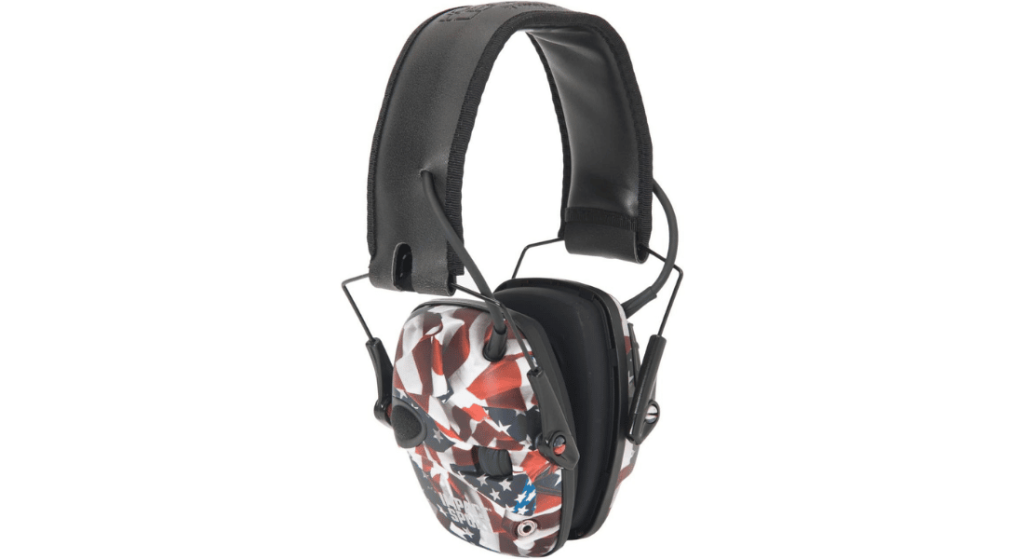
The Howard Leight Impact Sport is my best overall pick because it gives you the most balanced mix of electronic hearing protection, slim fit, comfort, and range awareness under $50. It is one of the most practical choices for real shooters.
The 22 dB NRR is enough for many outdoor range sessions when the earmuffs seal correctly. The bigger advantage is the electronic amplification. You can hear range commands, coaching, movement, and conversation without constantly lifting one ear cup. That is a major safety benefit at public ranges and training classes.
The slim ear cup design also helps with rifle and shotgun use. Bulky earmuffs can hit the stock and break the seal, which reduces protection. The Impact Sport avoids that problem better than most passive budget muffs.
| Specification | Details |
|---|---|
| Type | Electronic |
| NRR | 22 dB |
| Power | 2 AAA batteries |
| Best Use | Outdoor range, pistol, rifle, training |
| Comfort | Very good for budget electronic earmuffs |
| Cheek Weld | Good due to slim cup profile |
| Range Awareness | Excellent |
| Indoor Range Use | Use with foam earplugs |
| Pros | Cons |
|---|---|
| Good all-around pick for most shooters | Indoor use needs plugs underneath |
| Electronic amplification helps hear commands | Needs batteries |
| Slim profile works well with rifles | |
| Comfortable enough for normal range sessions |
Best for: If you want one affordable electronic earmuff that works for most range days, especially outdoors.
Walker’s Razor Slim Electronic: Best for Rifle Shooters
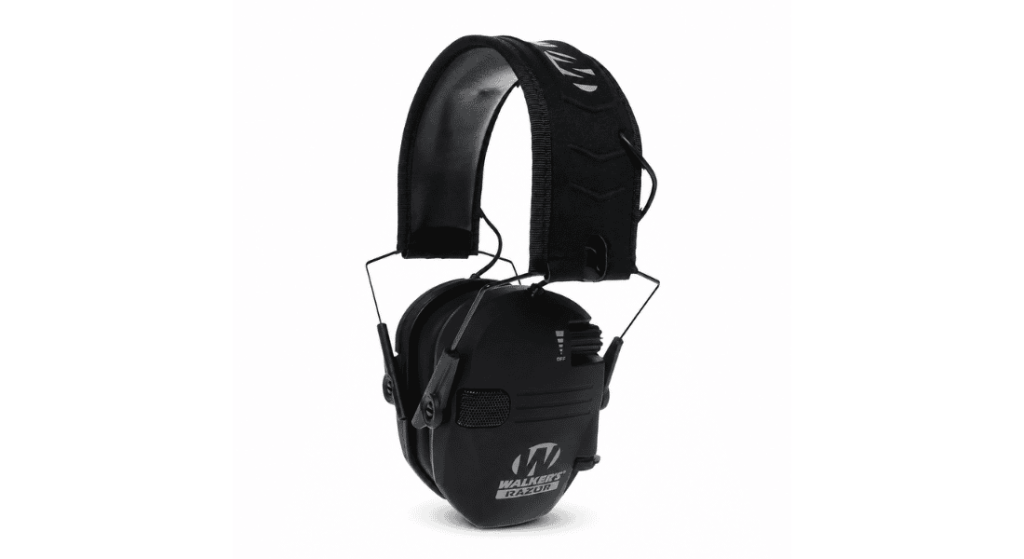
The Walker’s Razor Slim Electronic is the best option for rifle shooters because of its slim cup shape and slightly higher 23 dB NRR. It sits close to the head and reduces the chance of the ear cup touching the rifle stock during cheek weld.
This matters more than many new shooters realize. If the cup lifts even slightly, your hearing protection drops fast. For AR-style rifles, bolt guns, shotguns, and hunting rifles, low-profile earmuffs usually feel better than bulky passive muffs.
The Razor Slim also gives you electronic sound amplification, so you can hear speech and range instructions while still getting gunshot protection. It is one of the strongest choices for shooters who want affordable electronic ear muffs without jumping into premium pricing.
| Specification | Details |
|---|---|
| Type | Electronic |
| NRR | 23 dB |
| Power | 2 AAA batteries |
| Best Use | Rifle, shotgun, outdoor range, hunting practice |
| Comfort | Very good |
| Cheek Weld | Excellent for the price |
| Range Awareness | Very good |
| Indoor Range Use | Use with foam earplugs |
| Pros | Cons |
|---|---|
| Slim design is great for rifle shooters | Usually costs slightly more than Caldwell E-Max |
| 23 dB NRR beats many budget electronic muffs | Battery-dependent |
| Good electronic sound amplification | |
| Comfortable for outdoor range sessions |
Best for: If your main concern is cheek weld, rifle stock clearance, and a low-profile electronic design.
Caldwell E-Max: Best Electronic Under $30
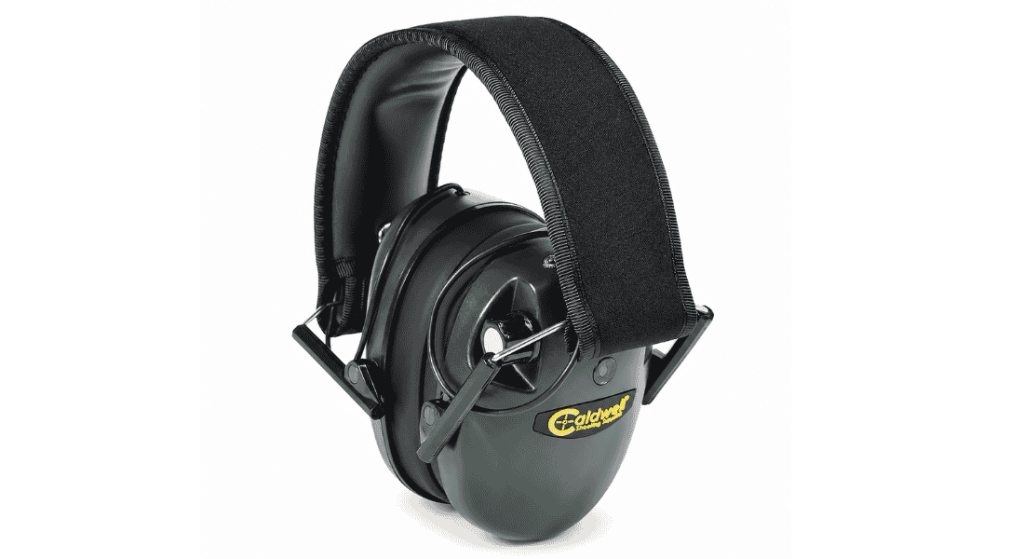
The Caldwell E-Max is the best electronic earmuff under $30 when you want basic sound amplification at the lowest possible price. It offers 23 dB NRR, dual microphones, and a low-profile design that works well for beginners.
This is a strong entry-level pick for new shooters who do not want to spend $45 to $50 right away. You still get electronic hearing features, which means you can hear normal speech and range commands better than with passive muffs. Pairing them with the right earplugs also helps improve their overall performance.
The tradeoff is build quality. The Caldwell E-Max is useful, but it does not feel as refined as the Howard Leight Impact Sport or Walker’s Razor Slim. The comfort is acceptable, the profile is good, and the value is strong, but serious weekly shooters may eventually want an upgrade.
| Specification | Details |
|---|---|
| Type | Electronic |
| NRR | 23 dB |
| Power | AAA batteries |
| Best Use | Beginners, casual range trips, outdoor pistol |
| Comfort | Good |
| Cheek Weld | Good due to low-profile design |
| Range Awareness | Good |
| Indoor Range Use | Use with foam earplugs |
| Pros | Cons |
|---|---|
| Very affordable electronic option | Build feels more basic than higher-priced models |
| 23 dB NRR is solid for the price | Comfort may not suit very long sessions |
| Good for beginners and casual shooters | |
| Low-profile cups help with rifle and shotgun use |
Best for: If your budget is tight, but you still want electronic shooting earmuffs under 50.
PROHEAR 016 2-Pack: Best Passive Pick
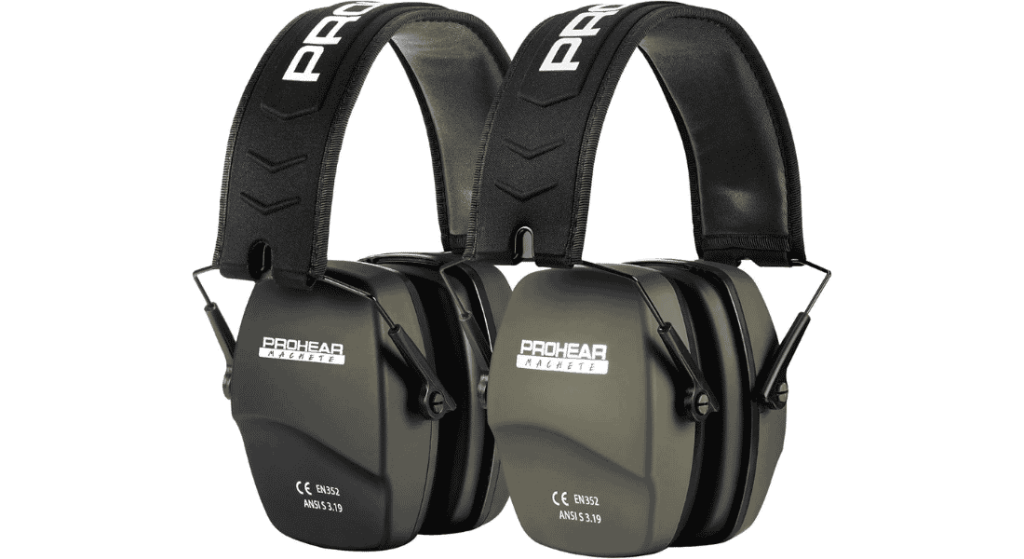
The PROHEAR 016 2-Pack is the best passive pick because it gives you two pairs of 26 dB NRR earmuffs at a low price. For families, guests, backup range bags, and new shooters, this is one of the best and cheap shooting ear muffs.
The 26 dB NRR is higher than the electronic options in this list. Since there are no microphones, circuits, or batteries, the design is simple and reliable. You put them on, check the seal, and shoot.
The downside is communication. Passive muffs block normal conversation more than electronic muffs. At a supervised range, that can be annoying because you may miss commands or coaching. They are also not as slim as dedicated rifle-focused electronic muffs.
| Specification | Details |
|---|---|
| Type | Passive |
| NRR | 26 dB |
| Power | None |
| Best Use | Guests, backup, beginners, family range trips |
| Comfort | Good |
| Cheek Weld | Fair |
| Range Awareness | Low |
| Indoor Range Use | Better with foam earplugs for loud calibers |
| Pros | Cons |
|---|---|
| 26 dB NRR is strong for the price | No electronic amplification |
| 2-pack gives excellent value | Can block range commands |
| No batteries needed | |
| Good backup option for guests |
Best for: If you need affordable passive earmuffs for multiple shooters or a backup set in your range bag.
Walker’s Pro Low Profile Folding: Best Ultra-Budget Option
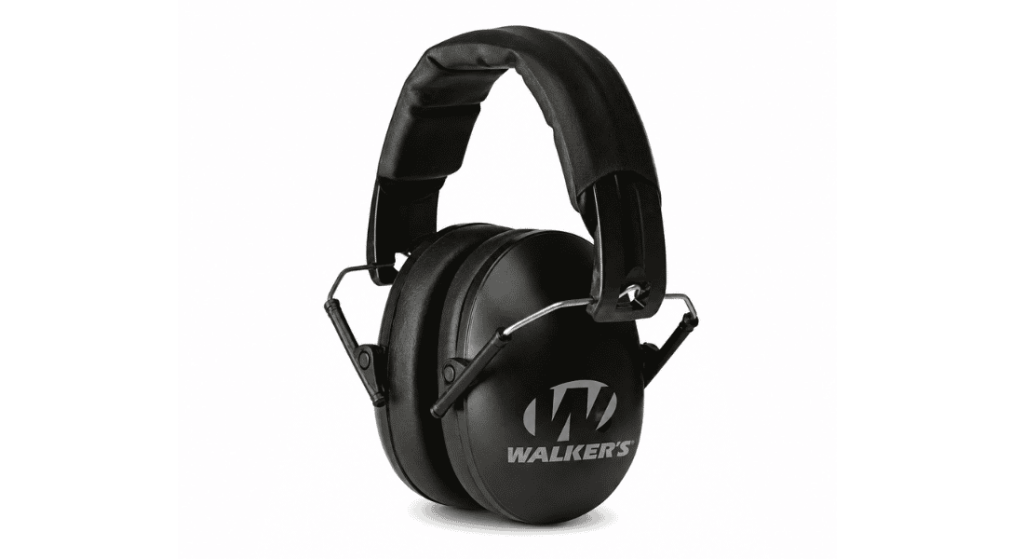
The Walker’s Pro Low Profile Folding Muff is the best ultra-budget option because it is cheap, compact, and simple. It is not trying to compete with electronic muffs. It is made for basic protection at the lowest price.
The 22 dB NRR is modest, but the low-profile shape makes it more shooter-friendly than bulky construction-style earmuffs. It folds down easily, which makes it useful as a spare pair in your range bag.
This is not the best choice for indoor ranges, magnum handguns, or long training days. But for occasional outdoor shooting, backup use, or giving a guest basic hearing protection, it is a practical budget pick.
| Specification | Details |
|---|---|
| Type | Passive |
| NRR | 22 dB |
| Power | None |
| Best Use | Backup pair, outdoor casual shooting, guest use |
| Comfort | Fair to good |
| Cheek Weld | Good for passive budget muffs |
| Range Awareness | Low |
| Indoor Range Use | Use with foam earplugs |
| Pros | Cons |
|---|---|
| Extremely affordable | 22 dB NRR is basic |
| Folds compactly for range bags | No electronic hearing |
| Low-profile shape helps with rifles | |
| No batteries needed |
Best for: If you want the cheapest usable shooting earmuffs under $50.
Electronic vs Passive Shooting Earmuffs: Which Is Right for You?
Electronic earmuffs are better when you need to hear speech, range commands, game movement, timers, or coaching. Passive earmuffs are better when you want simple noise blocking at the lowest price.
For most outdoor shooters, electronic earmuffs make more sense. They improve safety because you do not need to lift one cup to hear people. For indoor ranges, passive high-NRR muffs or electronic muffs with foam plugs underneath are better.
| Situation | Best Choice |
|---|---|
| Indoor pistol range | Electronic 22 to 23 dB plus foam earplugs |
| Outdoor rifle hunting | Electronic slim-profile |
| Maximum noise blocking | Passive 26 dB+ |
| Budget under $20 | Passive |
| Shooting with kids | Passive youth-fit muffs plus plugs when needed |
If you only shoot outdoors and need to hear range commands, choose Howard Leight Impact Sport or Walker’s Razor Slim. If you shoot indoors or bring guests, keep passive muffs and foam plugs available.
Common Mistakes Shooters Make When Buying Budget Earmuffs
The first mistake shooters make when purchasing shooting ear muffs under 50 is buying without checking the NRR certification. A product can look tactical and still offer weak protection. Always check the actual NRR number, not just marketing words like “noise canceling” or “shooting grade.”
The second mistake is ignoring the cheek weld fit for rifle use. If your earmuff hits the stock and lifts off your ear, you lose protection. Rifle shooters should prioritize slim-profile cups.
The third mistake is assuming all electronic muffs perform the same. Cheap electronic muffs vary in sound quality, shut-off behavior, comfort, and battery life. Under $50, the goal is reliable basic performance, not premium audio.
The fourth mistake is skipping fit testing before long sessions. Wear your earmuffs with your safety glasses, hat, and normal shooting setup. If the glasses break the seal, adjust the fit or use thinner eye-protection arms.
The fifth mistake is forgetting batteries before range day. Electronic muffs still provide passive protection when turned off in many cases, but you lose the biggest reason to buy them: hearing speech and commands.
The sixth mistake is using construction-rated muffs instead of shooting-rated muffs. Some construction muffs offer good NRR, but they may be bulky and poor for rifle cheek weld. Shooting earmuffs should fit your firearm stance, not just your head.
What to Look for in Budget Ear Protection Shooting Earmuffs?
NRR Rating and What You Actually Need for Shooting
NRR stands for Noise Reduction Rating. It shows how much sound reduction a hearing protector can provide under controlled testing. For shooting, a higher NRR is helpful, but only if the earmuffs seal properly.
For outdoor shooting, 22-23 dB electronic earmuffs can work for many shooters when the fit is secure. For indoor ranges, 26 dB+ passive earmuffs or double protection with foam plugs is safer. Indoor ranges reflect sound toward your ears, which makes gunfire feel sharper and louder.
For serious range use, use this simple guide:
| Range Use | Suggested Protection |
|---|---|
| Outdoor .22 LR or light pistol | 22 dB+ earmuffs |
| Outdoor rifle or shotgun | 22 to 23 dB slim electronic muffs |
| Indoor pistol | Earmuffs plus foam plugs |
| Magnum handgun | High-NRR muffs plus foam plugs |
| New shooter | Comfortable muffs plus foam plugs |
Do not rely on NRR alone. Check the seal, comfort, and whether your glasses create gaps.
Electronic vs Passive Earmuffs
Electronic earmuffs use microphones to amplify safe sounds and reduce loud impulse noise. They help you hear people around you while still protecting your ears from gunfire. That makes them better for classes, public ranges, hunting, and training.
Passive earmuffs do not use batteries or microphones. They block sound all the time. They are cheaper, simpler, and often offer higher NRR for the money.
If you shoot alone outdoors, either can work. If you train with others, electronic muffs are worth it. If you need the cheapest possible protection, passive muffs are the better buy.
Fit, Comfort, and Cheek Weld Compatibility
Fit is where cheap shooting earmuffs either win or fail. A good earmuff should fully cover your ears, press evenly around the head, and seal around safety glasses.
Comfort matters because shooters move, reload, shoulder firearms, and spend time waiting between strings. If the headband is painful after 15 minutes, you will keep adjusting it. Every adjustment can break the seal.
Cheek weld compatibility is especially important for rifles and shotguns. Slim cups are usually better because they reduce contact with the stock. This is why the Walker’s Razor Slim and Howard Leight Impact Sport rank high for rifle shooters.
Many shooters also benefit from investing in the best earplugs for shooting. They can maximise their protection with the right gear. But doing proper research and reading real reviews from Gunners’ Review can help make the right decision.
Final Verdict
To finalise, the Howard Leight Impact Sport is the best pair of ear muffs for shooting under $50 because it gives the strongest mix of electronic awareness, comfort, slim profile, and real range performance. It is the safest recommendation for most shooters who want one affordable pair.
Shooters can also check out other options according to their shooting needs, indoor or outdoor range preferences, and noise cancellation abilities. When you have proper protection for shooting ranges, you can enjoy a smooth shooting experience, even with the loudest gunshot noises.
FAQs
For shooting, 22 dB NRR is a common starting point for slim electronic earmuffs, especially outdoors. For indoor ranges or loud calibers, use foam earplugs under the earmuffs. Higher NRR is better only when the muff seals properly.
Yes, electronic shooting earmuffs under $50 are worth it for outdoor range use, training, hunting practice, and hearing range commands. Howard Leight Impact Sport, Walker’s Razor Slim, and Caldwell E-Max are good examples of affordable electronic ear muffs.
Yes. Wearing foam earplugs under shooting earmuffs is recommended for indoor ranges, magnum handguns, muzzle brakes, short barrels, and long shooting sessions. This is called double protection, and it is one of the best low-cost upgrades for hearing safety.
NRR 25 offers slightly more rated noise reduction than NRR 22, but real-world fit can matter more than the 3 dB difference. A well-sealed NRR 22 electronic muff can outperform a poorly sealed NRR 25 passive muff.
Cheap ear muffs can be good enough for shooting if they have a real NRR rating, fit securely, and match your range use. For indoor shooting, cheap earmuffs should usually be paired with foam earplugs