A good LPVO scope should help AR-15 owners in solving this one simple problem: how to get red-dot speed up close without losing useful magnification past 100 yards. The best LPVO scopes for AR-15 give you fast 1x shooting, better target identification, cleaner holds, and enough range for hunting, training, competition, or a general-purpose rifle.
The hard part is choosing the right magnification range, reticle, illumination, and eye box without wasting money on a scope that looks good on paper but feels slow behind the rifle.
The U.S. Army’s new XM157 fire-control optic is built around a 1-8×30 LPVO [Vortex won this contract valued at $2.7 billion.]
This review focuses on the best ar-15 lpvo scopes that make sense for the owners NOW.
We are not chasing every optic on the market. Instead, we have filtered down the practical LPVOs that fit real AR-15 use, from premium 1-6x glass to value-focused 1-10x options.
Quick Picks
A good LPVO should match the rifle’s job.
A 16-inch general-purpose AR-15 does not need the same optic as a 5.56 DMR build. Likewise, a home-defense rifle does not need the same top-end magnification as a hunting or range-focused setup.
| Category | Product | Best For |
|---|---|---|
| Best Overall Premium Pick | Vortex Razor HD Gen II-E 1-6×24 SFP | Fast 1x feel, premium glass, forgiving eye box |
| Best Rugged Simple Pick | Trijicon Credo 1-4×24 | Close-to-mid AR-15 use with trusted durability |
| Best 1-10x FFP Value | SIG SAUER Tango-MSR 1-10x26mm FFP | Holdovers, longer reach, DMR-style setups |
| Best Affordable 1-6x Pick | Vortex Venom 1-6×24 SFP | Entry-level LPVO value with useful AR-BDC reticle |
| Best Complete 1-10x SFP Kit | SIG SAUER Tango-MSR 1-10x28mm SFP | Mount-included setup with broad magnification |
These picks cover the most common AR-15 requirements.
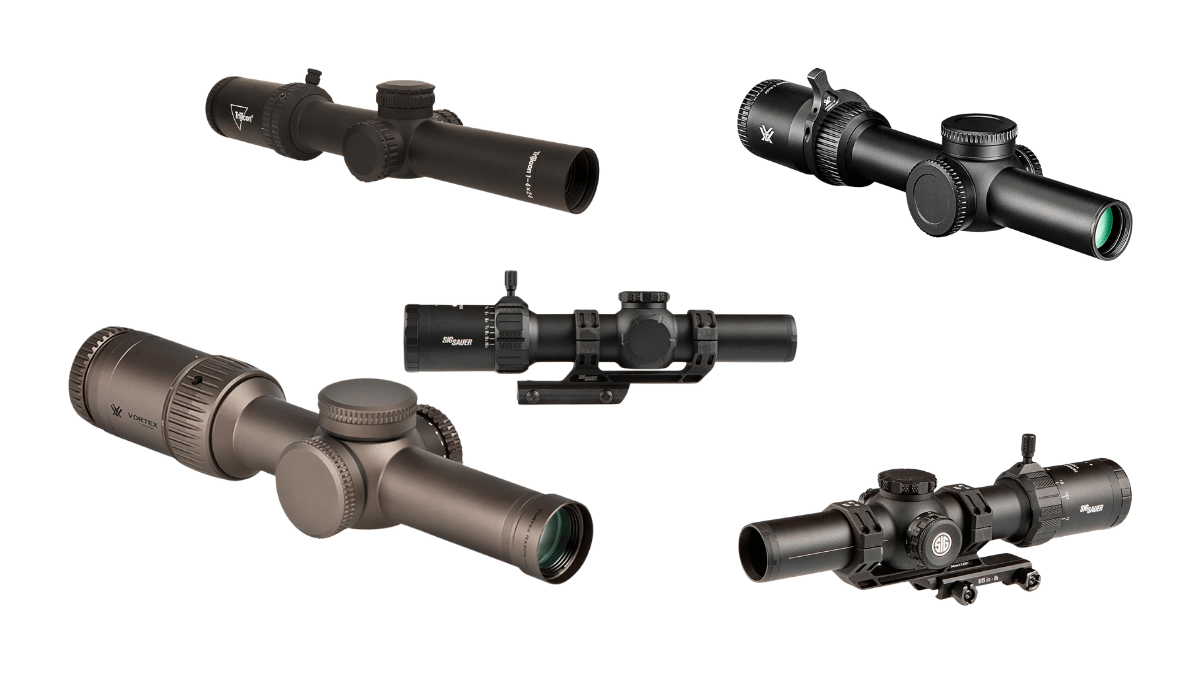
The Razor is the premium 1-6x option. The Venom gives excellent value. The SIG Tango-MSR models make sense if you want 10x magnification without entering premium LPVO pricing.
👉 If you wanna compare LPVOs against red dots, prisms, and magnifier setups, see our review of the best AR-15 optics to understand the bigger picture before you commit to one optic path.
What Is an LPVO Scope for AR-15?
An LPVO, or low power variable optic, is a rifle scope with low starting magnification and adjustable zoom. Most AR-15 LPVOs start at 1x and move up to 4x, 6x, 8x, or 10x. At 1x, the scope helps with close-range target acquisition. At higher magnification, it gives better target detail and more precise holds.
That is why LPVOs have become so popular on AR-15 rifles. A red dot is faster at close range, but it does not give magnification on its own. A traditional rifle scope gives magnification, but it usually feels slower up close. An LPVO sits between both worlds.
Vortex’s Venom 1-6×24 is a low power variable optic (LPVO) for fast short-to-mid-range targeting, with 1-6x magnification, a 24mm objective lens, and an AR-BDC3 reticle tuned around common 5.56 AR-15 loads.
Comparison Table
The goal here is not to crown one scope for every rifle.
Rather, this table should help you match the optic to your use case.
| Product | Magnification | Focal Plane | Tube Size | Reticle Type | Best Use | Pricing |
|---|---|---|---|---|---|---|
| Vortex Razor HD Gen II-E 1-6×24 | 1-6x | SFP | 30mm | JM-1 BDC / VMR options | Premium general-purpose AR-15 | See price here |
| Trijicon Credo 1-4×24 | 1-4x | SFP | 30mm | BDC segmented circle .223/55gr | Rugged close-to-mid setup | See price here |
| SIG SAUER Tango-MSR 1-10x26mm | 1-10x | FFP | 34mm | MSR BDC-10 | DMR-style 5.56 builds | See price here |
| Vortex Venom 1-6×24 | 1-6x | SFP | 30mm | AR-BDC3 | Budget-friendly 1-6x LPVO | See price here |
| SIG SAUER Tango-MSR 1-10x28mm | 1-10x | SFP | 34mm | MSR BDC10 | Complete mount-included kit | See price here |
The Vortex Razor HD Gen II-E has a 1-6x magnification range, 24mm objective lens, 30mm tube, 4-inch eye relief, and 21.5 oz weight in the JM-1 BDC version.
Trijicon’s Credo 1-4×24 comes with a second focal plane .223/55gr BDC segmented circle reticle, 10 illumination settings, 17.1 oz weight, and a 95 to 24.2 ft field of view at 100 yards.
SIG SAUER’s Tango-MSR 1-10x28mm SFP comes with a 34mm maintube, 20.4 oz weight, 11 illumination settings, 110 to 10 ft field of view at 100 yards, and included ALPHA-MSR mount.
Reviewing the Best LPVO Scopes for AR-15
Here are the best ar-15 LPVO scopes in 2026 (so far):
Vortex Razor HD Gen II-E 1-6×24 SFP
Highlight: Best premium 1-6x LPVO for AR-15 owners who want red-dot speed with real mid-range clarity
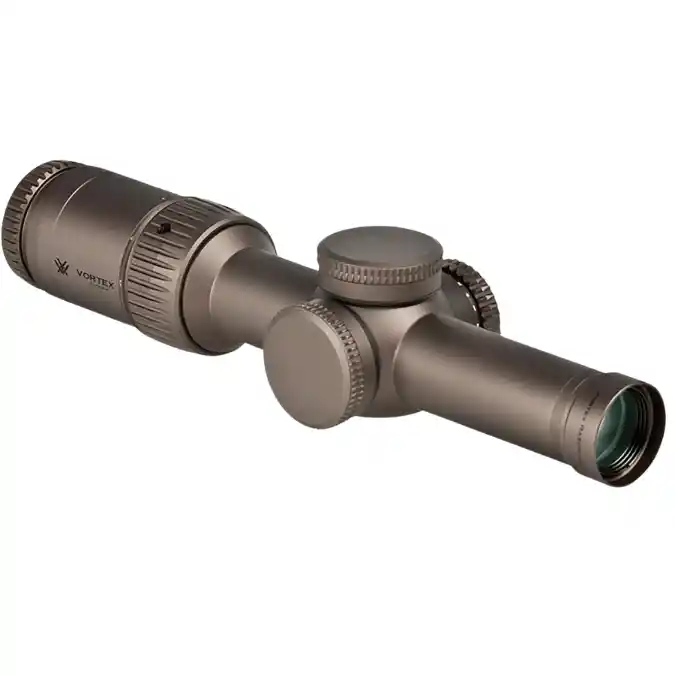
The Vortex Razor HD Gen II-E 1-6×24 is the kind of LPVO that still earns its place in a premium AR-15 roundup because it does the simple things extremely well. It gives you a clean 1x view for close-range work, usable 6x magnification for distance, a daylight-bright illuminated center dot, and a second focal plane JM-1 BDC reticle that does not feel overly busy. It falls fairly inside the high-ticket range without moving into completely unrealistic pricing for AR owners.
In real use, it gets high, consistent praise: glass clarity, forgiving eyebox, bright illumination, and rugged construction. Even after comparisons with other popular optics in the game, people still come back to the Razor for its edge-to-edge image quality, fast target pickup, and red-dot-like 1x performance. It’s a close-to-mid-range optic built for MIL/LE, competitive shooters, and high-speed engagements.
The tradeoff is weight and price. At around 21.5 oz, this is not the lightest premium LPVO, and you might find the magnification ring feeling stiff without a throw lever. It also will not fully replace a dedicated red dot for shooters who are extremely sensitive to fisheye or want the absolute fastest 1x setup. Still, if you want one tough optic for close-range drills, range work, patrol-style setups, and 300–500 yard shooting, this is one of the safest premium picks in the category. The JM-1 BDC version includes a 30mm tube, 4-inch eye relief, and a 1x field of view of 115 feet at 100 yards, which explains why it gets all the praises for its forgiving feel behind the rifle.
Pros and Cons
| Pros | Cons |
|---|---|
| Excellent edge-to-edge glass clarity for a 1-6x LPVO | Expensive compared with many AR-15 LPVO options |
| Daylight-bright center dot works well for fast close-range shooting | Heavier than some newer lightweight premium LPVOs |
| Forgiving eyebox and generous eye relief make it easy to shoot from imperfect positions | |
| Rugged build quality with Vortex’s strong lifetime warranty support |
Best for: AR-15 owners who want a proven premium LPVO with excellent glass, fast 1x performance, simple BDC holds, and enough durability for hard use.
Skip if: you want the lightest possible LPVO, need a first focal plane reticle, or prefer a true red dot plus magnifier setup for close-range speed.
Trijicon Credo 1-4×24 Illuminated Riflescope
Highlight: Best durable 1-4x LPVO for AR-15 owners who want Trijicon build quality without jumping into four-figure pricing
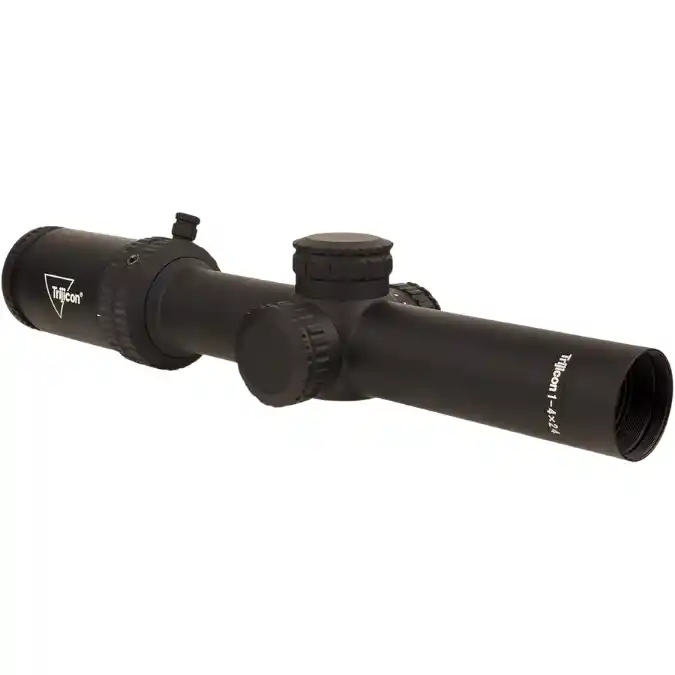
The Trijicon Credo 1-4×24 is a strong higher-mid-price LPVO for AR-15 owners who care more about reliability, glass quality, and fast practical shooting than chasing maximum magnification. It fits our list well without feeling like a budget filler product. It also checks the AR-friendly box with a 1-4x magnification range, illuminated reticle system, and a ruggedized build designed for hard use.
For an AR-15 setup, the main appeal is speed. The 1x setting keeps the scope usable for close-range shooting, while 4x gives enough reach for range work, defensive carbine training, and medium-distance target identification. The 1-4×24 Credo comes with a second focal plane reticle, .223/55-grain BDC segmented circle option, 10-level partial reticle illumination, and a 30mm maintube, which makes it a very natural match for 5.56 AR platforms.
The standout points with this are glass clarity, eye relief, crisp adjustments, and Trijicon’s long-term durability reputation. Users like it on AR-style rifles and .300 Blackout setups, and you should verify the serial number with Trijicon, which might be useful if you’re worried about optic authenticity on Amazon. The main drawback is that you might find it a little heavy, and that the illumination brightness may not feel red-dot bright in every lighting condition. That matters if you expect a true red-dot replacement instead of a traditional LPVO.
Pros and Cons
| Pros | Cons |
|---|---|
| Strong Trijicon build quality and long-term reliability reputation | 1-4x magnification is less flexible than 1-6x or 1-8x LPVOs |
| Clear glass with good eye relief for close and mid-range AR shooting | You may find it slightly heavy for a lightweight carbine |
| Illuminated segmented reticle helps with faster target pickup | |
| Good fit for 5.56 AR-15 setups using .223/55-grain BDC options |
Best for: AR-15 owners who want a tough, clear, simple LPVO from a trusted optic brand and do not need more than 4x magnification.
Skip if: you want a lighter optic, need 6x or 8x top-end magnification, or expect the illumination to behave exactly like a dedicated red dot.
SIG SAUER Tango-MSR 1-10x26mm FFP
Highlight: Best value 1-10x FFP LPVO for AR-15 owners who want reach, reticle utility, and a mount included
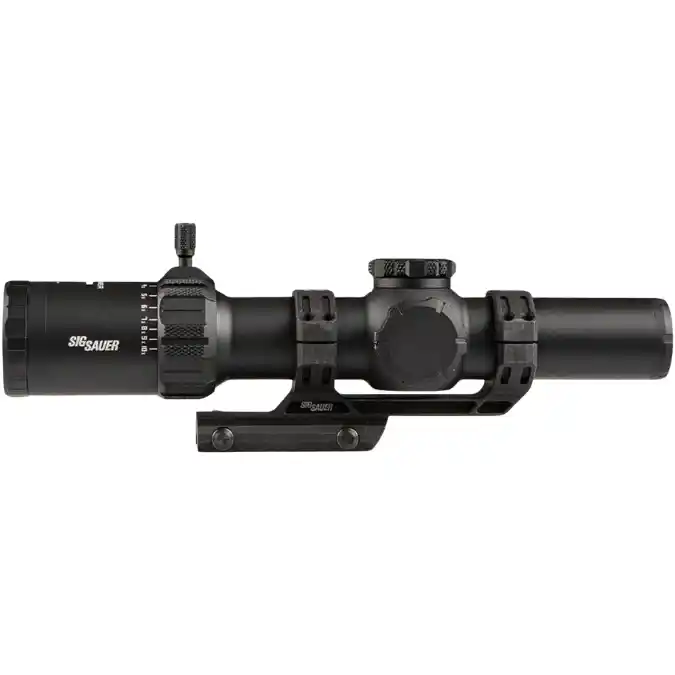
The SIG SAUER Tango-MSR 1-10x26mm FFP is a strong commercial pick for AR-15 owners who want more magnification than a standard 1-6x LPVO without jumping into the $1,000+ premium bracket. The package includes lens covers plus a one-piece aluminum cantilever mount. That’s important if you want a more complete setup instead of buying the optic, mount, and covers separately.
On paper, this is built for a modern MSR or AR-style rifle: 1-10x magnification, first focal plane MSR BDC-10 illuminated reticle, 34mm maintube, 11 brightness settings, low-dispersion glass, waterproof/shockproof/fogproof construction, and 1/2 MOA adjustments. The weight is 21.9 oz, with 120–12 ft field of view at 100 yards, 3.44–3.24 inches of eye relief, and it also includes the ALPHA-MSR cantilever mount, which makes it a serious option for a 5.56 DMR-style AR-15 or a general-purpose rifle that needs more top-end reach.
Users like the clarity, included mount, 10x performance, zero retention, and overall value. You can move from a red dot and magnifier setup to this scope and find it to be the setup you were looking for. The weak spots are worth calling out: the 1x may not feel like a true red dot, the magnification ring can feel stiff, turret clicks may feel too fine to you, and you might get a poor experience with cloudy glass and warranty support. For the money, though, this is still a high-interest LPVO because it gives you a lot of scope, a useful FFP reticle, and a ready-to-mount package in one box.
Pros and Cons
| Pros | Cons |
|---|---|
| 1-10x magnification gives more reach than common 1-6x LPVOs | 1x may not feel as natural as a dedicated red dot |
| First focal plane MSR BDC-10 reticle supports holdovers across magnification range | Magnification ring and turret feel may not satisfy every shooter |
| Includes cantilever mount and flip-back lens covers | |
| Good value for AR-15, 5.56 DMR, and range-use setups |
Best for: AR-15 owners who want a value-focused 1-10x FFP LPVO with an included mount, useful BDC holds, and enough magnification for close-to-mid and longer-range shooting.
Skip if: you want a true red-dot feel at 1x, lighter weight, premium-tier glass, or a proven duty-grade optic with fewer mixed user comments.
Vortex Venom 1-6×24 SFP
Highlight: Best affordable 1-6x LPVO for AR-15 owners who want clean glass, fast handling, and strong value
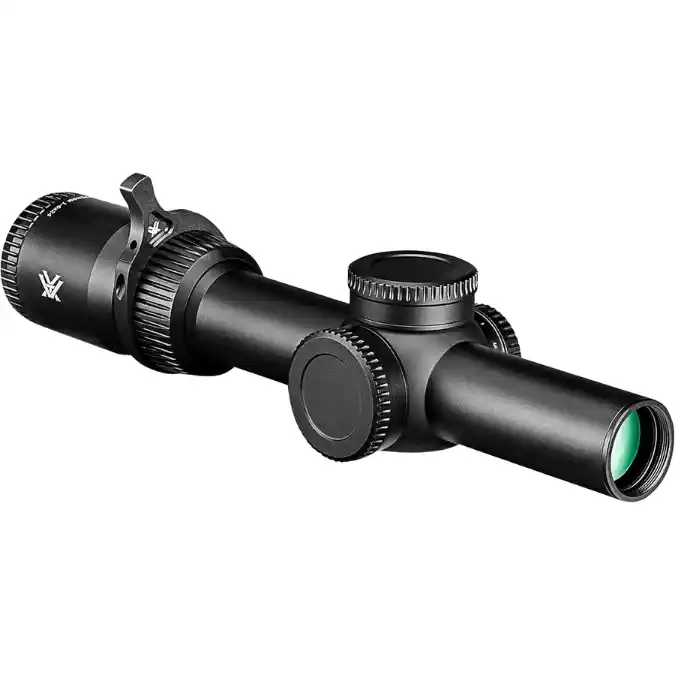
The Vortex Venom 1-6×24 SFP is not the highest-ticket LPVO in this review, but it earns a spot because it gives AR-15 owners a very practical 1-6x setup at a price that still feels easy to recommend. It uses a second focal plane AR-BDC3 reticle, a 30mm tube, an included throw lever, and Vortex’s lifetime VIP warranty support.
For a standard AR-15, this scope makes the most sense as a short-to-mid-range optic. The Venom 1-6×24 comes with 1-6x magnification, 24mm objective lens, 3.7-inch eye relief, 126.0–20.2 ft field of view at 100 yards, capped turrets, 1/4 MOA adjustments, 10.3-inch length, and 19.5 oz weight. The AR-BDC3 reticle is also tuned around common 5.56 AR-15 loads, with a broken circle for faster target pickup and BDC holds designed to stretch out to 650 yards.
It’s value for money with this. Users love the clear glass, easy zeroing, true-feeling 1x performance, usable illumination, solid zero retention, and good results on AR-15, hunting, and range setups. The weak points are predictable, too: it does not include a mount, the lens caps might not be as robust as you think, and it is not a premium-glass optic like the Razor HD. Still, if you want a reliable 1-6x LPVO without spending $700–$1,500, this is one of the cleanest value picks in the list.
Pros and Cons
| Pros | Cons |
|---|---|
| Strong value for a 1-6x AR-15 LPVO | Mount is not included |
| Clear glass and easy-to-use AR-BDC3 reticle | Lens caps could be better |
| True 1x feel and useful 6x magnification for short-to-mid-range shooting | |
| Includes throw lever, lens covers, sunshade, battery, and Vortex warranty support |
Best for: AR-15 owners who want a budget-friendly 1-6x LPVO with clear glass, fast handling, and a reticle built around common 5.56 use.
Skip if: you want premium glass, an included cantilever mount, first focal plane reticle behavior, or a higher-end optic for hard professional use.
SIG SAUER Tango-MSR 1-10x28mm SFP
Highlight: Best complete 1-10x SFP LPVO package for AR-15 owners who want mount-included value
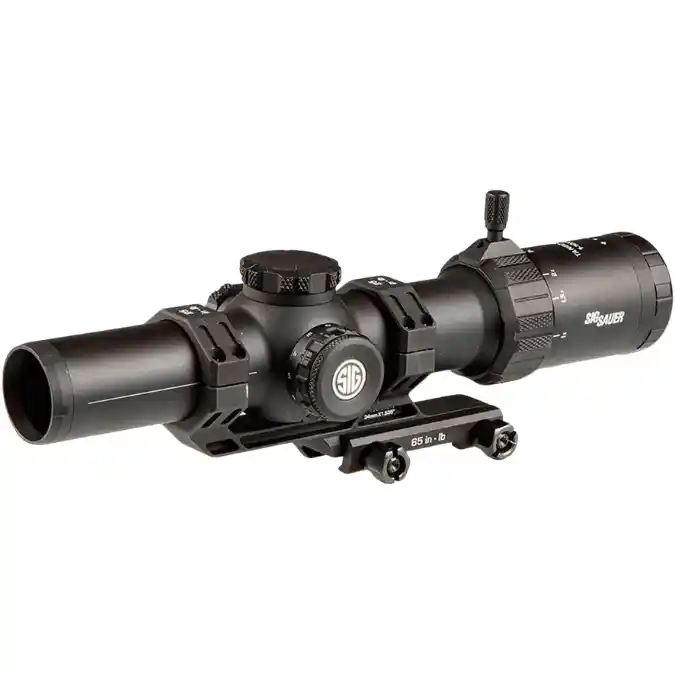
The SIG SAUER Tango-MSR 1-10x28mm SFP is the more straightforward, user-friendly version of a 1-10x AR optic. It gives you the bigger magnification range you want, but also keeps the setup simple with a second focal plane MSR BDC-10 reticle, included throw lever, flip-back lens covers, and an ALPHA-MSR cantilever mount in the box. It’s a stronger pick than many other LPVOs in this price class.
For an AR-15 owner, the main selling point is the complete package. The important numbers here are: 1-10x magnification, 28mm objective lens, second focal plane reticle, 34mm maintube, 20.4 oz weight, 3.54–3.22 inches of eye relief, 110–10 ft field of view at 100 yards, 11 illumination settings, 100 MOA elevation travel, 100 MOA windage travel, and an included mount. That gives it enough range for close work at 1x, general carbine shooting, and medium-range AR-15 use without forcing you to shop for a separate 34mm mount.
Users admire the clear glass, bright reticle, easy setup, included mount, smooth magnification adjustment, and solid zero retention on AR-style rifles and heavier platforms. The honest downside is that this is still a value-focused 1-10x, not a premium $2,000 optic. That does not hurt the recommendation, but it means this scope is best positioned as a high-value complete LPVO kit, not as a Razor, Nightforce, or Trijicon replacement.
Pros and Cons
| Pros | Cons |
|---|---|
| 1-10x magnification gives AR-15 owners more reach than common 1-6x LPVOs | 10x eyebox can feel tight compared with premium LPVOs |
| Includes ALPHA-MSR cantilever mount, throw lever, lens covers, and battery | Bulkier than some simpler 1-6x scopes |
| SFP reticle keeps the aiming picture easy to read at lower magnification | |
| Strong praise for a value-focused 1-10x optic |
Best for: AR-15 owners who want a ready-to-mount 1-10x LPVO package with good magnification range, usable illumination, and strong value under the premium optic tier.
Skip if: you want first focal plane reticle behavior, ultra-lightweight handling, premium glass at 10x, or a duty-grade optic with fewer compromises.
How to Choose the Best AR-15 LPVO Scope
The best ar-15 lpvo scopes are not always the most expensive ones. The right choice depends on how the rifle gets used, how much weight the owner can tolerate, and how much magnification actually helps.
For most AR-15 owners, the biggest factors are magnification range, reticle design, daylight bright illumination, eye box, eye relief, weight, mount compatibility, and warranty support. However, one factor usually matters more than the spec sheet shows: how natural the scope feels at 1x.
A scope can advertise 1x and still feel slower than a red dot. Distortion, tight eye position, dim illumination, and a busy reticle can make close-range shooting feel clumsy. So, before focusing only on 8x or 10x magnification, pay attention to how the optic behaves at the low end.
👉 Once the optic is mounted and zeroed, it is worth learning how to build cleaner sight tracking and trigger control without burning ammo, especially if you want that 1x setting to feel natural during dry reps. Our review of the best ar dry fire training systems focuses on AR reps, sight stability, transitions, and trigger control.”
1-6x vs 1-8x vs 1-10x: Which Magnification Range Makes Sense?
A 1-6x LPVO is still the safest range for many AR-15 owners. It gives enough top-end magnification for typical range work, hunting distances, and general-purpose shooting. Also, many 1-6x scopes offer better eye box forgiveness than cheaper high-magnification LPVOs.
A 1-8x LPVO gives more reach, but it can add cost, weight, and optical compromise. Some 1-8x models feel excellent. Others feel tight at max power or less natural at 1x.
A 1-10x LPVO makes sense when the AR-15 leans toward a DMR-style role. It helps with target identification and holds at distance. However, 10x can bring a tighter eye box, smaller exit pupil, and more noticeable glass limitations in lower-price scopes.
| Magnification | Best Fit | Main Tradeoff |
|---|---|---|
| 1-4x | Simple close-to-mid setup | Less reach |
| 1-6x | General-purpose AR-15 | Less top-end detail than 8x or 10x |
| 1-8x | Mixed range and field use | Can cost more for good glass |
| 1-10x | DMR-style AR-15 and longer holds | Tighter eye box at high power |
FFP vs SFP LPVO: Which Is Better for AR-15?
FFP means first focal plane. The reticle changes size as magnification changes. This helps when using holdovers at different magnification settings, especially on scopes with more advanced BDC or mil-based reticles.
SFP means second focal plane. The reticle stays the same size through the zoom range. Many AR-15 owners prefer SFP because the reticle stays easy to see at 1x, and the optic often feels simpler during close-range shooting.
For most users under $1,000, SFP still makes a lot of sense. It gives a cleaner aiming picture at low power and usually delivers better value. However, FFP becomes more useful if the rifle regularly gets used for varied-distance holds.
Reticle and Illumination Matter More Than You Think
A reticle can make or break an LPVO.
A simple BDC reticle can help AR-15 owners hold for distance without dialing turrets. Yet a busy reticle can slow down close-range shooting, especially at 1x.
Daylight bright illumination also matters. It helps the eye find the center aiming point faster in bright outdoor conditions. Still, illumination does not automatically turn an LPVO into a red dot. The eye box, field of view, and reticle design still decide how fast the scope feels.
The Vortex Venom’s AR-BDC3 reticle uses a 1 MOA center dot and broken circle, with BDC holds designed around common 5.56 AR-15 loads out to 650 yards. That is a good example of a reticle built around actual AR use instead of generic scope marketing.
Eye Box, Eye Relief, and 1x Performance
The eye box is the space behind the scope where your eye can still see a usable image. A forgiving eye box helps when shooting from awkward positions, moving between targets, or building a quick cheek weld.
Eye relief also matters, especially on rifles with more recoil or unusual shooting positions. Most AR-15 LPVOs offer enough eye relief, but the scope still needs proper mounting. If the mount places the scope too far forward or too far back, even a good LPVO can feel uncomfortable.
This is also why mount-included kits can be attractive. A complete LPVO package saves time, especially for newer AR owners.
However, you may still prefer a higher-end mount from brands like ADM, Badger, Scalarworks, LaRue, or Geissele.
LPVO vs Red Dot and Magnifier: Which Is Better for an AR-15?
An LPVO works better when the rifle needs both speed and precision. It gives you a 1x setting for close targets and magnification for distance, target identification, and better shot placement.
A red dot with magnifier can feel faster up close. It also keeps the sight picture simple. However, the magnifier adds bulk, and the setup usually offers less precision than a good LPVO at distance.
👉 For some rifles, a red dot and magnifier setup may fit your AR better if close-range speed matters more than reticle holds or top-end glass. See the best red dot magnifiers for ar builds here.
So, when should you use an LPVO? Use one when the AR-15 needs to work from close range to a few hundred yards. Use a red dot when the rifle is mainly for close-range speed and simple handling.
What LPVO for AR-10?
An AR-10 usually benefits from more magnification than a standard 5.56 AR-15. The rifle, cartridge, and intended range often make 1-8x or 1-10x more useful than a basic 1-4x.
Still, the same rules apply. The optic needs strong glass, a usable reticle, enough eye relief, and a mount that can handle the rifle’s recoil. For .308 or 6.5 Creedmoor AR-10 builds, you should pay extra attention to reticle holds, weight, and durability.
Which AR-15 LPVO Should You Choose?
The best ar-15 lpvo scopes in 2026 come down to use case. The Vortex Razor HD Gen II-E is the strongest premium 1-6x option here because it combines clear glass, fast 1x performance, and a forgiving eye box.
The Trijicon Credo 1-4×24 makes sense for users who want a simpler, durable close-to-mid-range LPVO. The SIG SAUER Tango-MSR 1-10x26mm FFP is the better fit for owners who want first focal plane holdovers and more reach.
The Vortex Venom 1-6×24 is the value-focused pick for owners who want a practical 1-6x LPVO without premium pricing. Meanwhile, the SIG SAUER Tango-MSR 1-10x28mm SFP is the easier complete kit because it includes the mount, covers, throw lever, and broad 1-10x range.
In short, choose the Razor if the budget allows it.
Choose the Venom if value matters most.
Choose one of the SIG 1-10x models if the rifle needs more reach and a complete setup.
👉 For more comparisons of the best optics across red dots, LPVOs, prism sights, lights, and magnifiers, keep our more optic-specific testing and AR sight reviews / guides bookmarked.
Follow Gunners’ Review for more gear insights!
FAQs
The best AR-15 LPVO scopes include Vortex Razor HD Gen II-E, Trijicon Credo, Vortex Venom, and SIG SAUER Tango-MSR options.
For a general-purpose AR-15, a 1-6x LPVO is often the safest choice. It gives fast 1x handling and enough magnification for most realistic 5.56 shooting distances.
Yes. An LPVO is good for an AR-15 when you want close-range speed, better target ID, and cleaner shots past red-dot distance.
The U.S. Army uses the M157/XM157 fire-control optic, a 1-8x variable magnification system developed for the NGSW platform.
Top high-end LPVOs include the Nightforce ATACR 1-8×24 F1 and Vortex Razor HD Gen III 1-10×24.