Best AR-15 optics come down to one practical question: what does the rifle need to do most often? A close-range home defense rifle does not need the same optic as a range rifle, competition build, or general-purpose setup. U.S. AR-style rifle ownership is massive:
NSSF estimates about 32.09 million Modern Sporting Rifles (MSRs) have been in circulation since 1990.
… so the optic market is crowded for a reason.
The goal here is simple: help you, the AR-15 owner, choose between red dot sights, holographic sights, prism optics, LPVOs, and magnifier setups without wasting money on the wrong tier.
This post reviews five optic types because you guys do not all shoot the same way.
Best AR-15 Optics at a Glance
Here are the quick picks.
Some of you want fast target pickup inside 50 yards. Some wish for better visibility at 100 to 300 yards. Others need an etched reticle because a red dot looks blurry through the eyes.
| Optic | Best For | Optic Type | Magnification | Strongest Use Case | Budget Tier |
|---|---|---|---|---|---|
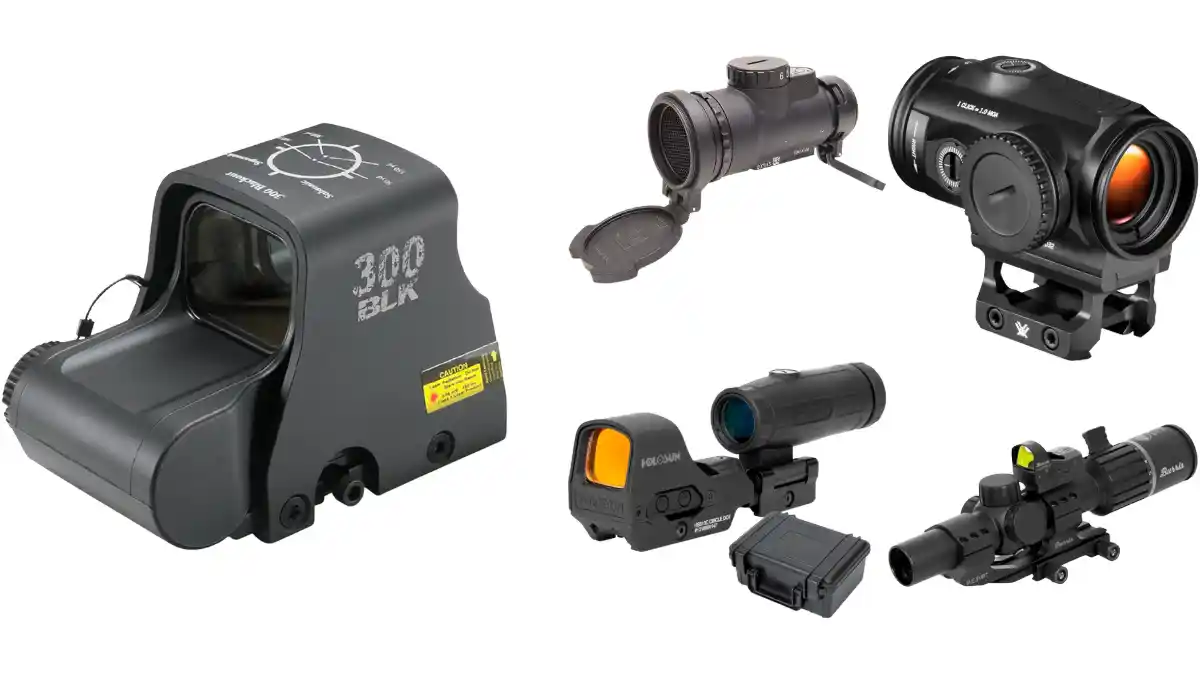
| EOTECH XPS2 | Fast close-range target pickup | Holographic sight | 1x | Home defense, range drills, fast shooting | Premium |
| Trijicon MRO | Rugged red dot use | Reflex red dot | 1x | Defensive rifle, range use, hard-use setup | Mid to premium |
| Vortex Spitfire HD Gen II | Etched reticle clarity | Prism optic | 3x or 5x options | Astigmatism-friendly AR-15 setup | Mid-range |
| HOLOSUN 510C & HM3X Combo | Close-to-mid-range versatility | Reflex sight plus magnifier | 1x and 3x | Range use, flexible carbine setup | Mid-range |
| Burris RT-6 | LPVO flexibility | Low-power variable optic | 1-6x | Range, competition-style shooting, 100 to 300 yards | Budget to mid-range |
How We Chose These AR-15 Optics
We focused on real-world AR-15 use instead of chasing the most expensive glass. A useful optic needs to match the rifle, the distance, the owner’s eyesight, and the role of the build.
We looked at reticle type, battery life, mounting style, durability, eye relief, weight, speed at 1x, magnification value, and warranty support. We also considered how each optic type fits common U.S. use cases such as home defense, range use, training, hunting-style setups where legal and appropriate, and general recreational shooting.
A good optic should make the rifle easier to use. It should not make the rifle awkward, top-heavy, slow, or overbuilt for the task.
Best AR-15 Optics Reviewed
We reviewed the best AR-15 optics. Here are the ones that made it to our list:
1. EOTECH XPS2 Holographic Weapon Sight
Key features: 68 MOA ring • 1 MOA center dot • CR123 battery • compact rail-saving body • non-night-vision model
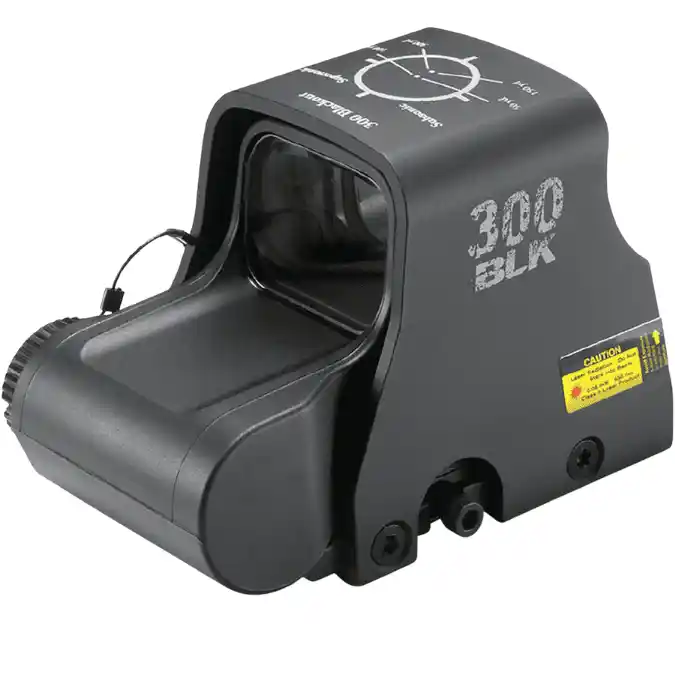
The EOTECH XPS2 is the premium holographic option in this AR-15 optics lineup. It’s ideal for you if want a fast, open sight picture instead of a basic tube-style red dot. The 68 MOA ring helps your eye pick up the reticle quickly, while the 1 MOA center dot keeps it useful for more controlled shots at moderate distance. That makes it a strong fit for range use, training rifles, and compact AR-15 builds where fast target pickup matters.
Its biggest advantage is the holographic reticle system. The XPS2 gives you 20 daylight brightness settings, runs on one CR123 battery, and uses a short body that leaves more rail space for backup irons or a magnifier. EOTECH lists the XPS2 with 0.5 MOA click adjustments, water resistance to 10 feet, and up to 1,000 hours of battery life at a nominal room-temperature setting. User reviews also repeatedly praise the clear sight picture, easy mounting, fast acquisition, rugged feel, and the ability to use it naturally with both eyes open.
The tradeoff is simple: this is not the optic for buyers who care most about battery life, night vision compatibility, or lowest price. Several reviewers liked the performance but still pointed out that Aimpoint-style red dots usually win on battery life. Some users also mentioned possible reticle blur with astigmatism, no included cover, and the need to check mounting tightness. The XPS2 is excellent when you want a durable holographic sight, but it is not the most budget-friendly or battery-efficient AR-15 optic.
Pros and Cons
| Pros | Cons |
|---|---|
| Fast 68 MOA ring helps with quick target acquisition | Shorter battery life than many premium red dots |
| 1 MOA center dot gives better precision than larger dot reticles | No night vision compatibility |
| Compact body leaves room for backup sights or a magnifier | |
| Rugged build with clear glass and easy adjustments |
Best for: AR-15 owners who want a premium holographic sight with a fast reticle, compact footprint, and strong close-to-mid-range usability.
Skip if: You want multi-year battery life, night vision support, or a cheaper red dot-style optic.
2. Trijicon MRO 1x25mm Red Dot
Key features: 2 MOA red dot • 25mm objective lens • CR2032 battery • 7075-T6 aluminum housing • no mount included
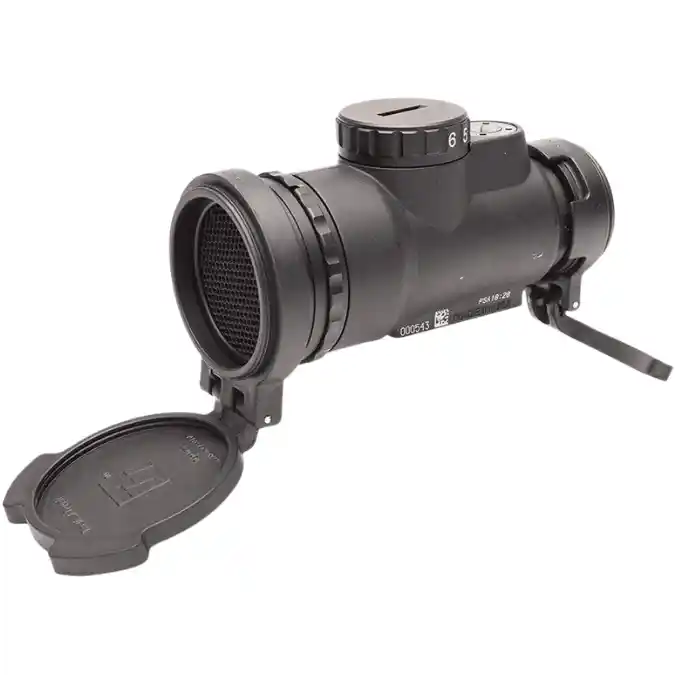
The Trijicon MRO-C-2200017 is the rugged red dot option in this AR-15 optics lineup. It is made for shooters who want a simple 1x optic with a wide viewing window, long battery life, and a tough sealed body. The 2 MOA dot keeps the sight fast up close while still giving enough precision for typical carbine-distance shooting. Trijicon lists it as a sealed reflex sight for rifles, carbines, and shotguns, with a large aperture designed to reduce tube effect and improve situational awareness.
Its biggest strength is durability and practical battery life. The MRO Patrol uses a forged 7075-T6 aluminum housing, 25mm objective lens, ambidextrous brightness control, 0.5 MOA adjustments, waterproof construction, and one CR2032 battery with up to five years of continuous use at the listed day setting. Reviewers also liked the large field of view, lightweight build, crisp dot, strong body, and value compared with some higher-priced duty-style red dots.
The main thing to watch is the optic’s visual character. Some users mention a slight blue or green tint, minor magnification, glare at higher brightness settings, and parallax concerns. A few reviews also question zero consistency or seller condition, so buying from a trusted source matters. This specific version is listed without a mount, which means AR-15 owners need to budget for the right mount separately before installing it.
Pros and Cons
| Pros | Cons |
|---|---|
| Large viewing area helps reduce the tube-like feel | Does not include a mount |
| Long battery life compared with many holographic sights | Some users report tint, glare, or slight magnification |
| Rugged 7075-T6 aluminum housing built for hard use | |
| 2 MOA dot works well for speed and practical accuracy |
Best for: AR-15 owners who want a tough, compact red dot with long battery life and a wider sight picture than many micro red dots.
Skip if: You want a mount included, perfectly neutral glass, or a true holographic-style reticle.
3. Vortex Spitfire HD Gen II Prism Scope
Key features: etched AR-BDC4 reticle • 3x/5x magnification options • 12 brightness settings • multi-height mount • Vortex VIP Warranty
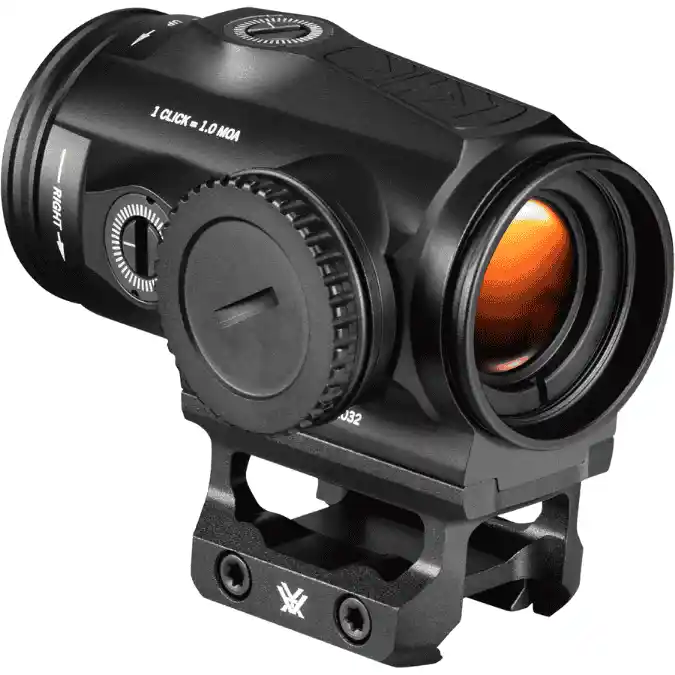
The Vortex Spitfire HD Gen II is the prism-scope pick in this AR-15 optics lineup. It’s perfect for users who want more aiming structure than a plain red dot but do not want the size and weight of a full LPVO. The etched reticle is the main reason to consider it, especially for users who struggle with starburst or dot distortion from astigmatism. Vortex lists the Gen II Spitfire with an HD optical system, multi-height mounting, night-vision-compatible low settings, and waterproof, fogproof, and shockproof construction.
Its biggest advantage is that it stays usable even without illumination. The reticle is etched into the glass, so the optic still gives you a usable aiming reference if the battery dies. The 3x version works better as a lighter general-purpose prism optic, while the 5x version gives more reach with a 25mm objective lens, 2.7-inch eye relief, 1 MOA click adjustments, and an AR-BDC4 reticle. Reviewers liked the clear glass, compact body, reduced weight compared with LPVOs, and the confidence of Vortex’s warranty.
The tradeoff is eye relief. Several users liked the optic overall but said they had to move it far back on the rail or use a cantilever-style setup to get a comfortable sight picture. Some also mentioned that the reticle can feel small, the controls are not as convenient as a simple brightness knob, and the included mount options may not fit every AR-15 setup perfectly. This is a strong pick if you want a compact prism optic, but it is not the same experience as a true red dot with unlimited eye relief.
Pros and Cons
| Pros | Cons |
|---|---|
| Etched reticle remains usable without battery power | Shorter eye relief than red dot sights |
| Good option for shooters with astigmatism | Reticle may feel small to some users |
| Clear glass with compact, lightweight design | |
| Backed by Vortex’s strong VIP warranty |
Best for: AR-15 owners who want a compact prism optic with an etched reticle, usable magnification, and better reticle clarity than many standard red dots.
Skip if: You want unlimited eye relief, a simple dot-only sight, or a lightweight optic for very close-range shooting only.
4. HOLOSUN 510C & HM3X Combo
Key features: multi-reticle system • 3x flip-to-side magnifier • Solar Failsafe • Shake Awake • QD mounts
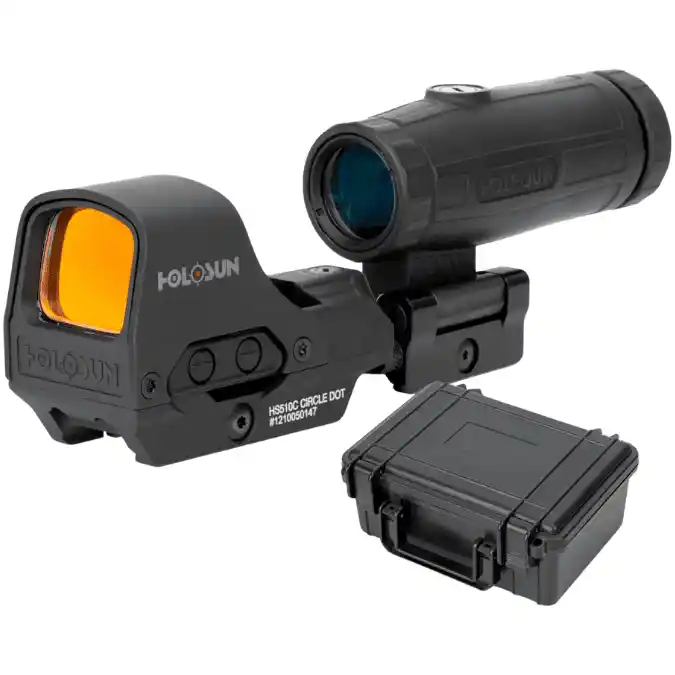
The HOLOSUN 510C & HM3X Combo is the most flexible close-to-mid-range setup in this AR-15 optics list. Instead of buying a red dot and magnifier separately, this package gives you the HS510C open reflex sight with the HM3X 3x flip-to-side magnifier. It works well for shooters who want quick close-range aiming with the option to flip in magnification for better target visibility at distance. Holosun lists the combo with a wide viewing window, Multi-Reticle System, Solar Failsafe, Shake Awake, titanium protective hood, and quick-detach mounting system.
The main advantage is versatility. The HS510C lets users switch between a 2 MOA dot, 65 MOA circle, or circle-dot reticle, while the HM3X adds 3x magnification without forcing the shooter to keep magnification on all the time. Holosun also lists up to 50,000 hours of battery life, 12 brightness settings, IP67 waterproof construction, and 2.75 inches of eye relief on the magnifier. User reviews strongly support the same pattern: buyers liked the easy setup, clear glass, large field of view, fast reticle options, flip-to-side magnifier, and strong value for range use or competition-style shooting.
The downside is weight and control feel. This combo adds more bulk than a standalone red dot, so it may feel like too much on a lightweight AR-15 build. A few users also said the side buttons are not the easiest to feel while looking through the optic. Still, if you want one setup that can handle fast close shots and more controlled mid-range aiming, the 510C and HM3X combo gives you a lot of performance for the money.
Pros and Cons
| Pros | Cons |
|---|---|
| Combines a reflex sight and 3x magnifier in one package | Heavier and bulkier than a standalone red dot |
| Multi-reticle system gives dot, circle, and circle-dot options | Side buttons can be harder to feel during use |
| Flip-to-side magnifier makes close-to-mid-range transitions simple | |
| Strong battery life with Solar Failsafe and Shake Awake |
Best for: AR-15 owners who want one optic setup for close-range speed and occasional 3x magnification without building a separate red dot and magnifier combo.
Skip if: You want the lightest possible setup or only shoot at close range where a standalone red dot is enough.
5. Burris RT-6 1-6x24mm LPVO
Key features: 1-6x magnification • true 1x setting • illuminated Ballistic AR reticle • integrated throw lever • 30mm tube
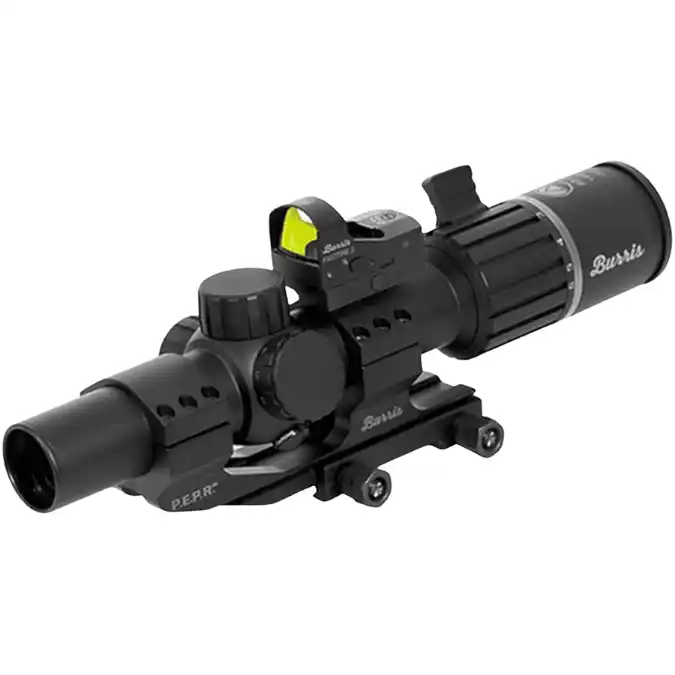
The Burris RT-6 is the LPVO pick in this AR-15 optics lineup. It is made for shooters who want one optic that can handle fast close-range aiming and more controlled shots at distance. Burris positions the RT-6 around competition and tactical-style shooting, with a true 1x low end for both-eyes-open engagement and a 6x top end for longer shots. The Ballistic AR reticle also gives holdover references for distance work instead of leaving you with a plain dot.
Its biggest strength is value. You get a 1-6x magnification range, illuminated reticle, compact scope body, and a built-in throw lever that helps move quickly from 1x to 6x. Burris also lists the RT-6 as shorter than many 1-4x scopes, which helps keep handling quicker on an AR-15. User reviews mostly back that up, with buyers praising the clear 1x view, easy zeroing, close-quarter speed, solid build, and strong price-to-performance for range use, competition, and sub-200-yard setups.
The tradeoff is weight and brightness. Several users liked the scope but said it feels heavier than expected, especially if buying the tactical kit with the FastFire red dot and mount. Some also mentioned that the illumination is not as bright as higher-end LPVOs, the eye box can feel particular, and lens caps may not be included depending on the package. The RT-6 is a smart pick if you want a practical LPVO without jumping into premium pricing, but it is not the lightest or brightest scope in the category.
Pros and cons
| Pros | Cons |
|---|---|
| True 1x setting works well for close-range aiming | Heavier than some red dot or prism options |
| 1-6x range adds more distance flexibility than fixed 1x optics | Illumination is not as bright as higher-end LPVOs |
| Integrated throw lever helps with fast magnification changes | |
| Strong value for AR-15 range, competition, and tactical-style use |
Best for: AR-15 owners who want an affordable LPVO for close-to-mid-range shooting, 3-Gun-style use, or one optic that can do more than a simple red dot.
Skip if: You want the lightest possible setup, daylight-bright premium illumination, or a simple optic with unlimited eye relief.
AR-15 Optics Buying Checklist
Before choosing an optic, match the sight to the rifle’s real purpose. This prevents overspending and avoids the common mistake of putting a heavy optic on a rifle meant to stay fast.
Use this simple checklist before buying:
- Choose red dot or holographic for mostly close-range use
- Choose prism or LPVO if you need more aiming structure or distance help
- Check optic weight, mount height, battery life, reticle type, and warranty
- Avoid unknown optics for defensive rifles
- Confirm the optic and mount fit your rail setup before ordering
👉 Once the optic is mounted and zeroed, the best AR-15 dry fire training systems build smoother target transitions, sight tracking, and trigger control without burning through range ammo.
Also think about backup sights. A reliable optic is still an electronic or optical device. If the rifle has a defensive role, backup irons or a proven secondary sighting plan can add confidence.
AR-15 Optic Types Explained
Here’s the difference between major types of AR-15 optics.
Red Dot Sights
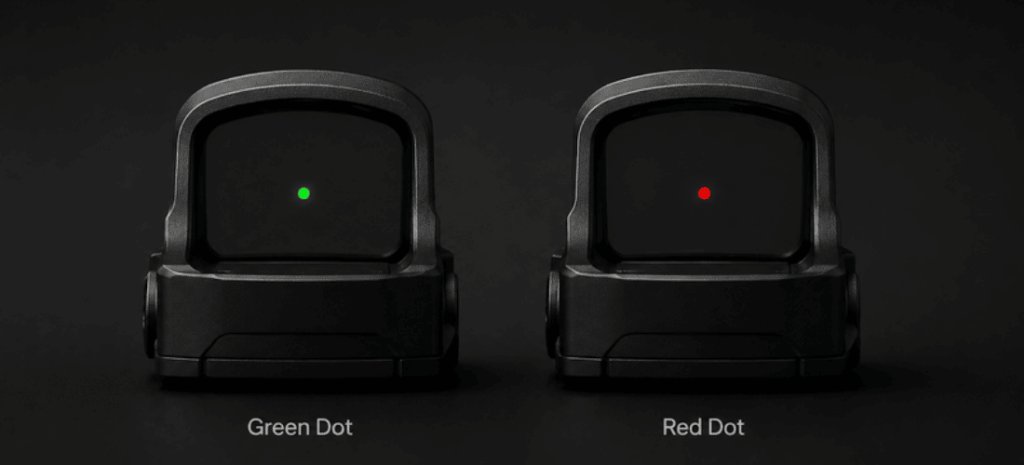
A red dot sight is usually the cleanest choice for close-range AR-15 shooting. It gives you a simple aiming point, fast sight picture, and low weight. Most quality red dots also offer long battery life, which matters if the rifle is kept ready for defensive use.
Red dots work especially well for home defense and range use inside common carbine distances. They are not ideal when you need target detail at longer distances, though. Also, some users with astigmatism see the dot as a starburst or smear instead of a crisp point.
Aimpoint, Sig Sauer, Holosun, Trijicon, and Primary Arms are common names in this category. For example, Aimpoint lists the PRO with a 2 MOA dot and 30,000 hours of constant operation on one battery. Sig Sauer lists the ROMEO5 Gen II with MOTAC motion activation and up to 40,000 hours of runtime under standard usage.
👉 The same speed-first logic also applies to AK optics, which is why our review of the best red dot sights for AK-47 is a helpful side read for those of you comparing dot size, battery life, and ruggedness.
Holographic Sights
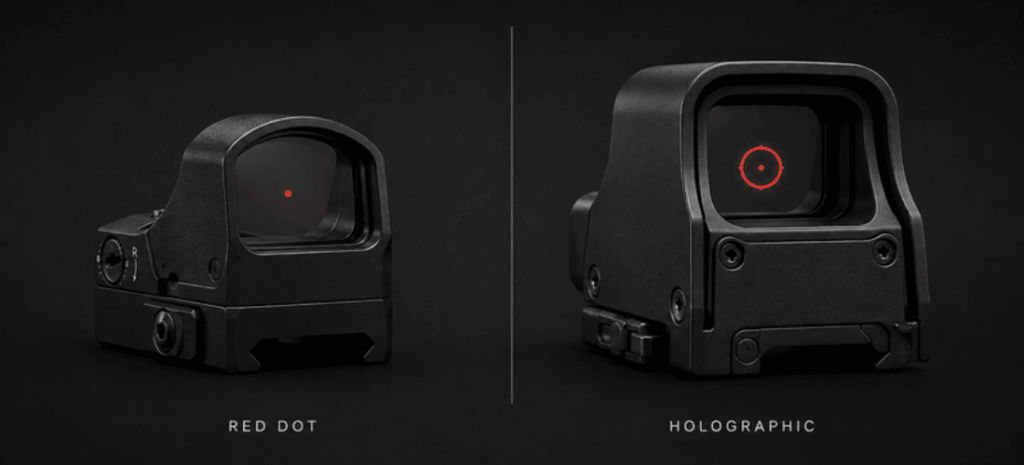
A holographic sight gives a different sight picture than a standard red dot. EOTECH-style reticles often use a large ring with a fine center dot, which helps many users pick up the reticle quickly at close range.
This makes holographic sights strong for speed. They are also useful when a user wants a bold reticle that stands out more than a small dot. The tradeoff is battery life. Many holographic sights do not match the multi-year runtime of premium red dots.
The EOTECH XPS2 is a strong example. Its common reticle setup uses a 68 MOA ring with a 1 MOA center dot, which supports fast target acquisition with a finer aiming point in the middle.
Prism Optics
Prism optics use an etched reticle, which is the main reason many AR-15 owners consider them. If a normal red dot looks distorted because of astigmatism, a prism optic can look cleaner because the reticle is physically etched into the glass.
Prism optics also stay usable without illumination. That gives them an advantage over battery-only aiming systems. However, they usually have more limited eye relief than red dots, so head position matters more.
Vortex describes the Spitfire HD Gen II as a prism scope with an etched-glass reticle that remains visible without illumination. Primary Arms also positions its MicroPrism optics as compact options with illuminated etched reticles and clear sight pictures for users with astigmatism.
LPVOs
An LPVO, or low-power variable optic, gives more distance flexibility than a fixed 1x optic. A 1-6x scope can work at close range on 1x, then dial up for better visibility at 100, 200, or 300 yards.
The downside is size and weight. LPVOs also require more attention to eye relief and eye box than red dot sights. Still, for a general-purpose AR-15, an LPVO can be one of the most useful optic choices.
The Burris RT-6 is a good example of this category. Burris lists it with a true 1x setting for both-eyes-open engagement, 6x zoom, and a Ballistic AR reticle with trajectory compensation out to 600 yards.
👉 If you want to see where LPVOs make even more sense, our LPVO-ready .308 AR setup breakdown shows why heavier AR platforms often benefit from magnified glass.
Red Dot vs Holographic vs Prism vs LPVO
The right optic depends on how the AR-15 will actually be used. A lightweight home defense rifle usually favors a red dot or holographic sight. A range rifle that sees 100 to 300 yards may benefit from a prism optic, magnifier combo, or LPVO.
| Optic Type | Best For | Main Strength | Main Tradeoff |
|---|---|---|---|
| Red dot | Close-range speed | Lightweight, simple, long battery life | No magnification |
| Holographic | Fast reticle pickup | Large ring reticle and quick sight picture | Shorter battery life |
| Prism optic | Reticle clarity | Etched reticle, often better for astigmatism | Limited eye relief |
| LPVO | Distance flexibility | 1x to magnified use in one optic | More weight and eye box sensitivity |
| Red dot plus magnifier | Flexible range use | Fast 1x with optional 3x | More bulk than a red dot alone |
How Much Should You Spend on an AR-15 Optic?
The best ar-15 optics are not always the most expensive ones. A casual range rifle can run well with a proven budget red dot. A defensive rifle deserves stronger durability, better battery life, and a mount that stays locked in place.
Budget AR-15 Optics
Budget AR-15 optics make sense for first builds, casual range rifles, and owners who do not need duty-grade performance. The key is to stay with proven brands and avoid unknown optics that look good online but fail under recoil, weather, or regular use.
Good budget optic categories include simple red dots, entry-level prism optics, and lower-cost LPVOs. Sig Sauer, Primary Arms, Holosun, Vortex, and Burris all have options that often make more sense than gambling on no-name sights.
Mid-Range AR-15 Optics
The mid-range tier is where most AR-15 owners should start looking seriously. You usually get better glass, stronger housings, better electronics, more useful reticles, and better warranty support.
This range works well for home defense, consistent range use, and general-purpose AR-15 builds. It is also where red dot and magnifier combos become attractive because they give you both speed and some reach.
Premium AR-15 Optics
Premium AR-15 optics are for owners who want durability, cleaner glass, stronger track records, night vision options, or a hard-use optic they can trust for years. Aimpoint, EOTECH, and Trijicon are major names here.
The premium tier is not mandatory for every rifle. However, it makes sense for a serious defensive setup, high-round-count training rifle, or any AR-15 where failure would be more than an inconvenience.
What Optic Should You Put on an AR-15?
For home defense, a red dot or holographic sight usually makes the most sense. Both are fast, simple, and easier to use in close-range scenarios than a magnified scope. A simple reticle also reduces visual clutter under pressure.
👉 If your build is shorter than a standard rifle, our extensive AR pistol guide explains barrel length, setup choices, and why lightweight optics usually make more sense.
For range use, the decision depends on distance. A red dot is enough for close-range drills and casual shooting. A prism optic, LPVO, or red dot with magnifier makes more sense when targets move farther out.
For an AR pistol, weight matters even more. A compact red dot or small holographic sight usually fits better than a full LPVO. A heavy optic can make a short build feel unbalanced.
For astigmatism, a prism optic is often worth considering first. An etched reticle can look cleaner than a projected dot, and it still works when illumination is off. That is why prism optics have become popular among AR-15 users who struggle with dot distortion.
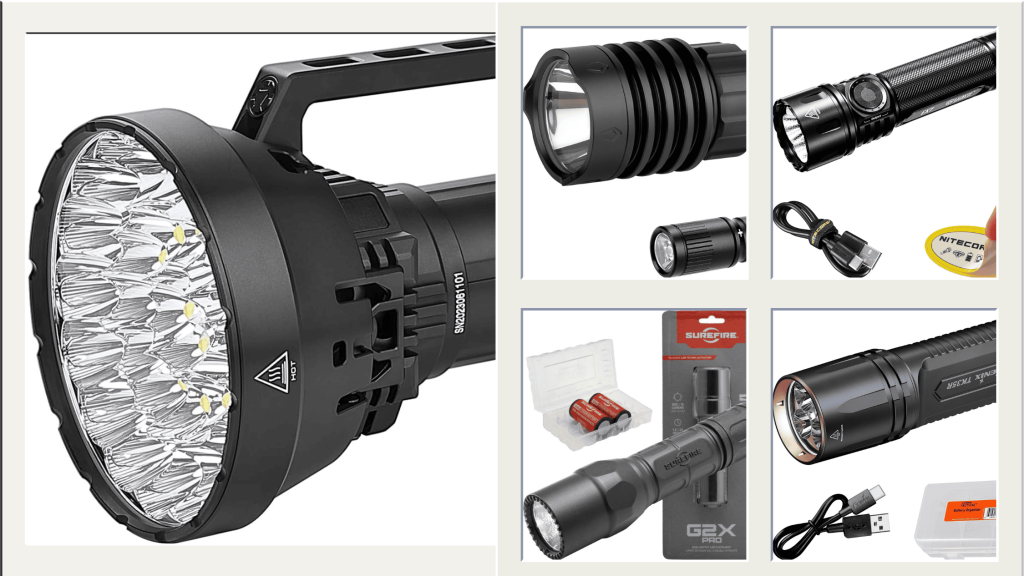
👉 A clear optic helps you aim, but a proper light helps you identify what you are looking at, so our review of the best tactical flashlights for low light conditions is worth checking for home-defense setups.
Final Verdict
The best ar-15 optics depend on role, not hype. A red dot is still the easiest answer for close-range speed. A holographic sight gives a larger, faster reticle. A prism optic helps users who want an etched reticle or better clarity with astigmatism. An LPVO is the better choice when the rifle needs to stretch beyond close-range work.
For this post, the five selected optics cover the most useful paths: EOTECH XPS2 for holographic speed, Trijicon MRO for rugged red dot use, Vortex Spitfire HD Gen II for prism clarity, HOLOSUN 510C & HM3X for flexible close-to-mid-range shooting, and Burris RT-6 for LPVO value.
The smart move is to choose the optic that matches how you shoot most often. That is how you get real value instead of just adding expensive glass to an AR-15.
👉 For more optic-specific testing and brand breakdowns, keep the Optics Reviews hub bookmarked, then think of that next upgrade.
And keep following Gunners’ Review for more useful hunting gear reviews!
FAQs
What are the best optics for an AR-15?
The best AR-15 optics include red dots, holographic sights, prism optics, LPVOs, and red dot magnifier combos. Red dots are best for speed, LPVOs are better for distance flexibility, and prism optics are useful for etched-reticle clarity.
What optic should I put on my AR-15?
For close-range use, put a red dot or holographic sight on your AR-15. For 100 to 300 yards, consider a prism optic, LPVO, or red dot with a magnifier. For a lightweight build, keep the optic simple.
What is the best AR-15 optic for 200 yards?
A 1–6x LPVO is the 200-yard sweet spot: fast at 1x, sharper at 6x, and more forgiving than a bare red dot.
Is a red dot or LPVO better for an AR-15?
A red dot is better for close-range speed. An LPVO is better when you need magnification for distance, target identification, or more precise aiming at 100 yards and beyond.
Which brands make good AR-15 optics?
Aimpoint, Sig Sauer, EOTECH, Trijicon, Primary Arms, Holosun, Vortex, and Burris are all major names in AR-15 sight options. The right brand depends on budget, optic type, battery needs, reticle preference, and intended use.