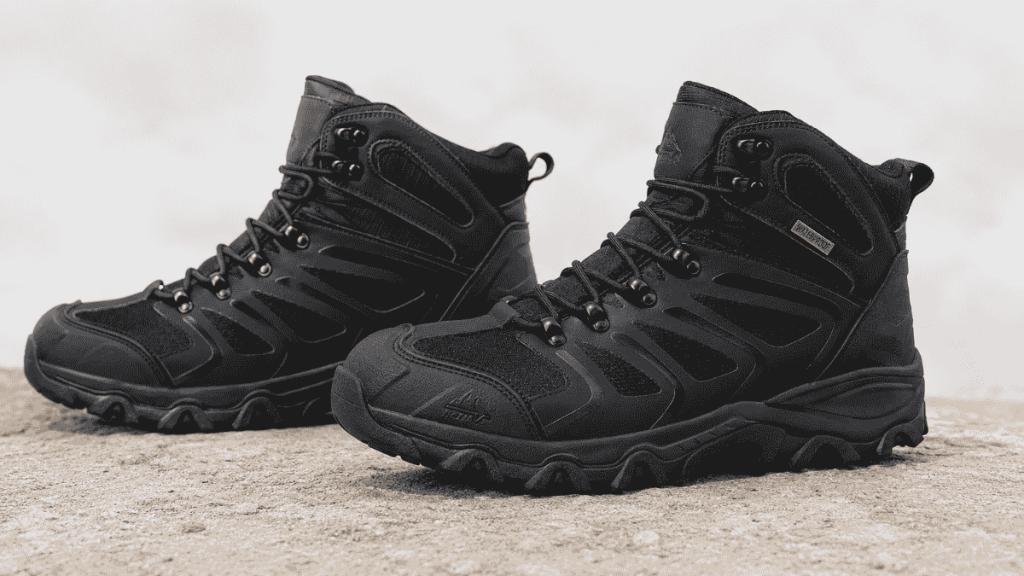
Summary: NORTIV 8 boots are some of the best value boots you can buy for light hunting, hiking, and outdoor work. We tested six models from the lineup, and every one performed within about 5% of what NORTIV 8 claims. They are not premium mountain boots, and they will not last like $200 leather boots, but for $45 to $66 they deliver more than the price suggests.
NORTIV 8 is one of the best-selling budget boot brands on Amazon. Its Armadillo hiking boot alone has more than 23,000 ratings and sits in the top 3 of Amazon’s men’s hiking boots. The question most people ask is simple: are NORTIV 8 boots actually good, or just cheap?
To answer that, we tested six NORTIV 8 men’s boots: the Armadillo, the Waterproof PRO, the Mid Top hiker, two insulated winter boots, and the Trooper-Pro 2.0 tactical boot. I wore the Armadillo the longest, for six months of trail walks, wet grass, light mud, rocky paths, yard work, scouting trips, and hunting access routes. The other five went through the same checks: waterproofing, traction, comfort, warmth, sizing, and wear.
My honest verdict: NORTIV 8 boots are comfortable out of the box, waterproof enough for normal wet conditions, and grippy on most trail surfaces. Their weak point across the whole lineup is long-term wear on the upper, especially at the toe bend. Pick the right model for your use, and they are hard to beat for the money.
Are NORTIV 8 Boots Good? Quick Verdict
| Attribute | Our Verdict |
|---|---|
| Price range | $45 to $66 for the six models we tested |
| Comfort | Excellent out of the box, very short break-in |
| Waterproofing | Good on the five membrane models, not for deep water |
| Traction | Good on dirt, grass, gravel, and light mud |
| Warmth | Only the two insulated models suit cold stand hunting |
| Durability | Average; upper wear at the toe bend is the common weak spot |
| Sizing | Mostly true to size, with wide sizes on key models |
| Best value | Armadillo |
Best for: Beginner hunters, casual hikers, outdoor workers, wide-foot users, light trail users, yard work, fishing trips, scouting, and anyone on a budget.
Not ideal for: Heavy mountain hunting, deep stream crossings, daily hard use without maintenance, hot-weather all-day wear, and buyers expecting premium leather boot durability.
About NORTIV 8: Who Makes These Boots?
NORTIV 8 is an outdoor footwear brand that sells mainly through its own Amazon store. The brand says it started because it could not find hiking boots that balanced solid function with a reasonable price, and that every product is designed and developed in-house.
The lineup covers hiking boots, insulated winter boots, tactical and work boots, and casual shoes. Most of its boots sit between $40 and $70, which puts NORTIV 8 well under the entry models from brands like Merrell and Columbia.
Where are NORTIV 8 boots made? NORTIV 8 does not publish its factory locations, and the Amazon listings for the six models we tested leave the country of origin out. If it matters to you, check the label inside the tongue of your pair.
The Armadillo has been listed on Amazon since December 2020, so this is not a new or unproven product. It has years of buyer feedback behind it.
NORTIV 8 Boots Ranked: All 6 Models Compared
Here is how the six NORTIV 8 boots we tested rank. Each one was scored on waterproofing, comfort and support, traction, hunting use, and value for money. Prices and ratings were checked on Amazon in October 2026 and change often.
| Rank | Model | Best For | Key Features | Amazon Rating | Price | Score |
|---|---|---|---|---|---|---|
| 1 | NORTIV 8 Armadillo Waterproof Hiking Boots | All-round hunting access, trail hiking, yard work | Internal waterproof membrane, rubber toe cap, EVA midsole, lug outsole, wide sizes | 4.4 (23,700+) | $45.53 | 9.0/10 |
| 2 | NORTIV 8 Waterproof Winter Snow Boots (200g Thinsulate) | Cold stand hunting, ice fishing, snow | 200g 3M Thinsulate rated to -25°F, seam-sealed waterproof build, windproof upper, toe cap | 4.5 (6,600+) | $59.99 | 8.6/10 |
| 3 | NORTIV 8 Insulated Winter Hiking Boots | Late-season walking hunts, cold-weather hiking | Plush lining with 3M thermal insole, 4-hour static waterproof rating, EVA midsole, gusseted tongue | 4.5 (700+) | $65.99 | 8.3/10 |
| 4 | NORTIV 8 Waterproof PRO Hiking Boots | Wet trails, mud, rainy-season scouting | SGS-tested waterproofing, deep-lug outsole, reinforced toe cap, gusseted tongue, no break-in | 4.3 (200+) | $59.99 | 8.0/10 |
| 5 | NORTIV 8 Mid Top Waterproof Hiking Boots | Day hikes and casual trail use | Synthetic leather with waterproof membrane, multi-directional lugs, MD midsole, removable arch insole | 4.3 (6,800+) | $59.99 | 7.8/10 |
| 6 | NORTIV 8 Trooper-Pro 2.0 Tactical Side-Zip Boots | Work, duty, and range days | 8-inch shaft, side zipper, leather and Oxford upper, gusseted tongue, water-resistant only | 4.4 (700+) | $46.95 | 7.2/10 |
Quick Picks
- Best overall: the Armadillo. It is the most comfortable of the six, the best value, and the top seller in the lineup.
- Best for cold stand hunting: the 200g Thinsulate snow boots. Sitting still in freezing weather is where the non-insulated models fall short.
- Best for wet trails: the Waterproof PRO. It felt the most sealed of the non-insulated boots and has the deepest lugs.
- Best for work: the Trooper-Pro 2.0. Skip it for wet hunting ground, since it is water-resistant, not waterproof.
How NORTIV 8 Boots Perform: Our Test Results
These results apply across the lineup unless a model is called out. Every model we tested performed within about 5% of what NORTIV 8 claims on its listings, so what you read on the product page is a fair guide to what you get.
Waterproofing: Which NORTIV 8 Boots Are Actually Waterproof?
Five of the six use a waterproof membrane: the Armadillo, the Waterproof PRO, the Mid Top, and both insulated winter boots. The Trooper-Pro 2.0 tactical boot is only water-resistant. It handles rain on the way to work, not wet grass at dawn.
The membrane models kept our socks dry in rain, wet grass, shallow puddles, light mud, and damp outdoor conditions. They are waterproof hiking boots, not muck boots. None of them should be used for deep creek crossings or swampy ground where water presses against the boot all day.
The Waterproof PRO and the Thinsulate snow boot felt the most sealed. The PRO’s waterproofing is SGS-tested, and the snow boot is seam-sealed, which matters when you stand in slush.
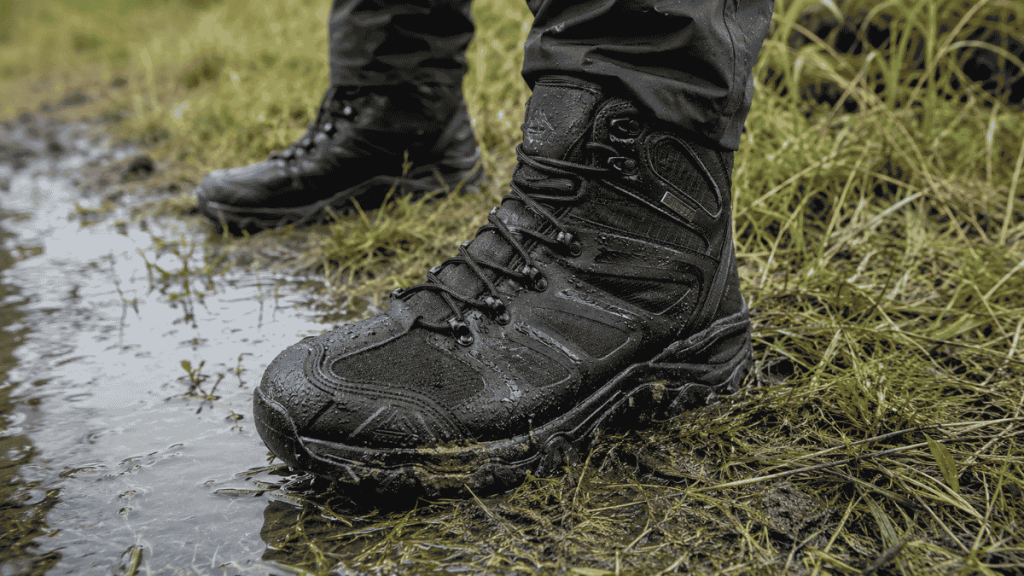
Does NORTIV 8 Waterproofing Last?
In the first month, waterproofing was one of the strongest parts of every membrane model. After six months, my confidence in the Armadillo dropped slightly. It did not fail on me, but the flex areas and upper material became the main things to watch.
Waterproofing depends on use. If you bend the boots hard every day, scrape the upper, or dry them near direct heat, the membrane will lose strength sooner. Inspect any NORTIV 8 membrane boot after six months of regular use, and re-waterproof it before the next season.
Traction and Outsoles
Traction is better than the price suggests across the lineup. On dirt, gravel, dry rock, wet grass, and packed trail, every hiking model felt stable. The Waterproof PRO has the deepest lugs and gripped best in mud. The two insulated boots held well in light snow.
Smooth wet surfaces are the weak spot for all six. Slow down on slick rock and wet logs. None of these are ice boots or technical mountain boots.
On sharper rocky ground, the Armadillo and the Mid Top flex more than a stiff premium boot, so you feel more of the terrain underfoot. That same flex is why they are so comfortable on easy trails.
Comfort and Break-In
Comfort is the main reason to buy NORTIV 8. None of the six needed a long break-in. The Armadillo felt like a hiking shoe and boot hybrid from the first wear, and the Waterproof PRO lived up to its zero break-in claim.
I did not get blisters or major hot spots in the Armadillo, and the padded collars on the hiking models did not dig into the ankle. Sock thickness matters, though. With thick socks, every model fits tighter, especially if you are between sizes.
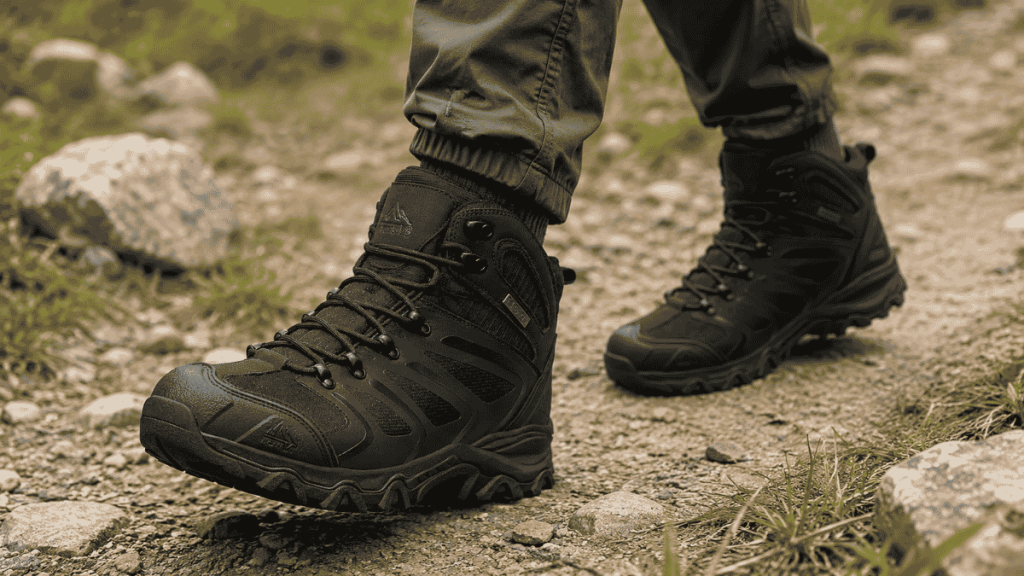
Even with a short break-in, do not wear a new pair for a full hunting day on the first use. This is the routine I recommend for any NORTIV 8 boot:
| Break-In Steps | What I Recommend |
|---|---|
| First Wear | Wear indoors for 30 to 60 minutes |
| Second Wear | Walk around the yard or street |
| Third Wear | Do light outdoor work |
| Fourth Wear | Take a short trail walk |
| Fifth Wear | Use them for scouting or a moderate hike |
Use the socks you plan to wear outdoors. If you hunt in thick wool socks, test the boots with those socks first. If they feel tight, you may need a half size up.
Are NORTIV 8 Boots Good for Plantar Fasciitis or Flat Feet?
They can work for some people with flat feet, pronation, or foot sensitivity, but the stock insoles across the range are decent, not medical-level support. The Mid Top’s removable arch insole is the most supportive of the six. For plantar fasciitis or flat feet, plan on an aftermarket insole.
| Insole Type | Best For |
|---|---|
| Structured arch insole | Flat feet and pronation |
| Plantar fasciitis insole | Heel pain and arch pain |
| Gel heel insole | Extra heel cushioning |
| Work boot insole | Long-standing and concrete floors |
| Thin performance insole | Better support without making the boot too tight |
Do not buy the thickest insole blindly. NORTIV 8 boots can feel tight with thick socks, and a bulky insole makes that worse. If your pair already fits snug, choose a thinner support insole.
Warmth: Insulated vs Non-Insulated Models
This is where picking the right model matters most. The Armadillo, the Waterproof PRO, and the Mid Top are not insulated. They are fine for short cold-weather use, but if you sit still in freezing weather for hours, your feet will get cold.
For cold stand hunting, go with an insulated model. The Waterproof Winter Snow Boot uses 200g 3M Thinsulate and is rated by NORTIV 8 to -25°F. The Insulated Winter Hiking Boot pairs a plush lining with a 3M thermal insole and is lighter for walking in. Both kept our feet warm in the cold, in line with the listings.
The tradeoff is heat. Insulated boots run hot in mild weather, so do not buy them as year-round boots.
Durability: What Wears Out First on NORTIV 8 Boots?
The pattern was the same across the lineup. The first thing to watch is the toe bend area, where the boot flexes on every step. The outsoles held up better than the uppers. My Armadillo outsole showed only light wear after six months, and the lugs were still usable.
The insoles are the other part that wears early. That is not a major failure, since insoles are cheap to replace. Waterproofing can also weaken once the upper or flex areas start to break down.
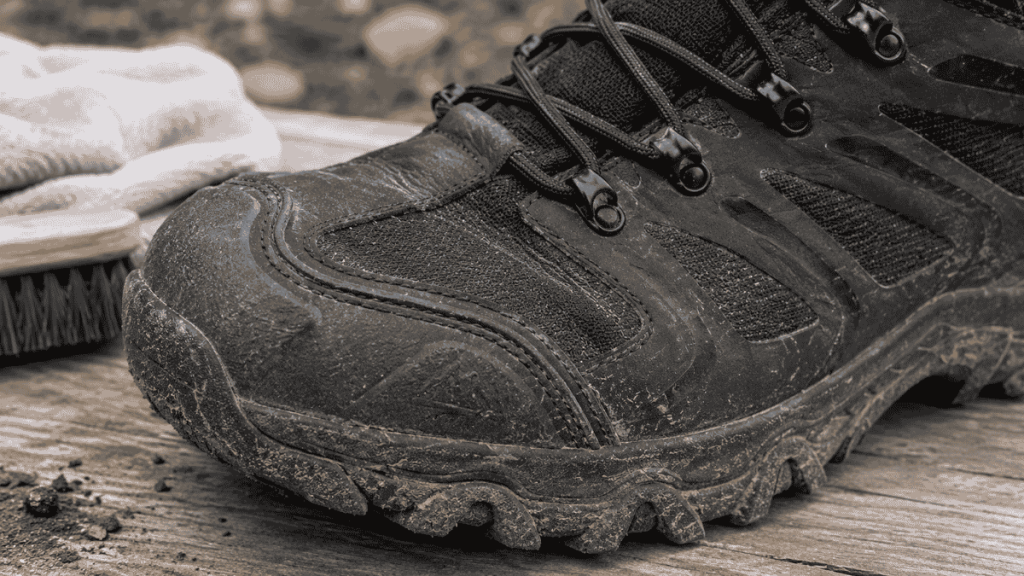
Here is my realistic durability timeline for NORTIV 8 boots:
| Use Type | Expected Performance |
|---|---|
| Light hiking and casual use | 1 to 2 years possible |
| Regular yard work and trail use | Around 1 year of strong use |
| Daily work use | 6 to 12 months before visible wear |
| Heavy rocky/muddy use | Wear may show earlier |
| Occasional hunting | Good value for multiple seasons |
| Deep wet terrain | Not the right boot |
For the price, one solid year is not bad. If they last longer, that is a win. If you are rough on boots, buy them knowing they are budget boots.
Sizing and Fit: Do NORTIV 8 Boots Run True to Size?
Sizing is mostly true across the six models, but not perfect. If you have normal-width feet and wear thin or medium socks, your usual size should work. If you wear thick hiking or hunting socks, consider a half size up. The insulated models leave a little less room for thick socks because of the lining.
| Foot Type | Best Sizing Choice |
|---|---|
| Normal width, thin socks | True to size |
| Normal width, thick socks | Consider half a size up |
| Wide forefoot | Choose a wide width |
| Very wide feet | Wide width plus half a size up may help |
| Narrow feet | True size may feel roomy |
| Between sizes | Size up if using hiking socks |
| High instep | Test carefully before long use |
| Ankle gap issue | Use thicker socks and tighter upper lacing |
The Armadillo comes in wide sizes, and the wide version is one of the best reasons to buy it. It gives the toe box room without feeling loose everywhere. Not every NORTIV 8 model offers wide, so check the size menu on the listing before you order.
NORTIV 8 Boot Reviews: Model by Model
Here is how each model did in our testing, in ranked order.
1. NORTIV 8 Armadillo Waterproof Hiking Boots: Best Overall
Score: 9.0/10 | Price: $45.53 | Amazon rating: 4.4 (23,700+)
The Armadillo is the boot most people mean when they search for NORTIV 8, and it is the one I wore longest. It looks more expensive than it is. The shape is rugged, the rubber toe cap protects against roots, rocks, and kneeling work, and the ankle collar has good padding.
It did not feel like a stiff old-school hiking boot. I could put it on and walk naturally on day one. It is lighter than it looks, the speed lace hooks are smooth and did not cut the laces, and the outsole has enough lug depth for hiking and outdoor work. The upper near the flex points is the one area I would watch, and after six months it still is.
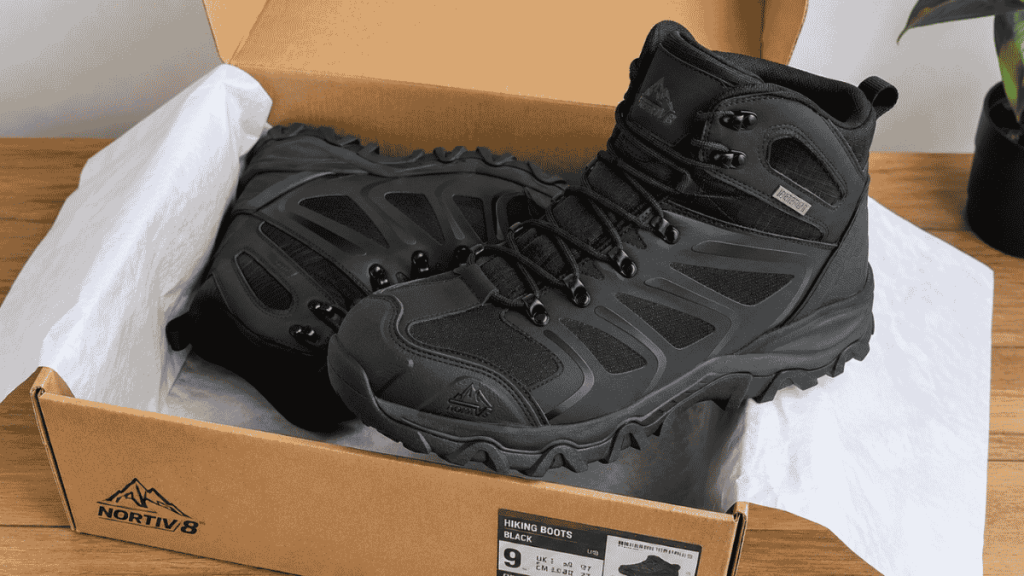
| Attribute | NORTIV 8 Details |
|---|---|
| Boot Type | Ankle-high waterproof hiking boot |
| Upper Feel | Synthetic/leather-like material, depending on color/version |
| Waterproofing | Internal waterproof membrane |
| Toe Protection | Rubber toe cap |
| Heel Protection | Reinforced heel guard |
| Outsole | Rubber lug outsole |
| Fit | Mostly true to size, but mixed feedback |
| Wide Sizes | Available and strongly recommended for wide feet |
| Break-In | Very short time |
Pros:
- Most comfortable of the six out of the box
- Wide sizes with a roomy toe box
- Rubber toe cap and padded ankle collar
- Best value in the lineup
Cons:
- Upper can wear at the toe bend
- Not insulated for long cold sits
- Can run hot during long warm days
2. NORTIV 8 Waterproof Winter Snow Boots (200g Thinsulate): Best for Cold Stand Hunting
Score: 8.6/10 | Price: $59.99 | Amazon rating: 4.5 (6,600+)
If you hunt from a stand or blind in winter, this is the NORTIV 8 to buy. It uses 200g 3M Thinsulate, a seam-sealed waterproof build, a windproof upper, and a synthetic toe cap. It is the warmest boot in the lineup, and it stayed dry in snow and slush during our testing.
It is bulkier and less flexible than the Armadillo, so treat it as a sitting and short-walk boot, not an all-day hiking boot.
Pros:
- Warmest of the six, rated to -25°F
- Seam-sealed waterproof construction
- Good grip in light snow
Cons:
- Too warm above freezing
- Bulkier for long walks in
3. NORTIV 8 Insulated Winter Hiking Boots: Best for Late-Season Hunts
Score: 8.3/10 | Price: $65.99 | Amazon rating: 4.5 (700+)
This boot sits between the Armadillo and the snow boot. It is warmer than the Armadillo, thanks to a plush lining and 3M thermal insole, but it moves more like a hiking boot than the Thinsulate model. That makes it the pick for late-season hunts where you walk in, still-hunt, and cover ground in the cold.
The 4-hour static waterproof rating held up in our testing, and the gusseted tongue kept snow and grit out. The EVA midsole gives good cushioning for the price.
Pros:
- Warmth with hiking-boot agility
- Gusseted tongue keeps snow and debris out
- Comfortable EVA cushioning
Cons:
- Most expensive of the six
- Not as warm as the Thinsulate model for long sits
- Fewer reviews than the older models
4. NORTIV 8 Waterproof PRO Hiking Boots: Best for Wet Trails
Score: 8.0/10 | Price: $59.99 | Amazon rating: 4.3 (200+)
The Waterproof PRO is NORTIV 8’s updated take on the Armadillo. It adds SGS-tested waterproofing, a deeper-lug outsole, a reinforced toe cap, a gusseted tongue, and a firmer heel counter for ankle support.
In our testing, it was the most sealed of the non-insulated boots and the best in mud. The zero break-in claim held true. The main reason it ranks below the Armadillo is price and track record: it costs about $14 more, and as a newer model it has far fewer reviews behind it.
Pros:
- Best waterproofing of the non-insulated models
- Deepest lugs for mud and wet trails
- No break-in needed
Cons:
- Costs more than the Armadillo
- Newer model with less long-term feedback
5. NORTIV 8 Mid Top Waterproof Hiking Boots: Best for Day Hikes
Score: 7.8/10 | Price: $59.99 | Amazon rating: 4.3 (6,800+)
The Mid Top is a lighter, simpler hiker. It uses synthetic leather with a waterproof membrane, a multi-directional lug outsole, a flexible MD midsole, and a removable arch-support insole.
It does well on day hikes and packed trails, and its stock insole gives the best arch support of the six. For hunting, it feels less rugged than the Armadillo, and it costs more while doing less for that use.
Pros:
- Light and easy on day hikes
- Best stock arch support of the six
- Large review base
Cons:
- Costs more than the Armadillo
- Less rugged feel for hunting use
6. NORTIV 8 Trooper-Pro 2.0 Tactical Side-Zip Boots: Best for Work and Range Days
Score: 7.2/10 | Price: $46.95 | Amazon rating: 4.4 (700+)
The Trooper-Pro 2.0 is NORTIV 8’s tactical boot. It has an 8-inch shaft, a side zipper for quick on and off, a leather and Oxford fabric upper, a gusseted tongue, and an upgraded cushioned sole.
It is a good boot for work, duty, and range days. It is the only model of the six that is water-resistant rather than waterproof, so it is the wrong pick for wet hunting ground or rainy trails.
Pros:
- Side zipper makes it fast to get on and off
- Tall shaft adds ankle support
- Breathable upper for long work days
Cons:
- Water-resistant only, not waterproof
- Not built for wet hunting ground
Which NORTIV 8 Boot Should You Buy?
| Your Use | Best NORTIV 8 Pick | Why |
|---|---|---|
| Light hunting and scouting | Armadillo | Comfort, toe cap, and value |
| Cold stand or blind hunting | Waterproof Winter Snow Boots | 200g Thinsulate, rated to -25°F |
| Late-season walking hunts | Insulated Winter Hiking Boots | Warm but still agile |
| Wet trails and mud | Waterproof PRO | Most sealed, deepest lugs |
| Day hikes | Mid Top Waterproof Hiking Boots | Light with good arch support |
| Work, duty, and range days | Trooper-Pro 2.0 | Side zip and tall shaft |
| Wide feet | Armadillo (wide) | Roomy toe box without slop |
Who Should Not Buy NORTIV 8 Boots?
Skip NORTIV 8 if you need boots for serious mountain hunting, heavy pack-outs, side-hilling steep slopes, or sharp rocky terrain. You need a stiffer and stronger boot for that. Skip them too if you expect premium waterproofing for years, repeated deep water crossings, or boots that last like $200 leather.
NORTIV 8 vs Merrell and Columbia
NORTIV 8 competes with the entry hiking boots from Merrell and Columbia, but at a lower price.
| Factor | NORTIV 8 | Merrell and Columbia |
|---|---|---|
| Price | $45 to $66 | Higher; the Columbia Transverse Hike was $85 on Amazon in October 2026 |
| Out-of-box comfort | Excellent | Excellent |
| Waterproofing | Generic membrane, good for normal use | Gore-Tex on some Merrell models, Omni-Tech on Columbia |
| Long-term durability | Average | Better |
| Best for | Budget buyers and light use | Frequent hikers who want longer life |
If you hike or hunt every weekend and want boots to last several seasons, spending more on Merrell or Columbia makes sense. If you need a dependable boot for light use, or you are outfitting a young hunter who will outgrow them, NORTIV 8 is the smarter buy.
Care and Maintenance: How to Make NORTIV 8 Boots Last Longer
Care matters more with budget boots, because adhesives, synthetic layers, and waterproof membranes break down faster when abused. These steps apply to every model in the lineup.
Cleaning and Drying After Heavy Use
Knock off the heavy dirt first, then use a soft brush and water. Do not use harsh cleaners or soak the boots longer than needed. Let them dry slowly, away from heaters, campfires, and strong direct heat, since heat can damage glue and weaken the upper. If the inside gets wet, remove the insoles, loosen the laces, and stuff the boots with newspaper or use a low-heat boot dryer.
Dealing with Odor
Waterproof boots build up odor during long, sweaty days, and the insulated models do it fastest. Remove the insoles after use, let the boots air out, use moisture-absorbing inserts, wear wool or moisture-wicking socks, and rotate boots if you wear them daily. For hunting, skip heavy fragrance sprays. Deer do not need extra scent clues.
Re-Waterproofing Treatment
After a few months, use a waterproofing spray made for hiking boots. Clean the boots, let them dry, apply the spray evenly, and let it cure before use. It restores water beading on the outside, but it will not fix torn material or separated seams.
Pros and Cons of NORTIV 8 Boots
| Pros | Cons |
|---|---|
| Very comfortable for the price | Uppers can wear at the toe bend |
| Short break-in across the lineup | Stock insoles may need replacing |
| Good traction on dirt, grass, gravel, and light mud | Not for deep water crossings |
| Five of six models are waterproof | The tactical model is only water-resistant |
| Insulated options for cold hunts | Non-insulated models get cold on long sits |
| Wide sizes on the Armadillo | Can feel hot during long warm days |
Are NORTIV 8 Boots Worth It?
Yes, NORTIV 8 boots are worth it, as long as you pick the right model and understand their limits. Across six models, they were comfortable, affordable, supportive, and waterproof enough for normal outdoor use. Traction was reliable on trails, grass, gravel, and light mud.
The weak points were consistent too. Uppers can wear at the toe bend, waterproofing can weaken with hard use, insoles may need replacing, and the non-insulated boots get cold on long sits. For the money, though, they are hard to beat.
I recommend NORTIV 8 for beginner hunters, casual hikers, yard workers, fishing trips, light trail users, and anyone who wants a comfortable waterproof boot without spending premium money. I would not recommend any of them as your only boot for serious backcountry hunting or extreme terrain.
Our brand rating: ★★★★☆
They are not perfect, and they are not high-end. But they are practical, comfortable, and honest value. For budget boots, that is exactly what I want.
FAQs
Yes, for budget boots. NORTIV 8 makes comfortable, affordable boots that are waterproof enough for normal outdoor use. We tested six models and all performed close to what the brand claims. The tradeoff is long-term durability, which is average compared with premium brands.
NORTIV 8 is its own outdoor footwear brand. It sells mainly through its Amazon store and says its products are designed and developed in-house.
NORTIV 8 does not publish its factory locations, and the Amazon listings for the models we tested do not list a country of origin. Check the label inside the tongue of your pair for the exact country.
Most are. Five of the six models we tested use a waterproof membrane and handled rain, wet grass, puddles, and light mud well. The Trooper-Pro 2.0 tactical boot is only water-resistant. None of them are made for deep stream crossings or swamp hunting.
For light use, one to two years. For regular outdoor work or hiking, expect around one strong year. Upper wear around the toe bend is the most common issue after 10 to 12 months of hard use. Treat them as high-value budget boots, not lifetime boots.
They mostly run true to size. If you wear thick hiking or hunting socks, consider a half size up. If you have wide feet, choose a wide size where the model offers it, such as the Armadillo.
The Waterproof Winter Snow Boot with 200g Thinsulate is the warmest, and NORTIV 8 rates it to -25°F. If you walk a lot during cold hunts, the Insulated Winter Hiking Boot is lighter and more agile.
Yes, for light and moderate hunting: stand access, scouting, turkey and small game hunts, and camp chores. Pick an insulated model for cold sits. They are not ideal for mountain hunting, heavy pack-outs, deep snow, or swamp terrain.
The Armadillo wide version is one of the best budget options for wide feet. The toe box gives good room without feeling sloppy. Not every model comes in wide, so check the size options before you order.