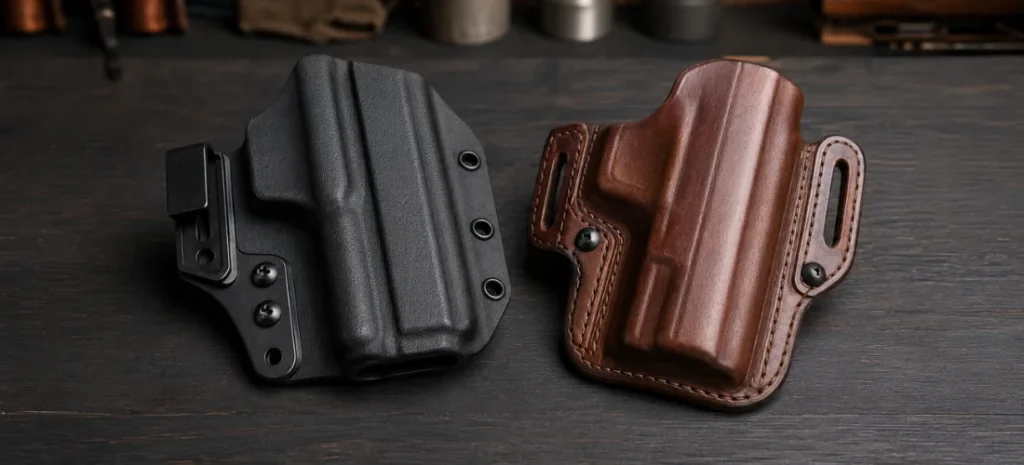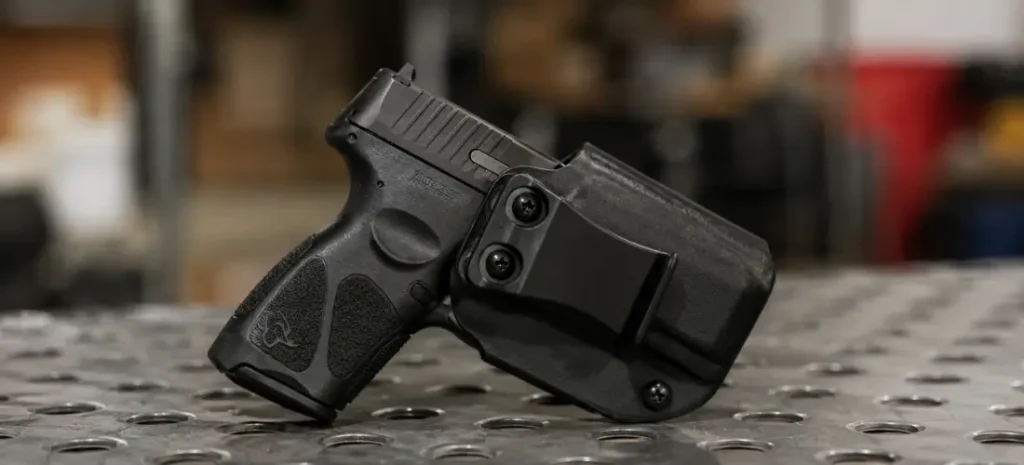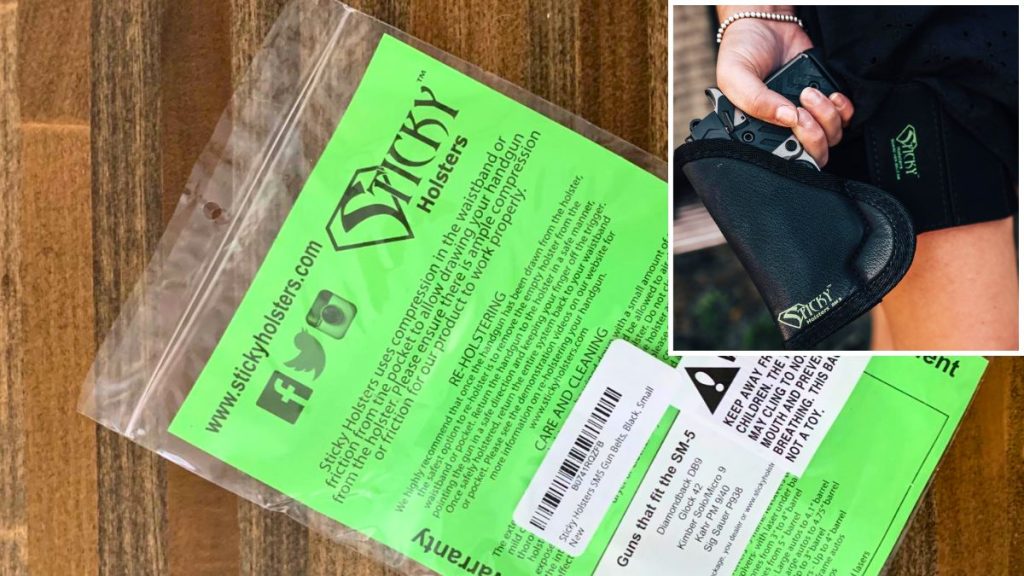
AIWB vs IWB comes down to where you carry inside the waistband and which setup fits your daily routine. AIWB, or appendix inside-the-waistband carry, places the holster toward the front of your body, while strong-side IWB keeps the holster around the hip.
Neither position works best for everyone because clothing, body fit, comfort, access, and practice all change the experience.
Before comparing appendix and strong-side positions, it helps to understand the broader differences between waistband carry styles. You can learn more about those categories in this guide to IWB versus OWB carry.
AIWB vs IWB
Here’s a quick comparison between the two.
| Factor | AIWB (Appendix IWB) | Strong-Side IWB |
|---|---|---|
| Carry position | Front waistband position near the appendix area | Hip-side waistband position, commonly around 3–4 o’clock |
| Concealment | Can help hide the grip with position-specific features like claws when the setup fits your body and clothing | Relies on hip placement, clothing coverage, and holster angle |
| Seated comfort | May require adjustment because the front position interacts with sitting posture and body shape | May feel more natural for some users during standing and movement but can also contact the seat area |
| Holster setup | Often benefits from features such as claw systems, wedges, and careful ride-height adjustment | Often focuses on cant, ride height, retention, and stable belt positioning |
| Main drawback | Comfort depends heavily on correct positioning and personal fit | Concealment and access depend on clothing, belt support, and exact placement |
For this comparison, AIWB is a specific appendix carry style within IWB, while IWB refers to strong-side hip carry.
A holster designed around one position may not deliver the same experience in another.
How These Two Holsters Were Selected
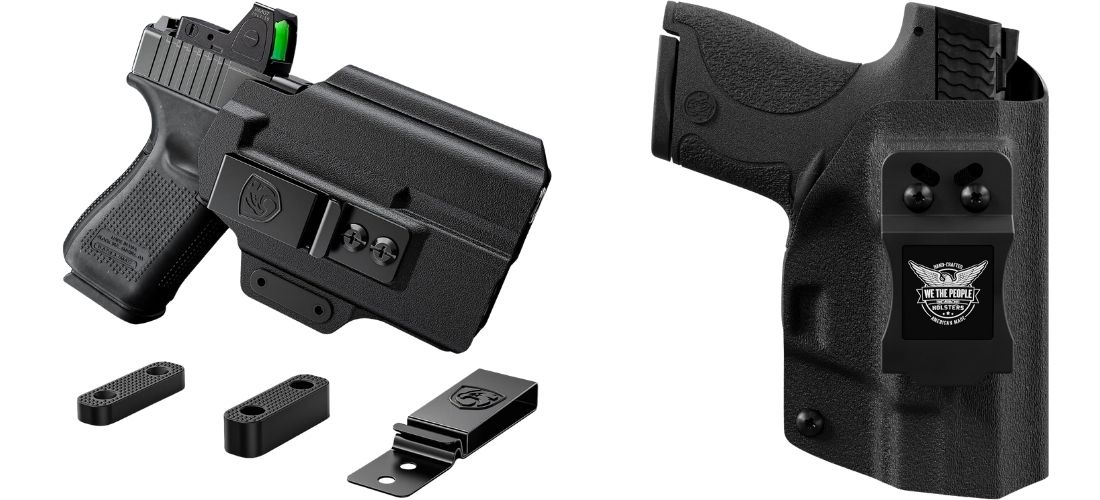
This comparison focuses on two different carry approaches using two specific holster models. The MUNALO Hybrid IWB Holster with Concealment Claw represents an appendix-focused setup, while the We The People Holsters Black Right Hand IWB represents a more traditional strong-side IWB approach.
The goal is not to declare one position the automatic winner. Instead, this review compares how each design fits its intended role, what features matter when choosing between AIWB and strong-side IWB, and which type of carrier may find each option a better match.
Two Holsters Compared
MUNALO Hybrid IWB Holster with Concealment Claw
Highlight: A feature-rich AIWB-focused holster option for light-equipped Glock setups.
Key features: Right-hand IWB design • Concealment claw • Light-compatible configuration • Adjustable retention • Dual belt clips • Optics-ready design
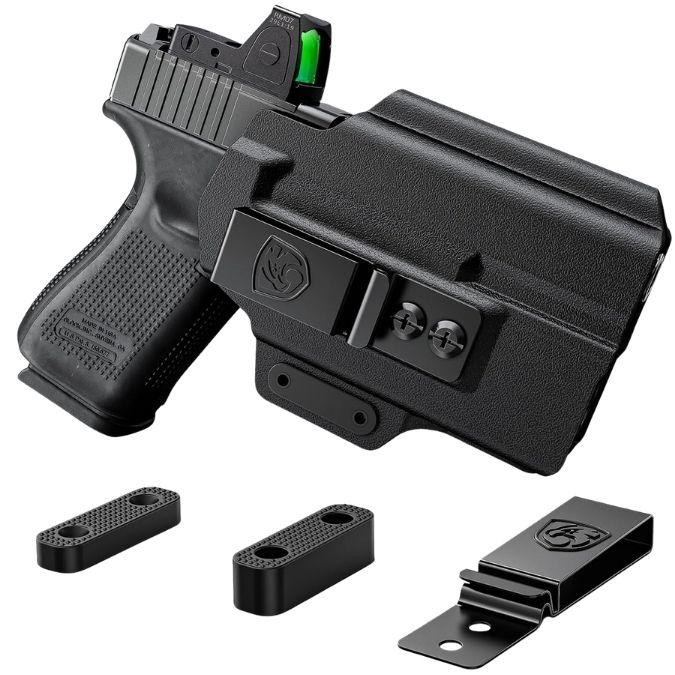
I’d choose the MUNALO Hybrid IWB Holster when your priority is an appendix setup with extra concealment features built in. The claw design is the part I would focus on most because it is intended to pull the grip closer to the body, which can matter when you are trying to reduce printing with a larger handgun or a mounted light.
What matters to me with this design is the combination of adjustability and support features. I like that you can tune retention and use different clip positions to change the fit, because AIWB comfort often depends on small setup changes. If you carry a compatible Glock and light combination, I recommend checking the exact fit before choosing it, since light compatibility is one of the biggest factors in whether this style of holster works well for you.
My main reservation is the exterior material choice. I think the grippy outer layer can be useful for keeping the holster stable, but you may find it less convenient if you frequently reposition your holster during the day. I’d choose this model for someone who wants a dedicated appendix setup with concealment-focused features, but I’d skip it if you prefer a simpler Kydex-only feel or frequently change carry positions.
Pros and Cons
| Pros | Cons |
|---|---|
| Concealment claw supports appendix-focused setup | Exterior grip texture may not suit everyone |
| Light-compatible design expands setup options | Exact light compatibility must be confirmed |
| Adjustable retention and positioning | |
| Dual clip configuration supports carry adjustment |
Best for: Carriers who want an appendix holster with a claw and light-compatible design for a Glock setup.
Skip if: You need a universal holster for many different handgun and light combinations.
Note: Amazon cautions that this product [MUNALO Holster] is returned frequently, so double-check everything when it arrives.
We The People Holsters Black Right Hand IWB Holster
Highlight: A straightforward strong-side IWB Kydex option focused on adjustable everyday carry.
Key features: Right-hand IWB design • Glock 19 compatibility • Kydex construction • Adjustable cant • Adjustable ride height • Retention adjustment
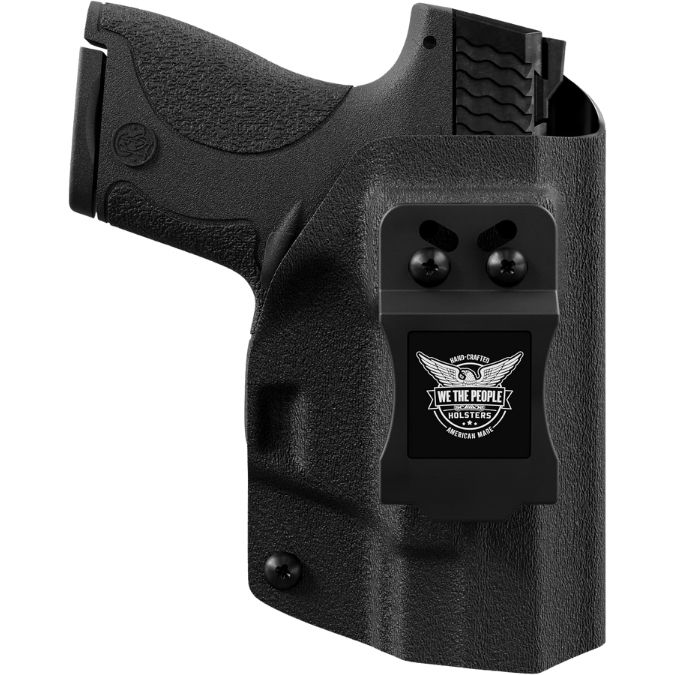
I’d choose the We The People Holsters Black Right Hand IWB when you want a simpler strong-side carry setup without adding appendix-specific features. The compact Kydex approach fits the role well because it keeps the design focused on basic positioning, retention, and adjustment rather than extra concealment hardware.
What matters to me is the ability to tune the carry position. You can adjust cant and ride height, and I recommend using those settings to match your belt, clothing, and preferred hip position. If you are moving away from a bulky setup and want a cleaner strong-side IWB option, this type of design gives you a practical starting point.
My main reservation is that a simple IWB design may not solve every concealment challenge. I’d choose this holster if you mainly carry at the hip and value a straightforward Kydex profile, but I’d skip it if your priority is appendix-specific features like a concealment claw or a setup built around a weapon light. You should also confirm the exact firearm variant before buying because fit depends on the intended model.
Exact firearm fit matters when choosing a strong-side setup, and this We The People holster review provides additional context on model-specific considerations.
Pros and Cons
| Pros | Cons |
|---|---|
| Adjustable cant and ride height | Clip design may not suit every preference |
| Compact Kydex construction | Fit depends on exact firearm variant |
| Retention can be adjusted | |
| Simple strong-side IWB setup |
Best for: Carriers who want an adjustable strong-side IWB holster for a Glock 19 setup.
Skip if: You need appendix-specific concealment features or a light-compatible design.
How to Choose Between AIWB and Strong-Side IWB
When comparing AIWB vs IWB, focus less on broad claims and more on how the position works with your body and your daily movement.
Start With Your Daily Carry Position
AIWB places the holster toward the front of the waistband, which can make grip concealment easier when the setup, clothing, and body position work together. This is why appendix carry holsters often include features designed specifically around keeping the handgun close to the body.
Strong-side IWB places the holster around the hip area. I recommend looking at this position if you prefer a traditional carry location and want a setup that works naturally with your usual belt and clothing choices.
Consider Holster Cant and Ride Height
Small adjustments can change how a holster feels. Cant changes the angle of the handgun, while ride height affects access, concealment, and how much of the setup sits above or below the belt line.
I’d pay close attention to these adjustments before deciding that a position does or does not work. A properly adjusted holster can feel very different from the same model installed with a poor setup.
Understand Claw Versus Wedge Features
AIWB-focused designs often use additional concealment features. A claw can help pull the grip inward, while a wedge may change pressure points against the body. These features are not automatically better for every person because comfort depends on body shape, firearm size, clothing, and placement.
If you are comparing an appendix carry holster against a standard strong-side IWB holster, look at the complete setup rather than one feature in isolation.
If you are comparing appendix-specific designs, reviewing different appendix holster options can help you understand how features such as claws, wedges, and adjustment systems affect the overall setup.
Check Retention and Exact Fit
A holster should match the specific firearm configuration you intend to carry. Changes such as different handgun models, mounted lights, or other accessories can affect compatibility.
I recommend confirming the exact model fit and following the manufacturer’s setup guidance before relying on a new holster. Retention adjustment, trigger coverage, and secure positioning are important parts of evaluating any concealed carry setup.
Match the Holster to Your Clothing and Routine
Your clothing choices can influence concealment as much as the holster itself. A setup that works well with one wardrobe may require adjustment with another.
Think about your normal day: time spent seated, driving, walking, working, and moving between environments. A carry position that works during a short test period may need refinement before it fits your full routine.
Can One Holster Serve Both AIWB and Strong-Side IWB?
Some IWB holsters can support more than one carry position, especially when they include adjustable cant and ride height. However, a design that works at the hip may not provide the same concealment characteristics at the appendix position.
I would check whether the manufacturer specifically supports the position you want to use. Features such as a claw, wedge, clip placement, and retention setup can change how a holster performs when moved from one location to another.
If you frequently switch positions, an adjustable design may provide flexibility. If you have a dedicated carry style, a holster designed around that position may offer a more focused setup.
If you carry a smaller Glock platform, reviewing Glock 43X IWB holsters can help you compare how firearm size changes holster selection.
Final Verdict
There is no single answer for every carrier comparing AIWB vs IWB. I’d choose an AIWB-focused setup like the MUNALO Hybrid IWB Holster if appendix carry features, concealment adjustments, and your equipment setup match your needs. I’d choose the We The People strong-side IWB option if you prefer a simpler hip-carry approach with adjustable positioning.
The right decision comes down to your firearm configuration, clothing, comfort, and consistent practice with your chosen setup.
If neither carry style fits your routine, you can explore additional broader concealed carry holster options before choosing a different setup.
FAQs
Is AIWB a type of IWB?
Yes. AIWB means appendix inside-the-waistband carry. It is a specific IWB carry position located toward the front of the waistband. In this comparison, IWB refers to strong-side hip carry.
Can one holster work at appendix and 3–4 o’clock?
Some adjustable IWB holsters may support multiple positions, but the fit and concealment can change between appendix and hip carry. Check the manufacturer’s intended use and adjust the setup carefully.
Which position conceals better under a T-shirt?
Concealment depends on your body shape, clothing, firearm size, holster design, and adjustment. AIWB and strong-side IWB can both work well when the setup matches those factors.
What changes when sitting or driving?
Sitting changes how the holster contacts your body and the seat. Some people prefer appendix positioning adjustments, while others find strong-side placement more comfortable during longer seated periods.
What should I check before switching carry positions?
Check firearm fit, holster retention, trigger coverage, belt support, clothing compatibility, and whether you can consistently practice with the new position.