Summary: Kydex is generally better for secure retention, faster access, easy one-handed reholstering, and minimal upkeep. Leather offers softer all-day comfort, quieter operation, and a traditional appearance. For defensive or high-activity carry, choose Kydex. For comfortable everyday wear or classic firearms, a well-made leather holster may be preferable.
A suitable holster must secure the firearm, fully protect the trigger, remain stable on the belt, and permit a controlled draw. It should also withstand the conditions in which it will be carried. Kydex and leather can both perform these jobs, but they do so differently.
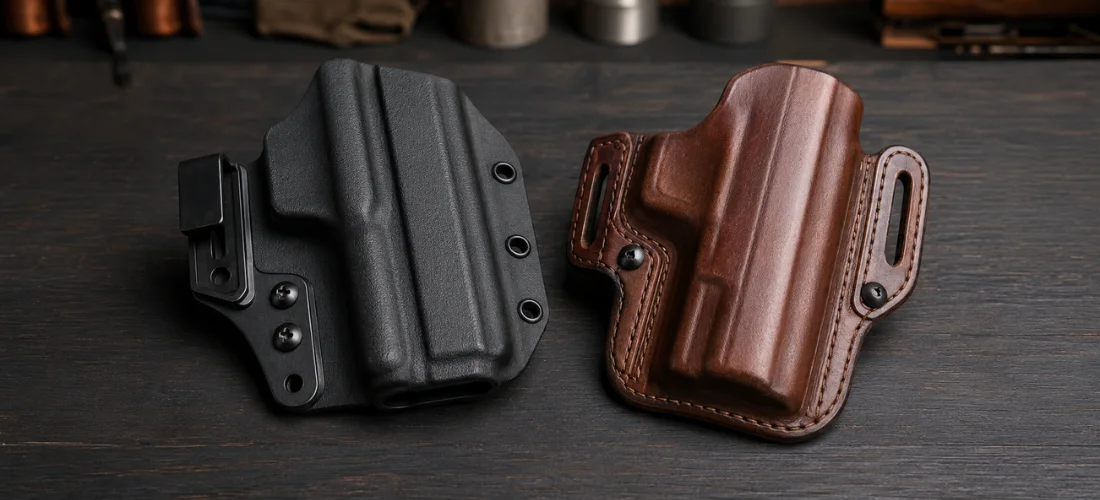
Kydex relies on rigid, precisely molded construction. Leather uses friction, shaping, and natural flexibility. Those differences influence comfort, security, concealment, maintenance, and service life. Our post on Kydex vs Leather holster explains how each material behaves in practical use and where one may be more appropriate than the other.
What Is a Kydex Holster?
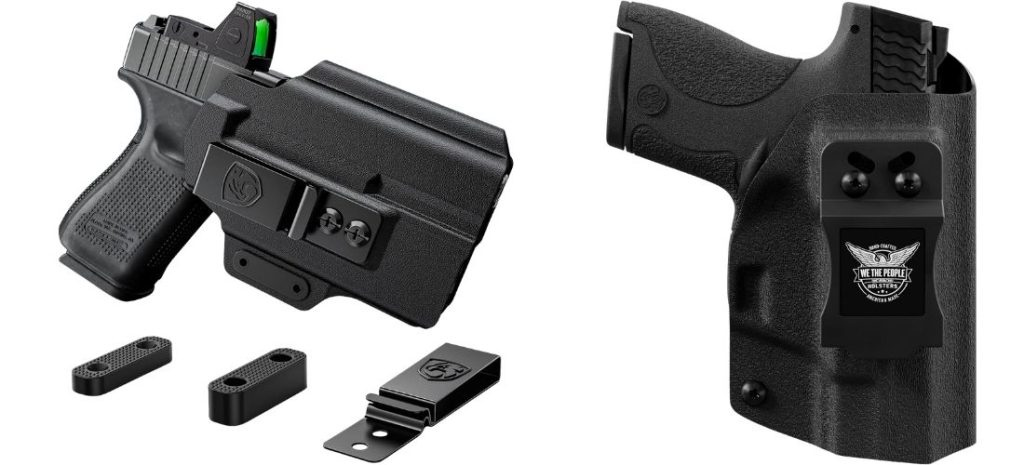
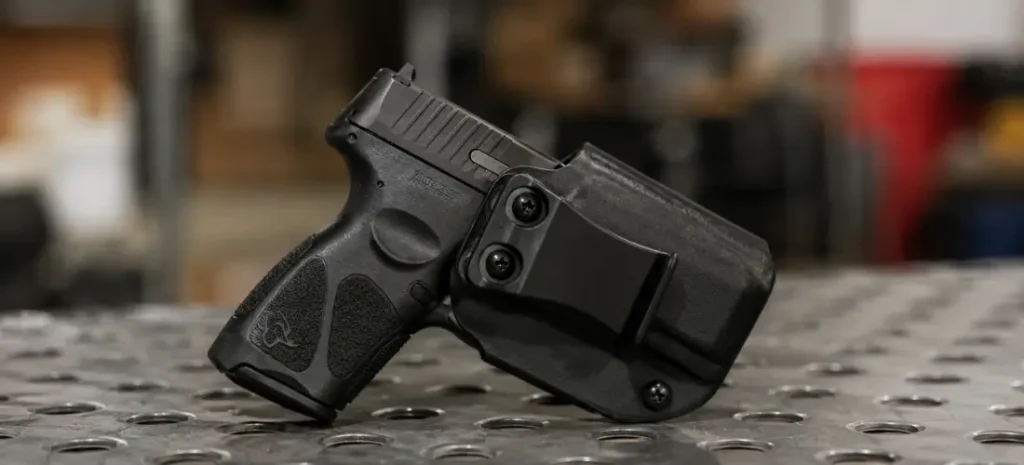
Kydex is a rigid thermoplastic commonly used to produce firearm-specific holsters. More precisely, KYDEX® is a registered brand of acrylic-polyvinyl chloride composite sheet made by SEKISUI KYDEX. Its name is frequently used as a generic label for similar thermoformed materials, including Boltaron and other acrylic-PVC sheets.
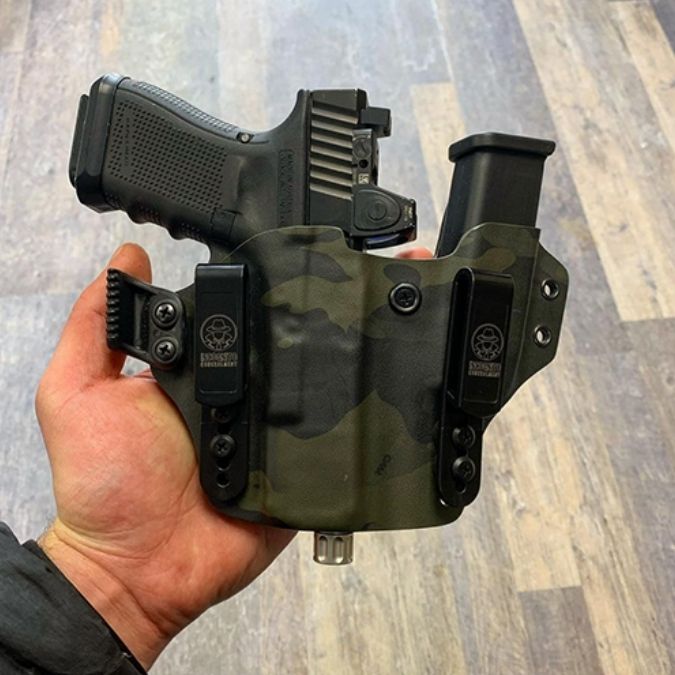
That distinction matters because a holster advertised as “Kydex-style” or simply “thermoplastic” may not use genuine KYDEX sheet. Material quality, thickness, molding accuracy, hardware, and edge finishing can vary considerably between manufacturers. Genuine KYDEX combines rigidity, formability, chemical resistance, and toughness, according to its manufacturer’s material information.
To manufacture a holster, a sheet is heated until pliable and pressed around a firearm mold or precision replica. Once cooled, it holds the formed shape. The maker then trims and polishes the edges, drills the mounting points, installs belt hardware, and adjusts the retention area.
Most designs secure the handgun around the trigger guard or another defined contour.
Pros and Cons
| Pros | Cons |
|---|---|
| Provides consistent, often adjustable retention | Rigid edges may create pressure points |
| Maintains its shape after the firearm is drawn | Produces more noise during drawing and reholstering |
| Supports controlled one-handed reholstering | |
| Resists sweat, rain, and humidity |
What Is a Leather Holster?
A leather holster is made from animal hide that has been tanned, cut, shaped, and reinforced to support a firearm. Cowhide is the most common choice because it balances cost, strength, and availability. Horsehide is denser and tends to resist moisture better. Exotic hides may be used as decorative overlays or premium exterior materials.
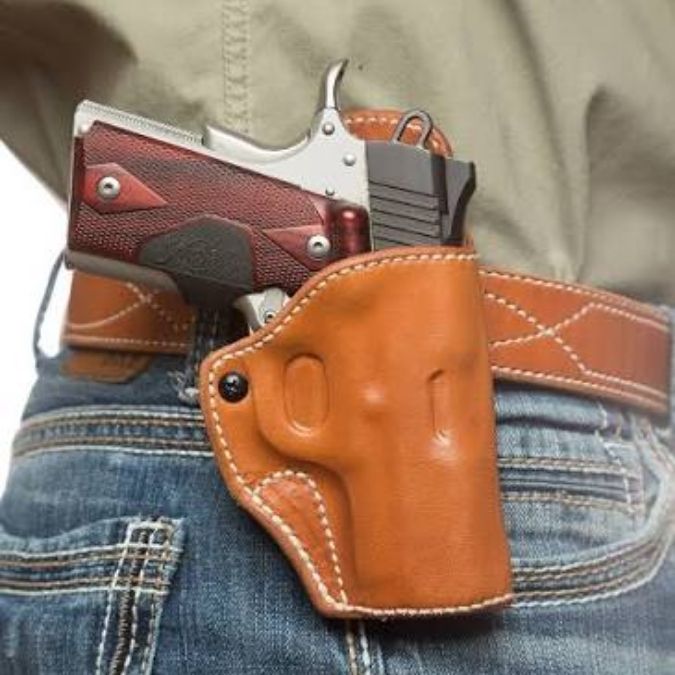
Quality varies according to the hide, tanning method, thickness, stitching, reinforcement, and molding accuracy. Full-grain and top-grain hides are normally preferred for serious use. Thin, overly soft, or poorly reinforced leather can lose its shape and should not be treated as equivalent to a properly constructed gun belt holster.
Manufacturing typically begins with cutting the leather pattern and joining its sections through stitching or riveting. The damp leather is then pressed and hand-boned around a firearm mold, allowing it to form around the gun’s contours. After drying, the holster may be dyed, sealed, burnished, and fitted with reinforcement around its opening.
Pros and Cons
| Pros | Cons |
|---|---|
| Feels softer and more comfortable against the body | May require a gradual break-in process |
| Gradually conforms to the wearer | Can stretch and lose retention over time |
| Produces less noise during the draw | |
| Offers a classic, premium appearance |
Kydex vs. Leather Holster: Which One Wins?
Here’s a quick comparison table:
| Factor | Kydex | Leather |
|---|---|---|
| Comfort | Rigid; may create pressure points | Softer and gradually conforms to the wearer |
| Retention | Precise, often adjustable | Friction-based; can loosen with use |
| Durability | Resists stretching and abrasion | Long-lasting when maintained but can soften |
| Maintenance | Wash, rinse, and dry | Clean carefully and condition periodically |
| Weather/moisture resistance | Nonporous and highly water-resistant | Can absorb sweat and water |
| Weight and profile | Usually light and thin | Usually thicker and moderately heavier |
| Break-in | Little or none | Often requires gradual fitting |
| Noise | Distinct sound during the draw and return | Quieter operation |
| Typical cost | About $35–$120+ | About $50–$200+ |
| Firearm finish impact | Contact points and trapped grit can cause wear | Softer contact, but retained moisture or grit can damage finishes |
Comfort
Against-Skin Feel
Leather usually feels warmer and less abrasive against bare skin. Its edges and backing can gradually conform to the wearer’s body, which may benefit people who carry for long periods.
Kydex remains rigid. Poorly positioned edges, screws, or sweat guards may create concentrated pressure points. However, a properly sized holster with polished edges, suitable ride height, and an appropriate wedge can be comfortable. Material alone does not compensate for an unsuitable carry position.
Initial Fit and Adjustment
Leather commonly has a break in period because a new holster may initially grip the firearm tightly. The process should follow the manufacturer’s instructions. Applying oils, soaking the holster, or forcing the wrong gun into it can permanently weaken retention.
Kydex normally arrives ready to use. If adjustable, retention is changed with screws and elastomer spacers. The handgun should release smoothly without allowing unnecessary movement.
IWB and OWB Comfort
Inside-the-waistband leather distributes pressure through its flexible body, but a broad design may retain heat and moisture. Kydex can feel harder, although its thinner construction may occupy less waistband space.
For outside-the-waistband use, both are generally comfortable because less material presses against the body. The holster weight difference becomes more noticeable with large handguns, reinforced leather, or heavy mounting hardware.
Retention and Draw Speed
Passive Retention Mechanics
Kydex usually locks around a defined part of the firearm, often the trigger guard. Many models provide audible or tactile retention click feedback when the handgun is fully seated. Tension screws can help the user balance security against release effort.
Leather relies more heavily on surface friction and molding. It can initially hold a handgun very tightly, but the fit may change as the fibers stretch or soften. Some leather holsters add a thumb break or retention strap for greater security.
Neither material should be trusted solely because the gun feels tight. Test retention with an unloaded firearm while following the manufacturer’s instructions.
One-Handed Reholstering
A well-made Kydex holster maintains an open mouth after the firearm is drawn. This allows the user to return the handgun without holding the holster open.
Unreinforced leather may flatten under belt pressure when empty. Trying to push a firearm into a collapsed opening can direct soft material toward the trigger or require unsafe manipulation. Some premium leather designs address this with reinforced mouths, but users must inspect them as they age. This structural advantage of rigid holsters is also identified in practical comparisons of the two materials.
Reholstering should never be rushed. Clothing, drawstrings, straps, and fingers must be kept away from the opening and trigger guard.
Consistency Over Time
A practical draw speed comparison usually favors Kydex because its shape and release point remain relatively consistent. Leather can provide a smooth draw, but moisture, wear, and stretching may gradually alter the resistance.
Training remains more important than a small theoretical speed advantage. A secure holster used consistently is preferable to a faster design that shifts on the belt or exposes the trigger.
Durability and Weather Resistance
Moisture and Sweat Exposure
Kydex does not absorb perspiration, rain, or cleaning water. Its strong sweat resistance makes it practical for humid climates, outdoor work, and strenuous activity. Moisture can still reach the firearm through an open holster, so the handgun must be inspected and dried.
Leather absorbs moisture unless effectively sealed. Sweat contains salts that may remain in the fibers and contribute to corrosion when the holster stays against the gun. Horsehide generally handles moisture better than ordinary cowhide, but it is not waterproof.
Temperature Effects
Normal hot or cold weather is unlikely to damage a quality Kydex holster. Extreme heat can deform thermoplastic, however. It should not be left against unusually hot surfaces or altered with a heat gun unless the manufacturer specifically authorizes it.
Leather may stiffen after becoming wet and drying incorrectly. Excessive heat can cause cracking or shrinkage, while repeated saturation can weaken its structure.
Expected Service Life
Both materials can last for years. Kydex delivers excellent durability over time because it does not stretch or absorb oils, although cracks, loose fasteners, or worn mounting points can eventually appear.
Premium leather can provide decades of service when properly maintained. Its safe life depends on preserving the opening, stitching, attachment points, and molded fit. A holster should be replaced when it no longer secures the firearm or reliably protects the trigger, regardless of age or price.
Maintenance Requirements
Cleaning Kydex
Remove the firearm before cleaning. Shake out loose grit, then wash the holster with mild soap and lukewarm water. Use a soft brush or cloth in recessed areas, rinse thoroughly, and allow it to dry before reinserting the gun.
Check screws, clips, belt loops, spacers, and retention hardware regularly. Thread-locking products should only be used as directed by the maker.
Conditioning Leather
Wipe leather with a slightly damp cloth and allow it to air-dry away from direct heat. Apply only a small amount of manufacturer-approved conditioner when necessary.
Heavy oiling can soften the structure, weaken retention, and encourage the opening to collapse. Saddle soap, waterproofing agents, and household leather treatments are not automatically suitable for a molded holster.
These different maintenance requirements make Kydex easier for owners who carry in demanding conditions or prefer minimal upkeep.
Mildew and Odor Risk
Damp leather stored in a closed bag, vehicle, or poorly ventilated safe can develop odors or mildew. Let it dry fully after exposure to perspiration or rain and store it in a cool, ventilated location.
Kydex does not support mildew in the same manner, although dirt and residue can still collect around hardware or textured surfaces.
Firearm Finish and Wear
No regularly carried firearm is guaranteed to remain cosmetically perfect. Both materials can produce wear, but the mechanism differs.
Kydex creates repeatable contact along molded retention points. Drawing the handgun repeatedly can polish or mark those areas. The greater concern is hard debris such as sand or metal particles trapped between the holster and slide. Each draw can drag that contamination across the finish like an abrasive. Because Kydex is nonporous, it is easy to rinse clean.
Leather feels softer, but it can retain dust, moisture, salt, and fine grit within its fibers. Those contaminants may rub across a wider area or hold corrosive moisture against the gun. Leather dyes and tanning residues may also affect sensitive surfaces when the holster is wet. Owners concerned about appearance should clean both the firearm and holster frequently rather than assuming softer material guarantees protection.
Check out our review of the VNSH belly band holster here.
Concealment and Profile
Kydex shells are typically thin and retain a predictable shape. This can reduce bulk, especially with appendix or strong-side IWB carry. Claws and wedges can rotate the grip inward, but their effectiveness depends on body shape, belt stiffness, firearm size, and placement.
Leather is often thicker due to folded sections, stitching, reinforcement, and belt loops. Its flexibility may help it follow the body’s contours, particularly in broad pancake-style OWB designs. Conversely, softened leather can deform rather than maintaining a consistent concealment angle.
When comparing leather vs kydex for concealed carry, Kydex usually offers the slimmer, more configurable solution. Leather may feel better against the body and can conceal effectively when its footprint, cant, and ride height suit the wearer.
Printing is influenced more by the handgun’s grip, belt, clothing, and holster geometry than by material alone.
Cost Comparison
Basic Kydex holsters commonly begin around $35 to $60. Better finishing, adjustable retention, concealment hardware, optic cuts, light compatibility, and custom patterns can move the price toward $80 to $120 or more.
Serviceable leather models often start around $50 to $80. Hand-boned molding, reinforced openings, premium stitching, lined interiors, and custom fitting may raise prices to $100–$200.
Custom or exotic leather can cost several hundred dollars. The increase reflects skilled labor, limited materials, decoration, and finishing rather than a proportional improvement in defensive performance.
Therefore, asking whether to buy a Kydex or leather holster should involve the complete design, not price alone. A cheap generic holster that fits several handguns poorly is a worse value than a firearm-specific model with secure attachments and complete trigger coverage.
Hybrid Holsters
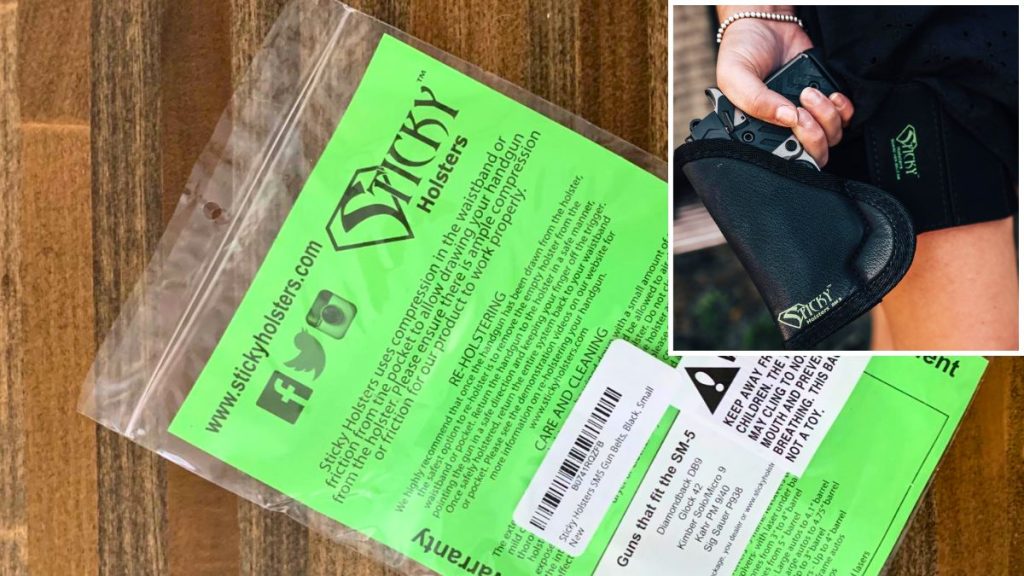
A hybrid holster normally combines a rigid thermoplastic shell with a flexible leather, neoprene, or synthetic backing. It attempts to provide Kydex-style firearm molding with a softer surface against the body.
Potential advantages include broader pressure distribution, improved comfort, and an open shell that supports easier reholstering. Some models also allow interchangeable shells.
The tradeoffs are additional bulk, more components, possible backing deformation, and less complete shell coverage in certain designs. A soft backer can curl toward the trigger area as it ages, particularly if the shell covers only one side of the handgun.
A hybrid makes sense for someone who finds a full Kydex shell uncomfortable but still wants rigid retention. Choose one that completely protects the trigger, remains stable, and does not allow the backing to fold into the holster.
Here are the best Glock 43X concealed carry holsters.
Which Holster Should You Choose?
EDC and Concealed Carry
For daily defensive carry, Kydex is usually the most practical choice. It offers stable retention, a slim profile, moisture resistance, and predictable access. Leather remains viable when it is firearm-specific, structurally reinforced, and regularly inspected.
Range and Competition
Kydex is generally preferable because it supports frequent drawing, consistent release, easy adjustment, and quick cleaning. Competition users should select a design appropriate for their division and range rules rather than modifying a concealed-carry model.
Duty and Law Enforcement
Material is only one part of a duty system. Officers need an approved holster with the required active-retention level and proper training. Rigid polymer duty holsters generally provide better structural consistency, but a basic Kydex concealment holster is not automatically suitable for duty use.
Collectors and Cowboy Action
Leather complements traditional revolvers and period-style equipment. It also provides the appearance expected in cowboy-action settings. Collectible guns should not be stored long-term inside leather because absorbed moisture and tanning compounds may affect the finish.
New Gun Owners
A firearm-specific Kydex model is often the simplest starting point. It provides clear seating, minimal care, and a rigid trigger enclosure. New owners should prioritize secure fit, dependable belt attachment, and instruction from a qualified trainer over decorative features.
See the best concealed carry holsters here.
Final Verdict
Kydex holster is the stronger all-around option for defensive carry, regular training, humid environments, and users who want consistent retention with little upkeep.
Leather holster is best for people who prioritize softer contact, quiet operation, craftsmanship, or traditional styling.
Whichever material you choose, use a firearm-specific holster that fully covers the trigger, stays securely attached, and holds its shape during normal use.
FAQs
Kydex can produce wear at repeated contact points, but dirt trapped between the gun and holster is often more abrasive than the clean material itself. Rinse the holster regularly and wipe down the firearm. Any frequently carried handgun may develop cosmetic wear, regardless of holster material.
Kydex is generally better for concealed carry because it is thin, moisture-resistant, and structurally stable. Leather can feel softer during extended wear and may conform more naturally to the body. The final choice should also account for firearm size, attachment security, body shape, and carry position.
A quality Kydex holster can last many years under normal use. Its lifespan depends on sheet thickness, molding quality, hardware, exposure to extreme heat, and activity level. Inspect it routinely for cracks, loose fasteners, damaged clips, or reduced firearm security, and replace it if any safety-critical area fails.
Leather can get wet, but prolonged saturation may cause swelling, staining, stiffness, shrinkage, or lost molding. Remove the unloaded firearm and allow the holster to air-dry naturally. Do not use direct heat or apply heavy oils. Follow the manufacturer’s care instructions before returning the holster to service.
Entry-level Kydex is usually cheaper because thermoplastic holsters can be molded and finished efficiently. Quality leather requires more cutting, stitching, shaping, and finishing by hand. Premium Kydex can still cost more than basic leather when it includes specialty hardware, custom graphics, light compatibility, or advanced concealment features.