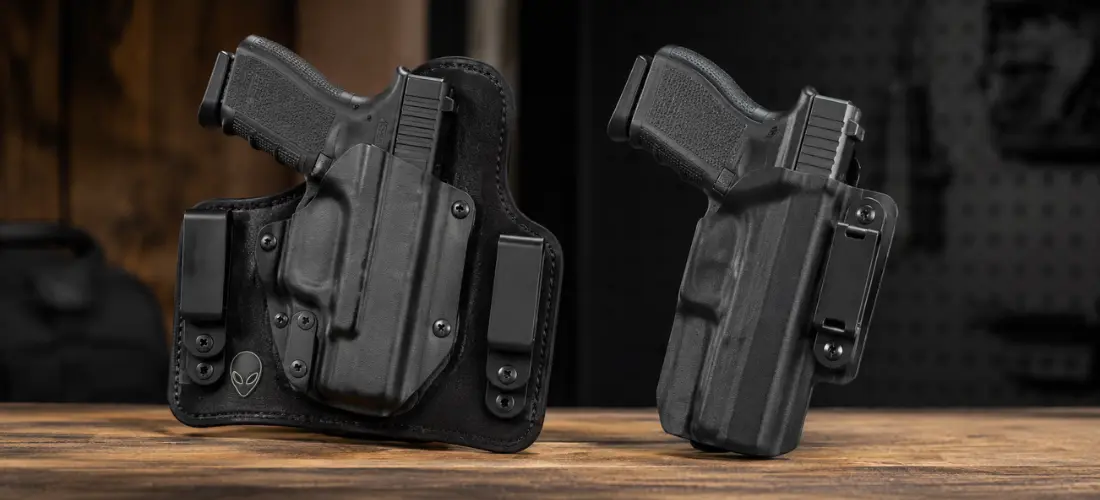
Alien Gear is better for modularity, adjustability, and carrying multiple supported handguns. Its wider hybrid design distributes weight comfortably during long carry periods. Tulster is better for a thinner, simpler, gun-specific concealed-carry setup. Its compact Kydex construction works particularly well for appendix carry. Choose Alien Gear if flexibility and behind-the-hip comfort matter most. Choose Tulster if minimal bulk and everyday concealment are your priorities.
A concealed-carry holster may look like a simple piece of equipment, but its construction affects comfort, concealment, retention, and draw consistency. Alien Gear and Tulster approach these requirements differently, making the right choice dependent on your handgun, clothing, preferred carry position, and daily routine. Choosing between Alien Gear vs Tulster holster comes down to how, where, and what you carry.
Alien Gear emphasizes adaptable systems and broad pressure distribution, while Tulster focuses on compact, firearm-specific Kydex designs. This comparison examines their construction, comfort, concealment, adjustability, modularity, price, and warranty coverage to help you select the option that genuinely fits your carry style.
About Alien Gear Holsters
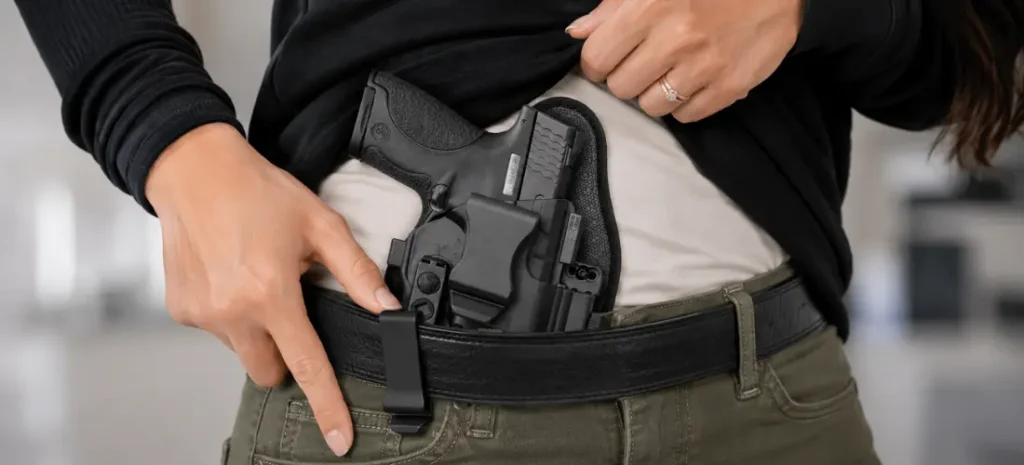
Alien Gear Holsters is an American manufacturer known primarily for hybrid and modular carry systems. Although its catalog now includes duty, tactical, shoulder, chest, pocket, and traditional Kydex models, the company built much of its reputation around comfortable inside-the-waistband holsters.
Its hybrid designs typically combine a rigid firearm-specific shell with a broad, flexible backing. The backing spreads the handgun’s weight across a larger section of the beltline and prevents the harder shell from sitting directly against the carrier’s body.
The brand’s most recognizable innovation is the ShapeShift modular system. Instead of treating every carry position as an entirely separate product, the system uses a firearm-specific shell that can connect to compatible IWB, OWB, appendix, shoulder, or other available mounting platforms.
This approach appeals to gun owners who want to experiment with different carry methods without purchasing a completely independent setup each time. However, the additional components needed to create that flexibility can make the system thicker and more complicated than a dedicated Kydex holster.
Alien Gear supports more than 700 handgun models across its wider catalog and states that its holsters are made in the USA. Availability still varies by holster series, firearm generation, optic configuration, and accessory setup.
About Tulster
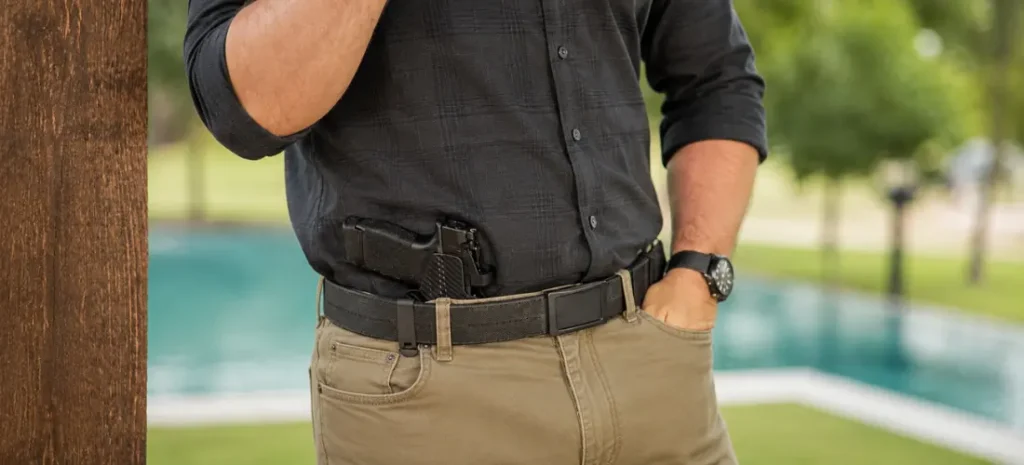
Tulster is an Oklahoma-based holster manufacturer with a strong focus on precision-molded Kydex products. Its approach is more streamlined than Alien Gear’s modular philosophy. Each holster is generally built for a specific firearm or closely related family of firearms.
The Profile series established Tulster’s reputation among concealed carriers. It is a minimalist inside-the-waistband holster intended for appendix or strong-side carry. Rather than using a wide backing and two clips, it uses a compact shell and a single attachment point.
Tulster has since introduced other designs, including the OATH, Profile+, ARC, RATH, Contour and Range+ series. The OATH IWB profile is particularly suited to optic-equipped pistols and modern appendix-carry setups, but the traditional Profile remains the most direct comparison to Alien Gear’s concealed-carry options.
The company’s core approach is straightforward: use a precisely molded shell, cover the trigger guard properly, provide adjustable retention, and remove unnecessary material. That simplicity makes Tulster attractive to carriers who already know which handgun and position they intend to use.
Alien Gear vs Tulster: Comparison Table
The following best holster brand comparison focuses mainly on Alien Gear’s ShapeShift IWB and Tulster’s Profile IWB. Specifications can vary across other models from both manufacturers.
| Feature | Alien Gear | Tulster |
|---|---|---|
| Holster type | Hybrid modular holster | All-Kydex holster |
| Materials | Polymer shell, flexible backing and steel-reinforced components | Vacuum-formed Kydex shell with polymer or optional metal clip |
| Bulk | Wider and generally thicker | Compact and low-profile |
| Clip configuration | Two belt clips on ShapeShift 4.0 IWB | One belt clip on Profile IWB |
| Modularity | Firearm shell works with compatible ShapeShift platforms | Fixed firearm-specific mold |
| Retention | Adjustable passive retention | Adjustable passive retention |
| Cant adjustment | Adjustable through clip positioning | Adjustable from approximately 0 to 30 degrees on Profile models |
| Best carry position | Strong-side or behind-the-hip IWB | Appendix or strong-side IWB |
| Typical listed price | ShapeShift 4.0 IWB starts around $69.99 | Profile models generally start around $64.99 |
| Warranty | Coverage varies by product under Alien Gear’s current written warranty | Lifetime coverage for Tulster Kydex products |
Detailed Comparison Between Alien Gear vs Tulster
This Alien Gear vs Tulster review compares more than comfort claims. The correct choice depends on the handgun’s size, your preferred carry position, your clothing, and whether you value a dedicated holster or a configurable system.
Build and Materials
Alien Gear’s ShapeShift IWB combines a molded polymer shell with a broad, flexible backing. The shell secures the firearm, while the backing provides a softer contact surface against the body.
The neoprene backing comfort is most noticeable during extended strong-side carry. It distributes pressure across a wider area and reduces the sensation of hard edges pressing against the skin. The backer can also act as a barrier between the handgun and perspiration.
Tulster’s Profile uses a rigid Kydex shell rather than a soft backing. Kydex holds its shape when the firearm is removed, provides a consistent trigger-guard enclosure, and allows the holster body to remain compact.
A rigid shell may initially feel less forgiving against the body. However, its smaller footprint means there is less overall material inside the waistband. For some carriers, especially appendix carriers, reduced size matters more than surface softness.
Neither construction is automatically superior. Alien Gear softens and distributes contact. Tulster minimizes the amount of material creating that contact.
Comfort and Bulk
Alien Gear’s two clips spread the firearm’s weight across the belt. This can stabilize compact, mid-size, and full-size handguns during behind-the-hip carry. The broader backing also limits concentrated pressure during long periods of standing or walking.
The tradeoff is bulk. A hybrid holster includes the shell, backing, connection hardware, retention components, and two belt attachments. It occupies more waistband space and can feel warm during hot weather.
Tulster’s single-clip layout creates a smaller contact area and is quicker to put on or remove. Its slim tuckable design works well beneath fitted clothing, provided the selected clip and configuration support the desired shirt placement.
Handgun size changes the result. A small pistol in a Tulster can virtually disappear with the correct belt and clothing. A full-size handgun may place more concentrated pressure on the wearer because the compact holster has less surface area to distribute its weight.
Conversely, the wider Alien Gear backer can make a heavier handgun more comfortable while making a small pistol feel surrounded by unnecessary material. Different users are carrying different guns in different positions.
Retention and Adjustability
Both brands primarily use passive retention. The holster holds the firearm through precise contact around designated areas, typically including the trigger guard.
Alien Gear allows the user to tune retention through its system’s adjustable components. The broader design also gives carriers several ride-height and cant combinations. These changes can improve grip access or reduce printing, but adjusting multiple connection points takes more time.
Tulster uses a tension screw to increase or decrease the pressure placed on the handgun. Its Profile models also allow the clip angle to be changed, giving users control over cant without rebuilding the entire setup.
Tulster feels simpler because fewer components require adjustment. Alien Gear provides more configuration choices, but buyers should follow the product instructions and test each setup with an unloaded firearm before carrying.
Regardless of brand, the firearm should remain secure during normal movement while still allowing a deliberate, unobstructed draw. Retention that is either extremely loose or excessively tight should be corrected before the holster enters daily use.
Concealment and Carry Position
Tulster has the advantage for appendix carry. Its compact shell and single attachment point occupy less space between the belt and body. The design is also easier to reposition along the front of the waistband when seated.
Alien Gear’s traditional hybrid IWB configurations are generally better suited to the strong-side or behind-the-hip position. The two clips need more horizontal space, but they also keep the holster stable across the beltline.
For OWB carry, Alien Gear provides multiple modular and dedicated options. Tulster also offers outside-the-waistband products, including its Contour series, but the Profile itself is an IWB design.
Printing is more likely when a thick holster pushes the handgun farther from the body. Alien Gear’s additional layers can increase that risk beneath fitted clothing. Tulster reduces the distance between the gun and wearer, although grip length, belt quality, body shape, ride height, and garment selection remain equally important.
Modularity: One Holster, Multiple Guns
Modularity is Alien Gear’s biggest differentiator. The firearm-specific portion of a ShapeShift setup can connect to compatible platforms, allowing the user to move between supported carry configurations.
This does not mean one universal shell securely fits every handgun. Each firearm still needs the correct shell. The advantage is that supported shells can work with other components in the same ecosystem.
Alien Gear also offers several holster customization options, including carry position, ride height, cant, retention and compatible mounting configurations. This makes the system useful for someone still deciding how they prefer to carry.
Tulster takes the opposite approach. Its molds are dedicated to particular handgun models or closely related variants. If you change to an incompatible firearm, you normally need another complete holster.
The Tulster vs Alien Gear decision is therefore partly philosophical. Tulster gives each handgun a focused carry solution. Alien Gear lets compatible handguns share more of the underlying platform.
Build Quality and Fit Finish
Tulster is known for clean Kydex molding, limited excess material and polished edges. The compact construction leaves fewer components that can loosen or shift. Its gun-specific molds also create consistent engagement around the firearm.
Alien Gear’s construction is more complex. Its flexible backing, molded shell, clips, hardware and modular connections must work together. The result can feel well engineered, but there are more pieces to inspect and maintain.
Alien Gear offers all-day comfort and system flexibility. But bulk, hardware complexity, and difficulty in selecting their preferred setup makes things difficult. Tulster offers concealment and molding, but often involve concentrated pressure, clip preference, or limited firearm availability.
Holster comfort varies significantly by belt, handgun, body type, clothing and carry position. A model that disappears for one carrier may create a pressure point for another.
Price and Warranty
Tulster is generally slightly more expensive, with the OATH typically starting around $69.99, while Alien Gear’s ShapeShift Appendix Carry Holster is often priced lower depending on the firearm variant. Tulster’s higher price is supported by its precision-molded Kydex construction and lifetime warranty on the Kydex body, although hardware and misuse are excluded.
Alien Gear provides a five-year limited warranty on eligible injection-molded ShapeShift components and three years on sewn components and soft goods. Prices vary by handgun model and availability, so buyers should confirm the selected variant before ordering.
When comparing the lifetime warranty policy offered by each brand, Tulster currently communicates lifetime Kydex coverage more consistently. Alien Gear’s policy requires closer product-specific review.
Which Holster Should You Choose?
EDC With a Compact or Subcompact Gun
Choose Tulster if minimizing thickness and waistband space is your priority. A compact handgun combined with a small Kydex shell is easier to conceal under everyday clothing.
Choose Alien Gear if the small handgun still creates uncomfortable pressure during long carry periods. The wide backing can distribute that pressure more effectively.
Appendix Carry
Tulster is the clearer choice for most appendix carriers. Its compact construction, adjustable retention and single clip are better suited to the limited space at the front of the waistband.
Alien Gear offers appendix-compatible products, but its broad hybrid IWB models are not the natural choice for this position.
Multiple Guns and One Carry System
Choose Alien Gear if you own several supported handguns and want to reuse compatible platform components. Confirm each firearm’s compatibility before investing in additional shells.
Choose Tulster if you prefer a separate, precisely fitted holster for each handgun. This costs more as your collection grows, but each setup remains simple and purpose-built.
First-Time Buyer on a Budget
The upfront price difference is unlikely to determine the winner. First-time buyers who know they want appendix carry should start with Tulster. Those who are uncertain about carry position or want more adjustability may find greater value in Alien Gear’s ecosystem.
A quality gun belt should also be part of the budget. Even a well-made holster can sag, shift or print when paired with an unsupportive belt.
Final Verdict
To conclude, Alien Gear is the better fit for carriers who value comfort across a wider area, configurable carry positions and compatibility with a modular ecosystem. Its hybrid construction is particularly useful for behind-the-hip carry and heavier handguns. Tulster is the better option for carriers who want a thinner, simpler and more focused concealed-carry setup.
Its compact Kydex construction is especially effective for appendix carry and subcompact pistols. Neither brand wins every category. Choose according to your firearm, body type, clothing and carry position. Always confirm exact handgun compatibility, inspect the trigger-guard coverage, and practice with an unloaded firearm before beginning daily carry.
FAQs
Tulster is generally better for low-profile appendix concealment, while Alien Gear is often more comfortable for behind-the-hip carry. Your handgun size, clothing and body shape ultimately determine which design conceals better.
Each shell is molded for a specific firearm or compatible model family. You can attach supported shells to compatible system components, but one shell should not be used with an unrelated handgun.
No. Tulster supports many popular concealed-carry handguns, but its catalog does not cover every model. Check the precise firearm, generation, barrel length, optic and handedness before ordering.
Tulster’s Profile is normally thinner because it uses a compact Kydex shell and one clip. Alien Gear’s hybrid models use a backing, shell, mounting hardware and two clips, producing a larger overall footprint.
Yes, they can provide secure retention, useful adjustability and excellent weight distribution. However, their multi-component construction is bulkier than minimalist Kydex, so they are better suited to carriers who value comfort and flexibility over minimum thickness.