Finding the best rifle sling for hunting comes down to how you carry, move, and use your rifle in the field. A comfortable sling can make long walks easier, while the right adjustment system can help you transition between carrying and shooting positions.
Comparison of the Best Rifle Slings
| Product | Best fit | Sling style | Key advantage | Main drawback |
|---|---|---|---|---|
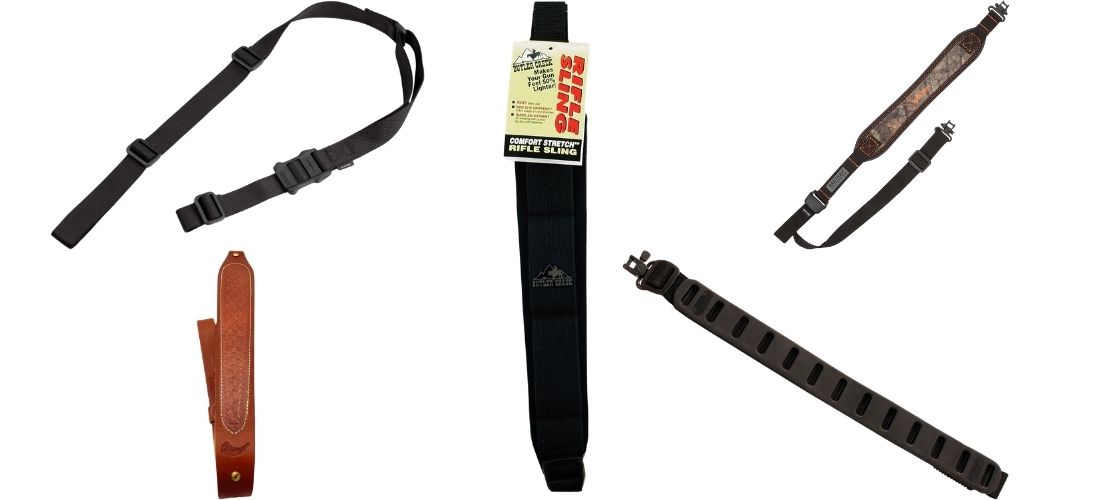
| Butler Creek Comfort Stretch Rifle Sling | Traditional hunting rifles | Padded stretch sling | Comfort-focused shoulder carry | Less adjustment flexibility |
| Magpul Two Point Sling – Quick Adjust (Black) | Hunters who want adaptable carry positions | Two-point adjustable sling | Fast length adjustment | Requires learning the adjustment system |
| Allen BakTrak Vapor Rifle Sling | Lightweight field carry | Padded hunting sling | Shoulder grip and simple setup | Hardware concerns need consideration |
| Hunter Company Chestnut Tan Cobra Rifle Sling | Classic hunting rifles | Leather sling | Traditional materials and appearance | Fewer modern adjustment features |
| The Claw Slimline Adjustable Padded All-Weather Sling | Active hunting situations | Adjustable padded sling | Secure shoulder positioning | More specialized than basic slings |
The Best Rifle Slings for Hunting
The five selected rifle slings below represent different hunting needs, from traditional leather designs to adjustable systems built for changing carry positions.
Butler Creek Comfort Stretch Rifle Sling
Highlight: A comfortable traditional sling choice for hunters who want simple carry support without extra complexity.
Key features: Stretch shoulder design • padded shoulder area • non-slip grip surface • compatible with 1-inch sling loops • adjustable strap system
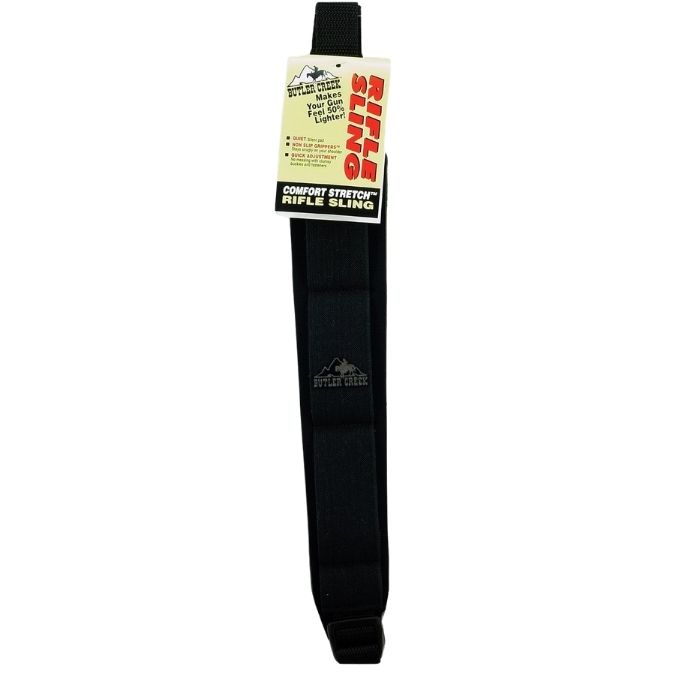
I recommend the Butler Creek Comfort Stretch Rifle Sling if you want a straightforward hunting sling focused on carrying comfort. The stretch construction and padded shoulder area are the features that matter most here because you are usually carrying a rifle much longer than you are shooting it. I like that this design stays focused on the basic job of supporting a rifle rather than adding unnecessary hardware or complicated adjustment systems.
The biggest appeal is the balance between comfort and simplicity. I’d choose this style for a hunter who wants a familiar shoulder carry setup and appreciates a grippy underside that helps keep the sling positioned. The sling is also a practical match for rifles using standard 1-inch loops, making it easier to pair with traditional hunting setups.
My main reservation is adjustment flexibility. I’d skip this option if you need a highly adaptable sling for frequent shooting-position changes or extensive carry adjustments. The fixed padded section and limited adjustment range can make fit more important, especially for taller users or unusual attachment points. For a classic hunting rifle that mostly needs comfortable transport, I think the uncomplicated design makes sense.
Pros and Cons
| Pros | Cons |
|---|---|
| Comfortable padded shoulder design | Adjustment range may feel limited for some setups |
| Non-slip surface helps keep placement stable | Does not include every mounting accessory |
| Simple traditional sling layout | |
| Works well with standard sling loops |
Best for: Hunters who want an affordable, comfortable sling for traditional rifle carry.
Skip if: You need tactical-style adjustment speed or extensive configuration options.
Magpul Two Point Sling – Quick Adjust (Black) (Original Version)
Highlight: A versatile two-point sling for hunters who want fast adjustment and multiple carry positions.
Key features: Two-point sling design • quick-adjust slider • durable nylon construction • adaptable attachment options • adjustable length
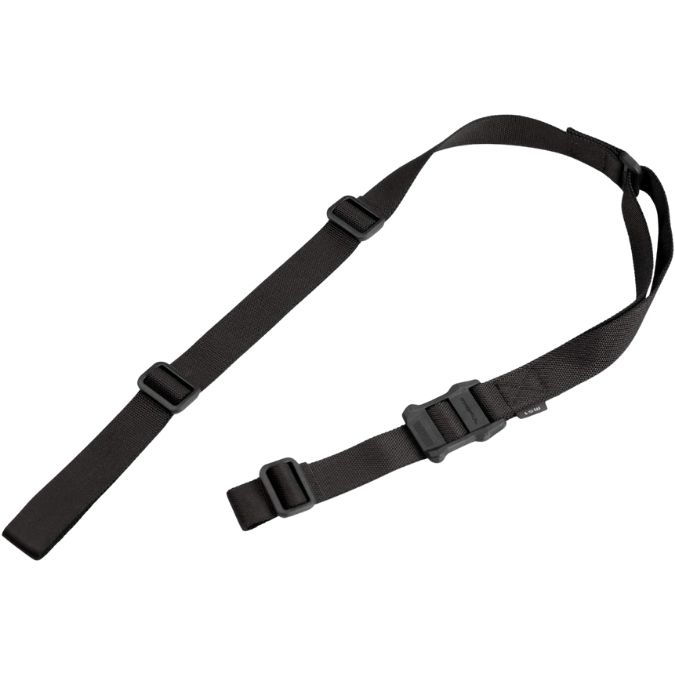
I recommend the Magpul Two Point Sling for hunters who want more control over rifle positioning. The two-point layout gives you a broader range of carry options, and the quick-adjust slider is the feature I would focus on when comparing it with simpler slings. If you move between walking, carrying, and shooting positions, that flexibility can make a noticeable difference.
What stands out to me is the adaptable design. I’d choose this sling for someone who already values adjustable gear because it allows you to fine-tune the fit rather than accepting one fixed carry position. The smooth nylon construction also fits users who want a sling that can move comfortably without feeling overly bulky.
My main reservation is that quick adjustment systems require familiarity. I’d skip it if you want the absolute simplest strap with no learning curve. The extra capability is useful, but it only helps if you actually use the adjustment features and pair it with compatible mounting hardware.
Pros and Cons
| Pros | Cons |
|---|---|
| Quick-adjust system improves carry flexibility | Adjustment operation may take practice |
| Two-point design supports multiple positions | Mounting hardware choice matters |
| Smooth nylon construction | |
| Broad adjustment range |
Best for: Hunters who want a configurable sling that adapts between carrying and shooting positions.
Skip if: You prefer a basic padded sling with minimal adjustment features.
Allen BakTrak Vapor Rifle Sling
Highlight: A lightweight hunting sling option built around shoulder grip and simple field adjustment.
Key features: Padded shoulder area • non-slip backing • adjustable strap • lightweight design • rifle sling configuration
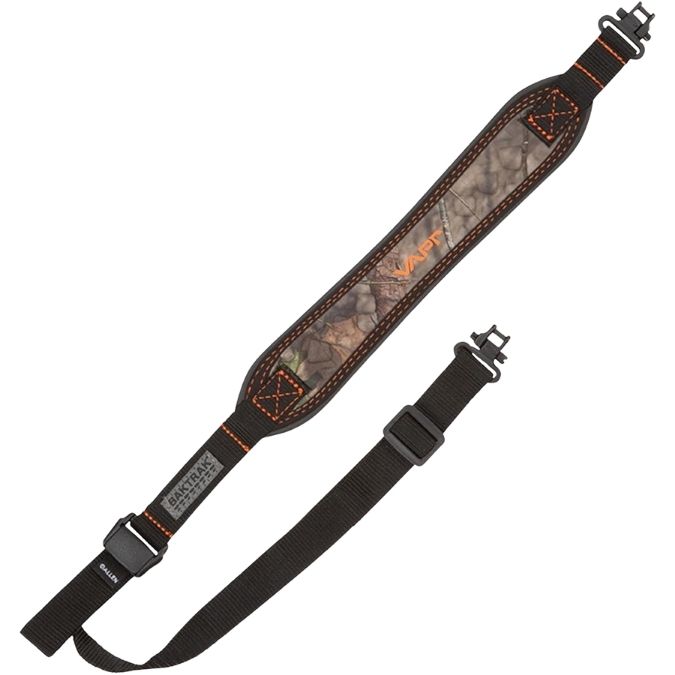
I recommend the Allen BakTrak Vapor Rifle Sling for hunters who prioritize keeping a rifle comfortable on the shoulder during movement. The design emphasis is on grip and carry stability, which are useful qualities when you are walking through changing terrain. I think this makes the most sense for someone who wants a practical sling without moving into more complex tactical designs.
The shoulder grip is the feature I’d pay attention to first. I like the idea of a sling that focuses on preventing unwanted movement while carrying, especially during longer walks. The adjustable construction also gives you the ability to set up the fit around your rifle and preferred carry position.
My main reservation is hardware durability based on the limitations recorded for this model. I’d inspect the attachment points carefully and make sure the mounting setup matches your intended use. I’d still consider it for normal hunting carry, but I would not choose it if you need a sling designed around extremely demanding use conditions.
Pros and Cons
| Pros | Cons |
|---|---|
| Shoulder grip-focused design | Attachment hardware concerns need consideration |
| Simple adjustment system | Not really feasible for demanding use conditions |
| Lightweight hunting-oriented layout | |
| Easy installation approach |
Best for: Hunters looking for a lightweight sling with a secure shoulder feel.
Skip if: You need a sling with maximum heavy-duty hardware confidence.
Hunter Company Chestnut Tan Cobra Rifle Sling
Highlight: A classic leather hunting sling for hunters who want traditional materials and appearance.
Key features: Full-grain leather construction • suede-lined shoulder area • chestnut tan finish • designed for 1-inch swivels • traditional hunting style
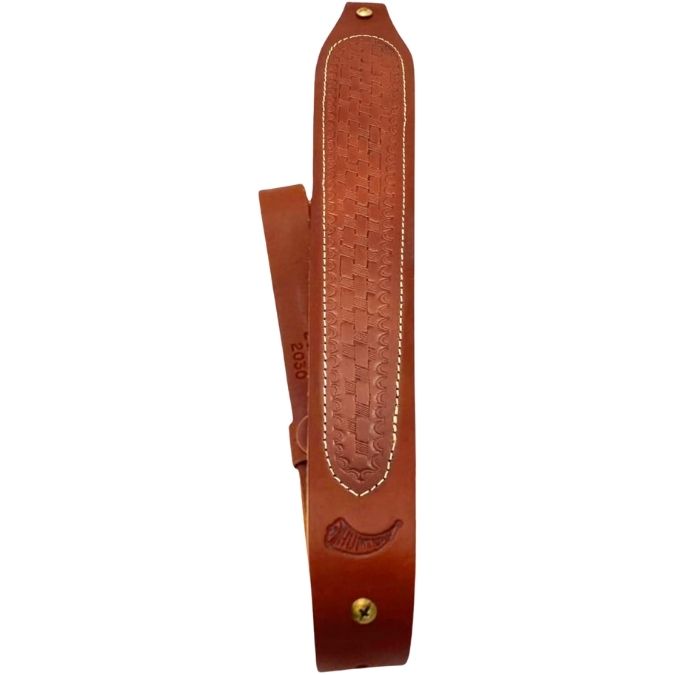
I recommend the Hunter Company Cobra Rifle Sling if you want a traditional leather option that matches classic hunting rifles. The full-grain leather construction and suede-lined shoulder area create a different experience from synthetic slings. I think this is the type of sling you choose when appearance, simplicity, and traditional feel matter alongside basic carrying comfort.
The leather construction is the main reason I’d consider this model. I’d choose it for a hunting rifle where you want the sling to complement the firearm rather than look like a purely technical accessory. The shoulder-facing suede material is also a useful detail because a sling that stays positioned well can make long carries more comfortable.
My main reservation is that traditional leather designs are less forgiving when you need quick changes or modern modular features. I’d skip it if you want rapid adjustment systems or maximum setup flexibility. You should also confirm your mounting hardware needs before purchase because compatibility depends on your rifle’s sling setup.
Pros and Cons
| Pros | Cons |
|---|---|
| Traditional full-grain leather construction | Hardware compatibility needs checking |
| Suede-lined shoulder contact area | Less adjustment flexibility than modern designs |
| Classic hunting appearance | |
| Designed around common sling setups |
Best for: Hunters who want a classic leather sling for a traditional rifle setup.
Skip if: You need quick-adjust tactical-style functionality.
The Claw Slimline Adjustable Padded All-Weather Rifle/Shotgun Sling
Highlight: A premium-feeling grip-focused sling for hunters who want stability during active movement.
Key features: Adjustable padded design • QD metal swivels included • all-weather construction • non-slip shoulder grip • rifle and shotgun compatibility
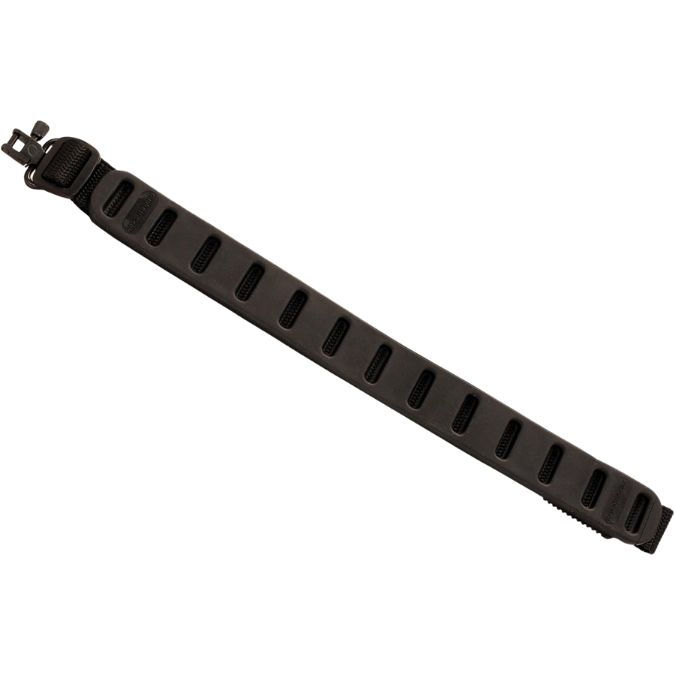
I recommend The Claw Slimline Adjustable Padded Sling for hunters who want a strong emphasis on keeping the firearm secure during movement. The grip-focused design is the standout feature because a sling that stays positioned can be valuable during long walks, spot-and-stalk situations, or uneven terrain.
What I like about this model is that it combines adjustment with included QD metal swivels, which simplifies setup compared with buying additional mounting pieces separately. I’d choose this sling when stability matters more than having the lightest possible setup. The padded design also fits the needs of hunters who spend extended time carrying a rifle or shotgun.
My main reservation is that this is a more specialized choice than a basic sling. I’d skip it if you want a minimalist strap or a lower-cost option for occasional use. The additional features make more sense for hunters who will actually benefit from improved grip and quicker setup.
Pros and Cons
| Pros | Cons |
|---|---|
| Strong shoulder grip design | Higher-cost option |
| Adjustable padded construction | May be more than casual users need |
| Includes QD metal swivels | |
| Suitable for active hunting movement |
Best for: Hunters who prioritize shoulder stability and quick setup in the field.
Skip if: You only need a basic lightweight sling for occasional range use.
How I Selected These Rifle Slings for Hunting
I focused on rifle slings designed for hunting use rather than general-purpose straps. The comparison considers practical factors that affect field carry, including comfort, shoulder stability, adjustment options, attachment compatibility, and the type of hunting situation where each sling makes the most sense.
A good hunting sling does not need every available feature. The right choice depends on your rifle setup, how far you typically walk, and whether you need quick adjustments during a hunt. Some hunters prefer traditional padded designs, while others benefit from modern two-point systems with more flexibility.
How to Choose the Right Rifle Sling for Hunting
Here’s how you can pick the ideal rifle sling, based on your hunting style.
Match the Sling Type to Your Hunting Style
The best sling style depends on how you hunt. A hunter walking slowly through familiar terrain may prefer a comfortable padded sling that focuses on carrying support. Someone covering more ground may benefit from a design that allows faster adjustments between movement and shooting positions.
Traditional rifle slings are often simple and dependable, while adjustable two-point designs provide more control over rifle placement. Think about how often you change positions and whether you need the sling mainly for carrying or also for shooting support.
Furthermore, check out our review of the best hunting knives here.
Comfort, Shoulder Grip, and Carry Stability Matter
A rifle sling spends most of the hunt supporting your firearm while you move. Padding can reduce pressure during longer carries, while grip-focused materials can help prevent unwanted shifting on your shoulder.
For hunters covering steep terrain, thick brush, or long distances, stability can matter as much as softness. A sling that stays positioned properly helps keep your rifle accessible without constant adjustment.
Check Attachment Compatibility Before Purchasing
Before choosing a sling, confirm how it attaches to your rifle. Some designs work with standard sling loops, while others depend on swivels, quick-detach systems, or additional mounting hardware.
Checking compatibility first prevents a common mistake: choosing a sling you like but discovering that your rifle needs extra parts before installation.
Consider Material and Weather Conditions
Leather, nylon, and padded synthetic materials each have different advantages. Leather slings can complement traditional rifles, while synthetic designs often prioritize lighter weight, easier maintenance, or additional adjustment options.
Your hunting environment also matters. Wet conditions, rough terrain, and frequent movement may influence which materials and features fit your needs best.
Rifle Sling Comparison
Thinking about which type fits your hunt? Below are some simple solutions.
Best Sling Style for Deer Hunting
For deer hunting, comfort and reliable carry are often priorities because hunters may spend long periods moving between locations or waiting in position. A padded sling with secure shoulder placement can be a practical choice for these situations.
See the best hunting boots you can wear to support your long-distance movements.
Best Sling Style for Spot-and-Stalk Hunting
Spot-and-stalk hunting often requires more movement and frequent position changes. Adjustable slings can be useful when you need to shorten, loosen, or reposition your rifle during the hunt.
Best Sling Style for Range and General Rifle Use
If your rifle serves multiple purposes, a versatile sling may provide the best balance. Adjustable designs can adapt across different activities, while simple padded slings remain useful when comfort is the main priority.
Final Verdict
The right hunting rifle sling depends on your rifle, terrain, and preferred carry style. Hunters who prioritize comfort may prefer padded traditional designs, while those who need more flexibility may benefit from adjustable options.
Rather than choosing based only on features, consider where and how you hunt most often. The best sling is the one that supports your rifle comfortably while matching the way you actually use it.
FAQs
What type of rifle sling is best for hunting?
The best type depends on your hunting style. Padded slings work well for hunters prioritizing comfort during long carries, while adjustable two-point slings are useful when you need more control over rifle positioning.
Should a hunting rifle sling be padded?
A padded sling can improve comfort during longer carries by spreading pressure across your shoulder. However, some hunters prefer lighter designs when reducing weight and simplicity are priorities.
Are leather rifle slings good for hunting?
Leather rifle slings remain popular for traditional hunting rifles because they offer a classic appearance and durable material feel. They may not provide the same adjustment options as modern synthetic designs.
What is the difference between a two-point sling and a traditional rifle sling?
A two-point sling usually offers more adjustment flexibility between carry positions, while traditional rifle slings often focus on straightforward shoulder carry and comfort.
How do I choose the right sling attachment system for my rifle?
Start by checking your rifle’s existing sling points and whether the sling requires loops, swivels, or quick-detach hardware. Matching the attachment system before buying helps avoid compatibility problems.