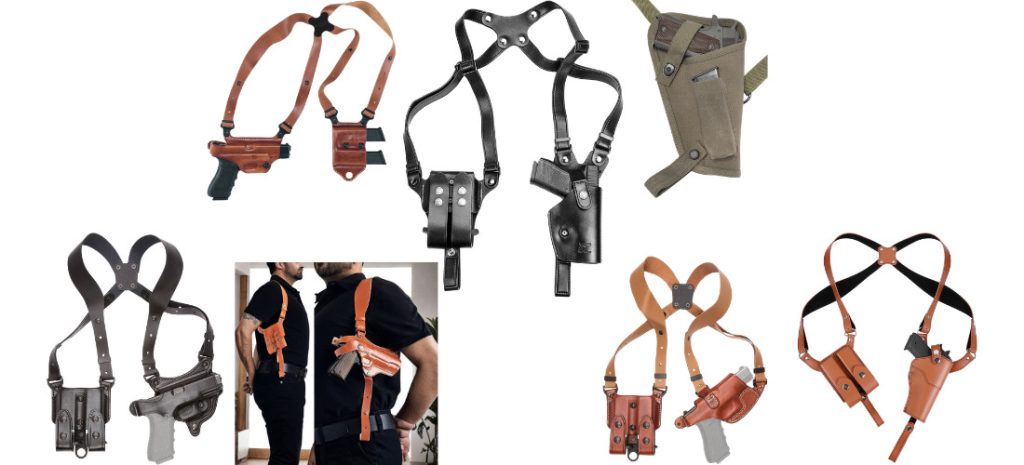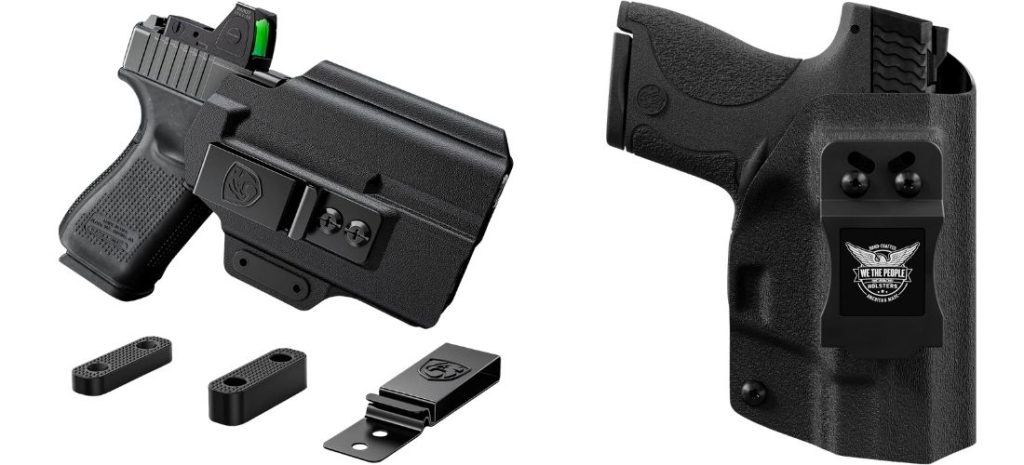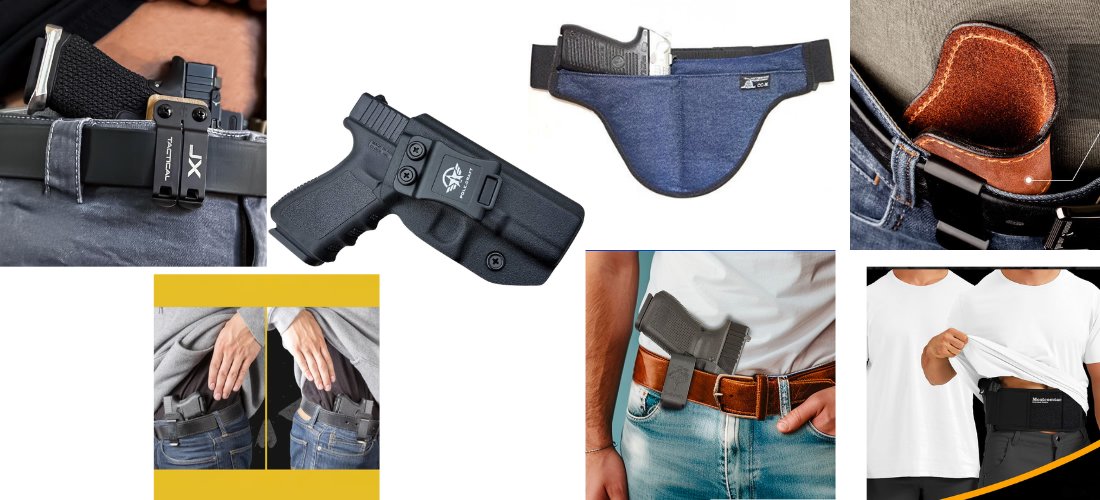
The best holsters for fat guys depend on your pistol, waistband and seated comfort. I’d start with the JX Tactical Fat Guy for the matching P365X Macro configuration if its lower ride suits you. The DeSantis Slim-Tuk is another option worth comparing. Neither replaces checking exact firearm fit, secure retention and how the holster feels during your normal day.
I’m Thomas Harvey, and I spend most of my time digging into carry gear for Gunners’ Review. Bigger guys usually get the same holster advice as everyone else, and it tends to miss the mark. So for this list, I zeroed in on what matters around a larger waistline: where the holster rides, how it handles pressure when you sit, and whether it stays put. I went through the specs, the fit details, and recent feedback from owners, and as always, I’m going to call out the strong spots as well as the weak ones.
How I Compared These Holsters
I assessed the selected configurations for larger-build comfort and pressure management (35%), exact-fit and retention confidence (30%), useful adjustment (20%), and clothing versatility (15%). Each criterion is scored out of five; doubling the weighted average gives the overall score out of ten. This is a researched comparison.
I gave comfort the largest share because waistband pressure is central to this comparison. However, comfort never makes an insecure fit acceptable. The Defender narrowly leads GUN & FLOWER at the same score because of its extended sweatshield and more consistent same-size evidence. Treat that tie-breaker as editorial judgment.
Ranking the Best Holsters for Fat Guys
I’ve ranked the top options here for fat guys, with comfort weighted most heavily. Match the exact variant before using the ranking to narrow your choice.
| Rank | Product and exact variant | Comfort /5 | Fit /5 | Adjustment /5 | Clothing /5 | Overall /10 | Pricing |
|---|---|---|---|---|---|---|---|
| 1 | JX Tactical Fat Guy: P365X Macro; black; right-hand Monoblock | 4 | 4 | 4 | 3 | 7.7 | Check Amazon price |
| 2 | DeSantis Slim-Tuk: 137KJB6Z0; black; ambidextrous | 3 | 4 | 4 | 4 | 7.3 | Check Amazon price |
| 3 | Relentless Tactical Defender: Chocolate Brown; right-hand Sweatshield | 4 | 3 | 2 | 3 | 6.3 | Check Amazon price |
| 4 | GUN & FLOWER leather IWB: Whiskey Brown; right-hand Subcompact | 4 | 3 | 2 | 3 | 6.3 | Check Amazon price |
| 5 | POLE.CRAFT IWB Kydex: Black-A; right-hand | 3 | 3 | 3 | 3 | 6.0 | Check Amazon price |
| 6 | Mostcomtac belly band: Up to 54 inches; right-hand | 3 | 2 | 3 | 4 | 5.7 | Check Amazon price |
| 7 | DTOM Fat Man Possum Pouch: Medium; denim | 2 | 2 | 2 | 4 | 4.6 | Check Amazon price |
The Best Holsters for Fat Guys, Reviewed
Here are the best ones in the game.
POLE.CRAFT IWB Kydex — Black-A, Right-Hand Draw
Highlight: A basic molded-shell option for a compatible stock Glock.
Key features: Kydex IWB shell • Right-hand draw • Adjustable retention • Belt clip • Standard Black-A configuration
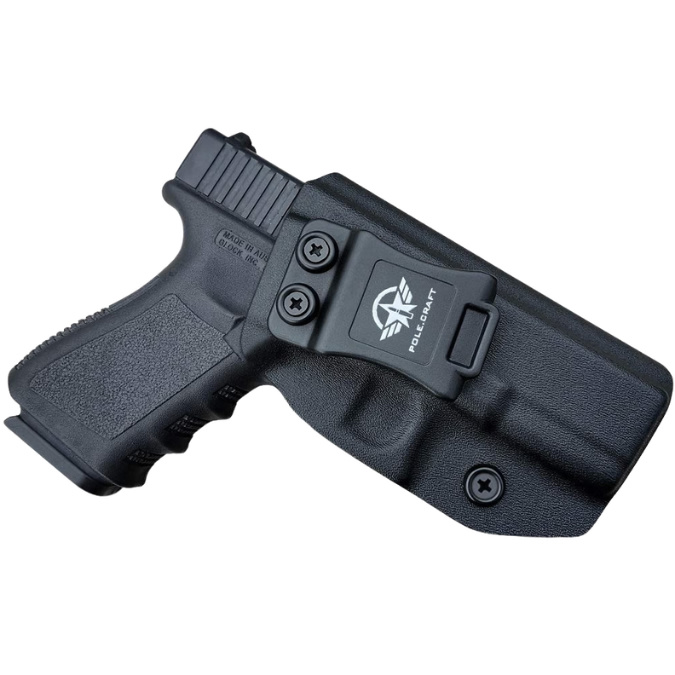
The POLE.CRAFT gives you a relatively simple molded shell without a broad leather backer or wraparound band. I’d consider this standard Black-A version if you prefer a compact setup and your pistol matches its specified Glock fit. Adjustable retention lets you check the hold for your particular firearm, and the belt clip keeps the attachment straightforward. This is the plain configuration, so I would not buy it expecting the separate padded or claw-equipped versions.
For a larger abdomen, the hard shell is also the main compromise: a small footprint does not guarantee comfortable body contact. My recommendation is conditional on both fit and hardware inspection, because excessive tightness, inadequate retention, and damaged attachment points are consequential concerns. You should not assume clearance for optics, tall sights, lights, or threaded-barrel accessories. If the pistol binds, slips free, or the shell digs into you while seated, I’d choose a better-fitting model instead of accepting the discomfort or modifying this one.
Pros and Cons
| Pros | Cons |
|---|---|
| Compact shell avoids a broad backer | Hard shell can press into the abdomen or hip |
| Retention can be adjusted | Fit and attachment durability need careful inspection |
| Simple single-clip attachment | |
| Molded fit for the specified Glock configuration |
Best for: You prefer a basic rigid-shell holster for a compatible stock Glock.
Skip if: You need padding, accessory clearance, or a fit that this exact shell cannot provide.
JX Tactical Fat Guy — SIG P365X Macro, Black, Right-Hand Monoblock
Highlight: A purpose-built lower-riding option for larger bodies.
Key features: P365X Macro-specific fit • Kydex IWB shell • Monoblock clip • Lower ride design • Right-hand draw
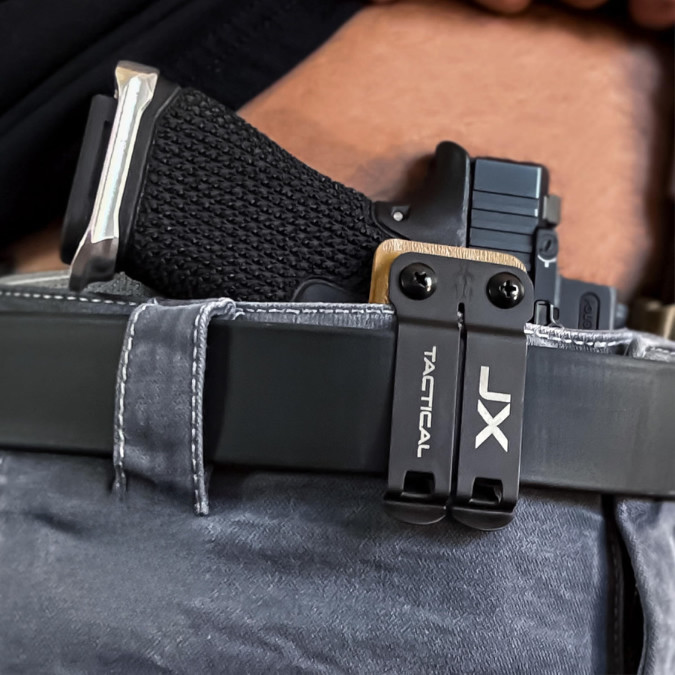
The JX Tactical is the most directly targeted design here for the problem of a holster pressing into a larger abdomen. I’d put this P365X Macro version on your shortlist when conventional IWB placement feels uncomfortable, because its defining feature is a lower position inside the waistband. The molded Kydex shell and adjustable attachment offer a more structured alternative to a soft band. My interest is in that different fit geometry, not a promise that every larger person will find it comfortable.
A lower position can trade abdominal clearance for pressure farther down and reduced room to reach the grip. I would assess seated comfort carefully rather than assuming lower always means better. You should also distinguish the P365X Macro from Legion configurations; I would not extend compatibility to a Legion without explicit confirmation. Binding or scraping that remains despite appropriate adjustment is a reason to reject the fit. This is a focused choice for the matching Macro, provided you are comfortable with its lower placement and Monoblock attachment.
Pros and Cons
| Pros | Cons |
|---|---|
| Designed specifically around larger-body comfort | Lower placement can restrict grip access or create pressure below the waist |
| Lower placement offers an alternative to conventional IWB fit | Legion compatibility and tight slide clearance cannot be assumed |
| Molded shell for the specified P365X Macro | |
| Adjustable attachment supports individual fit assessment |
Best for: You carry a matching P365X Macro and want to assess a deliberately lower-riding IWB design.
Skip if: You need confirmed Legion fit or find the lower placement uncomfortable when seated.
GUN & FLOWER Full-Grain Leather IWB — Whiskey Brown, Right-Hand Subcompact
Highlight: A leather option worth considering for a carefully matched subcompact.
Key features: Full-grain leather IWB design • Subcompact size • Right-hand draw • Retention adjustment • Whiskey Brown finish
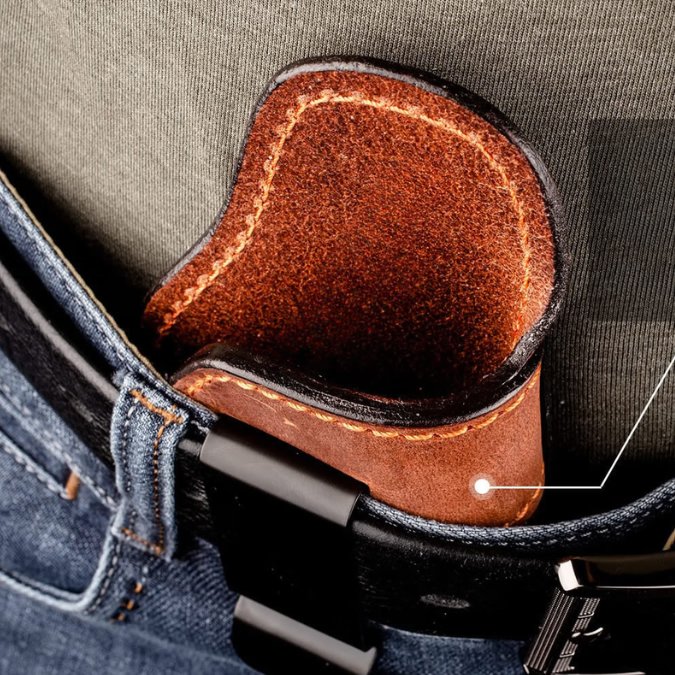
I’d consider the Whiskey Brown subcompact version if you want leather against your body and a straightforward belt-clip attachment. This size offers a softer contact surface than a rigid shell, with a retention adjustment to help assess the fit of a compatible small pistol. The attraction for me is everyday comfort without a wide belly band. You should select this specific subcompact version deliberately, rather than treating the much broader product-family title as a fit guarantee.
My main reservation is that a size label cannot establish safe retention or useful grip clearance for every small handgun. The related Full & Compact version is a different fit and should not determine your purchase here. I would check that your pistol stays secure, the trigger remains fully covered, and the grip remains accessible; leather comfort alone is not enough. Optic clearance also needs confirmation. If your setup requires trimming the leather or removing retention hardware, I’d choose a holster made for that configuration instead.
Pros and Cons
| Pros | Cons |
|---|---|
| Leather offers a softer body-contact surface | Broad family title can obscure the correct size |
| Dedicated subcompact size option | Optic and individual-pistol fit remain conditional |
| Retention adjustment supports fit assessment | |
| Belt clip provides straightforward attachment |
Best for: You prefer leather and can confirm that the subcompact version securely fits your pistol.
Skip if: You need guaranteed optic clearance or a shell molded for one exact handgun.
Mostcomtac Belly Band — Up to 54 Inches, Right-Hand
Highlight: A belt-independent option for casual clothing.
Key features: Neoprene band • Up-to-54-inch size • Right-hand configuration • Hook-and-loop closure • Movable magazine storage
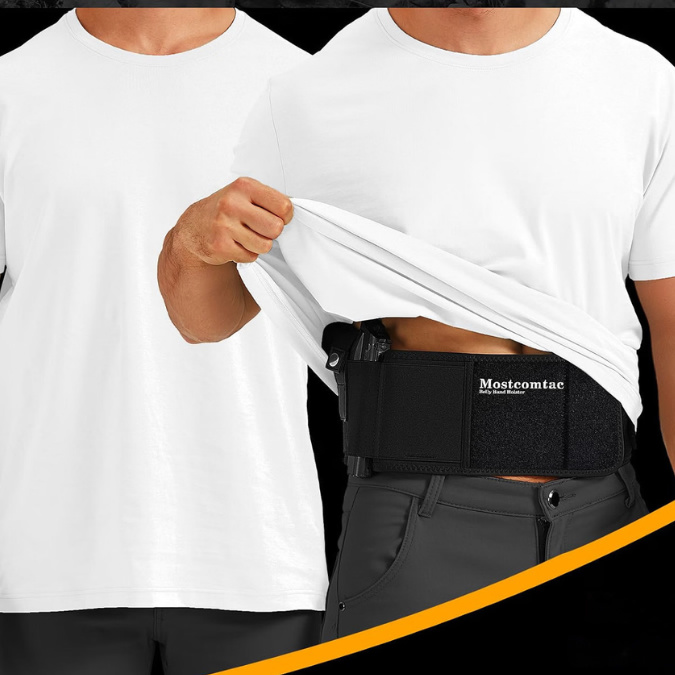
I’d consider the Mostcomtac when a conventional belt-and-clip setup does not suit your clothes. The up-to-54-inch version uses a soft neoprene band with hook-and-loop adjustment, a pistol pocket, and additional storage, including movable magazine holders. It distributes contact around your torso rather than concentrating everything at a narrow belt clip. For you, the useful distinction is clothing flexibility: the band can support the setup independently of ordinary trouser belt loops.
My main concerns are heat, movement, and pistol-specific retention. A larger size does not prevent rolling, riding up, or an awkward fit around a protruding abdomen, and neoprene can become sweaty in warm weather. I would not assume that the flexible pocket provides the same trigger protection or fit as a molded shell, or that it accepts a light or laser. You also need to assess the snap, seams, and magazine security. I’d choose it only when those checks pass and the band remains comfortable and stable through normal movement.
Pros and Cons
| Pros | Cons |
|---|---|
| Works independently of trouser belt loops | Neoprene can trap heat and the band may roll or shift |
| Soft band reduces hard-shell contact | Flexible pockets and straps require careful fit and retention checks |
| Adjustable wrap accommodates different torso measurements | |
| Movable magazine holders add storage flexibility |
Best for: You want a belt-independent option for casual clothing and fit comfortably within this band’s size range.
Skip if: You need a molded trigger enclosure, confirmed light compatibility, or a cooler minimal-contact setup.
DeSantis Slim-Tuk 137KJB6Z0 — Black, Ambidextrous
Highlight: A slim, tuckable option with useful adjustment flexibility.
Key features: Kydex IWB shell • Ambidextrous configuration • Adjustable tension • Tuckable 360 C-Clip • Adjustable carry depth
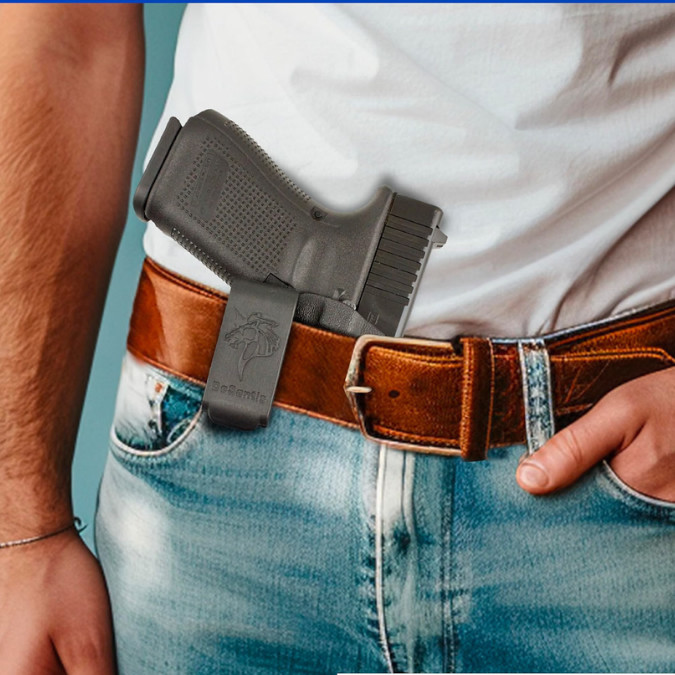
I like the Slim-Tuk’s combination of a compact shell and adjustable attachment for someone who finds broad holsters cumbersome. The 137KJB6Z0 provides adjustable tension and a tuckable C-Clip, allowing you to assess different carry depths and angles without adding a large backer. Its low-profile construction is appealing for everyday clothing, particularly when you want the option of a tucked shirt. That flexibility is more useful to me than simply labeling a holster suitable for every large body.
Lower placement comes with a trade-off: you may have less room around the grip. I would also scrutinize a left-handed setup for any belt-clip contact with the magazine release before considering it suitable. Fit deserves equal attention: I would not treat Glock 36 or Gen 5 Glock 23 compatibility as settled for this model. The plastic clip is another consideration if you prefer metal hardware. Choose it for its adjustment range only when the specific pistol, clip position, and seated comfort all work together.
Pros and Cons
| Pros | Cons |
|---|---|
| Compact shell avoids a bulky backing panel | Low placement can restrict grip clearance |
| Tuckable clip suits tucked-shirt clothing | Left-hand clip clearance and some Glock fits need particular scrutiny |
| Adjustable tension allows fit assessment | |
| Reversible attachment and carry-depth adjustment |
Best for: You want a tuckable, adjustable IWB holster for a confirmed compatible Glock.
Skip if: The clip contacts a pistol control or your exact Glock model does not fit correctly.
DTOM Fat Man Medium Denim Possum Pouch
Highlight: A below-waistband pouch for clothing that does not support a conventional holster.
Key features: Denim pouch • Medium handgun size • Fat Man waistband version • Separate magazine pocket • Belt-independent design
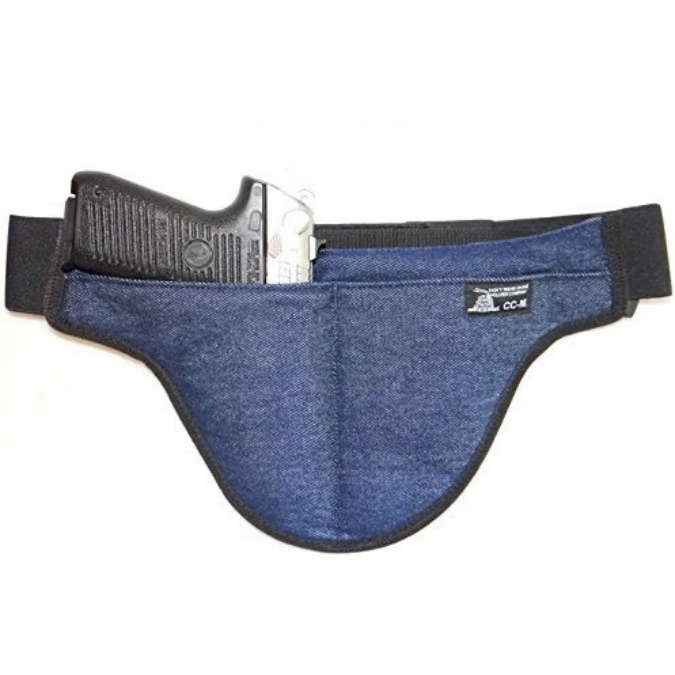
The DTOM takes a different approach: its pouch hangs below the waistband rather than clipping a hard shell at your waist. I’d consider it for loose casual clothing when you want the support band to work independently of your trousers. The denim construction provides a flexible contact surface, and a separate pocket accommodates a spare magazine. Be clear about the naming: Medium describes the handgun pouch, while Fat Man identifies the larger waistband version.
I would not make this my default recommendation for someone who spends much of the day seated. Its lower pouch can be awkward to reach, add bulk between the thighs, and become uncomfortable depending on your body shape and clothing. The larger band can also be too loose even for someone who normally buys larger trousers. You need to establish actual band fit, handgun retention, and complete trigger coverage rather than relying on the name. I’d keep this as a specialized clothing option, with access and seated comfort deciding whether it belongs in your routine.
Pros and Cons
| Pros | Cons |
|---|---|
| Does not depend on trouser belt loops | Below-waist placement can make seated access difficult |
| Flexible denim avoids a hard shell at the waistband | Pouch bulk and oversized band fit can undermine comfort |
| Separate pocket accommodates a spare magazine | |
| Offers an alternative fit for loose casual clothing |
Best for: You wear loose clothing and can obtain a secure, comfortable fit from the larger support band.
Skip if: You need easy seated access or dislike material and bulk between your thighs.
Relentless Tactical The Defender — Chocolate Brown, Right-Hand Sweatshield
Highlight: Leather comfort with an extended barrier between your skin and pistol.
Key features: Leather IWB construction • Extended sweatshield • Metal belt clip • Right-hand draw • Chocolate Brown finish
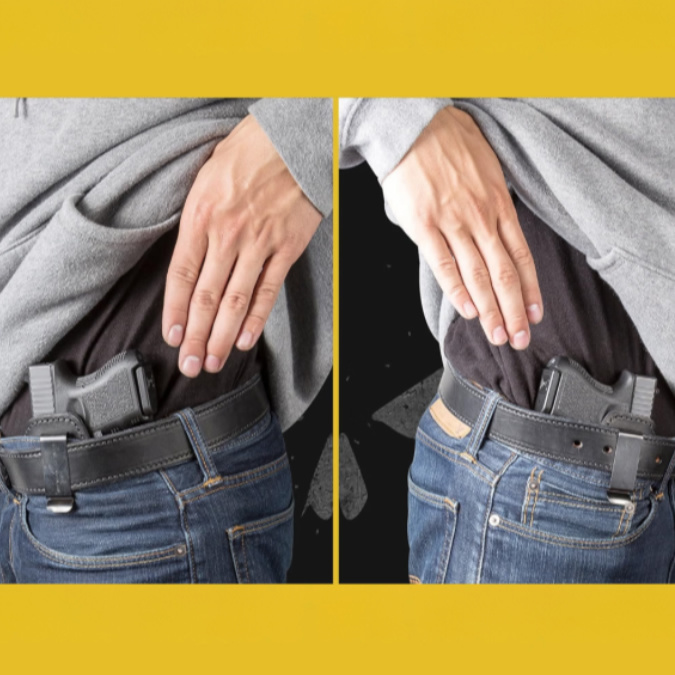
I’d consider The Defender if hard holster edges are your main source of discomfort. This right-hand Sweatshield version adds an extended leather back between your body and the pistol, which matters when your abdomen presses against the grip or slide. The simple clip-on design keeps the setup uncomplicated, while the leather offers a less rigid contact surface than an all-Kydex shell. For everyday wear, I value that extra separation more than the finish.
My reservation is the broad fit: a pistol can sit too deeply even when it physically fits inside. You need usable grip clearance and secure retention, particularly with smaller handguns. I also would not promise that the leather will soften quickly or feel identical to an older Defender. Treat this as a comfort-focused option for a confirmed fit, and choose a different holster if your pistol sinks below a practical gripping height or your optic interferes with the sweatshield.
Pros and Cons
| Pros | Cons |
|---|---|
| Extended leather back separates skin from the pistol | Broad sizing can bury smaller pistol grips |
| Less rigid body contact than an all-Kydex shell | Leather feel and break-in can vary |
| Straightforward clip-on attachment | |
| Simple design without a wide wraparound band |
Best for: You want a simple leather IWB holster with extra coverage against your skin.
Skip if: Your pistol sits too deeply, lacks secure retention, or needs unconfirmed optic clearance.
How to Choose a Holster for Your Fat belly
Here’s some essential stuff you need to double-check when buying a holster for your bigger physique.
Match the Holster to Your Exact Pistol and Accessories
Start with the firearm configuration, not your waist measurement. The correct model name, generation, handedness and accessories determine whether a molded holster is even a candidate. A similar-looking pistol is not a confirmed match, and a product family may contain several shells with different compatibility.
I would check the manufacturer’s fit information for the exact version before comparing comfort features. A light, optic or other accessory can change the required clearance. Broad leather or fabric fit claims deserve particular care: fitting inside the pocket is not the same as being held securely with appropriate trigger coverage and usable grip clearance.
Reject a configuration that binds, shifts excessively or leaves the trigger inadequately protected. A softer surface or lower price cannot correct that mismatch. Do not assume modifications will turn the wrong size into the right one.
Match Waistband Fit to Your Body Shape
Two people with the same trouser size can experience very different pressure from the same holster. Where your waistband sits, how your abdomen meets it and how much room your clothing allows all affect the result. Weight alone is a poor way to select a design.
Compare appendix vs. strong-side IWB if front-waistband pressure makes your current position uncomfortable. I would consider the whole contact area rather than assuming a smaller shell automatically feels better. A narrow hard edge can be more noticeable than a larger, smoother surface.
Use the following guide to identify what needs attention. These are buying considerations, not fit guarantees.
| Constraint | Prioritize | Check the trade-off |
|---|---|---|
| Abdominal pressure | Contact shape and suitable ride height | Grip clearance and seated contact |
| Limited waistband room | Appropriate footprint | Hard-edge pressure |
| Beltless clothing | Independent support | Band movement and pocket retention |
Balance Ride Height With Grip Clearance
Ride height describes how much of the holster and pistol sits above or below the waistband. A lower position may change where pressure falls, but it can also leave less grip exposed.
The JX Fat Guy design makes this tradeoff especially relevant. Its appeal is the lower position, yet you still need a configuration that fits your body and leaves practical grip clearance. A design that feels acceptable standing can interact differently with your abdomen when seated.
Check which adjustments the exact model actually supports. A retention screw is not evidence of adjustable ride height, and hardware from another version may not be included. For other front-waistband designs, compare our top IWB appendix holsters, paying attention to their size and compatibility.
Choose Material Without Overlooking Retention
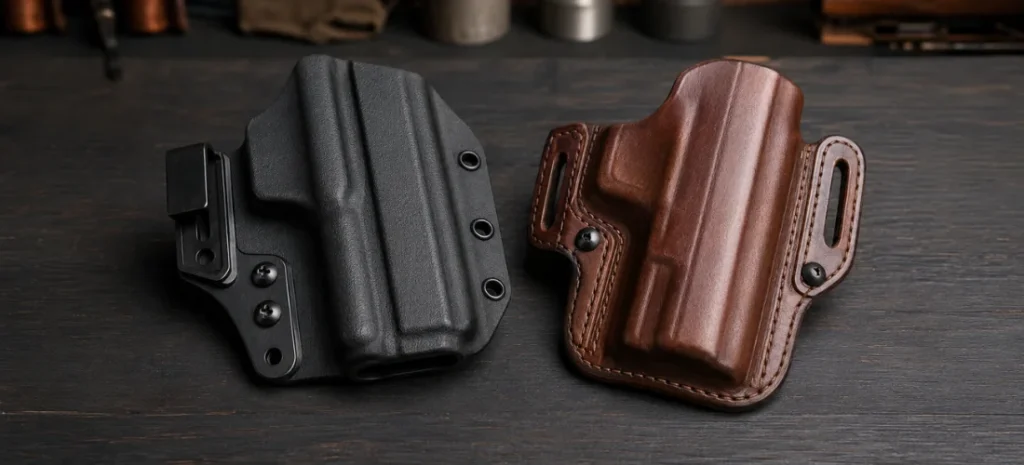
Leather can offer a less rigid contact surface, while molded thermoplastic keeps a defined shape. Neither material guarantees comfort. Edge finishing, footprint, positioning and the exact firearm fit can matter as much as the material label.
Our guide to Kydex vs. leather holsters explains how material choice affects shape retention, maintenance, and comfort. I would judge soft contact and structural support separately. A comfortable pocket still needs to hold the intended firearm securely and protect its trigger.
That distinction matters with the belly band and denim pouch here. Do not assume either provides the same rigid enclosure as a molded shell. Likewise, leather that becomes excessively soft or loses its intended shape deserves attention. Follow the maker’s care guidance rather than improvising treatments that could change fit or retention.
Measure Belly Bands Where You Will Wear Them
Your trouser label is not the circumference of every place a band might sit. Measure at the intended wearing location and compare that measurement with the specific size instructions. A stated maximum size does not describe comfort, closure overlap or pocket stability for every wearer.
Our ComfortTac vs. BravoBelt comparison covers two other belly-band designs and their sizing differences. Those products do not establish the fit or construction of the Mostcomtac option selected here.
I would also consider band width, garment pressure and whether the pouch suits the intended pistol. A band can fit around your body yet roll or shift during ordinary movement. With the DTOM, distinguish the larger band from the Medium pouch designation. “Medium” should not be read as a universal waist-size description.
Which Setup Suits Your Daily Routine?
The smarter move is to match your holster choice to what you actually do daily.
Sitting and Driving
Seated comfort is a separate question from standing comfort. Your abdomen, waistband and seat meet differently once you sit, and a holster that initially seems unobtrusive may create a persistent pressure point. Long driving days make that difference particularly relevant.
I would prioritize a design whose contact shape suits your normal seated posture, rather than choosing solely by its standing profile. Check fit with an unloaded firearm and follow the manufacturer’s instructions. Seat belts must remain correctly worn; a holster is not a reason to compromise their placement.
The denim pouch deserves particular caution if seated access and thigh bulk already concern you. No option here earns an unconditional recommendation for driving, and short-term softness does not establish comfortable support over a full day.
Shorts, Sweatpants and Beltless Clothing
Beltless clothing changes the support question. A clip intended for a suitable belt should not automatically be trusted on a thin elastic waistband. The weight and movement of the complete setup matter, even if the garment initially holds it in place.
The Mostcomtac band and DTOM pouch offer independent support arrangements, which explains their stronger clothing-versatility scores. That advantage does not remove their retention, bulk or movement limitations. I would separate “works without a trouser belt” from “works securely for this firearm and activity.”
Consider how the garment and band interact during your ordinary routine. If the setup rolls, sags or moves excessively, clothing flexibility alone is not a reason to keep it.
When Waistband Carry Is the Wrong Match
Sometimes the problem is the overall arrangement rather than one holster edge. If several suitable IWB configurations create persistent discomfort, another design may deserve consideration. OWB and hybrid options introduce different clothing, footprint and support tradeoffs; neither is automatically better for a larger build.
This seven-product lineup does not establish an OWB winner or a rigid-shell belly-band winner. I would not stretch its recommendations to fill those categories. The right next comparison depends on what failed: body contact, garment room, exact firearm compatibility or stable support.
If none of these waistband options suits your clothing, compare our broader concealed carry holster options before settling on a setup.
Final Verdict
I’d put the JX Tactical Fat Guy first for the matching P365X Macro setup when a lower ride improves your comfort without sacrificing usable grip clearance. The DeSantis Slim-Tuk is my next comparison for a compatible pistol when slimness, tuckability and adjustment matter more.
The Defender and GUN & FLOWER offer leather-focused alternatives, but exact fit remains decisive. POLE.CRAFT keeps the shell simple. Mostcomtac and DTOM address beltless clothing with more significant retention, movement or bulk compromises. Choose the configuration that fits securely and suits your daily posture, not simply the highest score or softest material.
FAQs
A larger build does not automatically rule out appendix carry. Suitability depends on your body shape, waistband, exact firearm and holster configuration. I would focus on secure fit, complete trigger protection, practical grip clearance and seated comfort rather than body weight alone. If the arrangement creates persistent pressure or cannot meet those conditions, a different position or design deserves consideration.
No. A lower ride changes where the pistol and holster contact your body, which may help some wearers and bother others. It can also reduce the amount of grip available above the waistband. I would treat lower ride height as a design choice to evaluate, not a guarantee. Both seated contact and usable grip clearance belong in that decision.
Neither is automatically better. IWB places more of the setup inside your waistband, where clothing allowance and body pressure matter. OWB moves the holster outside that space but changes coverage and support requirements. I would compare the complete arrangement with your normal clothing. This roundup does not include an OWB winner, so its rankings should not be read as an IWB-versus-OWB test.
Some can accommodate larger circumferences, but the size range is only the starting point. Measure where the band will actually sit and confirm the specific size instructions. Then consider rolling, closure support, pocket fit and secure retention. A comfortable band does not automatically provide rigid trigger protection. The Mostcomtac version here is listed up to 54 inches; that maximum is not a promise of comfort for every wearer.
Prioritize how the holster contacts your abdomen, waistband and seat in your normal seated posture. Standing comfort alone is insufficient. I would pay particular attention to persistent pressure, bulk and whether the complete setup stays supported without interfering with correct seat-belt use. Follow the manufacturer’s guidance when checking fit with an unloaded firearm. No product in this comparison has been established through our own extended driving test.
The Mostcomtac band and DTOM pouch use support arrangements independent of a trouser belt. Suitability still depends on the setup. The clip-equipped IWB options should be used with the support specified by their manufacturers. I would not assume a thin elastic waistband can replace a proper belt simply because a clip can attach to the fabric.