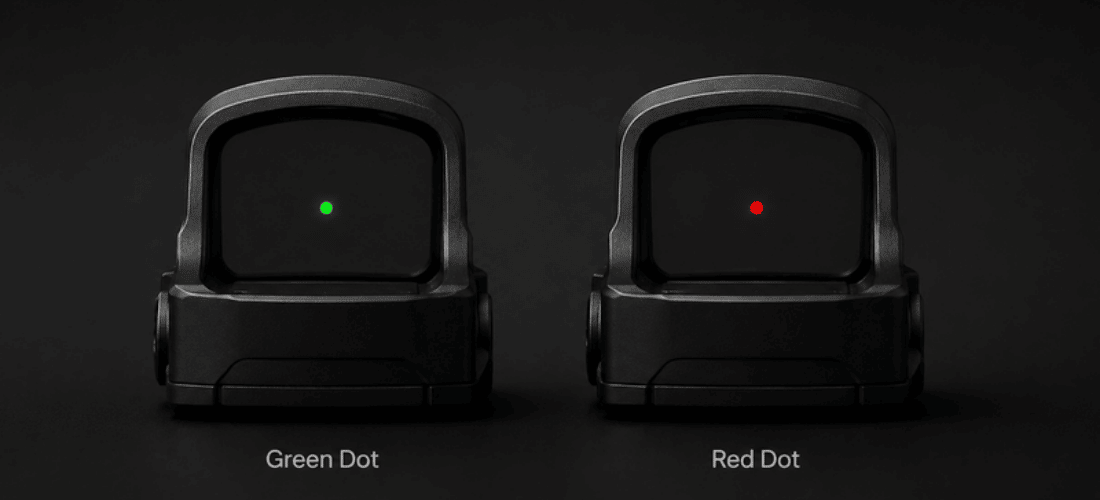
Quick Summary: A green dot is often easier to notice in bright daylight because the human eye is highly sensitive to green light. A red dot usually provides stronger contrast against foliage, offers more models at more price points, and remains the safer all-purpose choice for many first-time buyers. Neither color is inherently more accurate. Your eyesight, background, brightness setting, dot size, and intended use decide the winner.
If you are comparing a green dot vs red dot, do not choose from color alone. The same sights can look very different to individual eyes.
This post covers handguns, rifles, shotguns, concealed carry, range use, competition, and hunting.
Green Dot vs. Red Dot
Here’s how these two compare:
| Factor | Red dot sight | Green dot sight |
|---|---|---|
| Bright sun | Good with enough brightness | Often appears brighter and is easier to notice |
| Dim light | Usually comfortable at a low setting | Works well if its lowest setting is sufficiently dim |
| Green foliage | Strong color contrast | Can blend with the background |
| Snow, pale targets, open sky | May need a higher setting | Often stands out well |
| Astigmatism | May look crisp, smeared, or starburst-shaped | May look cleaner for some people, worse for others |
| Battery life | Traditionally has an advantage | Often shorter in comparable designs, but not always |
| Price and selection | More choices, including budget models | Fewer choices and sometimes a price premium |
| Best default user | First optic, mixed conditions, budget-focused | Bright-day use or eyes that clearly prefer green |
What Is the Difference Between a Red Dot and Green Dot?
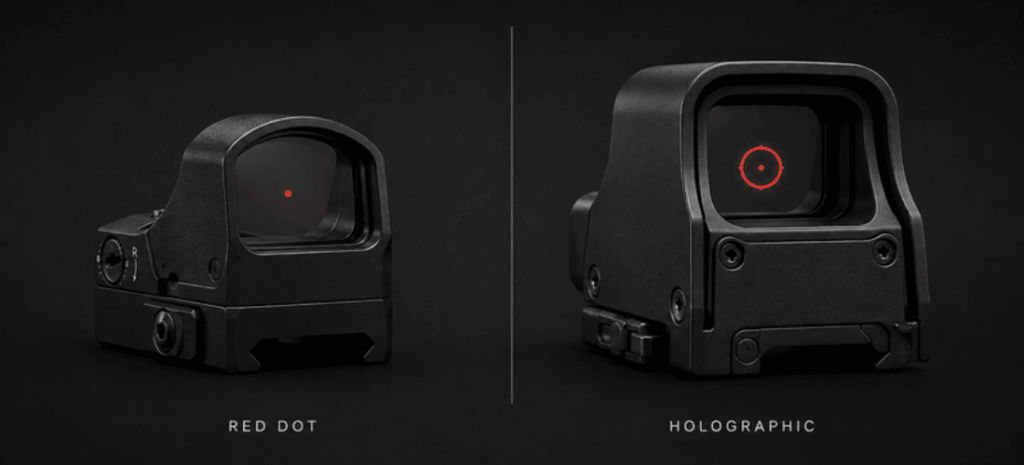
In most modern reflex sights, the fundamental difference is the LED reticle color. An emitter sends light toward a coated lens, which reflects the aiming point to the shooter’s eye. Nothing is projected onto the target. Both are normally 1x, non-magnified optics with unlimited eye relief.
“Red dot sight” is also a broad category name. One may display a green dot, circle-dot, chevron, or another illuminated reticle. A reflex sight is not a laser sight, and a holographic sight uses a different system.
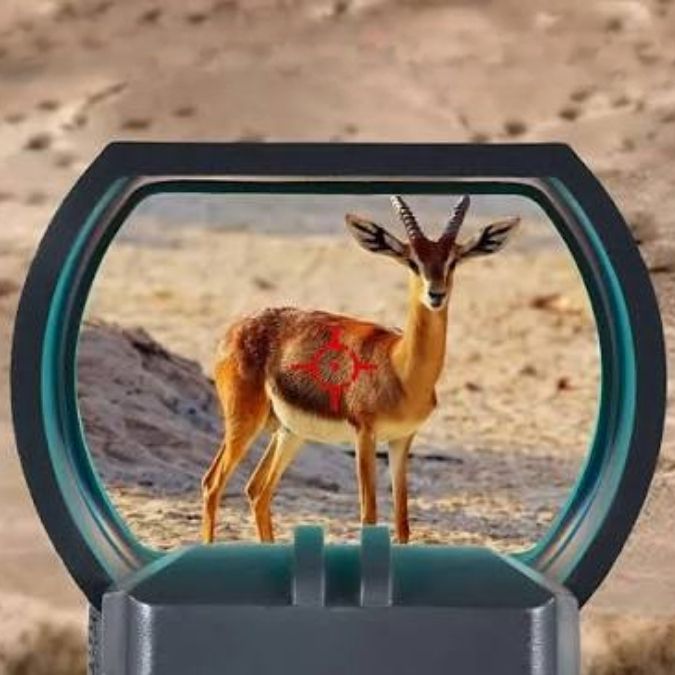
Color does not change mechanical accuracy or zero. Comparable red and green dots can be equally precise. Color changes how quickly and clearly you perceive the aiming point.
Why Does a Green Dot Often Look Brighter?
The eye is not equally sensitive to every wavelength. Under bright, cone-dominated vision, the standard human visual-response curve peaks close to 555 nanometers, according to the International Commission on Illumination. Many green emitters sit near that highly visible region, while red emitters use a longer wavelength.
Green can therefore appear bright at a lower output in daylight. Actual speed still depends on lens coating, LED intensity, background, eyesight, and familiarity.
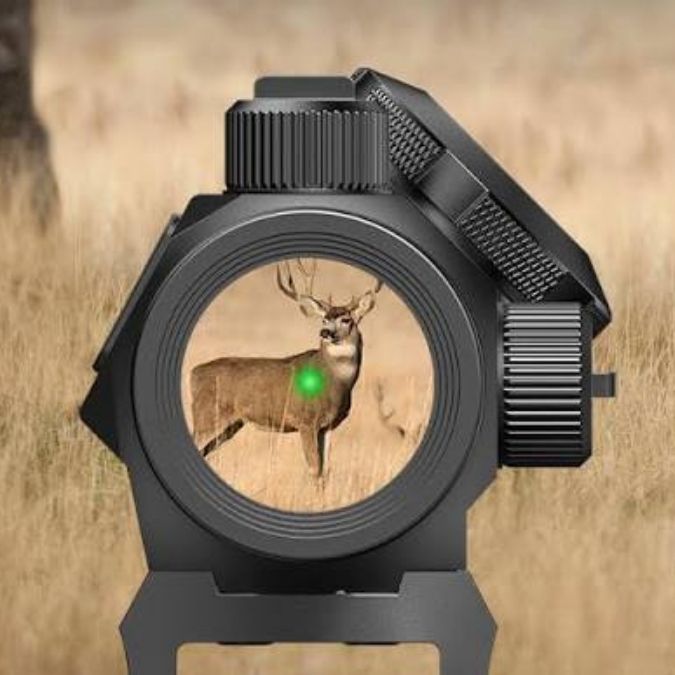
Contrast can overturn that advantage. Green may pop against snow, tan soil, pale paper, or washed-out sky, yet blend into grass. Red separates from green woods but can compete with red targets, vehicle lights, or autumn leaves.
Visibility in Bright and Low Light
Bright Daylight
Green has its clearest advantage in open, high-glare conditions. It may require less searching or output than comparable red, especially on an outdoor range, over water, in desert terrain, or against snow.
A quality red dot remains usable in full sun. If it disappears, check output, brightness, lens tint, and battery before blaming the color.
Low Light
Either color works in low light when dimmed correctly. An over-bright reticle blooms, hides detail, and appears larger than its stated MOA size. Red often feels less intrusive in darkness, but color alone does not establish night-vision compatibility.
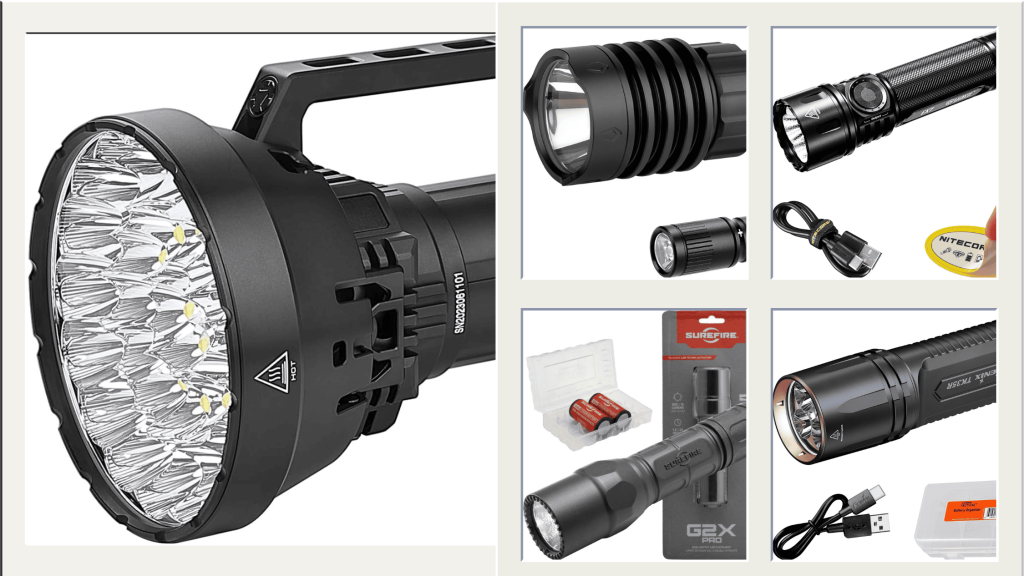
For a defensive setup, the optic helps you aim, while a light helps you identify what is in front of you. Compare suitable identification tools in our review of the best tactical flashlights for low-light conditions.
Is Green or Red Better for Astigmatism?
There is no universal winner here. Astigmatism can cause blurred or distorted vision, as explained by the American Optometric Association explains. One shooter may see green as cleaner; another sees red more sharply. Either can bloom when set too high.
Try these steps before blaming the optic:
- Focus on the target, not the glowing dot.
- Reduce brightness until the reticle is only as bright as necessary.
- Compare both colors while wearing your normal corrective lenses.
- Photograph the reticle with a phone. If the camera shows a round dot but your eye sees a smear, vision is the likely source. This is a useful check, not a diagnosis.
- If every projected dot looks distorted, consider an etched-reticle prism optic. Our review of the best AR-15 optics shows why prism sights often look cleaner to shooters with astigmatism.
Persistent or newly changed distortion deserves a professional eye exam.
Battery Life, Price, and Availability
Red traditionally offers the widest price and feature selection. A green version of the same optic can cost more and may have a lower advertised runtime.
However, “green always drains batteries faster” is outdated. Current red and green variants sometimes carry the same rating. Runtime also changes with brightness, reticle pattern, temperature, motion activation, auto-shutoff, and solar assistance. Compare exact models and test settings.
Premium red optics can advertise tens of thousands of hours. The Aimpoint Acro P-2 review covers a 50,000-hour rating at its specified setting. Just treat runtime as an estimate, not a replacement for scheduled battery changes.
Dot Size Can Matter More Than Dot Color
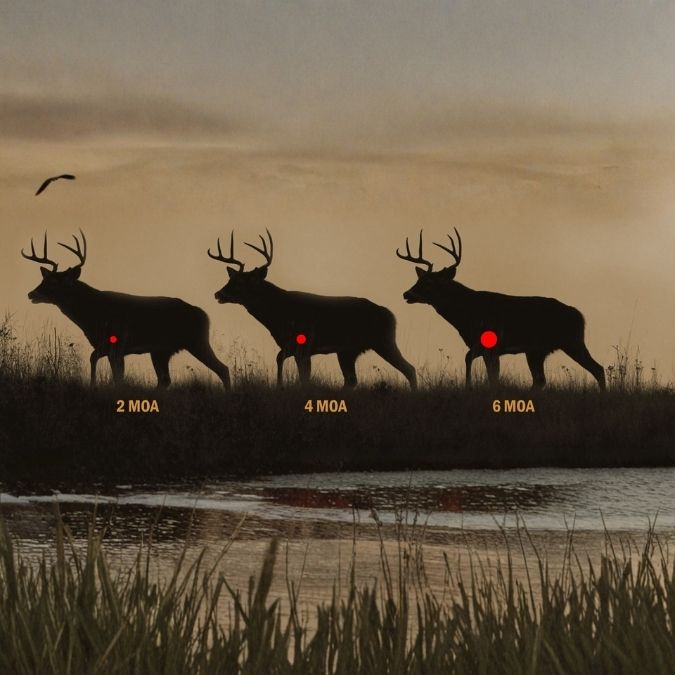
Reticle size affects speed and precision regardless of color. One minute of angle equals about 1.047 inches at 100 yards.
This table shows how much of a target common dot sizes cover.
| Dot size | Coverage at 25 yards | Coverage at 50 yards | Coverage at 100 yards | Typical fit |
|---|---|---|---|---|
| 2 MOA | 0.52 in | 1.05 in | 2.09 in | Rifle, magnifier use, precision |
| 3 MOA | 0.79 in | 1.57 in | 3.14 in | General-purpose pistol or carbine |
| 6 MOA | 1.57 in | 3.14 in | 6.28 in | Fast pistol pickup at closer distances |
A small dot supports a finer hold but may be slower to find. A large dot is easier to acquire but covers more of a distant target. Circle-dot systems add a large reference ring for quicker indexing while retaining a smaller center point.
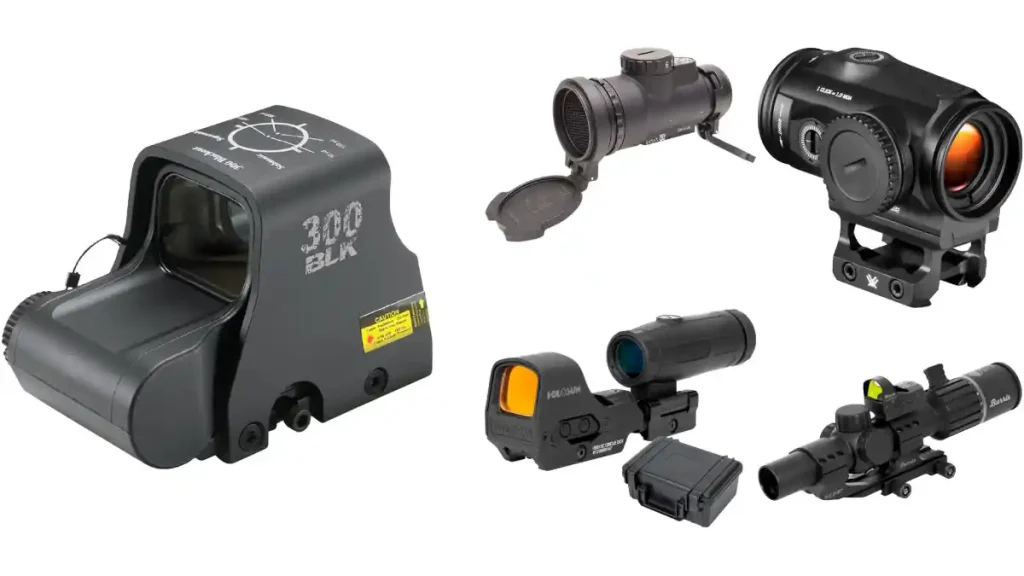
If you want your rifle to work beyond close range, check out these red dot magnifier options.
Which Reticle Color Fits Your Use?
Concealed Carry and Defensive Pistols
Choose the color you acquire reliably from the draw in changing light. Red offers more compact choices; green can excel for daytime carry. Footprint, battery access, durability, brightness controls, and emitter protection matter more than fashion. The Holosun 507C review shows useful carry-optic features to compare.
Rifles and Carbines
Red is the straightforward general-purpose choice because of selection and compatibility with magnifiers and night vision. Green deserves a look for a daylight-focused range rifle. Test the complete setup because magnification makes dot sharpness and size more noticeable.
Hunting
Match color to terrain and legal hunting conditions. Red contrasts with green timber and shaded brush. Green may stand out over water, snow, dry fields, or bright sky. At dawn and dusk, confirm the optic dims low enough.
Competition and Recreational Shooting
Target color, lighting, and familiarity determine the faster option. A timer and repeatable drills provide better evidence than a showroom impression. Neither color fixes an inconsistent presentation or incorrect zero.
How to Choose Between Green and Red
Compare the same optic model in both colors whenever possible. That controls for window size, lens tint, dot size, and electronics.
- Use your normal glasses or contact lenses.
- Keep both eyes open and focus on a target, not the lens.
- Check a dark indoor area, a bright window, and sunlit outdoor backgrounds.
- Set each reticle to the lowest usable brightness rather than matching setting numbers.
- Present the sight repeatedly from a safe ready position and note which color appears first without searching.
- Confirm dot size, mounting footprint, battery access, controls, warranty, and actual runtime before buying.
Handle only safely cleared firearms and follow the retailer’s or range’s rules during any comparison.
Final Verdict
For most users, red is the practical default. It provides more choices, usually costs less, contrasts well with foliage, and performs predictably across mixed conditions.
Green is the better option when it is visibly cleaner to your eyes or when most use occurs in bright, open environments.
This is what you need to do to decide: compare both colors in the same optic family, in realistic lighting, with your corrective lenses. Buy the reticle you can acquire quickly at a sensible brightness. Color theory should narrow the choice, not overrule what you actually see.
FAQs
Not universally. Green often appears brighter in daylight, while red usually offers more models, strong contrast against foliage, and broad mixed-light performance. The better dot is the one your eye sees cleanly in your expected environment.
It can be, but results vary. Some shooters see less starburst with green; others see red more clearly. Lower the brightness and compare both colors. An etched prism reticle may be a better solution if all projected dots look distorted.
Green often has the advantage because human daylight vision is highly sensitive near green wavelengths. A properly designed, daylight-bright red optic can still work very well.
Either works if it has a sufficiently low brightness setting. Red often feels less intrusive, but the optic’s adjustment range and night-vision rating matter more than color.
Sometimes, but not always. Older and directly comparable designs may give red a runtime advantage. Modern red and green variants can have equal advertised battery life, so compare exact model ratings, settings, and power-saving features.