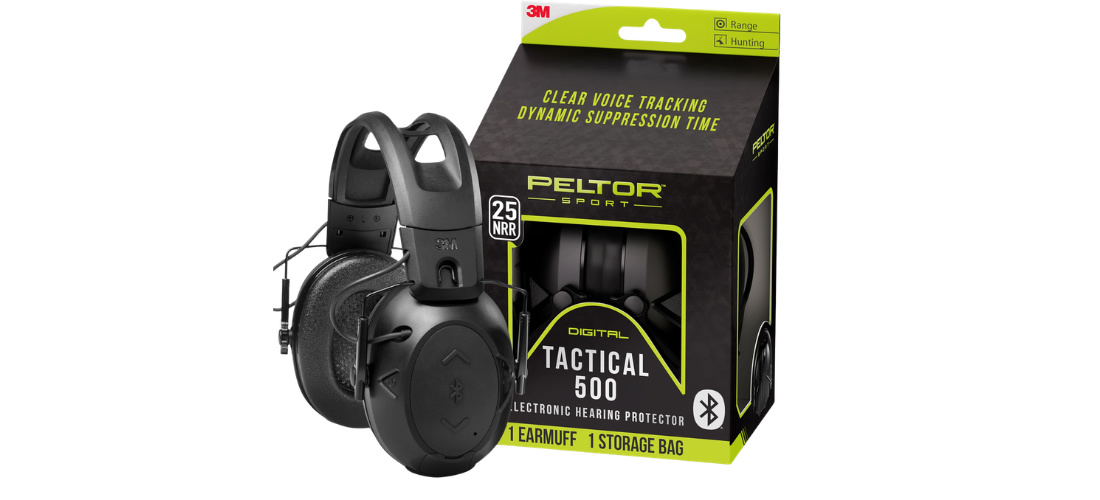
The Peltor Sport Tactical 500 is our top overall pick for shooting ear protection. Its biggest draw is the ability to hear speech and range commands while the electronics suppress sharp sounds. Bluetooth adds calls and audio, though owner reports are mixed on music quality. The main trade-offs are bulky cups, headband pressure for some wearers, and inconsistent reports on long-term durability.
I’m Thomas Harvey, a gear writer and researcher at Gunners’ Review, and If you’re looking for 3M Peltor ear muffs, you’re in the right space. Here’s what I looked at for the Tactical 500. I used 3M’s published specs and the most recent word on the product to see what it does well at the range and where the fit or audio might disappoint.
By the end, you’ll know why it ranks #1 in our review of the best shooting headphones; it’s easily one of the best ear protection on the market right now. So let’s get right into this review.
Key Specs of the Peltor Sport Tactical 500
If you are comparing ear muff hearing protection with Bluetooth, these are the specs that matter most.
| Spec | Peltor Sport Tactical 500 |
|---|---|
| Type | Electronic over-ear earmuff |
| NRR | 25 dB |
| Bluetooth | Yes, for phone calls and music |
| Sound processing | Gunshot suppression with Clear Voice Tracking |
| Microphones | Recessed, built to cut wind and fan noise |
| Power | Two AA batteries, or an optional rechargeable pack |
| Auto shut-off | Yes |
| Cushions | Replaceable, with gel cushions sold separately |
| Best for | Range shooting, hunting, shop and yard work |
What Recent Buyers Noticed
The most recent observations on Amazon are talking about clear positives:
- Range commands and stock clearance. One shotgun shooter could hear calls and shoulder the gun without the cups getting in the way. A rifle shooter found the cups too bulky for a comfortable cheek weld.
- Glasses and gel pads. One handgun shooter liked the fit with glasses and optional gel pads. A competition shooter still felt pressure on their eyewear and the top of their head with aftermarket gel cups.
- Long-term durability. One buyer reported a broken hinge after six months of light use. Another reported nearly eight years of use and had only replaced the ear cushions.
How Much Protection Does a 25 dB NRR Really Give You?
3M lists a 25 dB Noise Reduction Rating (NRR) for the Tactical 500. The rating comes from laboratory testing. The attenuation you get depends on how well the cups seal around your ears. Eyewear, headwear and contact with a gun stock can affect that seal. See how NRR ratings work for more on what the label measures.
In workplace noise assessments using A-weighted measurements, OSHA (Occupational Safety and Health Administration) subtracts 7 dB from the labeled NRR. In its assessment of whether engineering controls are needed, OSHA also applies a 50% correction. For details, refer to OSHA’s explanation of the workplace calculation.
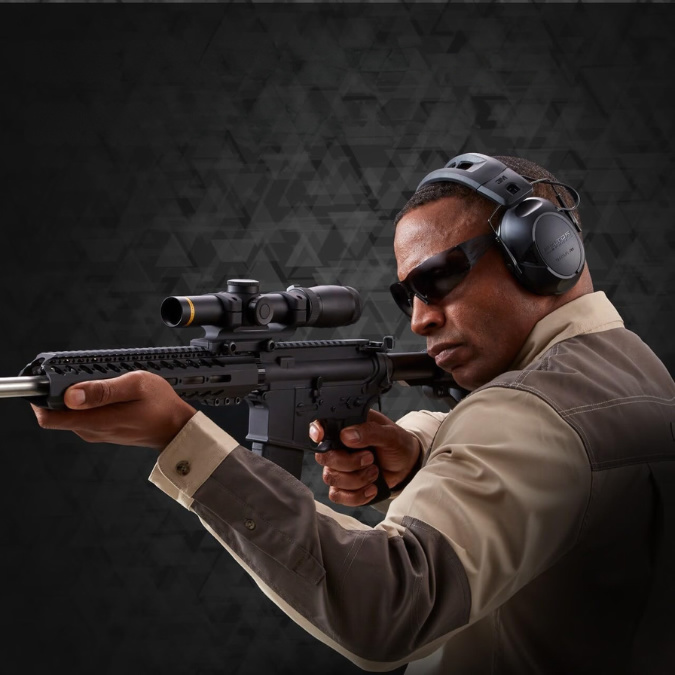
Recent owners have praised the protection outright, from handguns to .308 rifles. Some did say it fell short, including ringing ears after a match and no gain over a basic passive muff while mowing.
Outside the U.S., ear defenders usually carry an SNR instead. The two numbers are not directly comparable, and I did not find an SNR for this model.
How Well Do the Suppression, Voice Pickup and Bluetooth Work?
The electronics are what separate this muff from a passive one, and they are also where owners disagree most. I split them into three parts so you can weigh each one on its own.
Gunshot suppression
Suppression is the strongest part of the package for most owners. People described using it with handguns, shotguns and rifles up to .308, and one said it engaged even when racking a slide.
Three owners mentioned a background hiss or white noise. One said loud music makes the suppression cut in and chop the audio. Constant noise is mixed: six owners liked them around mowers and shop tools, while two said they did little against steady engine noise.
Voice pickup and situational awareness
Voice pickup helps when you need to hear other people between shots. If you plan to wear plugs under the muffs, check whether you can still hear range commands with both layers in place.
Bluetooth calls and music
Bluetooth works best for calls and podcasts. Twenty-one owners liked having calls and music at the range or at work. Nine described dropouts, muffled calls or thin music sound, and six more called the sound usable but not hi-fi.
If you prioritize music quality, these might not best suit to you.
Does the Peltor Sport Tactical 500 Fit With Hats, Glasses and a Cheek Weld?
If your current muffs press on your ears, the Tactical 500’s roomier cups may be a better fit. Check whether your hat or eyewear lifts either cushion away from your head.
The headband can become a pressure point over a long session. Optional gel cushions may improve comfort around glasses, so check the fit with the eyewear you actually use.
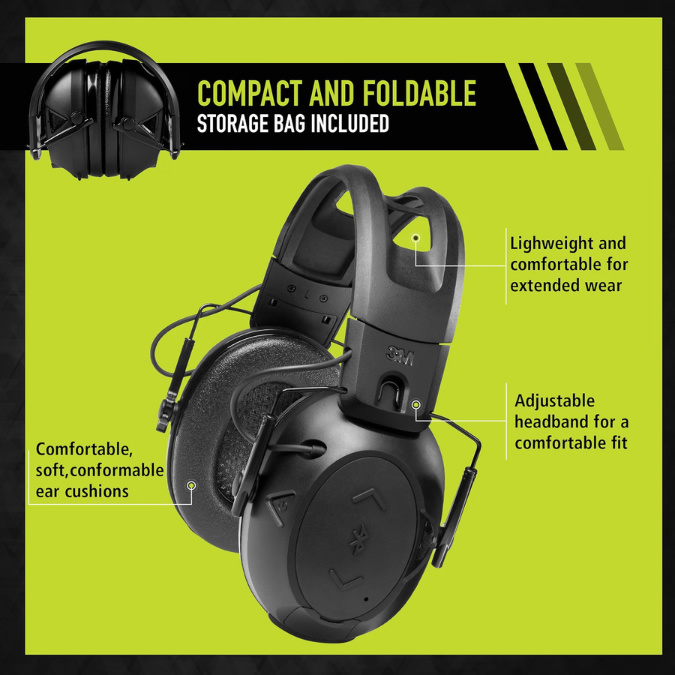
When comparing muffs for a rifle or shotgun, shoulder the firearm and check whether the stock pushes either cup away from your ear.
How Long Does the Battery Last?
The muffs run on two AA batteries, and an optional rechargeable pack is available. Runtime claims are all over the map, from roughly an hour and a half per set on two units to 10 to 12 hours per set. I would not trust any single number.
The muffs also shut off on their own, so you may need to touch a button during a long session.
Batteries are the most common cause of setup frustration. Five owners hit a manual that mentions both AA and AAA, or found the compartment tight, and one lost a pair when a cell leaked. I would use fresh or rechargeable AA cells and pull them for storage.
Three owners also ran into the micro-USB charging port on the optional pack, and two wished for USB-C.
How Durable Is the Peltor Sport Tactical 500?
Durability is the biggest trade-off for frequent use. Some reports mention failures involving the cups, hinge, charging port and electronics. If you rely on the muffs regularly, check the warranty terms and replacement cushion availability.
Also, confirm the 12-month warranty at the time of purchase.
Can You Wear the Peltor Sport Tactical 500 With Earplugs at an Indoor Range?
Yes, and for loud indoor lanes or rifles with muzzle brakes I would. My review on pairing muffs with plugs explains the usual shortcut of adding 5 dB to the higher rating.
Owners backed this up. One said the muffs plus foam plugs beat passive muffs indoors, another reached for plugs next to a muzzle-braked rifle, and a third said handgun use indoors was fine even beside a rifle.
The catch is hearing. One owner found range commands hard to catch with plugs in, and another felt the seal was weak with the muffs switched off.
Pros and Cons
Here’s how I weigh the strong positives against the negatives. Battery and headband issues are already covered above.
| Pros | Cons |
|---|---|
| Clear speech and range commands while loud noise stays controlled | Failures from a few days to under three years, described by nine owners |
| Softened shots across handguns, shotguns and rifles, praised by 41 owners | Thin sound and dropouts for a meaningful minority |
| Taking calls at the range without removing the muffs | |
| Roomy cups for larger heads and gel cushions for glasses |
How Does the Peltor Sport Tactical 500 Compare With Other Electronic Muffs?
I compared the 500 with three alternatives I would weigh against it, using the listed NRR for each. My comparison of Howard Leight vs Peltor goes deeper on the brand matchup.
| Model | Listed NRR | Bluetooth | Best for |
|---|---|---|---|
| Peltor Sport Tactical 500 | 25 dB | Yes | Voice pickup, calls and music |
| Peltor Sport Tactical 300 | 24 dB | No | The same family without Bluetooth |
| Howard Leight Impact Sport BT 5.0 | 22 dB | Yes | Bluetooth with a lower NRR |
| Walker’s Razor Slim | 23 dB | No (audio input jack) | Slim cups for cheek weld |
The 500 has the highest NRR of the four, and the Tactical 300 is the closest match if you do not want Bluetooth. If attenuation matters most, the Howard Leight Impact Pro is listed at 30 dB without Bluetooth. For more options, see my review of the best ear muffs for shooting.
Is the Peltor Sport Tactical 500 Worth It?
I would buy it if you want one muff that covers the range, a shop and phone calls, and you can live with average music sound. Many owners were happy with protection and voices, and the electronics are what set it apart from passive muffs.
I would skip it if long-term durability is your top priority, or if you want strong attenuation without electronics. Add gel cushions if you wear glasses, and check the warranty terms before you buy.
FAQs
3M labels the Peltor Sport Tactical 500 at 25 dB NRR. The attenuation you get depends on fit and how well the ear cushions seal around your ears, including when you wear glasses or shoulder a firearm.
No. It is an electronic muff that amplifies quiet sounds and suppresses loud ones, which differs from the anti-noise approach in noise cancelling headphones. Owners had mixed results with steady drones such as mowers, so I would not pick it as a noise cancelling muff for engines.
The muffs can fit with a hat or glasses. Check that the cushion sits flush around each ear. Optional gel cushions may improve comfort, and the fit will vary with your eyewear and head shape.
Only with an adapter, because the 500 is a headband model and not a helmet-mounted headset. Adapter makers list it as compatible, and one owner adapted theirs for work with a hard hat in winter. Check your helmet’s rail type and confirm the cups still seal. It is a civilian sport muff, so it does not tie into a crew radio.
Yes, and owners took calls on the firing line without removing the muffs. Nine described dropouts or weak sound, so I would not count on it for music quality.