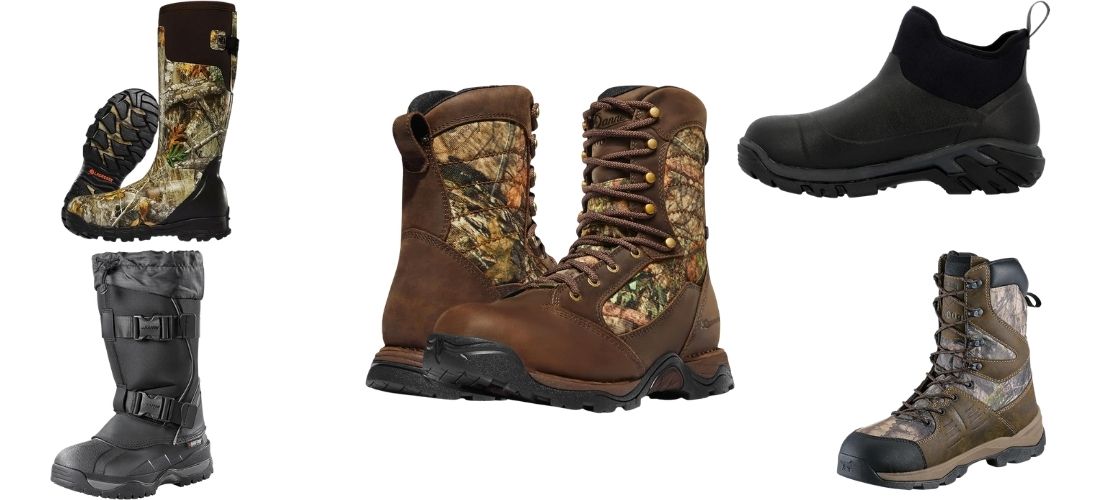
The best cold weather hunting boots should match how long you sit, how far you walk and how wet the ground gets. Right now, I’d choose the Danner Pronghorn 800G for the best overall balance. The LaCrosse Alphaburly Pro suits colder wet stands, while the Baffin Impact is the specialist option for severe cold.
Your usual terrain matters just as much. For milder seasons, compare our broader guide to the best hunting boots.
How I Selected These Cold Weather Hunting Boots
For this best cold weather hunting boots review, I compared exact product variants. That’s crucial since insulation, shaft height, width, lining and even outsole construction can change between versions carrying a similar name.
Cold protection accounts for 40% of the final score, while wet-weather protection accounts for 35%. The rest 25% I assigned to construction value. This weighting favors boots that keep serving their intended hunter after the approach, not simply the model with the largest insulation number.
I also weighed the main drawback against the intended use. A heavy rubber boot can make sense for a short walk to a flooded blind, while that same weight becomes a serious drawback on steep ground. Likewise, a warm boot loses practical value when a tight toe box compresses your foot or leaves no room for the socks you intend to wear.
Compare the Best Cold Weather Hunting Boots
I ranked these boots by practical cold-weather value rather than insulation alone. Cold protection carries the most weight, followed by weather protection, and construction value. Each criterion is scored out of 5, and the weighted Overall score is converted to a 10-point scale.
| Rank | Exact model and variant | Best use | Cold protection /5 | Weather protection /5 | Construction value /5 | Overall /10 | Main drawback | Pricing |
|---|---|---|---|---|---|---|---|---|
| #1 | Danner Pronghorn 8-Inch 800G, Mossy Oak Break-Up Country, Men’s Size 13 | Walking followed by stand time | 4.0 | 4.6 | 4.0 | 8.4 | Can feel short or narrow | Check Amazon price |
| #2 | LaCrosse Alphaburly Pro 18-Inch 1600G, Realtree Edge, Men’s Size 8 | Cold, wet stand hunting | 4.8 | 4.8 | 3.4 | 8.0 | Heavy for sustained walking | Check Amazon price |
| #3 | MUCK Woody Max, Black, Men’s Size 8 | Mud, snow and wet access routes | 4.4 | 4.6 | 3.2 | 7.9 | Bulky during active hunts | Check Amazon price |
| #4 | Baffin Impact Men’s Boot, Black, Size 7 | Extreme cold with little movement | 5.0 | 4.4 | 3.6 | 7.7 | Oversized for long approaches | Check Amazon price |
| #5 | Irish Setter Terrain 10-Inch 1200G, Mossy Oak Country DNA, Men’s Size 8 D | Moderate walk followed by a cold sit | 4.5 | 4.3 | 3.2 | 7.6 | Narrow, tight fit for some feet | Check Amazon price |
The scores are comparative. Baffin leads for maximum cold protection, but Danner ranks first overall because it offers a more useful balance for hunters who alternate between moving and waiting. No single insulation number can tell you how a boot will feel once fit, socks, wind, moisture and activity change.
The Best Cold Weather Hunting Boots
These best picks cover mixed hunts, wet stands, muddy ground, severe cold and insulated lace-up use. Start with your movement level, then compare the fit and weather protection.
Danner Pronghorn 8-Inch 800G, Mossy Oak Break-Up Country, Men’s Size 13
Highlight: Best overall for cold-weather hunts that mix walking with time on stand
Key features: 800G PrimaLoft insulation • Waterproof GORE-TEX liner • 8-inch full-grain leather and textile upper • Vibram Pronghorn outsole • 59-ounce pair weight
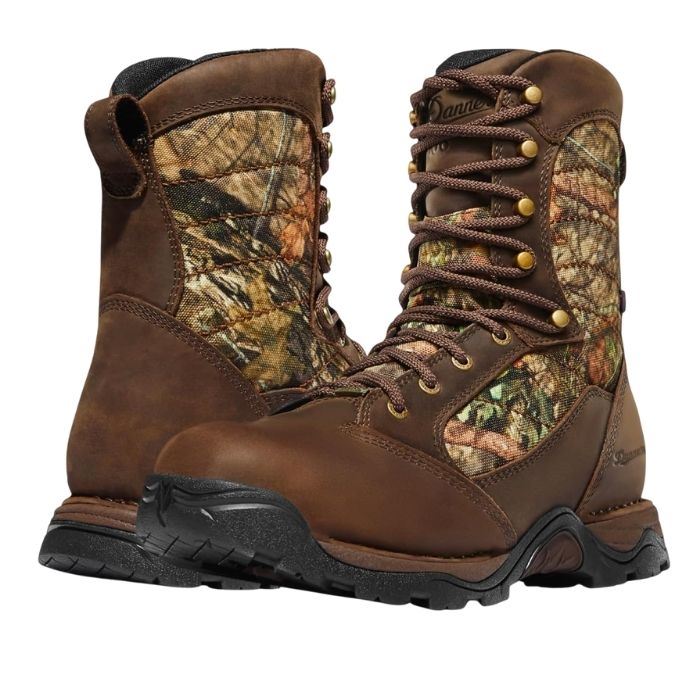
I’d choose the Danner Pronghorn as the most balanced boot here when your hunt includes real mileage before you settle into a stand. Its 800G PrimaLoft insulation adds cold-weather protection without pushing the boot into oversized pac-boot territory, while the waterproof GORE-TEX liner and eight-inch upper help manage wet grass, mud and shallow snow. I also like the combination of the supportive TERRA FORCE NEXT platform, cushioned Vibram SPE midsole and rugged Pronghorn outsole for uneven ground.
My main reservation is fit. This model can feel short or narrow, so I would not order your usual size blindly, especially if you plan to wear thick hunting socks. The 800G insulation is also a better match for active or mixed hunts than motionless, all-day sits in severe cold. If you want one lace-up boot that can cover upland walking, deer hunting and changing weather, this is my strongest all-around recommendation, but I’d confirm the fit indoors before taking it outside.
Pros and Cons
| Pros | Cons |
|---|---|
| Balanced 800G insulation for mobile cold-weather hunts | Fit can run short or narrow |
| Waterproof, breathable GORE-TEX liner | Not the warmest option for long stationary sits in severe cold |
| Supportive platform and cushioned midsole | |
| Rugged outsole suited to varied terrain |
Best for: Hunters who walk moderate distances and need one supportive waterproof boot for cold, mixed terrain.
Skip if: You need maximum insulation for motionless late-season sits or cannot verify the fit before wearing the boots outdoors.
LaCrosse Alphaburly Pro 18-Inch 1600G, Realtree Edge, Men’s Size 8
Highlight: Best for cold, wet stand hunting
Key features: 1600G Thinsulate Ultra insulation • 18-inch rubber and neoprene construction • Realtree Edge camouflage • Active Fit design • Burly Pro outsole • 5.5-pound pair weight
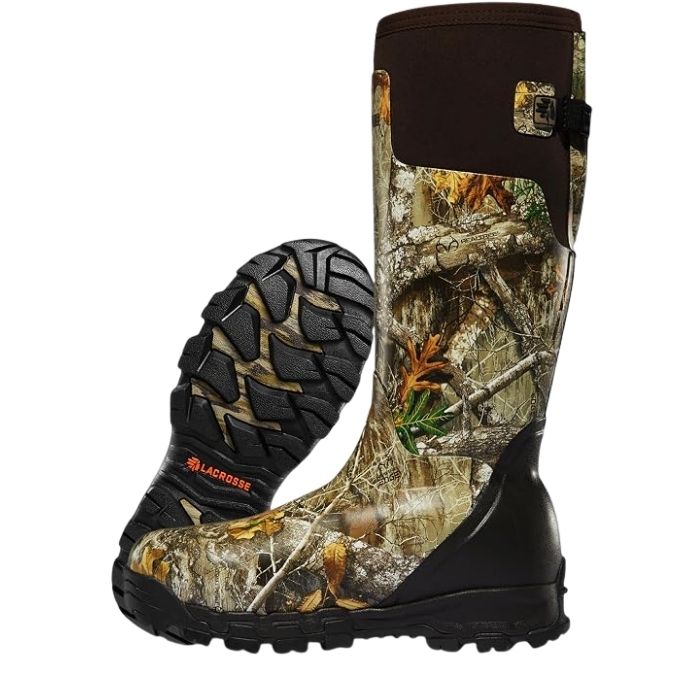
I’d pick the Alphaburly Pro when warmth, water protection and shaft height matter more than covering miles quickly. The 1600G Thinsulate Ultra insulation is built for colder, lower-activity hunts, while the 18-inch rubber and neoprene construction gives you useful coverage in mud, wet vegetation and deeper snow. The Burly Pro outsole adds an aggressive tread, and I like the adjustable fit around the calf for sealing the boot more securely over or under your hunting pants.
The trade-off is a 5.5-pound-per-pair build that can feel stiff and cumbersome compared with a lace-up hunting boot. I would pay close attention to the ankle and calf fit because a tight entry can make the boot difficult to pull on or remove, and the limited underfoot cushioning may become noticeable during long walks. I recommend it for short approaches to a blind or stand in genuinely cold, wet conditions, but I would choose a lighter, more flexible boot if your hunt involves steep ground or sustained hiking.
Pros and Cons
| Pros | Cons |
|---|---|
| High 1600G insulation for cold, low-activity hunts | Heavy 5.5-pound-per-pair construction |
| Tall rubber build protects through mud, snow and wet cover | Entry and ankle area may feel tight for some feet |
| Adjustable calf fit helps close the upper | |
| Aggressive outsole for soft and uneven ground |
Best for: Stand, blind and ice-country hunters facing cold ground, snow, mud or standing water with a short approach.
Skip if: Your hunt requires long hikes, frequent climbing or an easy-off boot for a high-volume ankle or calf.
MUCK Woody Max, Black, Men’s Size 8
Highlight: Best pull-on boot for cold, muddy hunting ground
Key features: 5mm waterproof neoprene bootie • Fleece lining • 2mm thermal foam underfoot • Tall pull-on construction • Outsole designed for mud, snow and dirt
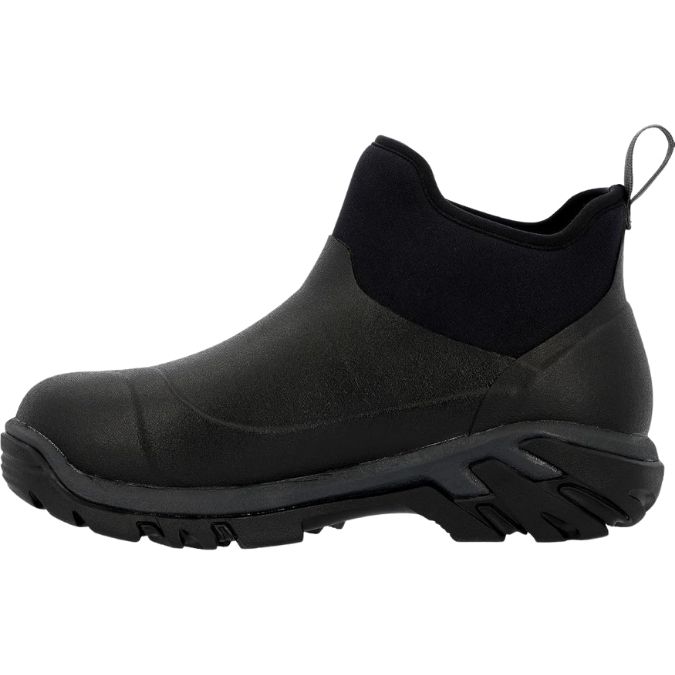
I’d choose the Woody Max when you want a simple pull-on boot for wet fields, muddy access trails and cold mornings around a stand or blind. Its 5mm waterproof neoprene bootie, fleece lining and 2mm thermal foam underfoot create a practical insulation system without laces or external hardware to manage. I also like the tall shaft and aggressive outsole for farm lanes, shallow water, slush and soft ground where a leather boot needs more cleanup.
My hesitation is that the same tall, insulated construction can feel warm, bulky and restrictive when you are moving hard or hunting in milder weather. The heel and calf fit can also make the boot harder to remove, and I would inspect the seams and sole bond regularly because long-term waterproof durability is the main risk with this type of bonded rubber boot. I recommend the Woody Max for cold, wet, low-to-moderate mileage hunts, but I’d switch to a supportive lace-up for steep terrain or long approaches.
Pros and Cons
| Pros | Cons |
|---|---|
| Waterproof neoprene bootie suits wet and muddy ground | Can feel bulky and overly warm during active or mild-weather hunts |
| Fleece lining and thermal foam add cold-weather protection | Tall fit can make the boot difficult to remove |
| Pull-on design is quick to use | |
| Aggressive outsole works across mud, snow and dirt |
Best for: Hunters who want an insulated pull-on boot for muddy fields, snowy access routes and wet stand locations.
Skip if: You need precise ankle support for steep terrain or a cooler boot for high-output early-season hunting.
Baffin Impact Men’s Boot, Black, Size 7
Highlight: Best for extreme cold and low-mobility hunts
Key features: Polar Rated cold-weather design • Removable multi-layer inner boot • B-Tek Dry waterproof base • Mid-calf snow boot • Snowshoe compatible
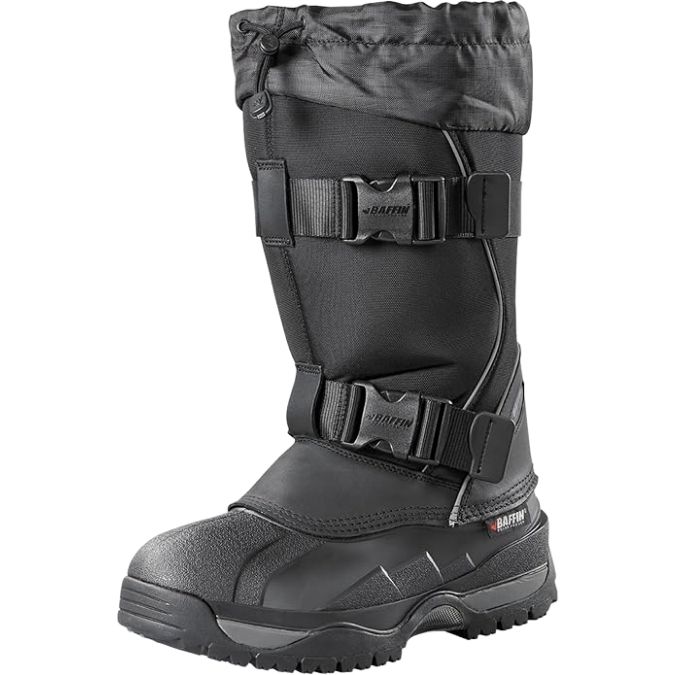
I’d reserve the Baffin Impact for the coldest conditions in this lineup, particularly long sits, ice-country use and snow-covered access where ordinary insulated hunting boots are not enough. Its removable multi-layer liner surrounds the foot with far more insulation than a conventional lace-up, while the B-Tek Dry waterproof base protects the lower boot in snow and slush. Baffin classifies the Impact as Polar Rated, with comfort experienced from -49°F to -76°F during moderate activity, but I would treat that as a controlled manufacturer rating rather than a personal warmth guarantee.
My main caution is bulk. This is a large boot that can feel heavy and awkward on long approaches, in tight vehicles or on technical terrain, and the thick liner makes sizing unusually sensitive. I recommend checking the brand’s measurements rather than automatically sizing up, because both toe pressure and heel movement can undermine warmth and comfort. If your priority is staying protected during a bitterly cold sit, I think the Impact earns its place; if you expect to hike most of the day, it is more boot than you need.
Pros and Cons
| Pros | Cons |
|---|---|
| Highest cold-weather capability in this lineup | Bulky build is poorly suited to long-distance hiking |
| Removable multi-layer liner can be dried separately | Thick liner makes sizing and heel fit difficult to predict |
| Waterproof base protects in snow and slush | |
| Snowshoe-compatible design suits deep-winter access |
Best for: Hunters facing severe cold, deep snow and extended periods of low movement in a blind, stand or ice-country setup.
Skip if: You need an agile boot for long hikes, steep ground, frequent driving or relatively mild winter temperatures.
Irish Setter Terrain 10-Inch 1200G, Mossy Oak Country DNA, Men’s Size 8 D
Highlight: Best high-insulation lace-up for moderate walking
Key features: 1200g insulation • 10-inch waterproof leather upper • UltraDry waterproofing system • enerG high-rebound EVA midsole • Polyurethane footbed • ScentBan scent control
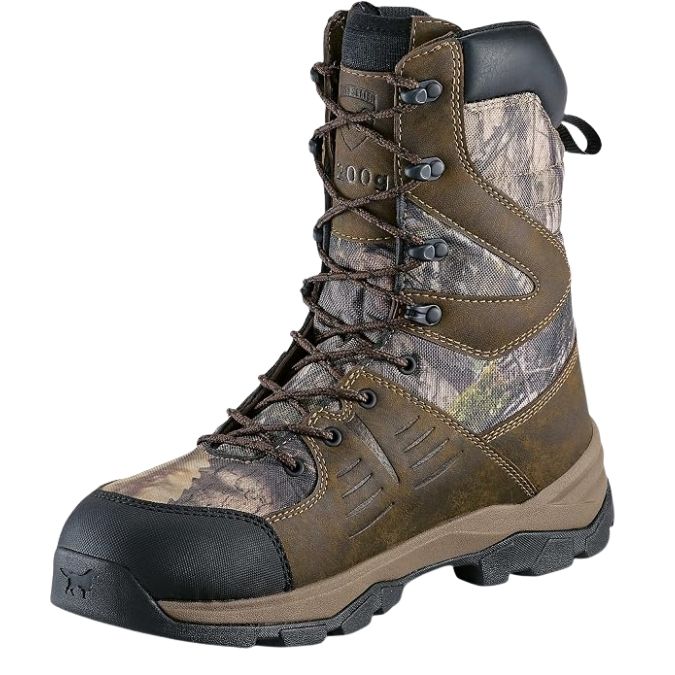
I’d consider the Irish Setter Terrain when you want more insulation than the Danner but do not want to give up the control of a lace-up boot. Its 1200g insulation and ten-inch waterproof leather upper suit colder stand hunts, while the UltraDry system helps protect your feet through damp cover and shallow puddles. I also like the combination of a polyurethane footbed and high-rebound enerG EVA midsole because it gives this boot a more walking-oriented structure than the tall rubber options.
Fit is the deciding issue for me. The Terrain can feel narrow through the forefoot and tight above the ankle, even in wider sizes, and its warmth does not automatically make it comfortable for a full day of walking. I would only recommend it if you can confirm enough space for your hunting socks without compressing your toes. For a hunter who wants a warm, supportive lace-up for a moderate walk followed by a long sit, it is a useful middle ground; wide-footed hunters should be cautious.
Pros and Cons
| Pros | Cons |
|---|---|
| 1200g insulation bridges mobile and stationary cold-weather use | Forefoot and ankle fit can run narrow or tight |
| Ten-inch waterproof leather upper offers lace-up support | Comfort may fall off during extended walking |
| Cushioned polyurethane footbed and high-rebound EVA midsole | |
| Scent-control treatment supports hunting use |
Best for: Hunters who want a warm lace-up boot for a moderate approach followed by a cold stand or blind sit.
Skip if: You have a wide or high-volume foot and cannot try the boot with your intended hunting socks before committing.
How to Choose the Best Cold Weather Hunting Boots
The warmest-looking boot is not automatically the right one. I would first map your approach distance, waiting time, terrain and likely moisture, then decide how much bulk and insulation you can realistically manage.
Match the Boot to How Much You Move
A short approach followed by four hours on a stand demands more retained warmth than a day of steady still-hunting. For stationary use, I would accept additional insulation and weight because your feet generate less heat once you stop. The LaCrosse and Baffin are strongest in that role.
For mixed days, the Danner and Irish Setter give you more control and support. A hunter covering several miles can become uncomfortable in a tall, heavily insulated rubber boot, especially when the approach creates sweat. Our comparison of still hunting versus tree stand hunting can help you identify whether movement or waiting dominates your day.
Understand Insulation Without Relying on One Number
Insulation weight is useful only within the context of the complete boot. An 800G lace-up can be the better choice for active cold-weather hunting, while a 1600G rubber boot makes more sense when you walk a short distance and remain still. A removable multi-layer liner, such as the one in the Baffin Impact, cannot be compared directly with a conventional gram rating.
I would also avoid treating a manufacturer temperature category as a guarantee. Your circulation, sock thickness, moisture, food intake, wind exposure and time without movement all affect comfort. The National Weather Service wind-chill guide is a better tool for understanding environmental risk than relying on a boot label alone.
Waterproofing, Sweat and Wet Ground
Rubber and neoprene designs provide tall protection in mud, slush, wet vegetation and shallow standing water. A waterproof leather or textile lace-up usually gives you better ankle control and a more natural stride, but water can still enter over its shorter collar.
Waterproof does not mean moisture-free. Sweat can build inside any insulated boot during a hard approach, and that dampness becomes uncomfortable after you stop moving. Adjust your pace, open closures when conditions allow and change damp socks before a long sit. Use our review of the best hunting rain gear to choose outer layers that help prevent water from running into the boot opening.
Fit, Socks and Toe Room
Fit the boot with the socks and insoles you will actually use. Your heel should remain controlled, but your toes need enough room to move without pressing against the front or sides. A thick sock squeezed into a close-fitting boot can restrict space and defeat the reason you added it.
I would not automatically order a larger size. Extra length can create heel lift, friction and instability, while a wider or higher-volume last may solve the actual problem. Tall pull-on boots also require attention at the ankle and calf because a secure foot fit does not guarantee an easy entry or comfortable shaft.
If your current socks bunch, become damp or make the boot too tight, compare the best hunting socks by weight, cushioning and height before changing boot sizes.
Compare Height, Closure, Traction and Weight
Eight- and ten-inch lace-up boots let you adjust tension across the instep and ankle. That control matters on slopes and uneven ground. Tall pull-ons are faster to use and protect more of the lower leg, but they cannot provide the same level of fit adjustment.
Traction should match the ground rather than look aggressive on a product page. Deep, widely spaced lugs can clear soft mud and snow, while a supportive outsole and stable heel matter more on rocky or side-sloping terrain. No outsole makes smooth ice safe, so change your route or add a suitable traction device when conditions require it.
Finally, compare pair weight with your approach distance. The 5.5-pound LaCrosse may be acceptable for a short walk to a stand, but that weight becomes increasingly noticeable over several miles. I would choose only as much boot as the coldest, wettest part of your normal hunt actually requires.
| Hunt pattern | Priority | Best match from this lineup |
|---|---|---|
| Walking followed by stand time | Balance, support and moderate insulation | Danner Pronghorn 800G |
| Short wet approach and long cold sit | Water coverage and high insulation | LaCrosse Alphaburly Pro 1600G |
| Mud, slush and low-to-moderate mileage | Pull-on convenience and wet-ground protection | MUCK Woody Max |
| Severe cold with little movement | Maximum insulation and removable liner | Baffin Impact |
| Moderate walk followed by a cold sit | Lace-up control with heavier insulation | Irish Setter Terrain 1200G |
Keep Your Feet Warmer Through the Season
A good boot cannot compensate for a damp liner or compressed sock system. The CDC’s cold-stress guidance identifies temperature, wind chill, rain and inadequate protection as factors in cold exposure, so I would plan around the complete forecast rather than air temperature alone.
- Carry a dry spare pair of socks when the approach may be wet or strenuous.
- Remove insoles and removable liners so hidden moisture can dry between hunts.
- Keep boots away from direct high heat that could damage adhesives, leather or rubber.
- Inspect seams, flex points and sole bonds before late-season conditions expose a small failure.
Use our guide to cleaning and drying hunting boots for the between-hunt routine. If your feet become numb, unusually pale or painful, leave the cold and address the exposure instead of assuming a heavier sock will solve it. The CDC cold-related illness guidance explains warning signs and appropriate responses.
Final Verdict
The Danner Pronghorn leads my best cold weather hunting boots ranking because its 800G insulation, waterproof liner and supportive platform cover the widest range of active and mixed hunts. Choose the LaCrosse Alphaburly Pro for wet stationary use, the MUCK Woody Max for muddy pull-on convenience and the Baffin Impact for the coldest low-mobility conditions.
The Irish Setter Terrain fills the gap for hunters wanting 1200g insulation with lace-up control. Whichever model fits your hunt, confirm toe room and heel security with your intended socks before wearing it outside.
FAQs
How Much Insulation Do I Need in Cold Weather Hunting Boots?
For active hunts, 800G can provide a useful balance between warmth and manageable bulk. Stationary hunters may prefer 1200G or 1600G, but conditions, circulation, socks and boot construction prevent any insulation weight from guaranteeing comfort.
Are Rubber or Leather Hunting Boots Warmer?
Neither material is automatically warmer. Insulation and fit matter more. Rubber boots excel in wet ground and often use thick neoprene, while leather lace-ups usually provide better adjustment, support and walking efficiency.
Should I Size Up for Thick Hunting Socks?
Not automatically. Try the boot with your planned socks and insoles. You need comfortable toe movement without heel lift. If the forefoot feels compressed, a wider or higher-volume fit may work better than extra length.
What Hunting Boots Work Best for Long Tree-Stand Sits?
The best cold weather hunting boots for a long tree-stand sit prioritize insulation, toe room and protection from wet ground. The LaCrosse Alphaburly Pro suits wet stands, while the Baffin Impact targets more severe cold.
How Do I Keep My Feet Warm While Hunting in Freezing Weather?
Start with dry boots and socks, avoid constricting your toes and change damp socks before settling in. Match insulation to your activity, use a ground barrier where practical and leave the cold if numbness or skin changes develop.