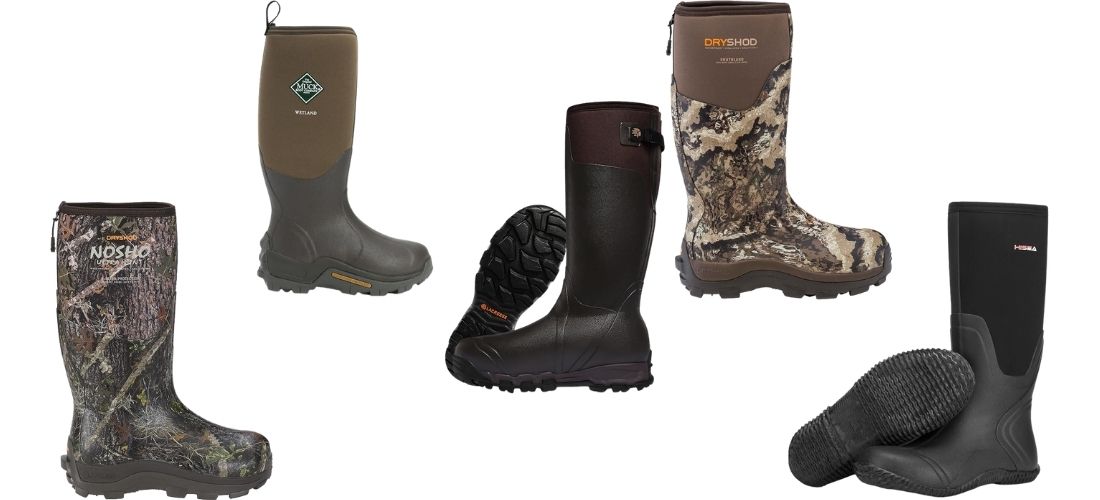
The best rubber hunting boots should match how far you walk, how cold you expect the ground to be, and how much standing water you cross. I would start with the LaCrosse Alphaburly Pro 1600G for cold, stationary hunts. Choose the MUCK Wetland for marshes, the Dryshod Southland for warm conditions, the Dryshod NOSHO for layered cold protection, or the HISEA 5mm for hunting and routine property work.
Even the best rubber hunting boots are not automatically the right choice for every hunt. If your route is dry, steep, or high-mileage, compare this review to the best hunting boots review before committing to a tall pull-on design.
How I Chose and Ranked These Rubber Hunting Boots
I ranked each boot for the work it needs to perform, not for brand recognition or popularity. Waterproof integrity and durability carry 40% of the score because a cracked shell or failed seam can end a wet hunt. Comfort and walkability account for 35%, temperature control for 25%. I also considered traction, entry, removal, and everyday usability for the rubber hunting boots reviewed here.
My assessment combines the exact construction and features of each selected model with recurring evidence about fit, warmth, leakage, wear, grip, and removal. I did not treat an isolated strength as proof that a boot works for every condition, and I reduced scores when a meaningful failure pattern or fit restriction appeared. If two weighted results had tied, the higher waterproof-integrity score would have won, followed by comfort and walkability.
This produces a practical ranking rather than a claim that one boot is universally superior. The best rubber hunting boots for a frozen blind can be the wrong choice for a humid early-season walk, which is why every recommendation below includes a clear reason to skip it.
Compare the Best Rubber Hunting Boots
I scored these boots for waterproof integrity and durability, comfort and walkability, temperature control, traction, and practical use. The overall score converts the weighted five-point result to a ten-point scale. Fit and warmth still depend on your foot shape, calf size, socks, circulation, activity level, and weather.
Best Rubber Hunting Boots: Ranked Reviews
The five models cover distinct jobs. Read the limitation as carefully as the recommendation, especially if you have wide feet, large calves, sensitive heels, or a long approach to your hunting area.
| Rank | Product | Best use | Waterproof integrity and durability /5 | Comfort and walkability /5 | Temperature control /5 | Overall /10 | Main compromise | Pricing |
|---|---|---|---|---|---|---|---|---|
| #1 | LaCrosse Alphaburly Pro 18-Inch 1600G | Cold, wet stationary hunts | 4.0 | 3.2 | 4.2 | 7.4 | Bulky, stiff, and difficult to remove | Check Amazon price |
| #2 | MUCK Wetland | Wetlands and waterfowl | 3.4 | 3.8 | 3.7 | 7.3 | Calf and forefoot fit can run tight | Check Amazon price |
| #3 | Dryshod Southland | Warm-weather hunting | 3.6 | 3.8 | 3.0 | 7.2 | Not warm enough for cold stationary hunts | Check Amazon price |
| #4 | Dryshod NOSHO Ultra Hunt | Layered extreme-cold use | 3.4 | 2.9 | 4.2 | 6.9 | Narrow fit and possible heel rubbing | Check Amazon price |
| #5 | HISEA Men’s 5mm Neoprene Rubber Boots | Hunting and property chores | 2.5 | 3.0 | 3.0 | 5.6 | Inconsistent durability and wet-surface grip | Check Amazon price |
LaCrosse Alphaburly Pro 18-Inch 1600G, Brown, Men’s Size 14
Highlight: Best for cold, wet stationary hunts
Key features: 1,600g Thinsulate Ultra insulation • 18-inch waterproof rubber-and-neoprene build • EVA footbed and cushioned midsole • Adjustable rear gusset • Burly Pro outsoleLaCrosse Alphaburly Pro 18-Inch 1600G in Brown, men’s size 14
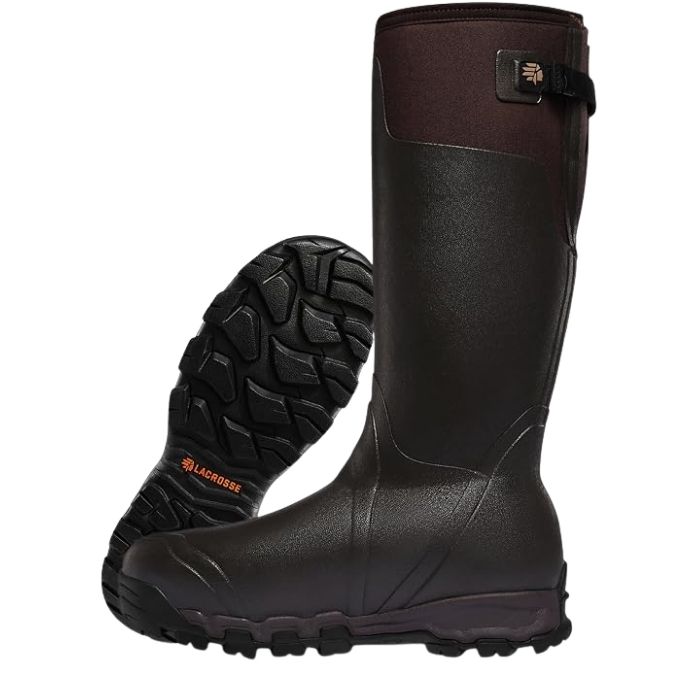
The Alphaburly Pro 1600G is the boot I would choose when cold ground, standing water, and long periods in a blind matter more than low weight. Its tall rubber-and-neoprene build, heavy insulation, rear gusset, and aggressive outsole make sense for late-season deer, waterfowl, and ice-fishing conditions where you need warmth and waterproof coverage.
My main reservation is walking comfort. The 18-inch shaft and heavy insulation can feel stiff and bulky, the ankle can run tight, and the lack of an easy heel kick makes some pairs difficult to remove. I recommend it for short approaches and stationary cold-weather hunts, but you should look elsewhere if your day involves miles of steep or uneven ground.
Pros and Cons
| Pros | Cons |
|---|---|
| Strong insulation for cold, stationary hunts | Stiff and bulky for longer walks |
| Tall waterproof construction handles mud, snow, and shallow water | Tight ankle and difficult removal can create fit problems |
| Adjustable rear gusset accommodates different calf layers | |
| Aggressive outsole provides useful grip on wet, muddy ground |
Best for: Hunters making short walk-ins to cold, wet stands or blinds.
Skip if: You need a flexible boot for long hikes or have trouble pulling tight-fitting rubber boots off.
MUCK Wetland, Bark, Men’s Size 13 M
Highlight: Best for wetland and waterfowl conditions
Key features: 5mm neoprene bootie • 18-inch full height • Breathable air-mesh lining • EVA midsole • Self-cleaning MS-1 outsoleMUCK Wetland in Bark, men’s size 13 M
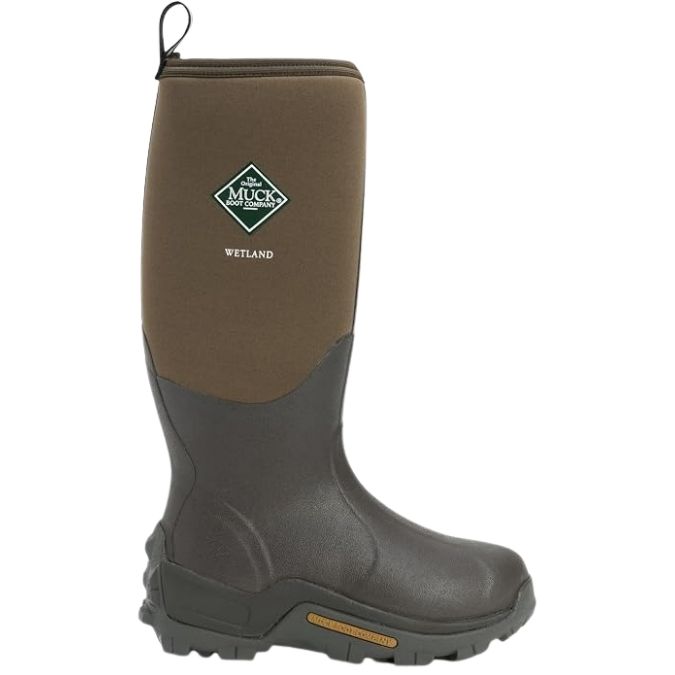
The MUCK Wetland is the option I would take into marshes, muddy fields, and shallow water when all-day wet protection matters more than technical hiking support. Its 5mm neoprene, tall rubber overlay, air-mesh lining, cushioned EVA midsole, and mud-shedding outsole give you a useful balance of warmth, flexibility, and underfoot comfort for waterfowl hunting and wet property work.
I would still check the calf and forefoot fit carefully before keeping it. The tall opening can press into larger calves, some feet find the boot narrow, and isolated seam or toe leaks make long-term waterproof durability less certain than the strong overall construction suggests. I recommend the Wetland for moderate-cold wet terrain, but not as a guaranteed extreme-cold boot or a substitute for a supportive lace-up hiking boot.
Pros and Cons
| Pros | Cons |
|---|---|
| Tall waterproof design suits marshes and muddy ground | Calf opening or forefoot can feel tight |
| 5mm neoprene provides flexible insulation | Leak and seam-durability failures have occurred |
| Air-mesh lining helps manage moisture | |
| EVA midsole and MS-1 outsole support long wet-weather days |
Best for: Waterfowl hunters and outdoorsmen who regularly cross mud, marshes, snow, or shallow water.
Skip if: You have a large calf, need a wide forefoot, or expect stiff ankle support for rough hiking.
Dryshod Southland, Veil Whitetail, Men’s Size 7
Highlight: Best for warm-weather hunting
Key features: 4mm neoprene bootie • WIXIT Cool-Clad moisture-wicking lining • 16.3-inch average height • DS1 molded outsole • Veil Whitetail camouflageDryshod Southland in Veil Whitetail, men’s size 7
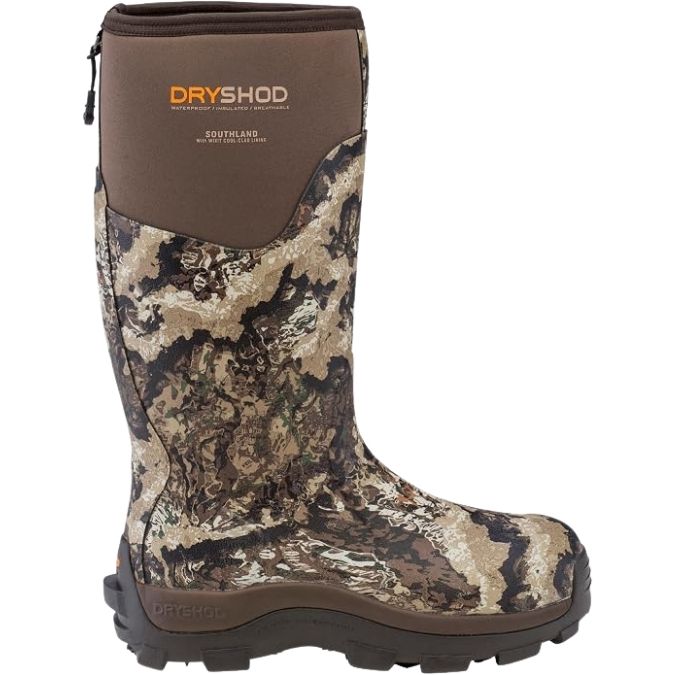
The Southland is the rubber hunting boot I would pick for warm early seasons, humid hog hunts, and wet summer chores. Its lighter 4mm neoprene bootie and perforated moisture-wicking lining address heat better than the heavily insulated boots here, while the tall waterproof construction, DS1 outsole, and roll-down upper still give you practical coverage for creek crossings and soft ground.
You should treat it as a warm-weather specialist. It needs break-in time, the camouflage finish can wear with repeated brush contact, and it does not provide enough insulation for cold fall sits. I recommend it when keeping your feet dry without trapping excessive heat is the priority, especially if you want a roomier calf and easy pull-on removal.
Pros and Cons
| Pros | Cons |
|---|---|
| Cooler construction suits warm and humid hunts | Insufficient warmth for cold stationary hunts |
| Tall waterproof build handles rain and creek crossings | Camouflage finish can wear and the boot may need breaking in |
| Roomier calf and roll-down upper improve versatility | |
| DS1 outsole provides useful traction on mixed ground |
Best for: Early-season hunters working through warm, wet terrain for several hours at a time.
Skip if: Your hunt includes freezing temperatures or long inactive periods in cold ground conditions.
Dryshod NOSHO Ultra Hunt, Camo, Men’s Size 7
Highlight: Best layered option for extreme cold
Key features: Layered 5.5mm insulated bootie • Warm fleece and breathable air-mesh lining • EVA cold-blocking midsole • DS1 molded outsole • 16.3-inch average heightDryshod NOSHO Ultra Hunt in Camo, men’s size 7
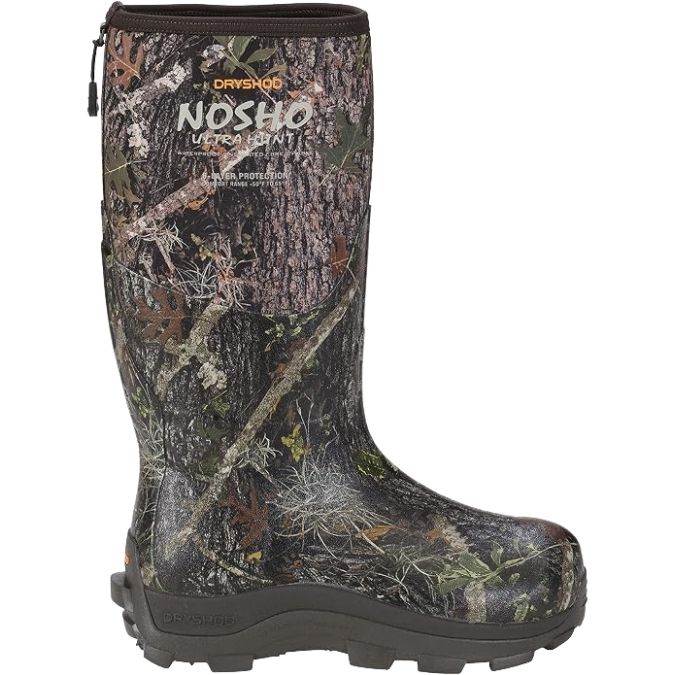
The NOSHO Ultra Hunt is my choice for hunters who want a tall rubber boot built around layered cold protection without an exceptionally heavy feel. Its insulated bootie, fleece and air-mesh lining, EVA cold-blocking midsole, nylon shank, and DS1 outsole suit cold blinds, ice fishing, and snowy approaches where waterproof coverage and easy pull-on use are central to the job.
Fit is the deciding factor. The boot can run snug or narrow, and the rear interior stitching can rub the heel, while warmth during very long inactive sits still depends on circulation, socks, and personal cold tolerance. I would recommend it for cold-weather use after an indoor fit check, but I would skip it for wide feet or any heel pressure that appears immediately.
Pros and Cons
| Pros | Cons |
|---|---|
| Layered insulation targets cold hunting and ice conditions | Narrow or snug fit can exclude wider feet |
| Waterproof tall build protects through snow and slush | Interior heel stitching may rub or blister |
| EVA midsole and nylon shank add underfoot structure | |
| Roll-down upper and heel kick simplify entry and removal |
Best for: Cold-weather hunters and ice anglers who prioritize warmth, waterproof coverage, and convenient pull-on use.
Skip if: You have wide feet, a sensitive heel, or need precise lace-up support for long technical walks.
HISEA Men’s 5mm Neoprene Rubber Boots, Black, Size 6
Highlight: Best multipurpose option for hunting and chores
Key features: 5mm neoprene construction • Air-mesh lining • Reinforced Achilles, heel, and toe areas • Removable insole • Molded rubber outsoleHISEA Men’s 5mm Neoprene Rubber Boots in Black, size 6
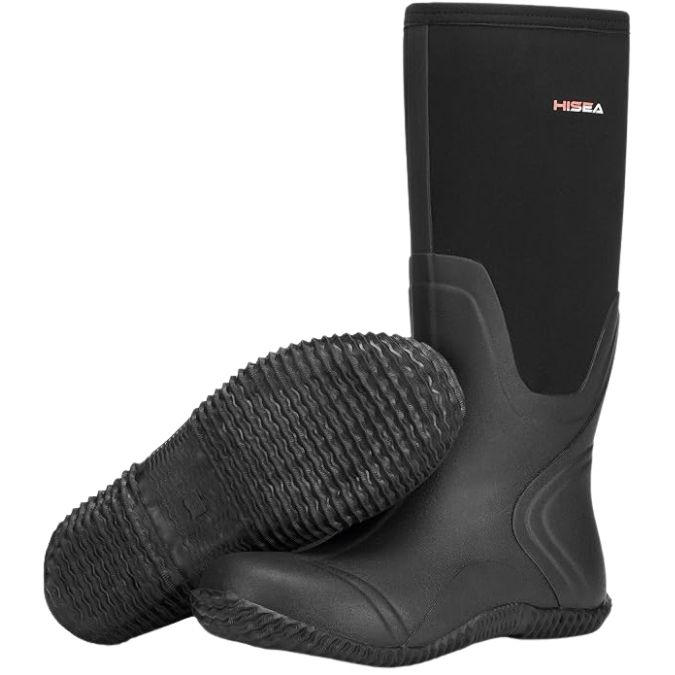
The HISEA 5mm is the option I would consider when one pull-on boot needs to cover hunting, fishing, farm chores, and wet yard work. The neoprene upper, air-mesh lining, reinforced lower shell, removable insole, and flexible molded outsole make it easier to wear for routine mixed use than a heavily insulated late-season boot.
I would buy it only with realistic durability and traction expectations. Fit varies through the ankle and calf, heel seams can rub, and the record includes early tears, leaks, thin soles, and poor grip on some muddy or smooth wet surfaces. I recommend it as a value-focused general-use boot after careful sizing, but not for remote hunts where a leak, puncture, or slip could end the day.
Pros and Cons
| Pros | Cons |
|---|---|
| Flexible 5mm neoprene works across several outdoor chores | Durability and long-term leak resistance are inconsistent |
| Lighter, easy-on design suits routine use | Fit, heel comfort, and wet-surface traction vary materially |
| Reinforced lower areas add everyday protection | |
| Removable insole allows simple fit and cushioning adjustments |
Best for: Hunters who also want one boot for fishing, farm chores, gardening, and occasional snow.
Skip if: You need dependable traction on slick commercial floors, thick protection from sharp brush, or proven long-term waterproof durability.
How to Choose Rubber Hunting Boots
The right construction depends on where water enters, how much you move, and what usually ends your comfort first. Work through those conditions before comparing small feature differences.
Rubber Versus Neoprene Construction
A tall rubber shell blocks water and protects the lower boot from mud, wet grass, and ordinary abrasion. Neoprene adds flexibility and insulation higher on the leg, so the boot can move more naturally than a rigid all-rubber shaft. But exposed neoprene is more vulnerable to thorns, sharp stubble, and repeated brush contact.
More rubber coverage generally improves physical protection, though it can add stiffness and weight. More neoprene usually improves flexibility and makes the shaft easier to roll down, but it does not turn the boot into supportive hiking footwear. I would favor protection for dense brush and rough chores, then favor flexibility for marshes, field edges, and easier walking.
Match Insulation to Activity and Temperature
Insulation numbers do not tell you how warm your feet will feel by themselves. A heavily insulated boot makes sense when you sit on frozen ground after a short approach. The same boot can trap sweat during a long walk, leaving your socks damp by the time you stop moving. That is a poor trade in cold weather.
Choose lighter neoprene for warm, active hunts and reserve thick layered insulation for colder, less active use. Leave enough room to wiggle your toes without allowing the heel to lift excessively. Thick socks cannot fix a boot that is too tight because compression restricts the air space and circulation that help retain warmth. Our review of the best hunting socks for cold weather explains how thickness, cushioning, and activity level affect that fit.
Keeping feet dry is also a safety issue during prolonged cold exposure. The NIOSH guidance on cold-related illness explains why constantly wet feet can lose heat quickly and develop immersion-related injury.
Quick Condition Picker
| Hunting condition | Start with | Reason |
|---|---|---|
| Warm and active | Dryshod Southland | Lighter neoprene and moisture management |
| Wetland and moderate cold | MUCK Wetland | Tall coverage with flexible 5mm neoprene |
| Cold and mostly stationary | LaCrosse Alphaburly Pro 1600G | Heavy insulation and aggressive outsole |
| Cold with easier entry and removal | Dryshod NOSHO Ultra Hunt | Layered insulation, roll-down upper, and heel kick |
| Mixed hunting and property chores | HISEA 5mm | Flexible general-use construction |
Check Foot, Ankle, and Calf Fit
Rubber boots do not offer the fine adjustment of laces. Your toes need working room, but the heel should not slide far enough to rub. Pay attention to pressure across the instep and ankle because a tight bend can become painful during walking and can make the boot very difficult to remove.
The shaft opening matters just as much. A large calf, tucked-in pants, and thick base layers can turn a comfortable footbed into an unusable boot. An adjustable gusset helps, while a roll-down shaft can improve ventilation and entry. Neither feature fixes a narrow foot shape.
Try the boots indoors with the socks and pants you plan to wear. Walk, climb a step, kneel, and hold a crouch. Return them if you feel sharp heel pressure, toe contact, calf pinching, or restricted circulation. Do not assume neoprene will stretch enough to correct a bad initial fit.
Match Shaft Height to Water Depth
A 16- to 18-inch shaft works well for mud, wet vegetation, shallow creek crossings, and flooded ground that stays below the top opening. The trade-off is more weight, calf contact, heat, and resistance around the knee. A shorter boot is easier to walk in but gives you less margin when the ground drops unexpectedly.
No knee-high boot protects you when water reaches over the shaft. If that happens regularly, compare the best duck hunting waders instead. And if rain or wet vegetation is soaking you above the boot line, complete the system with suitable hunting rain gear.
Choose Traction for the Terrain and Walking Distance
Deep, widely spaced lugs can bite into mud and release it as you step. Closely packed tread may feel smoother on firm ground but can hold clay and become slick. Snow, wet grass, roots, smooth concrete, and side slopes also demand different things from an outsole, so one aggressive-looking pattern is not proof of universal grip.
Also consider how much structure sits above that tread. A flexible pull-on boot is convenient in flat marshes and fields, but it cannot lock your heel and ankle like a fitted lace-up boot. For long climbs, side-hilling, loose rock, or repeated steep descents, I would give up some waterproof convenience for better support.
Inspect Flex Points, Seams, and Protective Rubber
Leak risk concentrates where the boot bends or where materials join. Check the toe flex, heel, ankle crease, neoprene seams, and the upper edge of the rubber overlay. Small cracks, separation, or worn stitching deserve attention before a remote hunt, even if the rest of the boot looks clean.
Brush hunters should also consider how much protective rubber covers the lower leg. Exposed neoprene improves flexibility but is easier to snag. Reinforced toes and heels help with routine impacts, yet they do not guarantee long-term waterproofness if the flex points or seams fail.
Check the Current Size Chart, Return Terms, and Warranty
Boot sizing varies by model, and a selected review size is not a universal recommendation. Check the current manufacturer chart, confirm whether the seller allows an indoor fit return, and read the applicable warranty terms before ordering. Policies, stock, and eligible sizes can change.
How to Make Rubber Hunting Boots Last Longer
Mud and grit left in flex points can grind against rubber and stitching. After the hunt, rinse the exterior with cool water, clear packed material from the outsole, and use a soft brush where needed. Follow the complete process to clean and store hunting boots after exposure to mud, salt, manure, or standing water.
Remove the insoles and let the boots air-dry with the openings unobstructed. Keep them away from direct heaters, fires, and prolonged strong sunlight because excessive heat can damage rubber, adhesives, and neoprene. Do not store a damp pair in a sealed vehicle bin or plastic bag.
Before the next trip, flex the toe and ankle while checking for fine cracks, loose overlay edges, seam separation, and worn tread. Inspect both boots even if only one felt wet. Store them upright in a cool, dry place so the shafts are not permanently folded or compressed.
Final Verdict
The LaCrosse Alphaburly Pro 1600G ranks first among the best rubber hunting boots when cold ground, standing water, and stationary hunting matter more than low weight. Its warmth and traction are convincing, but I would not choose it for a long, steep approach.
The MUCK Wetland is the better wetland option, while the Dryshod Southland makes more sense for warm, active use. Choose the NOSHO only after checking its narrow fit and heel area. The HISEA is the flexible value choice for mixed chores, though its durability and traction risks make it harder to trust on remote hunts. Match the boot to temperature, walking distance, foot shape, and water depth rather than choosing by insulation alone.
FAQs
Are Rubber Hunting Boots Completely Waterproof?
The molded rubber portion should block water when intact, but seams, flex points, punctures, and water entering over the shaft can still leave your feet wet. Inspect the boots before each remote hunt.
How Much Insulation Do Rubber Hunting Boots Need?
Active, mild-weather hunts usually need less insulation than cold stationary sits. Heavy insulation helps on frozen ground but can trap sweat while walking, so match it to both temperature and activity.
Should Rubber Hunting Boots Fit Tight or Loose?
They should hold the heel without squeezing the toes, ankle, instep, or calf. Leave room for your intended socks, but avoid excess movement that causes rubbing or unstable footing.
Are Rubber Boots Suitable for Walking Long Distances?
Some flexible models handle moderate flat-ground walking well. For steep, rocky, or high-mileage routes, a supportive lace-up hunting boot usually provides better heel control, ankle support, and precise fit.
How Long Should Rubber Hunting Boots Last?
Service life depends on construction, terrain, storage, cleaning, and how often the material flexes. Replace boots that develop leaks, cracked rubber, separated seams, worn tread, or an unsafe fit.