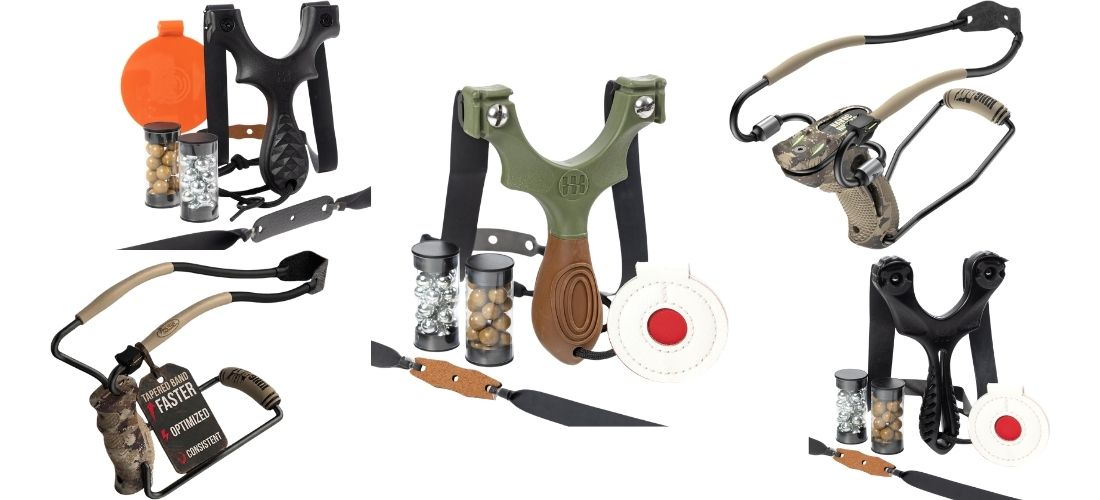
The best slingshot for hunting should fit your hand, hold its bands securely, and suit the way you plan to carry and maintain it. I would choose the SimpleShot Scout XT for the widest grip flexibility. The lighter Scout LT2 is the better compact choice, while the Barnett models suit hunters who specifically want a folding wrist brace.
How I Evaluated the Best Hunting Slingshots
I assessed each exact model through product specifications, manufacturer instructions, attachment compatibility, portability, and evidence about fit and material limitations. The rankings here do not claim measured accuracy, velocity, range, or terminal performance.
I weighted control and grip fit most heavily because the frame must sit predictably in your hand. Attachment security came next because a loose band, plug, or clamp is more consequential than a missing accessory. Flexibility and portability only add value when the basic setup suits you.
Suitability remains conditional. Your skill, band and ammunition match, quarry, distance, backdrop, and local rules determine whether a slingshot is appropriate. These scores do not certify any model for every hunting situation.
Ranking the Best Hunting Slingshots
I scored these hunting slingshots on five practical factors. Control and grip fit account for 35%, attachment security and durability for 30%, setup flexibility for 25%, and aiming or support features for 10%. The weighted Overall score uses a 10-point scale.
Major compromises also affect the ranking. Extra features cannot compensate for unreliable band retention, an uncomfortable brace, or a poor fit.
| Rank | Exact product | Best fit | Control and grip | Attachment security | Setup flex | Aiming/support | Overall | Pricing |
|---|---|---|---|---|---|---|---|---|
| #1 | SimpleShot Scout XT, Camo | Broad grip flexibility | 4.5/5 | 3.5/5 | 5.0/5 | 3.0/5 | 8.1/10 | Check Amazon price |
| #2 | SimpleShot Scout LT2, Black | Compact pinch or thumb-supported use | 4.0/5 | 3.5/5 | 4.0/5 | 3.5/5 | 7.8/10 | Check Amazon price |
| #3 | Barnett King Rat Havoc Hunter, Camo, BAR50005 | Feature-rich wrist support | 3.5/5 | 2.5/5 | 3.0/5 | 4.0/5 | 6.4/10 | Check Amazon price |
| #4 | Barnett King Rat Black Widow Hunter, Camo, BAR50001, One-Pack | Compact folding wrist brace | 3.0/5 | 2.5/5 | 3.0/5 | 4.0/5 | 6.3/10 | Check Amazon price |
| #5 | SimpleShot Axiom Ocularis, Standard Black | Slim frame and broad band compatibility | 3.5/5 | 1.5/5 | 4.0/5 | 2.0/5 | 6.1/10 | Check Amazon price |
The Scout XT combines several grip styles with two band orientations and a supportive handle. The lighter LT2 finishes close behind but offers fewer grip options. The Havoc edges the Black Widow on control, while the Axiom’s portability cannot offset its plug-retention concern.
The Best Hunting Slingshots I Would Choose
These picks cover two broad formats: adaptable handheld frames and traditional models with folding wrist braces. Start with fit and attachment design, then decide whether sights, compactness, or extra support justify the added compromises.
SimpleShot Scout XT, Camo
Highlight: Best overall for grip versatility
Key features: Thermoplastic frame • Rubber overmold grip • FlipClip X clamps • OTT/TTF compatibility • 4.5-ounce frame
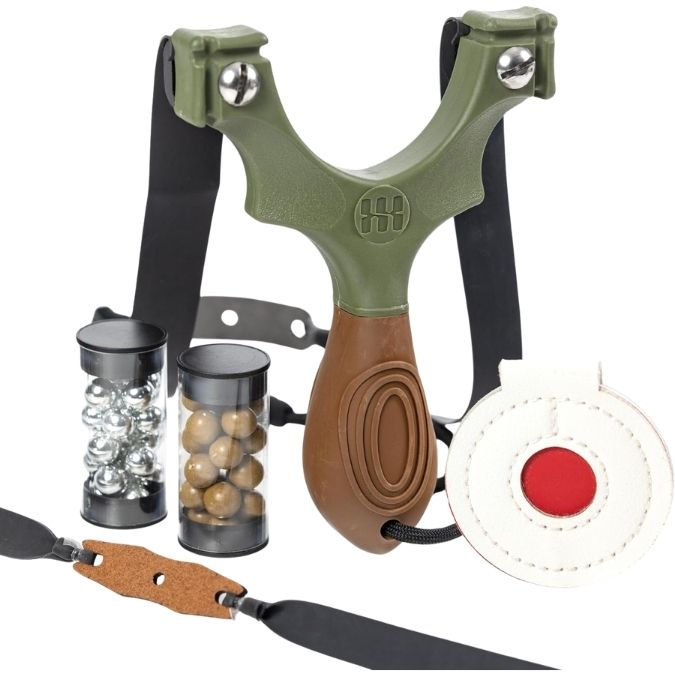
I’d keep the Scout XT as my best overall pick for its flexibility across different grips. The rubber-covered handle supports hammer, pinch and thumb-supported holds, giving you room to find a comfortable fit without changing frames. Its FlipClip X clamps accommodate over-the-top or through-the-fork band layouts. At 5.75 inches tall, this is a substantial handheld frame rather than the smallest option in the lineup.
My main reservations are its bulk in smaller hands and the attention its bands and clamps need. Band life can vary considerably, and I wouldn’t treat the supplied bands as a reason to buy it. Clamp adjustments can also feel fiddly despite the convenient attachment design. I’d choose the XT if you value grip options and a cushioned handle, but I’d favor a smaller frame if compactness matters more. Check band condition and attachment security before use.
Pros and Cons
| Pros | Cons |
|---|---|
| Supports several grip styles | Bulky for some smaller hands |
| Rubber-covered handle | Variable band life; clamps need attention |
| Clamps accommodate two band orientations | |
| Substantial frame with useful hand support |
Best for: You want a versatile handheld frame with several grip options.
Skip if: You need a particularly small frame or want minimal attachment maintenance.
SimpleShot Scout LT2, Black
Highlight: Best compact option for pinch and thumb-supported grips
Key features: Removable handle scales • Integrated band clips • Fiber-optic aiming references • OTT/TTF compatibility • 3.7 ounces assembled
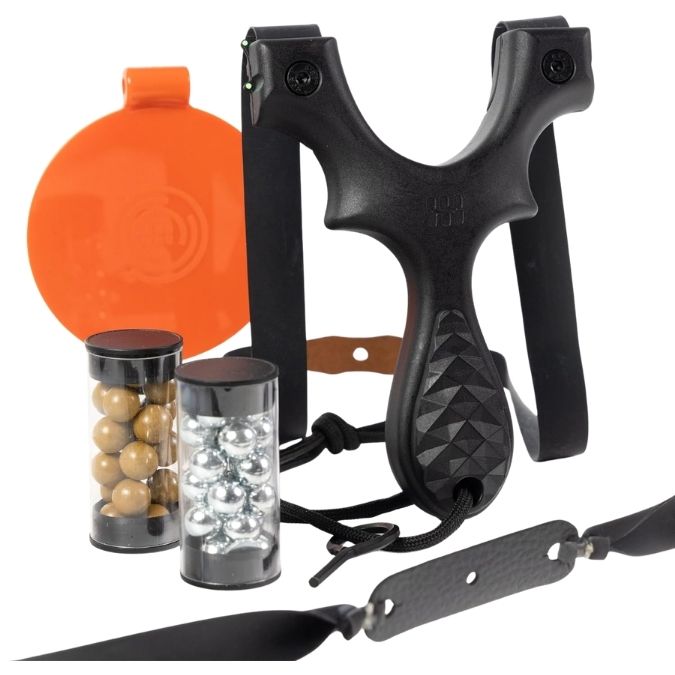
The Scout LT2 would be my choice if you want a compact frame built around a pinch or thumb-supported grip. Its 5.16-inch height and 3.7-ounce assembled weight make it smaller and lighter than the XT. Removable handle scales give you some control over handle thickness, while the integrated clips support either band orientation. I see the fiber-optic references as a useful visual aid, without assuming they will make the frame accurate for everyone.
I’d choose the LT2 only if its grip style already suits you. It isn’t designed for a full hammer grip, so its smaller dimensions aren’t an automatic advantage for every hand. The band clips also require a 3 mm hex key, which adds a tool to your maintenance routine. For me, the appeal is compactness and adjustable handle fit; I wouldn’t stretch that into a claim of proven long-term durability.
Pros and Cons
| Pros | Cons |
|---|---|
| Compact, lightweight frame | Not designed for a hammer grip |
| Removable scales adjust handle thickness | Clip adjustments require a hex key |
| Integrated clips support two band orientations | |
| Built-in fiber-optic references |
Best for: You prefer a compact frame and use a pinch or thumb-supported grip.
Skip if: You want a full hammer grip or tool-free clip adjustment.
Barnett King Rat Havoc Hunter, Camo, BAR50005
Highlight: Feature-rich wrist-braced option
Key features: Folding wrist brace • Textured TPE grip • Double-X tapered bands • Leather center-shot pouch • Three-distance ring sight
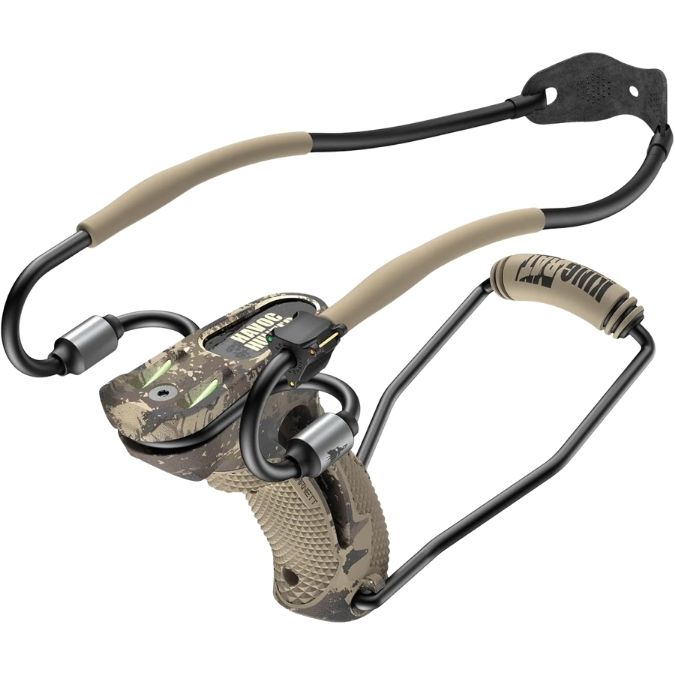
I’d consider the Havoc Hunter if you prefer a wrist-braced slingshot with a shaped, textured handle. The folding brace makes the assembly easier to pack, and the leather center-shot pouch gives it a straightforward ammunition cradle. Barnett also includes a ring sight and vibration dampeners. Those extras make it a feature-rich choice, although I wouldn’t use their presence alone to promise better accuracy or comfort.
My hesitation is the combination of a demanding draw and a brace that can feel narrow or hard against the wrist. Band durability and brace-retention wear are also concerns, so I wouldn’t choose it for you if low maintenance is a priority. The sight can loosen or suffer damage, which limits how much value I’d place on it. I’d reserve this pick for someone comfortable with a firmer draw who will check the bands, brace and sight before use.
Pros and Cons
| Pros | Cons |
|---|---|
| Brace folds for packing | Demanding draw; brace comfort varies |
| Textured, shaped grip | Band and brace-retention durability concerns |
| Leather center-shot pouch | |
| Ring sight included |
Best for: You prefer wrist support and a substantial grip, and accept regular condition checks.
Skip if: You need a light draw, generous wrist clearance or dependable sight retention with little attention.
Barnett King Rat Black Widow Hunter, Camo, BAR50001, One-Pack
Highlight: Compact folding wrist-braced option
Key features: Padded folding wrist brace • Textured camo grip • Double-X tapered bands • Leather center-shot pouch • Fiber-optic and ring sight references
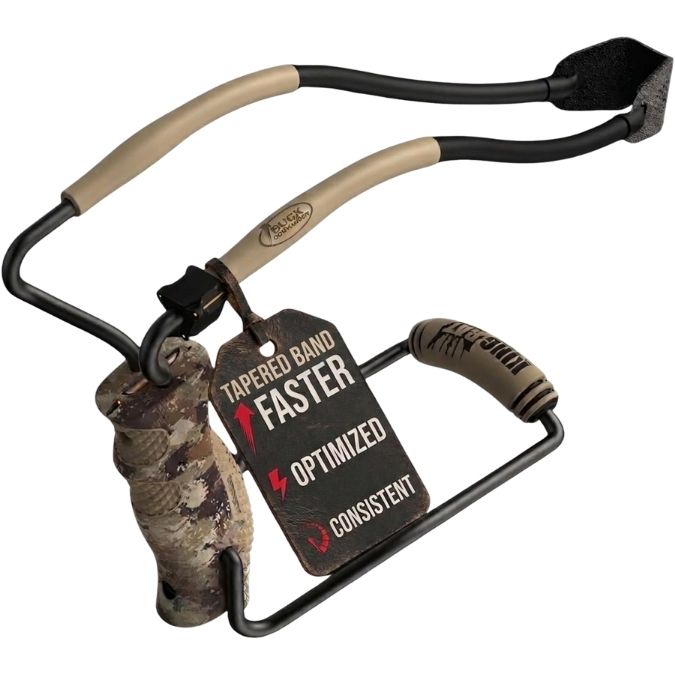
The Black Widow Hunter would be my pick if you want a folding wrist brace in a compact, conventional layout. Its textured camo handle and leather center-shot pouch cover the essentials, while the padded brace provides a contact surface behind the grip. You also get fiber-optic and ring sight references. I see its main attraction in the folding format, rather than treating the sight hardware as a guarantee of precision.
I’d pay close attention to wrist fit before choosing this model. The brace can be restrictive for larger wrists, and its padding doesn’t guarantee comfort under a firm draw. Loose sight components and early band damage are additional concerns. For me, that rules it out as an automatic beginner recommendation. I’d consider it if you specifically want a compact wrist-braced design, but skip it if easy draw effort, generous clearance or low-maintenance sight hardware matters most.
Pros and Cons
| Pros | Cons |
|---|---|
| Brace folds for storage | Restrictive brace fit and firm draw |
| Textured handle | Sight retention and band durability concerns |
| Leather center-shot pouch | |
| Multiple built-in sight references |
Best for: You want a compact folding brace and can accommodate its wrist fit and draw effort.
Skip if: You have larger wrists or prioritize a light draw and reliable sight retention.
SimpleShot Axiom Ocularis, Standard Black
Highlight: Slim frame with a flexible band-attachment system
Key features: Slim handheld frame • Ocularis plug attachments • Flat-band compatibility • Tube and looped-tube compatibility • Multiple grip options
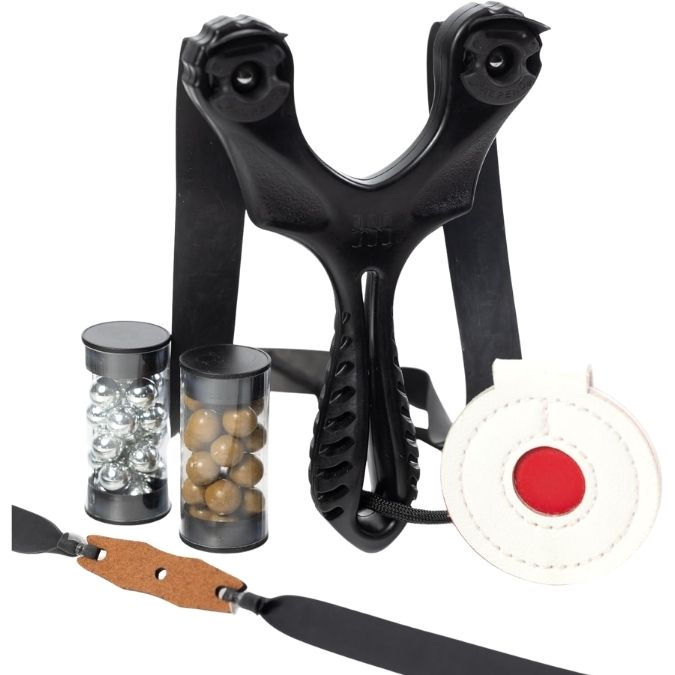
I’d consider the Axiom Ocularis if you want a slim frame with broad band compatibility. Its Ocularis plugs accommodate flat bands, tubes and looped tubes, giving you more attachment flexibility than a frame limited to one format. The compact shape suits carrying with little bulk, and it supports several grip styles. For me, the appeal is the combination of a simple frame and adaptable attachments, rather than any claim of greater power.
My main reservation is attachment security. A plug system can be convenient, but band slippage and plug damage are meaningful risks; I wouldn’t dismiss every retention problem as an installation mistake. Band life can also be short. I’d choose the Axiom only if you’re willing to follow its instructions and check both the bands and plugs before use. If you want screw-clamped attachments and less concern about plug seating, I’d favor the Scout XT instead.
Pros and Cons
| Pros | Cons |
|---|---|
| Slim, compact frame | Plug retention and damage concerns |
| Accepts flat bands | Variable, sometimes short band life |
| Also accepts tubes and looped tubes | |
| Supports several grip styles |
Best for: You value a slim frame and compatibility with several band formats.
Skip if: You prefer screw clamps or want to minimize attention to plug seating.
How to Choose Among the Best Hunting Slingshots
The best hunting slingshot is the one you can hold consistently, inspect confidently, and carry without leaving essential maintenance items behind. Accessories matter less than fit, secure attachment, and a band system you understand.
Start With Frame Style and Wrist Support
A handheld frame keeps the setup simple and usually reduces bulk. Models such as the Scout XT, LT2, and Axiom rely on your grip and frame contact for control. Their different handle shapes matter because the same frame can feel stable in one hand and awkward in another.
A folding wrist brace adds another point of contact, but it also adds fit variables. The brace must clear your wrist, sit comfortably, and remain secure under draw. I would choose a Barnett model only when you specifically prefer that support, rather than assuming a brace automatically makes the slingshot easier or more accurate.
Match the Grip Style to Your Hand
Hammer, pinch, thumb-supported, and fork-supported grips place pressure on different parts of the frame and hand. The Scout XT gives you the broadest room to experiment. The LT2 is a more focused choice for pinch and thumb-supported shooting, while its removable scales let you alter handle thickness.
Fit the frame with the clothing you will actually wear. Cold-weather bulk and reduced fingertip feel can change how securely you hold the frame and pouch. Our review of the best hunting gloves compares fingertip access, insulation, weather coverage, and active-use fit.
Choose Flat Bands or Tubes for the Setup You Will Maintain
Flat bands can provide a smooth draw and are widely used on modern handheld frames. Tubes suit many traditional wrist-braced designs and may appeal if you already understand their draw and replacement process. Neither format guarantees a specific speed, useful range, or service life.
Band condition matters more than category alone. Latex ages, wears at contact points, and can be damaged by poor installation or mismatched setups. Follow the exact model instructions and keep replacement bands that match the frame and intended ammunition.
Compare Clips, Plugs, and Fixed Attachment Systems
The Scout XT uses FlipClip X clamps and supports over-the-top or through-the-fork layouts. The LT2 also supports both orientations through integrated clips, but adjustment requires a 3 mm hex key. Those screw-based systems offer clear clamping, although you still need to check alignment and tension.
The Axiom uses Ocularis plugs to accept flat bands, tubes, and looped tubes. That flexibility is useful, but correct seating deserves careful attention because retention is the model’s largest concern. The Barnett designs use tapered bands within more conventional wrist-braced layouts, with less configuration freedom than the SimpleShot frames.
| Product | Frame type | Supported grip | Band and orientation | Adjustment item | Main attachment caveat |
|---|---|---|---|---|---|
| Scout XT | Handheld | Hammer, pinch, thumb-supported, fork-supported | Flat bands; OTT or TTF | FlipClip X clamps | Clamp attention and variable band life |
| Scout LT2 | Handheld | Pinch or thumb-supported | Flat bands; OTT or TTF | 3 mm hex key | Tool required for clip adjustment |
| Havoc Hunter | Folding wrist brace | Shaped handle with wrist support | Double-X tapered bands | Model-specific attachment | Band and brace-retention wear |
| Black Widow Hunter | Folding wrist brace | Textured handle with wrist support | Double-X tapered bands | Model-specific attachment | Early band damage concerns |
| Axiom Ocularis | Handheld | Multiple grip options | Flat bands, tubes, or looped tubes | Ocularis plugs | Plug seating, slippage, and damage concerns |
Treat Sights as References
Fiber-optic points and ring sights can give you a consistent visual reference. They do not remove the need for repeatable grip, anchor, release, and band alignment. A sight that shifts or loosens can become less useful than a simple frame edge.
I would give sight hardware modest weight unless you already know how you plan to use it. Inspect its position before practice and do not base the purchase on an unsupported range or accuracy promise.
Balance Packability With Field Maintenance
The LT2 and Axiom make sense when carry size matters most. The Barnett braces fold, but they remain more mechanically involved than a plain handheld frame. The XT is larger than the other SimpleShot options, although that size creates room for more grip styles.
Plan for the maintenance your model requires. That can mean a compatible hex key, correctly sized replacement bands, clean plugs, or time to check brace and sight hardware. A compact slingshot is not truly convenient if the part needed to secure its bands stays at home.
Match the Tool to the Intended Use
Target practice, pest control, and hunting are separate decisions. If you are still defining the activity, our overview of small-game hunting in the U.S. separates rabbit, squirrel, predator, and other hunting categories. That’s important because legal methods and ethical capability change with the species and location.
A slingshot may be the wrong tool when you need greater consistency, a shouldered platform, or a different lawful method. In that case, compare the best pellet guns for hunting instead. Do not stretch a compact slingshot beyond your demonstrated accuracy or the equipment’s documented limits.
Legal, Ethical, and Safe Use in the U.S.
I always emphasize on checking the local laws of the state where you’re gonna be hunting/shooting, including any new rules and regulations, in advance.
Check Species, Season, Method, and Location Rules
There is no useful nationwide yes-or-no answer for hunting with a slingshot. State rules differ, and cities, counties, public lands, wildlife areas, or individual units can impose additional restrictions. The U.S. Fish and Wildlife Service states that every state has its own hunting regulations and provides links for checking state-specific licenses and requirements.
Confirm the species status, open season, permitted method, ammunition rules, and exact location before carrying a slingshot for hunting. For pest-control use, start with our varmint hunting guide, then verify the current rules and obtain landowner permission where required.
Use a Safe Backstop and Stay Within Proven Capability
Identify the target and everything around and beyond it. A portable frame does not make a poor backdrop acceptable. If you cannot account for a miss or deflection, do not take the shot.
Humane use requires more than a product marketed for hunting. You need repeatable accuracy under the actual distance and conditions, lawful ammunition, suitable equipment, and the judgment to decline a shot. The evidence for this lineup does not establish a universal species, range, or energy threshold.
Check before hunting: Is the species legal? Is a slingshot an allowed method there? Is the location lawful? Can you make a humane shot under the actual conditions?
Five Checks Before Taking a Slingshot Into the Field
- Inspect the bands. Look for thinning, cuts, discoloration, or damage at the pouch and attachment points.
- Confirm every attachment. Check clamps, plugs, clips, tubes, and knots according to the exact model instructions.
- Check the frame and accessories. Look for cracks, loose sight parts, damaged brace tabs, or unexpected movement.
- Verify the rules. Confirm the species, season, method, ammunition, location, and required permission.
- Confirm the shot environment. Use a safe backstop and remain within your demonstrated accuracy limit.
SimpleShot’s slingshot owner-manual hub provides model-specific setup and safety material. Use the instructions for your exact frame and attachment system rather than assuming another model works the same way.
Final Verdict
I would start with the SimpleShot Scout XT when you want the broadest grip flexibility and a cushioned, substantial handle. Choose the Scout LT2 when lower weight and a more compact frame matter more, provided you use a pinch or thumb-supported grip.
The Havoc Hunter is my preferred wrist-braced option, but only for someone who accepts its firm draw and inspection needs. The Black Widow packs its brace into a compact format but has a more restrictive fit. I would reserve the Axiom for readers who value its slim shape and broad band compatibility enough to manage the Ocularis plugs carefully.
FAQs
Are slingshots legal for hunting in every U.S. state?
No. States and local jurisdictions can restrict species, seasons, methods, ammunition, and locations. Check the current wildlife-agency and local rules before use.
Are flat bands or tubular bands better for hunting?
Neither is universally better. Choose the format supported by your frame, draw preference, ammunition, maintenance routine, and manufacturer instructions.
Is a wrist-braced slingshot better than a handheld frame?
A brace adds support but also creates wrist-fit and hardware concerns. Handheld frames are usually simpler and offer more grip flexibility.
How often should slingshot bands and attachments be inspected?
Inspect them before every use and whenever the setup changes. Replace damaged latex and correct loose, worn, or improperly seated attachments before shooting.
Which slingshot grip is easiest for a beginner?
The easiest grip is the one you can repeat without strain. A versatile frame such as the Scout XT lets you compare several grip styles.