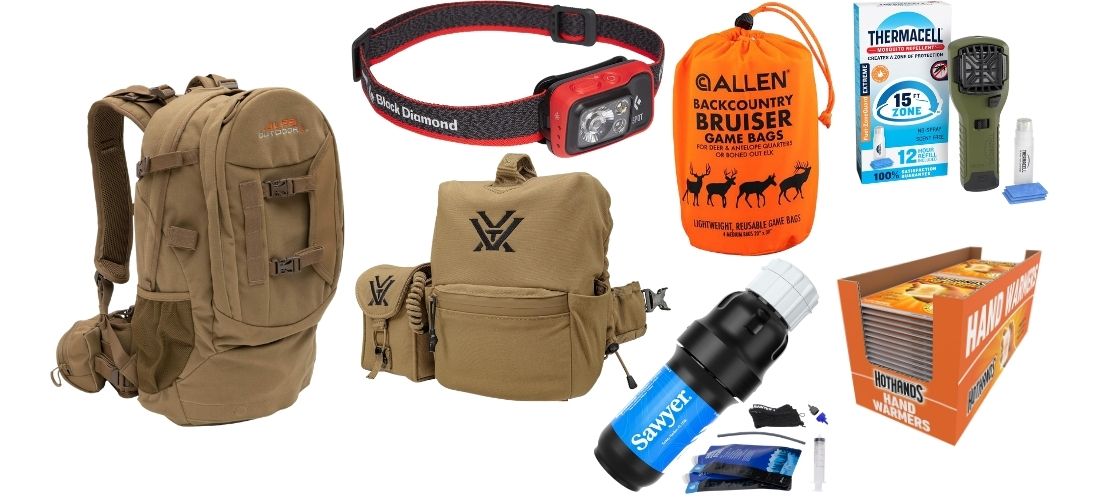
The best hunting gear fills a specific gap in your kit. I’d choose the ALPS Pursuit for organized carrying, the Spot 400 for hands-free light, and the Sawyer Squeeze for planned freshwater access. Other top picks address optics storage, mosquitoes, meat transport, and cold hands. Like always, the best way is to choose by the problem you need to solve.
I’m Thomas Harvey, and in this review I’m going to cover practical hunting essentials: a daypack, headlamp, binocular harness, water filter, mosquito repeller, game bag, and disposable hand warmers. I’ll compare each product’s intended use, key features, compatibility needs, and drawbacks, so you can identify and build your hunting kit for the season accordingly.
How I Selected The Best Hunting Gear
I assessed exact product variants through published specifications, intended uses, construction details, and practical strengths and compromises. This is a research-based assessment. My first-person recommendations describe how I would choose between equipment roles and manage the few drawbacks.
I favored recognizable field jobs over a collection of similar accessories. That approach gives you a useful starting point for carrying, lighting, optics access, water treatment, insect protection, meat transport, and hand warmth. Also, this does not make it a complete packing list for every species, location, or season, so choose smartly.
Compare the Best Hunting Gear by Job
A headlamp cannot replace a water filter, and a game bag cannot compete with a binocular harness on one meaningful score. This comparison separates field roles, useful conditions, supply needs, and drawbacks.
| Product | What it is | Job in your kit | Useful conditions | Supply or compatibility needs | Pricing |
|---|---|---|---|---|---|
| ALPS Pursuit, Coyote Brown, 44 L | Best hunting daypack backpack | Carry and organize day-hunt essentials | Stand hunts and shorter trips | Separate hydration bladder; check equipment fit | Check Amazon price |
| Spot 400, Octane, AAA | Best waterproof outdoor headlamp | Hands-free trail and task lighting | Predawn access, camp, return walk | Three AAA cells; carry spares and backup light | Check Amazon price |
| GlassPak Pro, Small | Best chest binocular harness | Keep binoculars and rangefinder accessible | Frequent glassing and mobile hunts | Check actual binocular dimensions with covers | Check Amazon price |
| Sawyer Squeeze SP129 | Best portable outdoor water filter | Filter suitable freshwater | Routes with dependable water access | Compatible containers, cleaning, freeze protection | Check Amazon price |
| Thermacell, Olive Green | Best portable outdoor mosquito repeller | Reduce mosquito interference | Calm, dry outdoor sits below altitude limit | Fuel cartridge and repellent mats | Check Amazon price |
| Allen Backcountry, 20 × 30 inches | Best reusable game bags | Contain appropriately sized meat portions | Deer recovery and boned-out loads | Enough bags for the planned portions | Check Amazon price |
| HotHands, selected bulk option | Best disposable hand warmers | Add portable hand warmth | Occasional cold sits | Unexpired sealed packets and spares | Check Amazon price |
Start with the row that matches your missing capability. Then read its full section before shopping, especially the skip-if guidance. The best hunting gear for a stationary hunt can become unnecessary weight on an active route, while a small failure in lighting or water planning can matter on either hunt.
Reviewing the Best Hunting Gear
Check the exact size, power system, and included accessories before ordering.
ALPS OutdoorZ Pursuit Pack, Coyote Brown, 44 L
Highlight: An organized daypack for stand hunts and shorter trips.
Key features: 44 L capacity • Drop-down equipment pocket • Front organizational shelf • Hydration compatible • Included blaze-orange rain cover
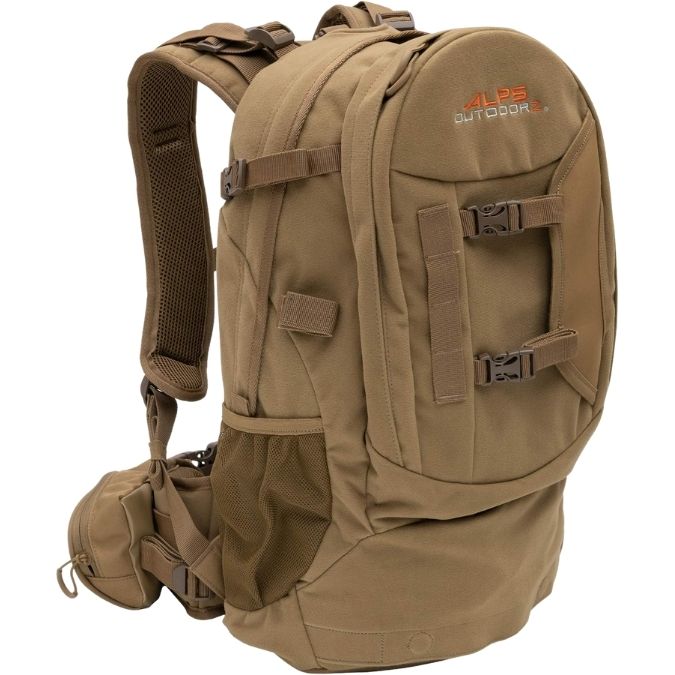
I’d choose the ALPS OutdoorZ Pursuit for a day hunt when keeping your gear organized matters more than carrying a heavy load of meat. Its 44-liter layout gives you room for layers and essentials, while the front shelf keeps smaller items accessible when the pack is hanging beside you. The drop-down pocket and lashing straps provide a way to carry a compatible bow or rifle. A padded waist belt and aluminum stay add structure, and the included rain cover is useful when the weather turns.
My main reservation is the sternum-strap attachment: it can pull loose, which undermines the fit precisely when you need the load held steady. Seam durability is another reason I would keep its job limited to ordinary day-hunt gear. Before heading out, load it with your actual equipment and check the straps and carry-pocket fit. You also need a separate hydration bladder. I like the accessible storage, but I would choose a dedicated load-hauling pack for demanding meat pack-outs.
Pros and Cons
| Pros | Cons |
|---|---|
| Front shelf keeps small essentials accessible | Sternum-strap attachment can pull loose |
| Separate pockets support organized packing | Seam durability limits confidence under demanding loads |
| External carry system frees your hands | |
| Rain cover included |
Best for: Day hunters who want organized storage and a carry system for compatible equipment.
Skip if: You need a pack primarily for heavy meat loads or extended backcountry hauling.
Black Diamond Spot 400, Octane, AAA-Powered
Highlight: Flexible hands-free lighting for predawn access and camp chores.
Key features: Up to 400 lumens • White and red modes • Dimmable output • Brightness memory • Three AAA batteries included • Optional BD 1500 battery compatibility
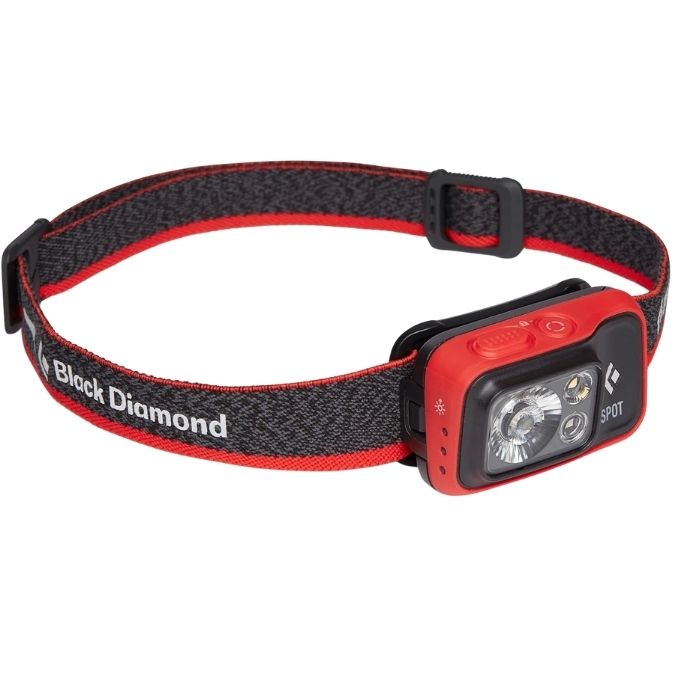
The Spot 400 gives you more control than a basic on/off headlamp. You can use brighter white light for the walk in, then reduce the output for close work without holding a flashlight. I particularly like brightness memory because it saves your chosen setting instead of forcing a fresh adjustment every time. This Octane version runs on three replaceable AAA batteries, so you can carry spares; the optional BD 1500 battery and charger provide a separate rechargeable route.
I’m less enthusiastic about the PowerTap control and plastic hardware. An accidental touch can change the brightness, and the battery latch and tilt mechanism deserve careful handling. Learn the controls and check that the case opens, closes, and holds its angle before taking it into the field. I would not promise an entire night at maximum brightness, and I would carry a backup light on a remote hunt. Choose this one for adjustable illumination if you are comfortable with a more involved control layout.
Pros and Cons
| Pros | Cons |
|---|---|
| Brightness adjusts to close work or trail use | PowerTap can trigger unwanted brightness changes |
| Red mode provides an alternative to white light | Plastic latch and tilt hardware need care |
| Memory retains your chosen brightness | |
| Replaceable AAA power supports spare-battery carry |
Best for: Hunters who want several lighting options and replaceable batteries.
Skip if: You want simple controls and minimal plastic hardware to manage in the dark.
Vortex GlassPak Pro Binocular Harness, Small
Highlight: Chest-mounted storage for binoculars and a rangefinder.
Key features: Small size • Forward-opening lid • Included rangefinder pouch • Adjustable harness • DWR-treated exterior • Modular attachment points
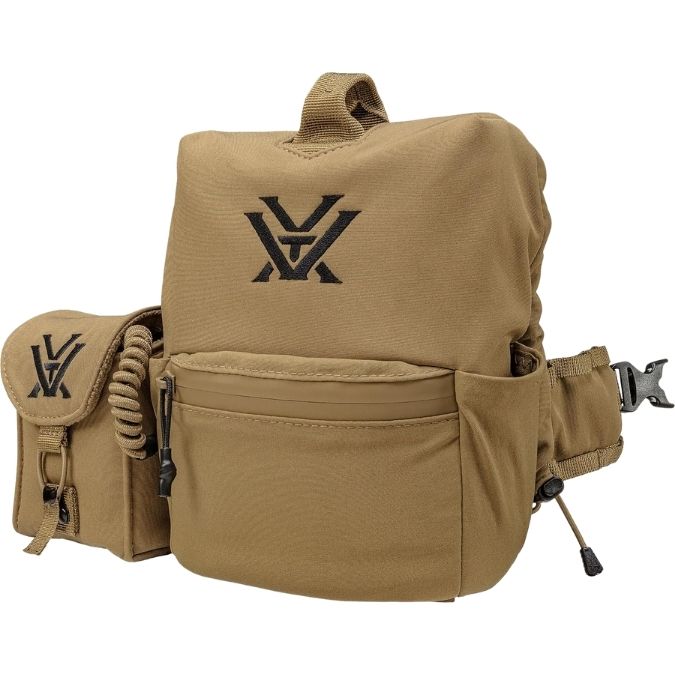
I like the GlassPak Pro Small for keeping your binoculars close without repeatedly reaching into a backpack. The forward-opening lid moves away from your face, and the structured pouch helps keep access straightforward. An included rangefinder pouch puts a second frequently used tool nearby. The adjustable harness and modular attachment points let you arrange the setup around your clothing and other gear, while the DWR-treated exterior adds water resistance without making this a waterproof case.
Size is the decision that matters most here. The Small is intended for most 42 mm and smaller binoculars, but objective size alone does not guarantee a comfortable fit with lens covers attached. I would check the complete dimensions of your binoculars and rangefinder before ordering. The accessory pockets are tight, and harness comfort takes some adjustment. If you want a compact optics carrier, the layout makes sense; if you expect a roomy chest pack for a phone and extra tools, I would look elsewhere.
Pros and Cons
| Pros | Cons |
|---|---|
| Forward-opening lid stays out of the way | Some binoculars fit tightly with covers attached |
| Rangefinder pouch included | Accessory pockets offer limited usable space |
| Structured binocular compartment aids access | |
| Adjustable, modular carrying layout |
Best for: Hunters carrying compact binoculars and a compatible rangefinder.
Skip if: You need generous phone storage or have bulky optics that exceed the Small pouch’s dimensions.
Sawyer Squeeze SP129 with Two 32-Ounce Pouches
Highlight: A compact filtration kit for hunts with suitable freshwater sources.
Key features: 0.1-micron absolute filter • Two 32-ounce pouches • Compatible 28 mm bottle threads • Drinking straw • Hydration-pack adapters
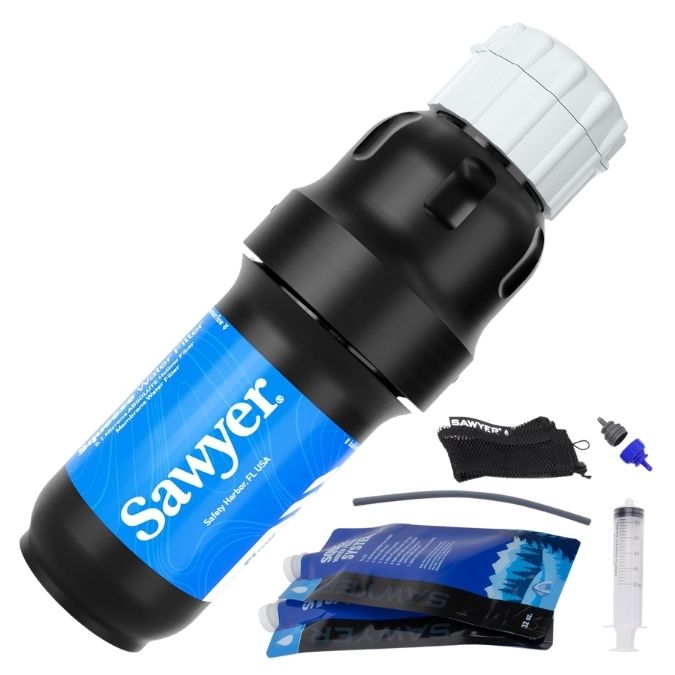
I’d pack the Sawyer Squeeze for a hunt where suitable freshwater sources are part of the route. Its 0.1-micron hollow-fiber filter removes bacteria and protozoa, and the SP129 kit includes two collapsible 32-ounce pouches, a straw, and hydration-pack adapters. You can squeeze water into another container or drink through the filter, while compatible 28 mm bottle threads give you an alternative to the supplied pouches. That flexibility is the strongest reason for my recommendation: the system can fit different carrying setups without a pump or batteries.
The pouches are the weak point. They can be awkward to fill and can leak or split, so I would check them before a trip and carry a compatible spare container. Backwash as directed when flow slows, inspect the gasket, and protect a wetted filter from freezing; replace it if freezing is suspected. You should also understand its limits: it does not remove dissolved salts or make every contaminated source suitable to drink. I recommend it for a planned water system with maintenance and backup options, not as a reason to ignore water-source conditions.
Pros and Cons
| Pros | Cons |
|---|---|
| Compact system needs no pump or batteries | Included pouches can be awkward to fill and prone to leaks |
| Works with compatible 28 mm bottles | Requires cleaning and protection from freezing after wetting |
| Two collapsible pouches included | |
| Supports several drinking and storage setups |
Best for: Hunters who plan their route around suitable freshwater and will maintain their filter.
Skip if: You need dissolved-salt removal or cannot protect a wetted filter from freezing.
Thermacell Fuel-ZoneGuard Extreme Repeller, Olive Green
Highlight: Mosquito protection for stationary outdoor sits in suitable conditions.
Key features: Fuel-powered MR300 • Advertised 15-foot protection zone • One 12-hour fuel cartridge • Three four-hour mats • No batteries required
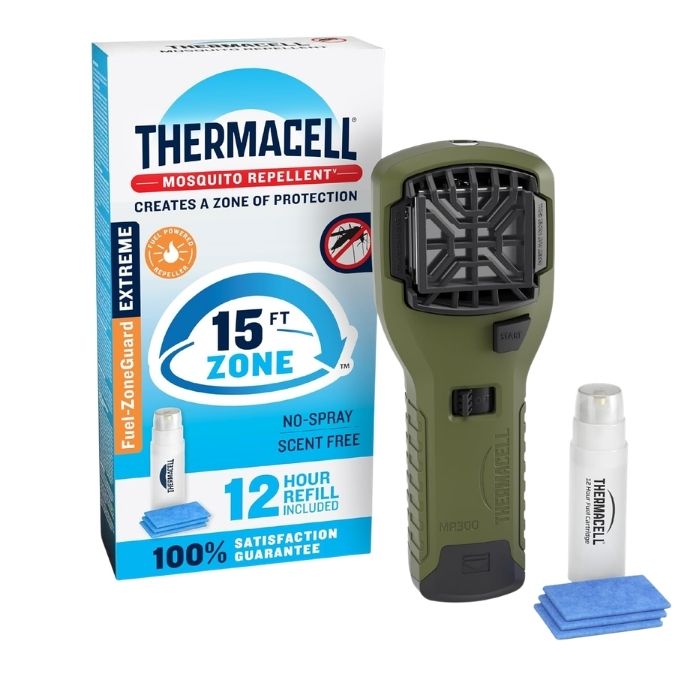
I’d consider this Thermacell for a warm-weather sit where mosquitoes make it difficult to stay comfortable. It heats a repellent mat using a fuel cartridge, creating an advertised 15-foot protection zone without applying a spray to your skin. The Olive Green package includes one cartridge and three mats, so the fuel and repellent are both replaceable. You need to allow roughly 10 to 15 minutes for maximum effectiveness. For a stationary outdoor position in calm weather, that setup is more appealing to me than carrying another device that needs charging.
My recommendation is conditional because protection is not consistent in every setting. Wind disperses the repellent, and ignition reliability is worth checking before you leave. I also would not assume that a scent-free description means deer cannot detect it. Budget for replacement fuel and mats, and do not assume the separate Hunt Pack’s holster comes with this version. Use it outdoors only, never in an enclosed blind or tent, and protect it from rain. The manufacturer specifies a 4,000-foot altitude limit for this fuel-and-mat type, making it a poor choice for high-country hunts.
Pros and Cons
| Pros | Cons |
|---|---|
| No battery charging required | Protection varies, particularly with wind |
| Avoids applying repellent spray to your skin | Recurring refill expense and a 4,000-foot altitude limit |
| Replaceable fuel and mats support continued use | |
| Starter cartridge and three mats included |
Best for: Hunters sitting outdoors below the altitude limit in calm, dry conditions.
Skip if: Your hunt involves high elevations, exposed windy terrain, or an enclosed shelter.
Allen Company Backcountry Quarter Bag, 20 × 30 Inches
Highlight: Reusable meat storage for appropriately sized game portions.
Key features: 20 × 30-inch dimensions • Breathable fabric • Drawstring closure • Washable construction • Reusable design
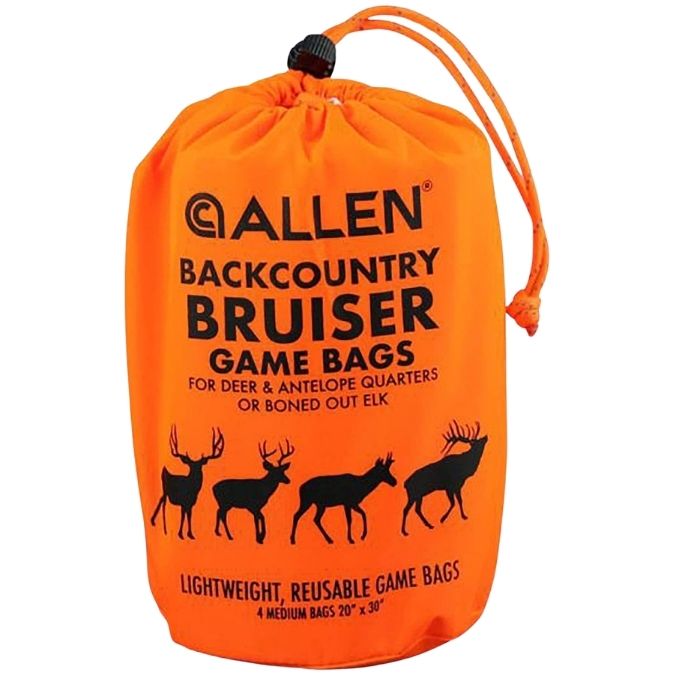
I’d choose the 20 × 30-inch Allen Backcountry bag for deer-sized portions or boned-out meat when you want something you can clean and use again. The breathable fabric provides a barrier against dirt and insects while allowing air circulation, and the drawstring gives you a straightforward way to close the opening. Its appeal is practical: you can keep meat contained during transport without treating the bag as a disposable item. Match the portion size to the bag instead of assuming that a product called a quarter bag will accommodate every animal.
My reservation is the balance between packed bulk and capacity. This is not the larger 40 × 25-inch version, so I would not choose it on the assumption that a large bone-in elk quarter will fit. It also is not the most compact option for a tightly packed kit. Check your space and planned meat portions before committing. If you value washability and repeated use over the smallest possible packed size, I think it is a sensible choice. You still need a separate plan for promptly cooling and transporting the meat.
Pros and Cons
| Pros | Cons |
|---|---|
| Washable for use across multiple hunts | Packed bulk can be inconvenient in a small kit |
| Breathable fabric permits air circulation | Smaller dimensions limit large bone-in quarter fit |
| Drawstring closure keeps contents contained | |
| Fabric barrier helps keep dirt and insects off meat |
Best for: Deer hunters or hunters carrying boned-out portions that fit the 20 × 30-inch size.
Skip if: You need extra room for large bone-in quarters or prioritize the smallest packed volume.
HotHands Hand Warmers, 40-Pair Option
Highlight: Portable hand warmth without a charging routine.
Key features: Air activated • Disposable packets • No batteries • Pocket-friendly format • Up to 10 hours of heat
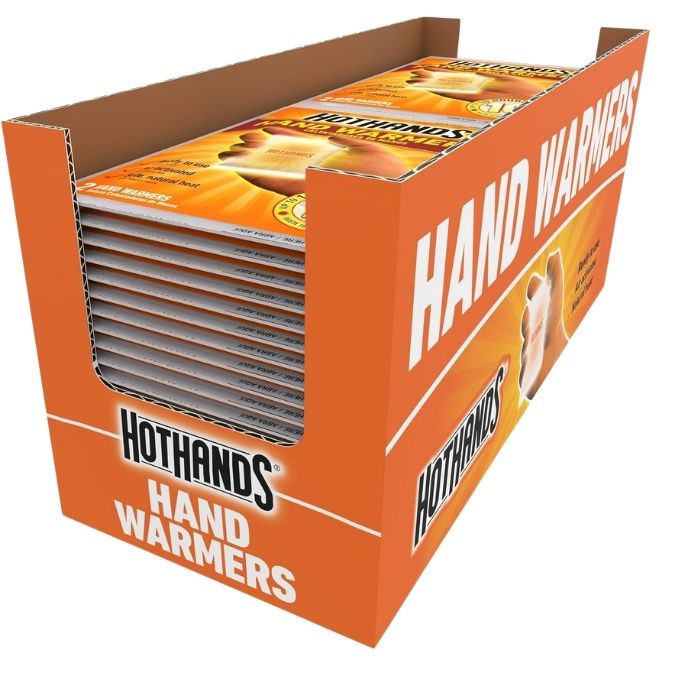
I like HotHands as a simple addition to a cold-weather hunting kit because you can carry unopened packets without remembering to charge anything. Once exposed to air, the warmers generate heat and fit into pockets or suitable glove warmer compartments. The advertised duration is up to 10 hours, which makes them worth considering for a long sit, but I would treat that as an upper limit rather than a promise. You can also divide a bulk purchase among hunting partners instead of carrying the entire supply.
My main caution is consistency: some packets produce less warmth or stop earlier than expected. Check the expiration date and condition of the sealed wrappers when they arrive, and try a pair before relying on them for a cold day. I would keep extras in the kit rather than depend on one pair. These are disposable, so frequent use creates an ongoing cost and waste. Follow the package directions and do not apply them directly to bare skin. For occasional hunts and backup warmth, their simplicity is the draw.
Pros and Cons
| Pros | Cons |
|---|---|
| No charging or batteries to manage | Heat output and duration can vary |
| Small packets fit easily into a hunting kit | Disposable format adds recurring cost and waste |
| Bulk supply can be shared among partners | |
| Sealed individual packets allow selective use |
Best for: Occasional cold-weather hunters who want portable warmth and spare packets.
Skip if: You need adjustable heat or prefer a reusable warmer for frequent daily use.
How to Choose the Best Hunting Gear
Here’s what you need to know before you hit the market (or a marketplace.)
Start with the hunt, duration, and distance from the vehicle
Write down the longest realistic day, including the return trip and a possible recovery. A short walk to a stand creates different carrying demands from repeated climbs, even if both hunts begin before sunrise. I would build around that demanding part of the day rather than the easiest approach.
Prioritize safety-critical systems before comfort accessories
Lighting and water equipment deserve attention before optional comfort purchases. Navigation, first aid, emergency shelter, food, communication, and weather protection also need their own place in the plan. The National Park Service’s Ten Essentials framework provides a useful starting checklist for outdoor preparation.
Practice with the equipment before relying on it away from the trailhead. Download necessary maps, learn your backup navigation method, and leave your route and expected return time with someone. For me, the best hunting gear includes a workable fallback when one device, container, or battery fails.
Choose storage around the actual load
Load the pack with your usual layers, food, water, and tools before judging fit. Check shoulder pressure, waist-belt position, and whether frequently used items stay accessible. A convenient organizational pocket loses its value if you must unload everything to reach it.
Keep the day-hunt and meat-hauling jobs separate when evaluating the Pursuit. A 44-liter capacity describes space, not a verified load limit. I would also check hydration routing and external equipment retention with the actual items you intend to carry, rather than assuming compatibility from a product photograph.
Match lighting and power to hunt duration
Maximum lumens tell you only part of the story. Think about the brightness needed for walking, close work, and finding equipment, then plan power for the return trip. Learn how to change modes with your usual gloves and keep spare cells protected from moisture and accidental contact.
The Spot 400 offers replaceable AAA power, but that convenience still requires fresh spares. Compare the best hunting headlamps if you are deciding between field-swappable batteries and a charging routine. A separate backup light is easier to justify when a delayed recovery could keep you out after dark.
Coordinate optics access and tool compatibility
Measure binoculars with the accessories you actually use, including lens covers. Check that the harness closes without force and that its straps work with your backpack. I would test access while wearing a jacket, because a comfortable summer fit may change with thicker layers.
A harness organizes optics; it does not supply them. Compare the best rangefinders for hunting when choosing the tool for its accessory pouch.
For extended glassing, our review of the best hunting tripods distinguishes optics support from rifle-support systems, helping you avoid an incompatible mount or unnecessary carrying weight.
Plan for terrain, weather, and mobility
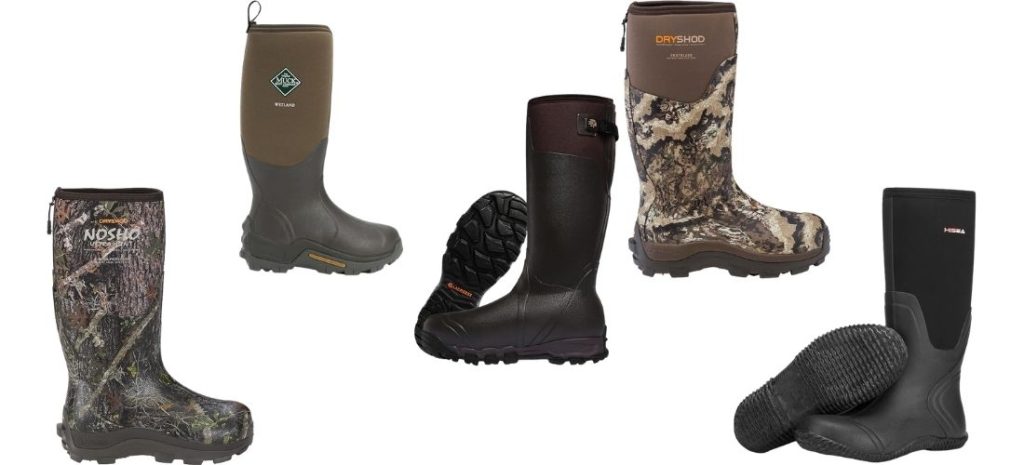
Start with the best hunting boots suited to your terrain before spending on small comfort upgrades. Try them with your intended socks and enough room for natural movement. Our review of the best hunting socks for cold weather explains why thicker cushioning is useful only when it fits inside your footwear.
For slow winter sits, compare the best cold weather hunting boots. For steep approaches and loaded descents, use our best elk hunting boots review to focus on support and fit. Those are different purchasing problems, so I would not choose solely by insulation thickness or the animal pictured in an advertisement.
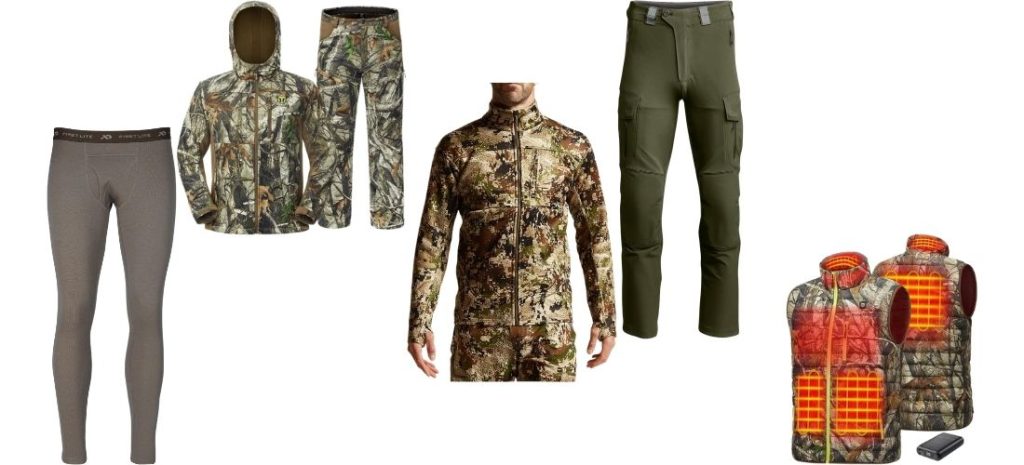
Pack the best hunting rain gear for expected exposure, with room for the layers underneath. A pack cover protects your load but does not replace clothing. Check movement, hood adjustment, and access to pockets before the forecast forces you to wear everything together.
Plan for weather, water, insects, and temperature
Map water opportunities before deciding how much to carry between them. The Sawyer Squeeze instructions and product guidance explain its use and care; a wetted filter needs protection from freezing. Keep clean-water containers separate from dirty-water handling and include a backup treatment plan suited to the source.
Match mosquito protection to the place you will sit. Wind and elevation can make the Thermacell a poor match, while changing weather may reduce the time you spend stationary. Carrying extra fuel cannot correct those environmental limitations.
For longer cold sits, compare the best heated vests for hunting before deciding whether rechargeable torso warmth belongs in your layering system. HotHands addresses a different need. I would treat either as supplemental comfort while maintaining suitable clothing, dry layers, and a practical return plan.
| Condition | Equipment decision | Before leaving |
|---|---|---|
| Rain | Protect clothing and vulnerable equipment | Pack accessible rain layers and dry storage |
| Freezing temperatures | Protect a wetted filter | Plan insulated storage and an appropriate backup |
| Wind or high elevation | Reassess the fuel-powered repeller | Check operating limits against the destination |
| Limited water access | Carry sufficient water between sources | Confirm dependable sources and container capacity |
| Extended darkness | Plan lighting redundancy | Check controls, batteries, and backup light |
| Long cold sit | Match insulation to low activity | Check fit, dry layers, and supplemental heat supplies |
Plan for recovery and the pack-out
Choose game-bag dimensions around the portions you expect to carry. Count the containers needed for the whole recovery rather than buying one bag because its name includes “quarter.” Pair them with one of the best hunting knives suited to your processing tasks and preferred maintenance routine.
A breathable bag helps keep meat contained, but cooling and transport still require planning. Identify who can help, what load you can realistically carry, and how the meat will reach suitable storage. I would resolve those questions before adding another convenience item to the pack.
Build the Kit Around the Hunt
Access and setup
Pack by when you need an item. Keep your light accessible before entering the dark, position water so you will drink regularly, and place rain protection where you can retrieve it quickly. Test the loaded pack on a short walk before a longer outing exposes a fit problem.
During the hunt
Arrange the harness so it does not fight your pack straps. Keep a warmer packet reachable when the forecast warrants it, and allow the repeller time to work only where conditions suit its instructions. The best hunting gear earns its place through useful access as much as through specifications.
Recovery and pack-out
Leave room for the recovery equipment you actually need. Recheck light reserves before working into the evening and keep game bags separate from dirty equipment until needed. A successful hunt can extend the day considerably, so the return plan should account for fatigue and a heavier load.
| Hunt phase | Relevant picks | What must work alongside them |
|---|---|---|
| Access and setup | Pursuit, Spot 400, Sawyer | Navigation, suitable water sources, containers, backup light |
| Active hunt | GlassPak Pro, Thermacell, HotHands | Compatible optics, suitable conditions, weather-appropriate clothing |
| Recovery and return | Allen bag, Spot 400 | Processing tools, cooling plan, appropriate load-hauling equipment |
Final Verdict
The best hunting gear purchase is the one that fixes your most consequential kit gap. I’d start with the Pursuit for day-hunt organization, the Spot 400 for hands-free lighting, or the Sawyer Squeeze when suitable freshwater access is part of the route.
Choose the GlassPak for optics access, the Allen bag for meat portions, and Thermacell or HotHands when conditions justify them.
FAQs
What hunting gear should every beginner carry?
Start with suitable clothing and footwear, navigation, lighting, water, food, first aid, and a plan for unexpected weather or delay. Add the equipment required for your hunt and recovery. These seven accessories cover several useful jobs, but they do not replace a complete trip-specific packing list or knowledge of the equipment.
Which hunting gear is worth spending more on?
I would prioritize dependable equipment where failure could end the hunt or complicate the return. That often means footwear, weather protection, lighting, navigation, and water planning. Spend for a useful fit or capability rather than a premium label. A less expensive item can be appropriate when its limitations match your use.
How should I organize hunting gear in a daypack?
Keep frequent-use items reachable and protect supplies that must stay dry. Put the light where you can find it without emptying the pack, separate clean-water handling from dirty containers, and group recovery tools together. Test the loaded arrangement while wearing gloves and outer layers, then adjust any awkward access points.
What hunting gear changes for cold or wet conditions?
Reassess insulation, footwear, rain protection, dry storage, and the equipment affected by freezing. A wetted hollow-fiber filter needs particular care, while a long stationary sit changes how much warmth you need. Supplemental heat can help with comfort, but I would not use it to compensate for wet clothing or inadequate layers.
How do I decide what hunting gear to leave behind?
Give each optional item a job tied to the route, forecast, and hunt style. Leave out duplicated conveniences when another item performs that job adequately, but retain suitable backups for critical systems. The best hunting gear list is personal: a warm-weather repeller and cold-weather hand warmers do not automatically belong on every trip.