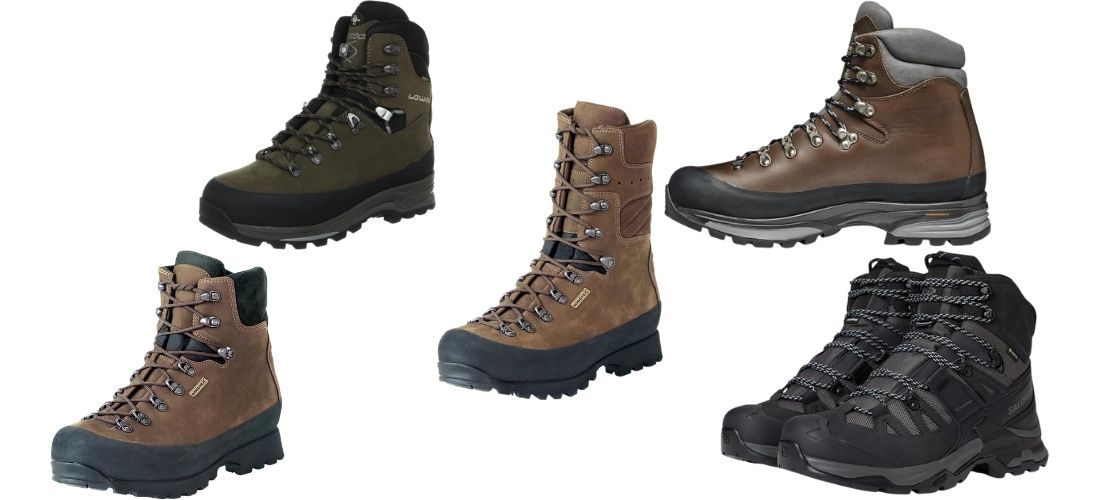
The best elk hunting boots match your feet before they match a season or terrain label. For steep sidehills and loaded pack-outs, I favor a secure heel, enough toe room for descents and a supportive platform that does not create persistent pressure. The Kenetrek Mountain Extreme Non-Insulated ranks first here, but its fit still decides whether it belongs on your hunt.
This review focuses on lace-up boots for active elk country, not rubber boots, pac boots or every kind of hunting footwear. If your needs are broader, our review of the best hunting boots covers general hunting categories beyond this mountain-oriented shortlist.
How I Chose These Elk Hunting Boots
To identify the best elk hunting boots, I considered the top mountain hunting boots for different versions of the same hard job: moving across uneven ground, staying functional through changing conditions and getting back under a heavier load. I compared exact-model construction, intended support, fit options, weather protection and practical failure points. A tall upper or stiff shank helped only when it served the stated use rather than adding bulk without a clear benefit.
This is a research-based assessment. I did not treat brand reputation or anything like that as proof that a boot will fit, stay dry indefinitely or survive every hunt.
Fit is the final gate. I would rather take a slightly less supportive boot that holds your heel and clears your toes than force a top-ranked mountain boot that rubs or crowds your foot. That is why every selection includes a clear reason to choose it and an equally clear reason to skip it.
Compare the Best Elk Hunting Boots
I scored each boot for the demands that matter most on an elk hunt. Terrain and load support carries 45% of the total, fit adaptability and distance comfort 35%, and weather management 20%. Each criterion is scored out of 5, then converted to a weighted overall score out of 10.
Know that these scores are comparative judgments. A lower-ranked boot can still be the right choice if its shape fits you better or its mobility suits your route. The main drawback column matters as much as the overall number.
| Rank | Product | Distinct fit | Terrain and load support /5 | Fit and distance comfort /5 | Weather management /5 | Overall /10 | Main drawback | Pricing |
|---|---|---|---|---|---|---|---|---|
| #1 | Kenetrek Mountain Extreme Non-Insulated | Tall, structured platform for steep country | 5.0 | 4.0 | 4.0 | 8.2 | Stiffness and persistent heel-rub risk | Check Amazon price |
| #2 | LOWA Tibet GTX WXL Wide | Wide-fit option with firm mountain support | 4.5 | 4.0 | 4.0 | 7.8 | WXL can still restrict the forefoot | Check Amazon price |
| #3 | SCARPA Kinesis Pro GTX | Protective leather boot for close-fitting feet | 4.5 | 3.5 | 4.0 | 7.6 | Toe-box and inner-ankle pressure | Check Amazon price |
| #4 | Kenetrek Hardscrabble Hiker | Shorter cuff with a firm platform | 4.5 | 3.0 | 3.0 | 7.1 | Difficult break-in and wet-weather concerns | Check Amazon price |
| #5 | Salomon Quest 4 GTX | Walking comfort on less abrasive routes | 3.5 | 4.0 | 4.0 | 6.9 | Material durability and separation concerns | Check Amazon price |
The Best Elk Hunting Boots
The ranked sections below preserve the exact product variants and recommendation limits. Start with the use case, then take the fit and durability cautions seriously before you commit to a remote hunt.
Kenetrek Mountain Extreme Non-Insulated
Highlight: My first choice here for steep country and demanding pack-outs, provided the fit works for you.
Key features: 10-inch leather upper • 2.8mm full-grain leather • 7mm nylon midsole • Windtex waterproof membrane • K-Talon outsole • Non-insulated construction
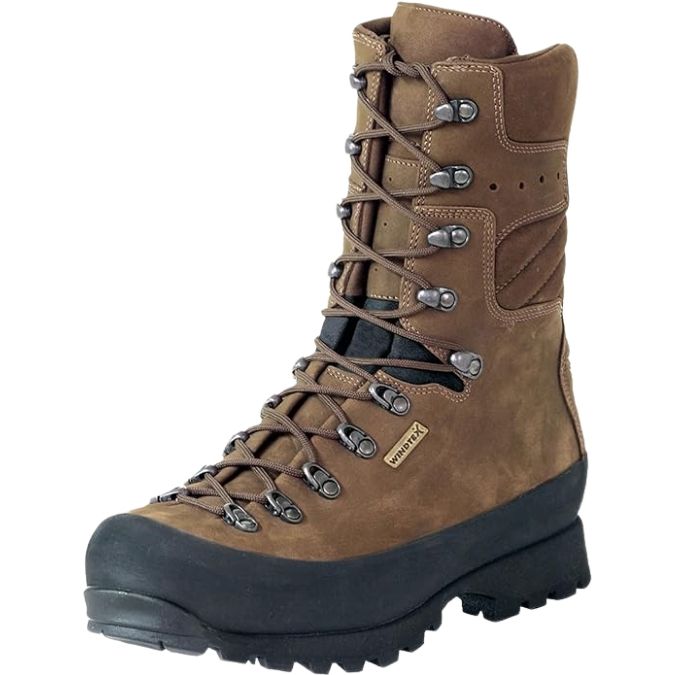
I’d choose the Mountain Extreme when your elk hunt involves steep sidehills, loose rock and a loaded pack. Its tall leather upper and stiff nylon midsole give you a substantial platform, while the rubber sole guard adds protection around the lower boot. The K-Talon outsole suits uneven mountain ground, but I would still take care on slick logs and wet surfaces. This is a boot for hunters who value structure more than an easy, flexible stride. The non-insulated version makes sense for active early-season hunting, although its thick construction can still feel warm.
My main reservation is heel comfort. A secure fit matters more than forcing yourself through a prescribed number of break-in miles, and persistent rubbing is a reason to reconsider the boot. I also would not equate its substantial build with guaranteed longevity: leaks, separating rubber and premature wear are meaningful risks alongside its strong mountain-use appeal. Check heel hold on climbs and toe clearance on descents before committing to a long trip. If those checks go well, I’d keep it at the top of this lineup for support; I’d choose something else for casual trails or long, stationary sits in deep cold.
Pros and Cons
| Pros | Cons |
|---|---|
| Tall upper provides substantial ankle coverage | Stiff construction can cause persistent heel rubbing |
| Firm midsole suits loaded travel on uneven ground | Leaks and rubber separation remain durability concerns |
| Protective rubber guard shields the lower leather | |
| Non-insulated option for active hunting |
Best for: Elk hunters who prefer a tall, structured boot for steep terrain and loaded pack-outs.
Skip if: You need a flexible boot immediately or cannot achieve a comfortable, secure heel fit.
LOWA Tibet GTX WXL Wide
Highlight: A structured mountain option worth trying when standard-width boots feel restrictive.
Key features: WXL wide variant • GORE-TEX lining • Full-length nylon shank • C4 contoured tongue • FlexFit ankle design
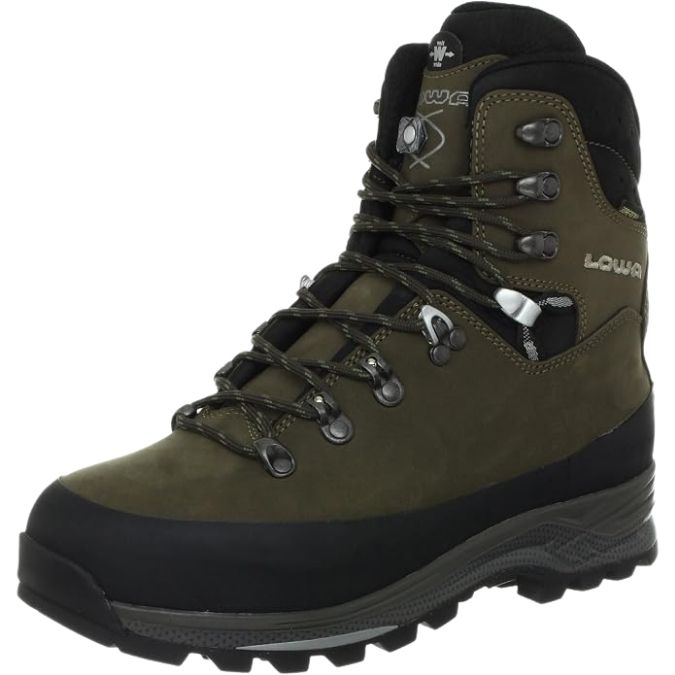
The Tibet GTX WXL earns its place because you can try a wider fit without moving away from a firm backpacking boot. I like that combination for elk hunters carrying camp through broken ground. The full-length nylon shank limits underfoot flex, while the contoured tongue and adjustable lacing help you secure the upper without simply overtightening everything. GORE-TEX adds a waterproof barrier for wet grass and changing weather. I’d prioritize this boot for off-trail travel where support matters more than saving every ounce.
But WXL is not a promise of generous room for every foot. Check the forefoot carefully with your hunting socks; I would not size up automatically or assume pressure will disappear with use. Weight, stiffness and warmth can become tiring on easy trails. Sole separation and deterioration are additional concerns, so inspect the sole bond before a remote trip, especially after long storage. I’d recommend the Tibet only when its width, heel hold and underfoot feel work together for you. A wide label alone is not enough to make it the right boot.
Pros and Cons
| Pros | Cons |
|---|---|
| Wide variant provides another fitting option | WXL can still feel snug across the forefoot |
| Firm shank supports travel over rough ground | Substantial weight, with sole-bond durability concerns |
| GORE-TEX barrier for wet conditions | |
| Contoured tongue and lacing help adjust the fit |
Best for: Hunters seeking a wide-fit option with a firm platform for backcountry travel.
Skip if: You need a very roomy toe box, minimal weight or a flexible everyday walking boot.
SCARPA Kinesis Pro GTX
Highlight: A protective leather option for rough approaches and hunters who prefer a close fit.
Key features: 2.4mm leather upper • Full-perimeter rubber rand • GORE-TEX lining • Micro-pulley lacing • Vibram Biometric/XS Trek outsole
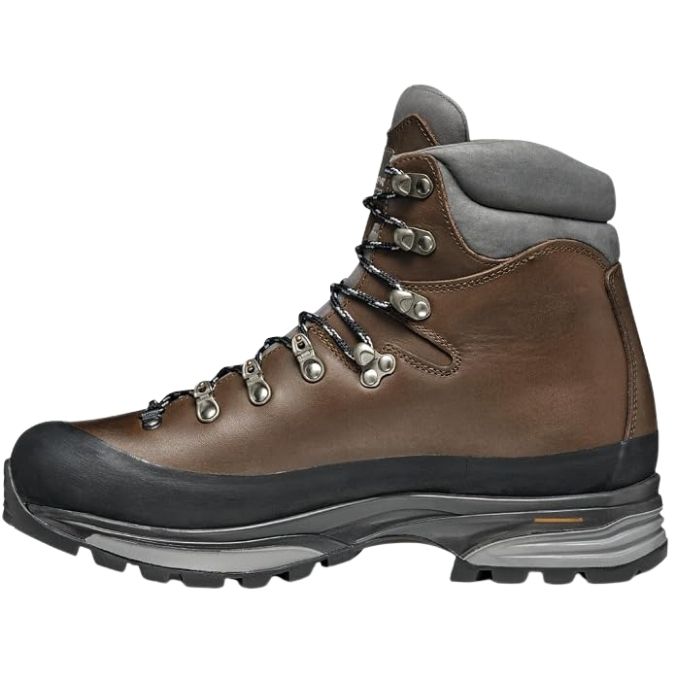
What interests me most about the Kinesis Pro GTX is the combination of a substantial leather upper and a full rubber rand. If your route involves brush, loose stone and repeated contact with rock, that protection has a clear purpose. The firm platform suits carrying a pack, and the micro-pulley lacing helps you distribute tension through the midfoot. I’d consider it for a hunter who prefers a secure heel and a close-fitting boot rather than a roomy, flexible hiker. Its GORE-TEX lining adds weather protection without making it a dedicated insulated winter boot.
The fit is also the biggest reason to pass. Toe-box pressure and rubbing around the inner ankle can outweigh the support, and I would not expect a thick replacement insole to solve a tight fit. Give yourself time to assess it on climbs and descents. Weight and stiffness are part of the trade-off, while lace wear, hardware failure and lifting rubber deserve attention before a remote hunt. I’d choose the Kinesis if it holds your heel without crowding your toes; I’d skip it if you need substantial forefoot space or a soft feel straight away.
Pros and Cons
| Pros | Cons |
|---|---|
| Full rubber rand protects the lower upper | Close toe-box fit can create pressure |
| Firm platform suits carrying a pack | Stiffness and weight demand a careful fit trial |
| Micro-pulley lacing makes tension adjustment easier | |
| Leather upper and GORE-TEX lining provide weather protection |
Best for: Hunters whose feet suit a close-fitting leather boot for rough, rocky approaches.
Skip if: You need a broad toe box or generous space for thick orthotics.
Kenetrek Hardscrabble Hiker
Highlight: Kenetrek’s shorter-cuff option for active hunts where you still want a firm sole.
Key features: 7-inch upper • 2.8mm full-grain leather • 7mm nylon midsole • Windtex waterproof membrane • K-Talon outsole • Non-insulated construction
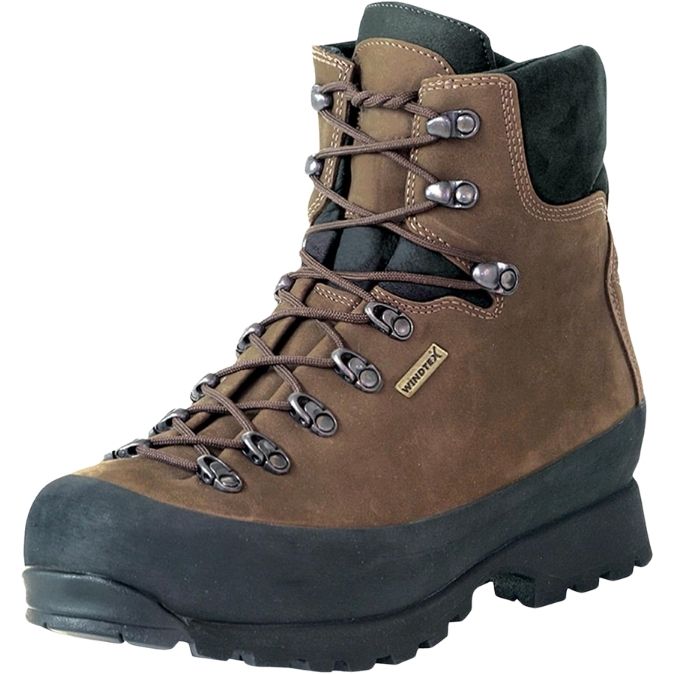
I’d choose the Hardscrabble over the Mountain Extreme when you want less height around the lower leg but still prefer a structured mountain boot. Its 7-inch upper sits above a firm nylon midsole, with a protective rubber guard and K-Talon outsole for rough ground. The non-insulated design suits active hunting, and the available width choices make fit worth exploring before dismissing it. For me, its appeal is the combination of a shorter cuff and substantial underfoot support, rather than the soft feel of a lightweight trail boot.
Do not mistake the lower height for an easy break-in. Heel and ankle irritation can persist, and the thick sole can feel cumbersome if you are used to lighter footwear. My other reservation is durability: peeling rubber, sole separation and wet feet are concerns I would take seriously rather than dismiss because the leather feels substantial. Check the fit with any orthotics you actually use, then assess comfort on hills and inspect the boot before departure. I’d consider it for active elk hunts if those checks go well, but not as a last-minute purchase you expect to soften during the trip.
Pros and Cons
| Pros | Cons |
|---|---|
| Shorter cuff reduces lower-leg coverage | Stiff sole and upper can cause prolonged discomfort |
| Firm nylon midsole supports loaded hiking | Rubber separation and wet-weather reliability are concerns |
| Width choices help narrow down the fit | |
| Non-insulated design suits active use |
Best for: Hunters who want a shorter leather boot with firm support for active mountain travel.
Skip if: You need easy flexibility, have unresolved heel rubbing or cannot fit your orthotics comfortably.
Salomon Quest 4 GTX
Highlight: A comfort-focused option for hiking-heavy hunts, with a substantial durability caveat.
Key features: GORE-TEX waterproof protection • ADV-C 4D chassis • Support around the heel • Backpacking design that allows natural foot flex
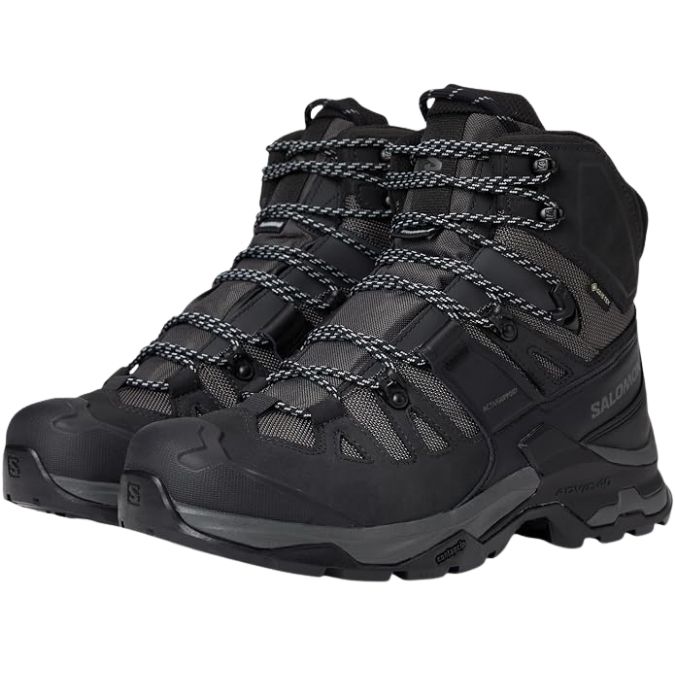
I see the Quest 4 GTX as the alternative for you if a rigid leather mountain boot makes every step feel awkward. Its ADV-C 4D chassis combines support around the heel with a design intended to preserve a smoother stride. That makes it worth considering for hiking-heavy elk hunts on established trails and mixed forest ground. The GORE-TEX construction adds weather protection, and a good fit can offer comfortable heel hold without the restrictive feel of a very stiff boot. I would still fit the Quest 4 on its own merits rather than assume an older Salomon size will transfer perfectly.
My recommendation is conditional because durability is the major weakness. Sole separation, deteriorating rubber, lifting toe protection and lace-hardware failures make me reluctant to choose it for a remote hunt where a boot failure would be difficult to manage. Comfort does not cancel those concerns. You should also check for heel rubbing and lace pressure before accepting the fit; neither is ruled out by a flexible feel. I’d keep it on the shortlist for hunters prioritizing walking comfort on less abrasive routes, but it would not be my first choice for repeated heavy pack-outs through sharp rock.
Pros and Cons
| Pros | Cons |
|---|---|
| Design allows a more natural walking stride | Sole and upper separation are significant concerns |
| Chassis provides support around the heel | Lace hardware can fail; fit differs from older models |
| GORE-TEX barrier adds wet-weather protection | |
| Comfortable heel hold is possible with the right fit |
Best for: Hunters prioritizing walking comfort on hiking-heavy routes with less abrasive terrain.
Skip if: You need my strongest durability recommendation for remote hunts and repeated rocky pack-outs.
How to Choose the Best Elk Hunting Boots for Your Hunt
The best elk hunting boots are not simply the stiffest, warmest or most expensive models. Your route, pack weight, season and foot shape determine the useful trade-offs. Eliminate any boot that fails the fit checks.
Match Support to Terrain and Pack Weight
A firm midsole limits how much your foot bends around sharp rock and uneven sidehills, while a taller upper provides more coverage around the ankle. Those traits become more valuable when you carry camp or meat.
Terrain varies within the same hunt. A route that begins on a maintained trail may finish in deadfall, loose scree or a steep drainage. Hunters planning elk hunting in Colorado also need to account for elevation, rapid weather changes and the work of hiking with weight.
More structure is not automatically better. A rigid boot can feel controlled under a pack yet cumbersome on easy approaches. For moderate mileage and lighter loads, a supportive hiking-style boot may be easier to live with.
| Boot profile | Stronger terrain role | Mobility compromise |
|---|---|---|
| Kenetrek Mountain Extreme | Steep sidehills and demanding pack-outs | Tall, stiff and comparatively heavy |
| LOWA Tibet GTX WXL | Rough backcountry travel with a wider-fit option | Substantial underfoot feel |
| SCARPA Kinesis Pro GTX | Rocky approaches needing lower-boot protection | Close fit and firm stride |
| Kenetrek Hardscrabble | Active mountain travel with a shorter cuff | Still much firmer than a light hiker |
| Salomon Quest 4 GTX | Trails and mixed forest ground | Less confidence for repeated abrasive pack-outs |
Fit, Width and Sock Volume Come First
Your heel should stay controlled on climbs without painful lace tension, and your toes should not strike the front on descents. Check both directions because level ground can hide heel lift or toe pressure.
When comparing elk boots for wide feet, remember that width labels do not describe toe-box shape, instep volume or heel hold. Wear the socks and orthotics you intend to hunt in. Full cushioning changes the available space, so our review of the best hunting socks for active hunts can help you compare thickness and coverage before fitting the boot.
Do not size up automatically to escape forefoot pressure. Extra length can create heel movement without fixing the shape mismatch. REI’s hiking-boot fit guidance recommends a snug rather than tight fit, with room to move your toes.
Fit Check Before the Hunt
- Lace the boot with your intended socks and insoles.
- Walk uphill and check whether your heel lifts or rubs.
- Walk downhill and confirm that your toes clear the front.
- Note pressure across the forefoot, instep and inner ankle.
- Repeat the check with a realistic pack before remote use.
Choose Stiffness and Break-In Together
Flexible boots usually feel natural sooner. Moderately structured boots balance stride comfort with support, while stiff mountain boots resist twisting and bending under demanding terrain or loads. The right point depends on your hunt.
Break-in can soften leather and help the upper move more naturally, but it cannot guarantee that a poor last will become the right shape. Persistent heel rubbing, toe compression or ankle pressure is a fit warning. I would test short walks first, then hills and a loaded pack, instead of discovering the problem several miles from camp.
Buy early enough to make a calm decision. If discomfort remains after gradual use, exchange the boot while you still can. Do not finish a risky break-in during the hunt.
Balance Waterproofing, Breathability and Insulation
Waterproof elk hunting boots help with wet grass, shallow mud and changing weather, but their membranes can slow moisture escape when your feet run hot. Sweat trapped inside can dampen socks even when water never enters from outside. Dry spares and deliberate drying matter on multi-day hunts.
Uninsulated elk hunting boots suit active early-season hunting for many people, yet thick leather and a membrane can still feel warm. Colder rifle hunts may justify insulation when movement slows. Do not treat a waterproof boot as an insulated boot or rely on an extra-thick sock when it removes necessary toe space.
Examine Construction, Durability and Care
Inspect the sole bond, rubber rand, toe protection, lace hooks and high-flex areas before leaving. Repeat that check after long storage and before a remote trip. A substantial leather upper does not guarantee that every bonded or molded component will age at the same rate.
After the hunt, remove loose mud, take out the insoles and let the boots dry away from direct heat. Follow model-specific instructions before applying any treatment. You can use our guide to clean your hunting boots for the basic process, while GORE-TEX provides separate footwear care instructions for membrane-lined footwear.
Match the Boot to Your Elk Hunt
Season changes the balance among mobility, support and weather management. Use these categories as starting points, but let your fit test overrule the label.
Early-Season and Mobile Hunts
For warm archery seasons, I favor controlled flex, manageable weight and enough room to keep socks from crowding the toe box. Hunters still hunting elk through timber may also value quiet foot placement. The Hardscrabble offers firm support with a shorter cuff; the Quest 4 walks more naturally but carries a larger durability reservation.
Mixed Weather and Backcountry Pack-Outs
For varied terrain and a possible heavy exit, I move support, heel security and lower-boot protection higher. The Mountain Extreme leads if its heel fit works. LOWA and SCARPA provide alternatives for different foot shapes, but neither should be forced through pressure.
Late-Season and Less-Mobile Hunts
None is a dedicated high-insulation winter boot. An uninsulated model can work in cool conditions when activity stays high, but long stationary periods change the problem. Choose insulation for the expected pace and weather.
| Hunt profile | Prioritize | Shortlist direction |
|---|---|---|
| Warm, mobile archery hunt | Fit, moisture management and mobility | Hardscrabble or Quest 4, subject to their durability limits |
| Steep backcountry hunt | Support, heel hold and protective construction | Mountain Extreme, LOWA or SCARPA |
| Heavy pack-out potential | Firm platform and secure downhill fit | Mountain Extreme first, then LOWA or SCARPA by fit |
| Colder, slower hunt | Toe room, sock compatibility and appropriate insulation | Reassess this uninsulated-heavy lineup before choosing |
Which Elk Hunting Boots Would I Choose?
I would start with the Kenetrek Mountain Extreme Non-Insulated for steep terrain and demanding pack-outs, provided it locks down your heel without rubbing. The LOWA Tibet GTX WXL is my next trial for a wider fit, while the SCARPA Kinesis Pro GTX makes sense for a close-fitting foot that benefits from its protective rand.
The Kenetrek Hardscrabble is the shorter-cuff alternative when you still want a firm platform. I would reserve the Salomon Quest 4 GTX for hunters prioritizing a smoother walking stride on less abrasive routes, because its durability concerns matter more in remote country. The best boots for elk hunting are the highest-ranked pair that also passes your personal fit test.
FAQs
Are Stiff Boots Better for Elk Hunting?
The best elk hunting boots are not always the stiffest. A firm platform helps on steep sidehills, sharp rock and loaded pack-outs, but it can be excessive on easier ground or tiring when the fit is wrong.
Should Elk Hunting Boots Be Insulated or Uninsulated?
Uninsulated boots generally suit active early-season hunts, while insulation becomes more useful in colder weather or during long stationary periods. Your pace, circulation, sock system and available toe room all affect the decision.
How Much Toe Room Should Elk Hunting Boots Have?
You need enough room to move your toes and avoid striking the front on descents, without creating uncontrolled heel movement. Test the boots on an incline with your intended socks and insoles.
How Long Should I Break In Elk Hunting Boots?
There is no reliable universal mileage. Build from short walks to hills and realistic pack weight, then reconsider the fit if rubbing, toe pressure or ankle pain persists instead of improving.
Do Elk Hunting Boots Need GORE-TEX or Another Waterproof Membrane?
Not always. A membrane helps in wet grass, mud and changing weather, but it can feel warmer and does not replace insulation. Choose it when wet-condition protection matters more than maximum ventilation.