The best hunting tripods solve different problems. I would choose the BOG DeathGrip Infinite Carbon Fiber for the strongest mix of rifle support and mounting versatility, the Primos Trigger Stick Gen3 for fast mobile setups, or the Vortex Mountain Pass when glassing matters more than clamping a firearm.
How I selected these hunting tripods
I compared exact U.S. models. The ranking gives 35% of the score to shooting stability, 20% to speed and terrain adjustment, 20% to hunting versatility, 15% to carry practicality, and 10% to reliability confidence. Those weights favor a secure field platform without ignoring how much effort it takes to deploy and carry.
This is a research-based assessment, not a claim that I physically tested every tripod. I checked published specifications, mounting systems, height range, materials, intended use, and practical failure points. The close call between Primos and the standard BOG came down to role: Primos is faster and lighter for a mobile hunter, while the BOG is the steadier choice when a clamped rifle can remain set up.
Compare the best hunting tripods
Start with the job you need the tripod to do. A clamping head can hold a conventional stock, an Arca-Swiss system makes equipment changes easier, and a V-yoke supports a fore-end without locking the firearm in place.
| Rank | Exact model | Best fit | Shooting stability /5 | Speed and adjustment /5 | Versatility /5 | Carry practicality /5 | Reliability confidence /5 | Overall /10 | Main drawback |
|---|---|---|---|---|---|---|---|---|---|
| #1 | BOG DeathGrip Infinite Carbon Fiber, 1163389 | Best overall | 4.5 | 4.0 | 5.0 | 3.0 | 3.0 | 8.3 | Heavy for long walk-in hunts |
| #2 | Primos Trigger Stick Gen3 Jim Shockey Tall, 65815 | Fast mobile setup | 3.5 | 5.0 | 4.0 | 4.0 | 2.0 | 7.4 | Yoke does not clamp the firearm |
| #3 | BOG DeathGrip Carbon Fiber, 1099443 | Fixed-position clamping support | 4.5 | 3.5 | 3.0 | 3.0 | 3.5 | 7.3 | Less fluid than a ball-head platform |
| #4 | Vortex Mountain Pass Tripod Kit, TR-MTP | Optics-first hunting | 3.0 | 4.0 | 3.0 | 4.0 | 3.0 | 6.8 | No included rifle clamp or V-yoke |
| #5 | Hammers Telescopic Shooting Tripod, SP3TQ | Budget standing rest | 2.5 | 2.0 | 2.0 | 3.0 | 1.5 | 4.5 | Older reliability evidence and slower setup |
Ranking the five hunting tripods by stability, adjustment, versatility, carrying burden, and reliability confidence.
The best hunting tripods I would choose
1. BOG DeathGrip Infinite Carbon Fiber, Model 1163389
Highlight: Best overall hunting tripod for switching between a clamped firearm, Arca-mounted rifle, and optics.
Key features: Carbon-fiber legs • DeathGrip UltraLite clamp • Arca-Swiss quick release • 360-degree ball head • 20.5 to 59.5-inch height range • 6 pounds, 8 ounces
The DeathGrip Infinite is the most capable all-around platform in this group because it combines the familiar clamp with an Arca-Swiss mounting system, an included optics plate, and a low-profile ball head. Its three leg angles, twist locks, removable foot spikes, and broad tilt range make it easier to level on uneven ground than a fixed shooting rest. I would choose it when you want one support that can hold a traditional rifle stock, accept an Arca-equipped rifle, and carry optics without changing tripods.
The compromise is portability. At 6 pounds, 8 ounces, it is lighter than many heavy shooting platforms but still substantial beside an optics tripod or trigger stick, and the more complex head gives you more controls to learn. My main reservation is the mismatch between its premium carry-oriented material and its real packed weight. I recommend it for a deliberate setup near a blind, vehicle, or glassing point, but I would not make it my first choice for a long backcountry approach where every pound matters.
Pros and Cons
| Pros | Cons |
|---|---|
| Accepts the included clamp, Arca-mounted equipment, and an optics plate | Too heavy for many long walk-in or backcountry hunts |
| Ball head allows broad pan and tilt adjustment | More controls and moving parts than a simple shooting rest |
| Carbon-fiber legs and three leg-angle positions suit uneven ground | |
| Rubber feet, removable spikes, bubble level, and carry case are included |
BOG DeathGrip Infinite Carbon Fiber strengths and trade-offs for a mixed rifle-and-optics setup.
Best for: Hunters who want one premium platform for clamped rifles, Arca-compatible equipment, and glassing.
Skip if: You need a genuinely light tripod for high-mileage backcountry hunting.
2. Primos Trigger Stick Gen3 Jim Shockey Tall Tripod, Model 65815
Highlight: Best hunting tripod for fast one-handed height changes during mobile hunts.
Key features: 24 to 62-inch height range • Trigger-operated adjustment • Quick-detach V-yoke • Leg-angle lock • Rotating joint • Approximately 3.5 pounds
The Trigger Stick Gen3 Tall stands out when setup speed matters more than locking a rifle into the support. Squeezing the trigger lets all three legs adjust together, so it can move from sitting to standing height without working several collars independently. The quick-detach yoke also opens a path to compatible optics or camera accessories. I would pick it for calling, still-hunting, or moving between short setups where you need support ready before the opportunity disappears.
A V-yoke supports the rifle rather than securing it, so you must keep control of the firearm and maintain downward pressure through the fore-end. The trigger mechanism and joint also create more dependence on moving components than a basic fixed rest, and some reliability concerns make me cautious about treating it as maintenance-free. I recommend it when speed and manageable carry weight are decisive, but you should choose a clamp or direct Arca mount if hands-free retention and maximum steadiness matter more.
Pros and Cons
| Pros | Cons |
|---|---|
| One-handed trigger makes major height changes fast | V-yoke does not secure the firearm hands-free |
| Useful sitting-to-standing adjustment range | Trigger and joint add potential wear points |
| Quick-detach yoke supports accessory changes | |
| Lighter than the two carbon-fiber BOG shooting tripods |
Primos Trigger Stick Gen3 Tall strengths and trade-offs for hunters who change position frequently.
Best for: Mobile hunters who value fast deployment from sitting, kneeling, and standing positions.
Skip if: You need the tripod to clamp and retain your firearm without continuous support.
3. BOG DeathGrip Carbon Fiber, Model 1099443
Highlight: Best fixed-position clamp tripod for a blind, stand, or prepared shooting point.
Key features: Carbon-fiber legs • Padded DeathGrip clamp • 7 to 59-inch height range • 360-degree pan • Up to 25 degrees of fore-and-aft cant • Twist leg locks
The standard DeathGrip Carbon Fiber centers its design on a padded clamp that can hold many conventional rifle or crossbow fore-ends without requiring an installed rail. Its broad height range works from low seated positions to standing, while the head pans and allows limited cant for tracking and leveling. I would choose this version when you want a firearm supported and retained at a blind or fixed position without paying for the Infinite model’s ball head and quick-change mounting system.
The clamp is secure, but it is not as fast or flexible as dropping an Arca rail into a compatible head, and the fixed head provides less freedom than the Infinite platform. At roughly the same stated weight as the Infinite carbon model, it is not a minimalist carry option either. My recommendation is straightforward: choose it for static stability and broad stock compatibility, but skip it if you regularly switch between a rifle and spotting scope or need fluid multidirectional movement.
Pros and Cons
| Pros | Cons |
|---|---|
| Padded clamp fits many firearms without a rail | Slower equipment changes than an Arca quick-release system |
| Wide 7 to 59-inch working height | Heavy compared with mobile shooting sticks and optics tripods |
| Carbon-fiber legs limit flex while reducing weight versus the aluminum version | |
| Pan and cant adjustments cover common blind and stand angles |
BOG DeathGrip Carbon Fiber strengths and trade-offs for a steady fixed hunting position.
Best for: Hunters who want a stable, hands-free clamp for a conventional stock at a prepared position.
Skip if: You want rapid Arca mounting, smooth ball-head movement, or a light backcountry load.
4. Vortex Mountain Pass Tripod Kit, Model TR-MTP
Highlight: Best optics-first tripod for seated glassing and wildlife observation.
Key features: Aluminum legs • Included two-way pan head • Arca-Swiss mount • 22-pound maximum load • 9 to 56-inch height range • 3.1 pounds
The Mountain Pass is an optics tripod rather than a purpose-built firearm rest. It folds to 19 inches, uses four-section aluminum legs with flip locks, and reaches 56 inches while weighing 3.1 pounds. The included two-way pan head favors controlled glassing movements, and the Arca-Swiss mount accepts compatible plates. I would select it when binoculars or a spotting scope do most of the work and you want a packable platform that can stay useful at the range.
Its 22-pound load rating does not automatically make it a rifle tripod. You still need a compatible and appropriately rated mounting solution, and the two-way head is designed around optics movement rather than every shooting position. My main caution is to separate capacity from suitability. I recommend the Mountain Pass for glassing-focused hunters who may share Arca accessories, but I would choose one of the dedicated shooting supports when the primary goal is stabilizing a firearm.
Pros and Cons
| Pros | Cons |
|---|---|
| Purpose-built kit for seated glassing and observation | No included rifle clamp or V-yoke |
| 3.1-pound weight is manageable for longer walks | Two-way pan head offers less positional freedom than a ball head |
| Arca-Swiss mount supports common optics plates | |
| Compact 19-inch folded length fits many packs |
Vortex Mountain Pass strengths and trade-offs for an optics-led hunting setup.
Best for: Hunters who primarily need stable binocular or spotting-scope support in a compact kit.
Skip if: You expect an included system for clamping or cradling a firearm.
5. Hammers Telescopic Shooting Tripod, 68-Inch Model
Highlight: Best low-cost full-height V-yoke option for occasional use.
Key features: Aluminum legs • 32 to 68-inch height range • Pivoting V-yoke • Quick-flip leg locks • Carbide tips with rubber caps • 38-ounce stated weight
The Hammers tripod uses a simple pivoting V-yoke and three-section aluminum legs to provide seated, kneeling, and standing support. Its 68-inch maximum height is the tallest in this lineup, while carbide tips and rubber covers give you two contact options for hard or softer ground. At a stated 38 ounces, it is easier to carry than the clamping BOG models. I would consider it when budget and standing height matter more than a sophisticated head or compact folded size.
The lower ranking reflects confidence as much as features. Its 32-inch folded length is awkward on a smaller pack, independent leg adjustments are slower than the Primos trigger system, and the available durability evidence is old enough that I would inspect the locks, yoke, and tips carefully before relying on it. I recommend it as an occasional shooting rest or backup, but you should spend more for a current, better-supported platform if repeated hard field use is part of the plan.
Pros and Cons
| Pros | Cons |
|---|---|
| 68-inch maximum height suits tall standing positions | Long 32-inch folded length is cumbersome on a pack |
| Pivoting V-yoke tracks without locking the fore-end in place | Reliability confidence is limited by older evidence |
| Quick-flip locks are simple to understand and inspect | |
| Carbide tips and rubber caps adapt to different surfaces |
Hammers Telescopic Shooting Tripod strengths and trade-offs for an economical full-height rest.
Best for: Occasional hunters who want a tall, lightweight V-yoke rest at a lower entry cost.
Skip if: You need compact packing, fast simultaneous leg adjustment, or current long-term reliability evidence.
How to choose a hunting tripod
Choose the support style before comparing materials
A clamp surrounds the rifle or crossbow fore-end and can keep the equipment supported while you glass or wait. That is useful in a blind, but it adds bulk and takes time to open, position, and tighten. A V-yoke is faster and accepts many fore-end shapes, yet it leaves you responsible for controlling the firearm at all times.
The best hunting tripods are not interchangeable simply because each has three legs. A clamp, cradle, and optics head control equipment differently, so choose the interface first. That decision will narrow the field faster than comparing materials, maximum height, or accessory lists.
Direct Arca mounting is the cleanest choice when your rifle or optics already use a compatible plate or rail. It reduces the extra hardware between equipment and head, but compatibility must be exact. Check plate geometry, clamp security, and the equipment maker’s instructions rather than assuming every Arca-style component is interchangeable under recoil.
Match the tripod to your shooting position and terrain
Maximum height gets attention, but minimum height and leg angle often determine whether a tripod works on a real hunt. Sitting on a slope, kneeling behind brush, and standing in tall grass require different geometry. Before buying, measure the support height you use while wearing your normal clothing and pack.
Your setup should also account for how you move through crossbow hunting terrain, from dense woods to open ground. Widely adjustable leg angles help on sidehills, while independently extending legs work around rocks and depressions. Spike feet can bite into soil, but rubber feet are usually kinder to hard indoor surfaces and may grip rock better.
When comparing the best hunting tripods for rough ground, look at how quickly you can widen the stance without pinching a hand or losing control of the supported equipment. More leg positions add flexibility, but they only help if their locks are easy to identify and confirm by touch.
Check the head, mounting system, and equipment compatibility
A two-way pan head is intuitive for following terrain with a spotting scope. A ball head adds fast multidirectional movement, though it can flop if you release too much tension while supporting heavy equipment. A fixed clamp favors retention and repeatability over rapid movement.
Confirm more than the advertised load rating. Check the head, plate, adapter, rail, fasteners, and firearm interface as a complete system. Capacity describes weight, not recoil suitability or safe retention. Any time a firearm is on the tripod, follow safe handling rules, keep the muzzle controlled, and identify the target and what lies beyond it. Project ChildSafe’s Hunt S.A.F.E. guidance is a useful refresher before the season.
Decide how much weight you will actually carry
Carbon fiber can reduce vibration and weight compared with a similar aluminum structure, but the head and clamp may outweigh the saving. That is why the carbon BOG models still sit near 6.5 pounds while the aluminum Vortex optics kit weighs about half as much. Compare the complete ready-to-use system, including plates, clamp, case, and any adapter.
I would set a realistic carry limit based on distance and elevation. A heavier hunting shooting tripod can be worthwhile when it replaces a separate rest and optics support near a vehicle. For a steep walk-in hunt, a lighter support that you carry every time is more valuable than a steadier one left behind.
Among the best hunting tripods here, complete weight ranges from a little over two pounds to about 6.5 pounds. Folded length matters alongside weight: a long, light rest can still snag brush or ride poorly on a compact daypack. Compare how you will secure it, not just how it feels in a store.
Tripod, bipod, or shooting sticks: Which support fits your hunt?
A tripod gives the broadest height range and the most independent footing, making it useful from blinds, seated field positions, and standing setups. A bipod is faster and stays attached to the rifle, but it is usually strongest from prone or a supported seated position. If that describes most of your shots, our guide to the best rifle bipods is the more practical starting point.
| Support | Choose it when | Main advantage | Main compromise |
|---|---|---|---|
| Tripod | You need seated-to-standing height or optics sharing | Independent footing and broad adjustment | More weight and setup volume |
| Bipod | You shoot mainly prone or from a bench | Fast, compact, and attached to the rifle | Limited height and terrain reach |
| Shooting sticks | You make quick, short mobile setups | Light and simple | Less retention and stability |
Choose the support type around your normal shooting position rather than maximum specifications.
Shooting sticks, including trigger-adjusted V-yoke tripods, occupy the mobile end of the spectrum. They stabilize the fore-end quickly without turning the firearm into a hands-free system. The right choice depends on whether you prioritize carrying speed, locked-in support, or the ability to share the legs with glass.
Build a more useful hunting setup around your tripod
A tripod cannot identify distance, confirm a safe backstop, or make an unsuitable shot responsible. Pair a stable rest with one of the best rangefinders for hunting before stretching your shot distance, and practice with the complete support system before the season. The U.S. Forest Service also advises hunters to check weather, tell someone their plan, know the area, and identify the target clearly in its outdoor hunting guidance.
For a ground-blind crossbow setup, these crossbow hunting techniques explain why a stable rest can reduce movement. Confirm that the yoke or clamp does not contact the string path, limbs, controls, or moving parts. Follow the crossbow maker’s support instructions, because a tripod that fits a rifle stock is not automatically safe for every crossbow.
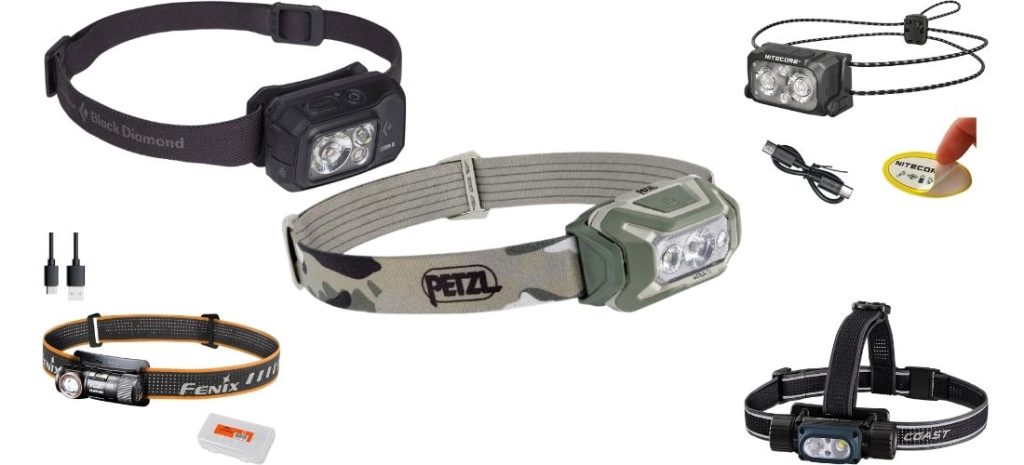
Pack the small items that keep the system usable: the correct plate or adapter, tools for its fasteners, lens protection for optics, and a working light. For early walks to a blind or ridge, add one of the best hunting headlamps to the same kit. Check every lock before leaving the trailhead and again after a rough ride or fall.
I use a short pre-hunt check to catch avoidable setup problems before they reach the field:
- Match the interface. Confirm the correct clamp, plate, rail, yoke, screw, and any required adapter for the exact firearm or optic.
- Inspect every lock. Extend each leg, apply moderate pressure, and check that no collar, flip lock, or angle stop slips.
- Practice the position. Set the tripod at the seated, kneeling, or standing height you expect to use while wearing your normal layers.
- Control loose parts. Tighten fasteners to the equipment maker’s guidance, store the required tool, and secure spare plates so they cannot rattle away.
- Pack for the route. Attach the tripod to your pack, walk with it, and make sure it does not block access to water, a first-aid kit, or other essentials.
This routine does not turn a rest into a safe shot, but it helps the best hunting tripods perform as intended. Recheck the system after temperature swings, hard travel, or any impact, and never use the tripod to justify a shot beyond your ability or conditions.
Which hunting tripod would I choose?
The BOG DeathGrip Infinite Carbon Fiber is my best overall choice because its clamp, Arca-Swiss interface, ball head, and optics plate cover the widest range of hunting tasks. It makes the most sense when versatility and secure support justify carrying more than six pounds.
I would choose the Primos Trigger Stick Gen3 for a mobile calling or still-hunting routine, the standard BOG DeathGrip Carbon Fiber for a fixed blind, and the Vortex Mountain Pass for glassing first. The Hammers can fill an occasional budget role, but its long folded size and lower reliability confidence keep it behind the other four.
FAQs
What makes a tripod good for hunting?
A good hunting tripod matches your firearm or optics, stays stable on uneven ground, adjusts to your normal position, and remains light enough to carry.
Is a carbon-fiber hunting tripod worth it?
Carbon fiber is worth considering when it cuts meaningful system weight or vibration, but compare the complete tripod because a heavy head can erase the advantage.
Can I use a spotting-scope tripod for a rifle?
Only with a compatible, appropriately rated mounting system and manufacturer-approved setup. A high load rating alone does not establish recoil suitability or safe firearm retention.
Is a clamped tripod better than a V-yoke shooting stick?
A clamp offers stronger retention for a fixed setup. A V-yoke is usually faster and lighter, but you must keep control of the firearm continuously.
What tripod height do I need for hunting?
Measure your support height while sitting, kneeling, and standing in hunting clothing. Choose a range that covers your real positions without extending every section fully.