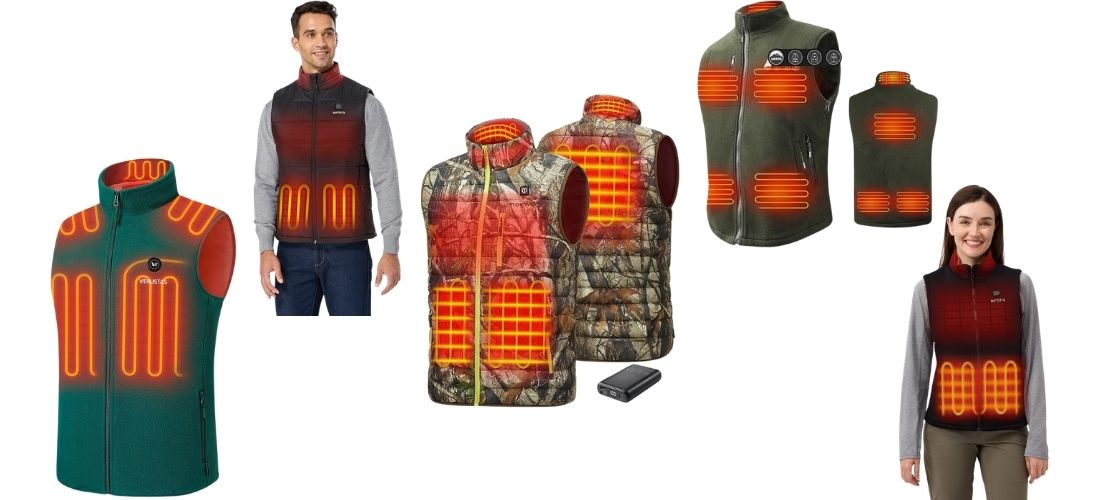
Without advertising a longer runtime, the best heated vests for hunting should match the way you hunt. I’d start with the TIDEWE for camouflage, the ORORO Classic for insulated versatility, or the ARRIS when adjustable fit and heating control are your primary concerns.
How I Selected These Heated Hunting Vests
For this review, I compared the exact models and variants through published construction details, heating layouts, included power systems, fit concerns and purchase-changing limitations. I favored distinct uses instead of treating similar specifications as different recommendations.
This is a research-based assessment. I did not measure the temperature, sound or runtime of these vests. I therefore treat maximum runtime as a planning limit, and avoid promising that any vest will remain quiet or warm for an entire day.
Compare the Best Heated Vests for Hunting
These top vests cover different needs, from stationary camo use to an adjustable fleece and a women’s cut. I would narrow the list by fit, heating placement, battery routine and the amount of time you expect to sit still.
| Rank | Product (variant) | Best-fit hunting use | Heating and controls | Included power and runtime | Main drawback | Price |
|---|---|---|---|---|---|---|
| #1 | TIDEWE Lightweight Heated Vest, Next Camo G2, XL | Stand or blind hunting | Four zones; three settings; collar, back and pockets | 10,000mAh power bank; up to 10 hours on low | Noise and long-term electrical performance need checking | See Amazon price |
| #2 | ORORO Men’s Classic Heated Puffer Vest, Black, XXL | Hunting and everyday winter use | Four zones; three settings; collar, back and pockets | USB-C rechargeable battery; up to 10 hours on low | Battery access beneath layers takes planning | See Amazon price |
| #3 | ARRIS Men’s 8-Zone Fleece Heated Vest, Army Green, One Size | Changing layer thicknesses | Eight zones; independent areas; five heat levels | 7.4V, 7,500mAh battery; advertised maximum up to 16 hours | Long recharge and a more involved control routine | See Amazon price |
| #4 | Venustas Men’s 6-Zone Heated Fleece Vest, Forest Green, Large | Shoulder and upper-torso warmth | Six zones; three settings; collar, back, shoulders and chest | 36Wh battery; up to 10 hours on low | Compatible 20W fast charger is separate | See Amazon price |
| #5 | ORORO Women’s 4-Zone Heated Fleece Vest, Black, Medium | Women wanting a soft heated midlayer | Four zones; three settings; collar, back and pockets | 7.38V, 4,800mAh battery; advertised up to 8 hours | Battery can feel conspicuous near the hip | See Amazon price |
Note: Runtime figures above are advertised maximums. Settings, active heating areas, battery condition and weather can change how long a vest runs.
The Best Heated Vests I’d Choose for Hunting
The best heated vests below each have a clear role and a drawback that can affect your hunt. Choose by the complete clothing system and battery routine, not just the heating zones number alone.
TIDEWE Lightweight Heated Vest for Men (Next Camo G2, XL)
Highlight: Camo core warmth for stand and blind hunting
Key features: Four heating zones • Three heat settings • Heated collar and pockets • Included 10,000mAh power bank • Next Camo G2 pattern
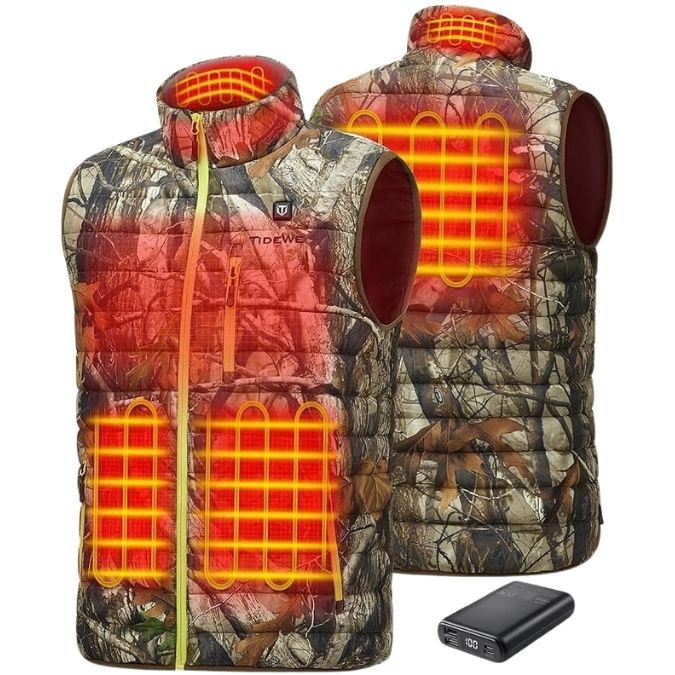
I’d choose this TIDEWE for a hunter who wants camouflage and adjustable core warmth in the same vest. The four heating zones cover the collar, mid-back and two pocket areas, so you get neck and torso heating without adding sleeves beneath your hunting jacket. The Next Camo G2 version also gives you a hunting pattern if you remove an outer layer. I see it primarily as a supplemental layer for stationary hunting, where you can turn the heat on after the walk in instead of wearing maximum insulation from the start.
The three heat settings keep the controls straightforward. Its runtimes are up to ten hours on low, 5.5 on medium and three on high, using the included power bank. Those figures make the trade-off clear: sustained high heat belongs in a shorter outing, not an assumption of dawn-to-dark coverage. What matters to me is being able to dial back the heat once you are comfortable. The power bank can also charge a phone, although I would preserve its charge for the vest during a long sit rather than plan on both jobs.
My main reservations are fit and dependable heating over repeated use. Allow room for the layers you will actually wear underneath, but do not automatically size up: a loose vest can leave the heated areas farther from your body. I would check every heating zone and the power connection before the season, then assess the controls while wearing the complete outfit. I also would not promise silent movement for close-range bowhunting. For an all-day hunt, I’d want a confirmed-compatible spare battery and adequate unheated insulation; the vest should add comfort without becoming the only thing keeping you warm.
Pros and Cons
| Pros | Cons |
|---|---|
| Camouflage suits a hunting outfit | Battery runtime needs a margin for longer sits |
| Collar heating extends warmth above the torso | Fit and electrical reliability warrant careful checks |
| Heated pocket areas add hand-warming utility | |
| Three settings let you manage heat and battery use |
Best for: Stand or blind hunters who want camo and controllable warmth beneath an outer layer.
Skip if: You need a proven silent bowhunting layer or uninterrupted all-day heat from one battery.
ORORO Men’s Classic Heated Puffer Vest (Black, XXL)
Highlight: An insulated heated midlayer with everyday versatility
Key features: Insulated nylon shell • Four heating zones • Three heat settings • Heated collar and pockets • Included USB-C rechargeable battery
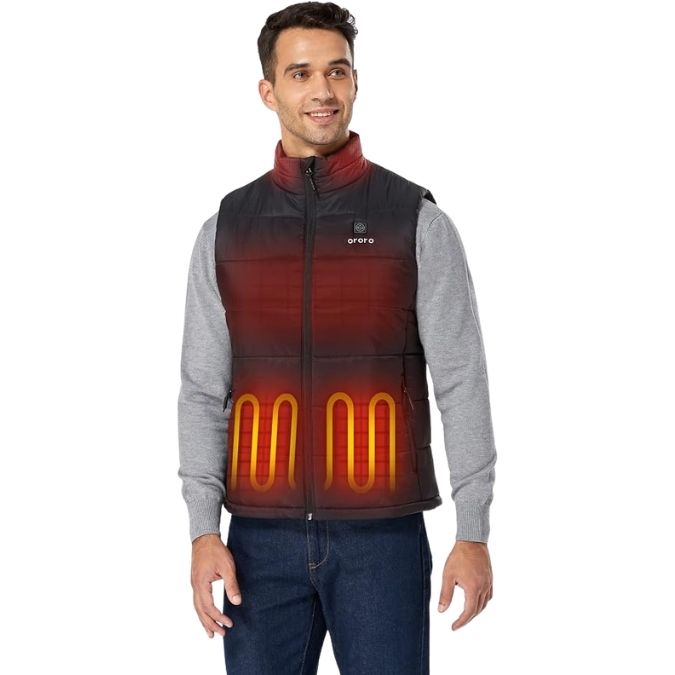
The ORORO Classic is the option I’d consider if you want one heated vest for hunting, outdoor chores and everyday winter use. Its insulated puffer construction provides a conventional vest beneath the heating system, while the sleeveless cut leaves your arms free. Four zones target the collar, mid-back and pockets. I’d wear the black version under a hunting shell, where its plain appearance matters less and the insulation can work alongside your other layers. This is the classic puffer, with a simpler storage layout than a dedicated multi-pocket hunting vest.
I particularly like the combination of collar heat and passive insulation. You can still use the vest as an ordinary insulating layer when the heating is off, then add warmth during a colder stretch of the sit. Three settings give you a straightforward adjustment rather than separate controls for each body area. The included battery charges through USB-C, which is convenient when you already carry compatible charging equipment. However, USB-C charging does not mean the vest runs directly from any USB power bank. I would confirm compatibility before buying a spare instead of assuming the phone battery in your pack will substitute.
Battery longevity and access are my biggest reservations. A spare is less helpful if you cannot reach the battery pocket without opening several layers, so I’d try the full clothing combination while seated before taking it hunting. Fit also deserves more attention than simply selecting your usual shirt size: too much room can leave gaps, while too little makes the puffer uncomfortable beneath a coat. I would check the battery, connector and all four heated areas early enough to resolve a problem before a trip. The advertised ten-hour maximum is a low-setting figure, not a promise of high heat throughout a long winter day.
Pros and Cons
| Pros | Cons |
|---|---|
| Insulation remains useful with the heating off | Spare power banks need confirmed vest compatibility |
| Collar heating adds neck coverage | Battery access and longevity require planning |
| Plain styling works beyond hunting season | |
| USB-C input makes battery charging convenient |
Best for: Hunters who want an insulated midlayer they can also wear for work, travel and outdoor chores.
Skip if: You want independent zone controls or a vest powered directly by an ordinary USB power bank.
ARRIS Men’s 8-Zone Fleece Heated Vest (Fleece–Army Green, One Size)
Highlight: Adjustable sizing and more control over where you feel heat
Key features: Zip-in sizing panels • Eight heating zones • Independently adjustable heating areas • Five heat levels • Included 7.4V, 7,500mAh battery
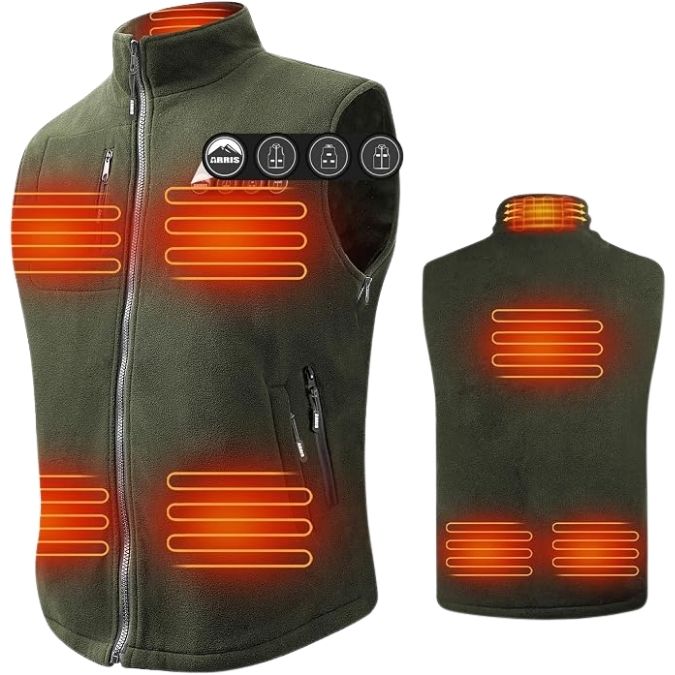
The adjustable side panels are the main reason I’d consider this ARRIS for hunting. Instead of committing to one fixed amount of room around your torso, you can change the fit to accommodate thinner or thicker layers. That is useful if your clothing changes between an early-season morning and a colder late-season sit. The fleece construction also gives you an insulating layer before the battery is switched on. I would still check the garment’s length, arm openings and collar carefully: adding width does not make every other part of a one-size vest adjustable.
The heating controls are its other meaningful distinction. Eight heating zones are arranged into independently controlled areas, with five heat levels available. You can put more warmth where you want it instead of raising the entire vest to the same setting. I prefer that flexibility for a long stationary session, especially if your back and front feel comfortable at different temperatures. The included 7.4V, 7,500mAh battery is part of the appeal, but capacity alone does not tell you how long it will run against another brand. The number of active areas and their settings matter too.
My reservation is the battery routine around those useful controls. The advertised six-to-seven-hour recharge is substantial, and I would not build an all-day hunting plan around the maximum sixteen-hour runtime. I’d also check that the vest restarts normally after being switched off; needing to uncover the battery and reconnect it would be frustrating beneath several layers. Battery durability deserves the same scrutiny as heat output. The side-panel zippers and battery add things to accommodate under your coat, so try the outfit seated as well as standing. I recommend this for someone who values adjustability enough to accept a more involved setup, rather than someone wanting the simplest possible heated layer.
Pros and Cons
| Pros | Cons |
|---|---|
| Zip-in panels accommodate different layering thicknesses | Long recharge time complicates consecutive cold outings |
| Independent heating areas allow targeted adjustment | Battery reliability and restart behavior need checking |
| Five heat levels provide finer control | |
| Fleece offers insulation when the heat is off |
Best for: Hunters who change their layering thickness and want more control over individual heated areas.
Skip if: You need a quick recharge or a fixed-size vest with the simplest possible controls.
Venustas Men’s 6-Zone Heated Fleece Vest (Forest Green, Large)
Highlight: Fleece layering with shoulder and chest heating
Key features: Six heating zones • Heated shoulders and collar • Three heat settings • Fleece construction • Included 36Wh battery
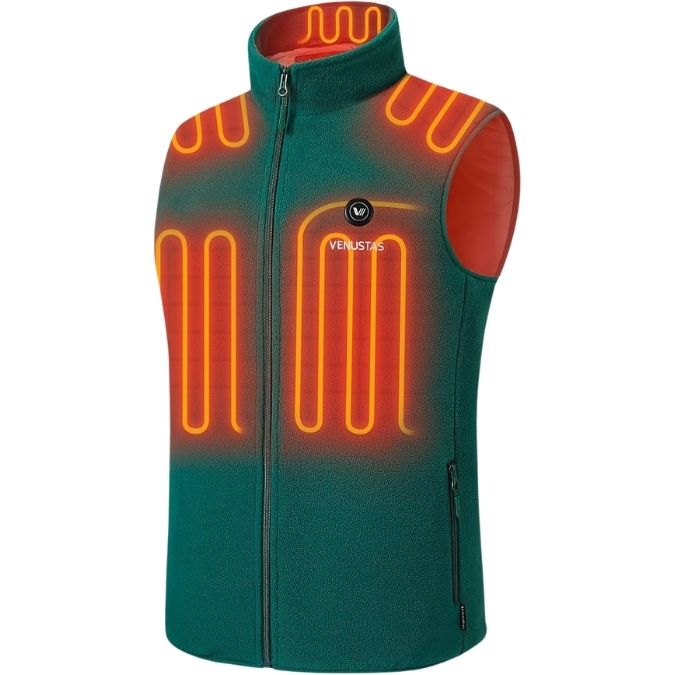
I’d put the Venustas on your shortlist if shoulder and upper-body warmth matter more than heated hand pockets. Its six panels cover the collar, back, both shoulders and both sides of the chest. That layout gives it a different emphasis from the pocket-focused designs here. The Forest Green fleece is also easy to work into an outdoor wardrobe without committing to a camouflage pattern. I see its strongest role as a heated midlayer under a hunting jacket, with the sleeveless cut avoiding another set of sleeves around your elbows and forearms.
What appeals to me is the balance between broad upper-body coverage and a simple control system. One button cycles through three heat settings, so you do not have to manage separate zones. The included 36Wh battery has advertised runtimes of up to three hours on high, six on medium and ten on low. I would treat those as planning limits rather than guaranteed field endurance. Charging is advertised at about 2.5 hours with a compatible 20W charger, but that charger is not included. If quick turnaround between outings matters to you, account for the correct charger as part of the purchase.
My main caution is to judge the heat while wearing your intended layers, not just by feeling warm fabric in your hands. A loose fit can reduce useful contact, yet squeezing into a smaller size can make the battery pocket uncomfortable. I would check the collar, shoulders and chest individually during that fitting. Battery performance and uneven heating remain concerns, so I would not head out for a long sit without checking the whole system. I also would not equate fleece with guaranteed silence during a bow draw. Choose this for its heating layout and layering potential; skip it if you specifically want powered warmth in the hand pockets.
Pros and Cons
| Pros | Cons |
|---|---|
| Shoulder heating adds upper-body coverage | Required charger for fast charging is sold separately |
| Separate left and right chest panels | Hand pockets are outside the stated heated areas |
| Fleece construction suits midlayer use | |
| Fast-charge capability with a compatible 20W charger |
Best for: Hunters seeking shoulder, collar and chest warmth beneath an outer jacket.
Skip if: Heated hand pockets or independently controlled heating areas are priorities.
ORORO Women’s 4-Zone Heated Fleece Vest (Black, Medium)
Highlight: A women’s fleece midlayer with heated collar and pockets
Key features: Women’s fit • Fleece insulation • Four heating zones • Three heat settings • Included 7.38V, 4,800mAh battery
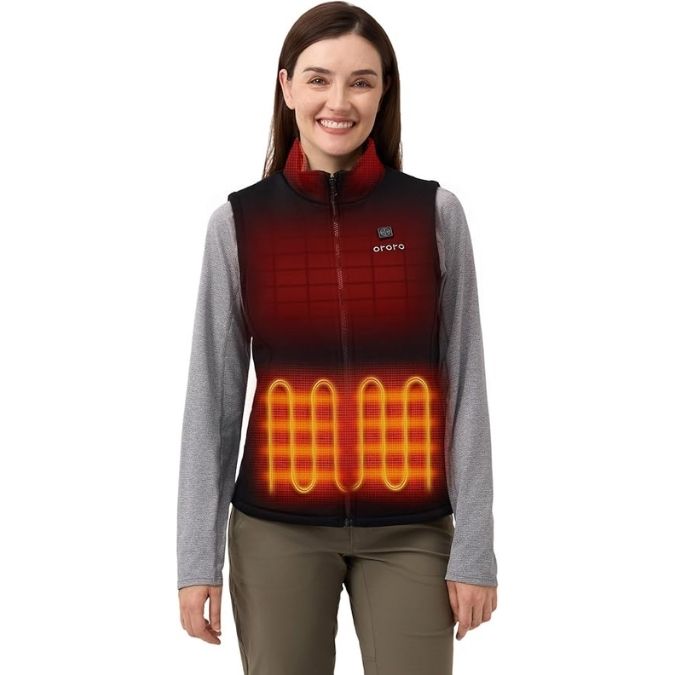
This is the option I’d consider for a woman who wants a heated fleece beneath her hunting jacket rather than a bulky outer vest. The four zones cover the collar, back and pocket areas, combining torso heat with useful warmth around the neck and hands. The black version can also serve as an everyday layer away from the woods. I particularly like the fleece construction for that crossover role: it offers some insulation with the power off and gives you a softer alternative to a quilted puffer. Its hunting fit still depends on the rest of your clothing.
The controls are straightforward, with three heat settings rather than independent adjustment of each area. That suits you if you want one warmth adjustment instead of several buttons to manage. I would place the vest over a base layer, then check that the jacket above it leaves room to move comfortably. The heated pockets are useful when you can reach them, although they become less accessible beneath a closed outer shell. The included battery is rated at 7.38V and 4,800mAh, and this version advertises up to eight hours of heating. I would not transfer a longer runtime from another ORORO model to this one.
Battery placement is my biggest fit concern. The pack can feel conspicuous near the hip, particularly under a close-fitting jacket, so I’d sit, bend and shoulder your pack during a fitting instead of judging comfort while standing still. Check chest and hip room together before changing sizes. Runtime and long-term electrical reliability also keep me from making an unconditional all-day recommendation. I would verify the battery and every heated area before taking it on a trip, and leave charging time between outings. This vest makes the most sense when its fleece comfort and women’s cut suit you, with battery heat supplementing a complete hunting outfit rather than replacing it.
Pros and Cons
| Pros | Cons |
|---|---|
| Women’s cut offers an alternative to men’s sizing | Battery placement can press near the hip |
| Fleece provides warmth with the power off | Higher heat settings limit time between charges |
| Heated collar adds neck coverage | |
| Heated pocket areas can warm resting hands |
Best for: Women who want a soft heated midlayer for shorter cold-weather hunts and everyday use.
Skip if: You need all-day high heat or cannot comfortably accommodate a battery near the hip.
How to Choose a Heated Vest for Your Hunt
Choosing among the best heated vests for hunting starts with your movement pattern, outerwear and charging plan. I would settle those points before comparing small differences in controls or styling.
Match the Vest to Your Walk and Your Wait
A strenuous approach and a motionless sit create different clothing needs. If you hike hard, starting with the vest on high can leave you warm and damp before you reach the stand. For a short walk followed by hours of waiting, active heat can be more useful after your activity drops.
I would estimate how much of the outing involves movement, then compare still hunting versus tree stand hunting. That distinction helps you decide whether low bulk, passive insulation or maximum runtime should carry the most weight.
Plan Battery Life Around the Heat Setting You Need
Even the best heated vests for hunting cannot turn a maximum-runtime claim into a guaranteed field result. A vest that advertises a long maximum can still require a recharge or spare if you use higher heat for most of a winter sit. I would plan from the setting I expect to need, then leave a margin rather than timing the hunt to the last advertised minute.
Battery capacity also needs context. Milliamp-hours cannot rank packs fairly when voltage, controls and active heating areas differ. Watt-hours give a more comparable energy measure when they are available, but they still do not predict fit, heat transfer or cold-weather endurance. For consecutive hunts, recharge time can matter as much as the maximum figure.
Check Battery Compatibility and the Complete Cost
A USB-C charging port describes how a battery accepts power. It does not prove that the vest can run from any ordinary USB power bank. I would confirm the required connector, output, voltage and manufacturer-approved replacement before ordering a spare.
Count the included battery, cable, required wall charger and a compatible spare when comparing the complete setup. Venustas advertises faster charging with a compatible 20W charger that is separate, while ARRIS has a longer advertised recharge routine. The U.S. Consumer Product Safety Commission advises treating the cells, battery pack, charger and end product as one compatible system, which supports checking compatibility instead of improvising it.
Choose Heating Placement, Not Just More Zones
Zone count does not tell you where the useful heat will land. TIDEWE and both ORORO picks place heat near the collar and pockets, which can suit neck warmth and resting hands. Venustas emphasizes the shoulders and chest, while ARRIS offers more control over grouped heating areas.
I would mark the places where you normally feel cold, then match those areas to the actual panel map. Eight zones do not mean eight separate buttons, and a higher count does not prove stronger or more even heat.
Fit the Vest With Your Complete Hunting Outfit
The best heated vests for hunting still need to fit closely enough for useful heat transfer without restricting breathing or movement. Try the intended base layer below the vest and the hunting jacket above it. Then sit, bend, raise your arms and shoulder your pack.
Pay attention to torso length, arm openings and battery pressure at the hip. ARRIS can change width with side panels, but that does not change every dimension. I would use each maker’s current size chart and avoid a universal instruction to size up or down.
Check Noise, Controls and Battery Access
Camouflage and fleece do not prove that a vest is quiet enough for a close bow shot. Rub the vest against the layers above and below it, move through a full draw and listen to the zipper, collar and battery pocket. Check this safely without a loaded weapon.
The power button also needs to remain reachable beneath your outer layer. I would make the same check while wearing the best hunting gloves for the conditions, because a small button or buried zipper can be harder to operate with insulated fingers.
Separate Insulation From Wind and Rain Protection
Fleece and puffer construction can retain some warmth after the battery stops, while a thin vest may depend more heavily on the rest of the system. That passive warmth matters if a pack runs out or a connection fails.
Water resistance, wind resistance and waterproofing are separate claims. I would follow the exact vest’s wet-use instructions and let suitable hunting rain gear provide the necessary outer protection. Make sure the shell still closes comfortably over the vest and battery.
Use and Care for Your Heated Vest Between Hunts
A reliable routine starts before the trip and continues after you return. The vest should remain one adjustable part of your cold-weather clothing rather than the only layer protecting you.
Dress for the Approach, Then Adjust for the Sit
I would begin with a moisture-managing base layer, use the heated vest as an insulating middle layer when its instructions allow, and add an outer shell for wind and precipitation. The National Park Service describes the same base, insulating and weather-protective functions in its cold-weather layering guidance.
| Layer position | Main job | Heated-vest check |
|---|---|---|
| Base layer | Move moisture away from skin | Avoid enough bulk to separate heating panels from your torso |
| Heated middle layer | Add insulation and adjustable warmth | Confirm fit, control access and battery comfort |
| Outer shell | Block the required wind and precipitation | Leave room to move without compressing the battery |
Pack dry hunting socks for cold sits when the approach may leave your feet damp. For a bow setup, rehearse the whole clothing system and use the guide to crossbow hunting in changing weather to plan around the forecast.
Charge, Inspect and Clean the Exact Model
Before each trip, charge with the approved equipment and inspect the pack, cable, connector and battery pocket. Power every heated area before you leave, then confirm that the controls remain accessible while seated and fully layered.
- Remove the battery before cleaning.
- Follow the exact garment’s care label for washing and drying.
- Let every connection dry completely before reconnecting power.
- Stop using a damaged, swollen or unusually hot battery and follow the maker’s disposal or service instructions.
I would not apply one vest’s machine-wash, dryer or charging directions to another model. Store the clean, dry garment without crushing the connector or leaving the battery attached for an unknown period.
Which Heated Vest Would I Choose?
Among the best heated vests for hunting here, I’d choose the TIDEWE when camouflage and heated pockets suit a stand or blind setup. The ORORO Men’s Classic is my more versatile insulated option, while ARRIS makes the strongest case when adjustable width and targeted control matter most.
Venustas is the better fit when shoulder and chest coverage lead the decision. The ORORO Women’s Fleece deserves the final place for its women’s cut, provided the battery feels comfortable at your hip. Each recommendation still depends on a fit check and a realistic charging plan.
FAQs
Will One Battery Last an All-Day Hunt?
Not always. Even the best heated vests for hunting depend on the heat setting, active zones, battery condition and weather, so plan a margin or compatible spare.
Should a Heated Vest Go Under or Over a Hunting Jacket?
It usually works best as a close middle layer under a weather-protective shell, provided the exact garment instructions and fit support that setup.
Can I Power a Heated Vest With Any USB Power Bank?
No. Match the connector, voltage, output and approved compatibility. A USB charging port alone does not establish that a power bank can run the vest.
Are Heated Vests Quiet Enough for Bowhunting?
Some may be, but material labels cannot prove silence. Test the complete layered outfit through a full draw before hunting at close range.
Can You Wash a Heated Hunting Vest?
Many models are washable after battery removal, but care methods differ. Follow the exact vest’s label and reconnect power only after everything is dry.