The Mantis Laser Academy Standard Kit is the best dry fire system for beginners. It is easy to set up, provides clear shot-placement feedback, and includes guided drills that help new shooters practice with purpose. Strikeman is the better budget option, but Laser Academy offers the strongest overall balance of simplicity, feedback, and long-term value.
Dry fire practice sounds simple until you try diagnosing your own shots. You press the trigger, the sights move, and you are left wondering whether the problem came from your grip, aim, or trigger press. The best dry fire system for beginners should remove that guesswork without turning every practice session into a technical project. It should be quick to set up, easy to understand, and useful enough that you will continue training after the initial excitement wears off.
We evaluated the leading options by comparing their setup process, feedback quality, beginner learning curve, cost, compatibility, and long-term usefulness. The result is a practical ranking for new shooters who want to develop better habits before spending heavily on equipment or ammunition.
What Makes a Dry Fire System Good for Beginners?
The best dry fire system for beginners is the Mantis Laser Academy Standard Kit because it combines straightforward setup with clear shot-placement feedback, structured drills, and room for continued improvement. Beginners should judge a system by its ease of setup, price, learning curve, and how clearly it explains what happened during each repetition.
New shooters should prioritize:
- A setup that takes minutes instead of requiring complicated calibration.
- Immediate and understandable feedback.
- Compatibility with their firearm and caliber.
- Drills that teach one skill at a time.
- Reasonable upfront and ongoing costs.
- A system that encourages frequent, focused practice.
- Simple scoring rather than overwhelming performance data.
Advanced shooters may enjoy detailed movement graphs and extensive statistics. Beginners usually benefit more from seeing where a shot landed and whether the gun moved during the trigger press.
Do Beginners Even Need a Dry Fire System?
No. A verified unloaded firearm, a safe practice area, and a structured plan are enough to begin dry firing. A training system becomes valuable because it provides feedback that shooters often cannot detect on their own.
Traditional practice can develop trigger control and sight alignment, but the shooter must recognize small errors without help. A laser or sensor can reveal whether the muzzle moved, where the simulated shot landed, and whether the sights remained stable.
This makes a system particularly useful for dry fire practice for new gun owners. It creates a visible connection between what the shooter felt and what the firearm actually did.
A system still cannot replace qualified instruction. It can confirm an error, but a professional instructor may be needed to identify its underlying cause.
Is Dry Fire Bad for Your Gun? Centerfire vs Rimfire
Most modern centerfire firearms can tolerate dry firing, but this is not a universal rule. Check the owner’s manual or contact the manufacturer before beginning regular practice.
Rimfire firearms require greater caution. In some designs, the firing pin can strike the chamber edge when no cartridge is present. Repeated impacts may cause rimfire firing pin damage or peen the chamber.
Dummy rounds or snap caps may provide protection, but they must be appropriate for the firearm. Never assume that advice for one model applies to another.
Best Dry Fire Systems for Beginners, Ranked
These rankings consider initial simplicity, usefulness of the feedback, compatibility, price, and whether the product remains valuable as the shooter improves.
#1 Best Overall for Beginners: Mantis Laser Academy Standard Kit
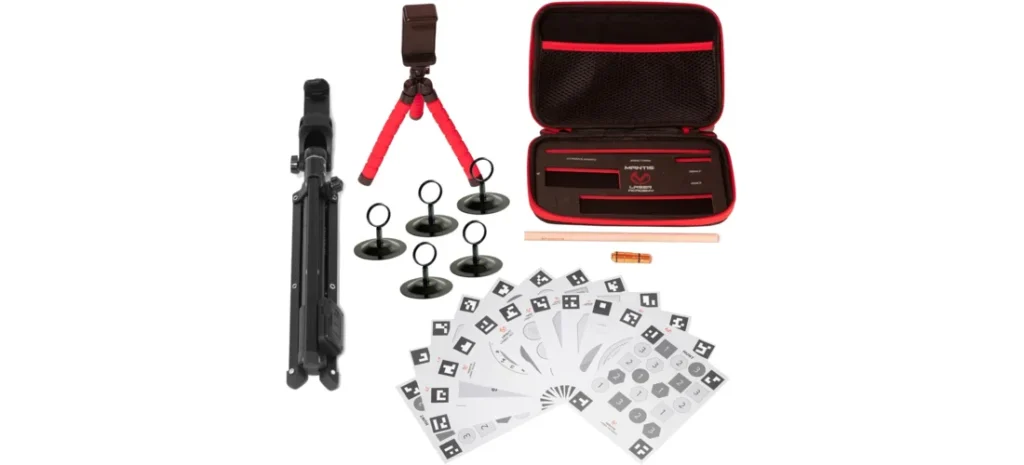
The Mantis Laser Academy Standard Kit uses a caliber-specific laser cartridge, physical smart targets, and a phone camera to record simulated hits. When the firing pin strikes the cartridge, it projects a short laser pulse onto the target. The application recognizes the hit and records its position.
The standard package includes full application access, a Pink Rhino training cartridge in the selected caliber, small and full-size targets, target stands, a tripod, a phone holder, and a carrying case.
Price: Approximately $159.
Setup time: About 5–10 minutes.
Beginner lesson: Consistent aim, smooth pressing, accuracy, and basic shot timing.
This is our pick for the best dry fire training system for beginners because its feedback is easy to interpret. A new shooter does not need to understand movement graphs. The target simply shows where the simulated shot landed.
The guided drills give each session a purpose, while the included targets and phone equipment create a more complete package than buying a bare cartridge. The shooter still needs to cycle most semiautomatic pistols between shots, which slows rapid repetition.
Pros
- Clear, immediate hit-location feedback.
- Guided exercises provide structure.
- Uses the shooter’s normal firearm and sights.
- Complete kit includes targets and phone-mounting equipment.
Cons
- Requires a compatible smartphone and suitable lighting.
- Most pistols must be manually reset after every shot.
Best for: Beginners who want structured drills and clear shot-placement feedback.
See the full Mantis Laser Academy review here.
#2 Best Budget Pick: Strikeman
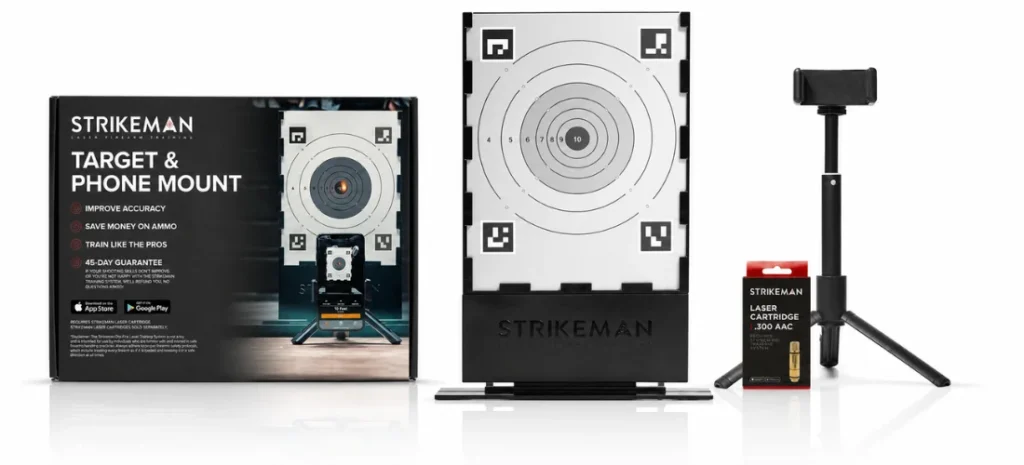
The Strikeman system follows a similar basic formula: insert the caliber-specific cartridge, position the target, aim a phone camera at it, and begin practicing. The application records laser strikes and can show grouping, accuracy, and session results.
Its simple visual feedback makes it one of the strongest candidates for the best laser trainer for beginners. The standard package has commonly been positioned near the lower end of complete app-supported kits, although current bundles, promotions, and application plans affect the final price.
Price: Commonly around $100–$125 for the standard configuration.
Setup time: About 5–10 minutes.
Beginner lesson: Shot placement, grouping, steady aiming, and consistency.
As a budget dry fire trainer, Strikeman provides enough information to make home practice more engaging without introducing sensor graphs or lengthy configuration. It is especially helpful for shooters who lose interest when practicing against an ordinary blank wall.
The main frustration is camera alignment. Distance, shadows, glare, and phone movement may affect hit recognition. Some features are also connected to paid application access, so buyers should check what their selected package includes.
Pros
- Approachable for first-time users.
- Uses the shooter’s actual firearm.
- Records hits and groupings.
- Generally costs less than premium sensor systems.
Cons
- Camera placement can require adjustment.
- Some advanced features may involve an additional plan.
Best for: Budget-conscious beginners who want simple, app-based laser practice.
#3 Best for Trigger Feel: SIRT Training Pistol
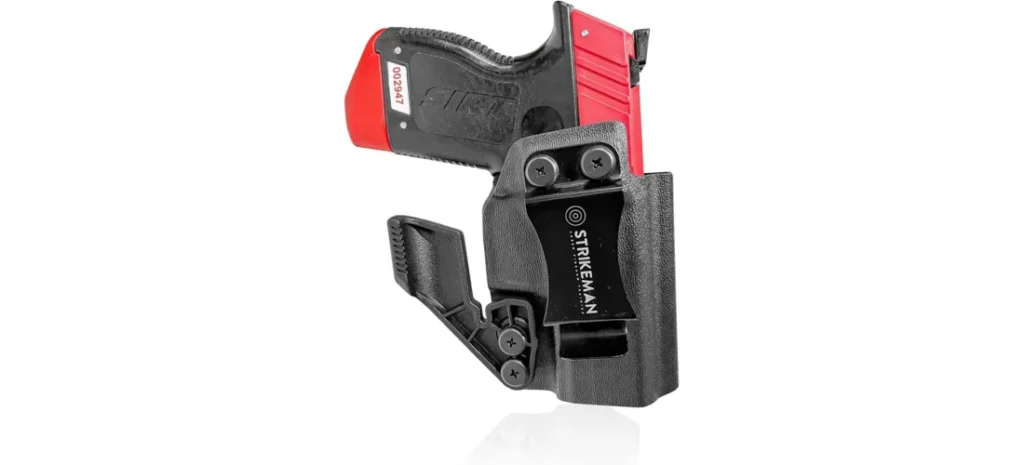
The SIRT training pistol is a dedicated practice gun rather than an accessory inserted into a live firearm. SIRT means SIRT (Shot Indicating Resetting Trigger.) Its automatically resetting trigger permits consecutive presses without cycling a slide after each repetition.
Depending on the model, it can resemble the dimensions and controls of a common defensive handgun. Lasers provide visual confirmation during the press, while trigger and laser adjustment tools allow some customization.
Price: Approximately $239–$514, depending on model.
Setup time: About 1–3 minutes.
Beginner lesson: Trigger movement, grip consistency, presentation, and repeated presses.
A SIRT pistol for beginners is especially useful when high-volume repetition matters. There is no chamber insert to install and no slide to cycle between shots. That makes it convenient for practicing presentations and moving between targets.
It is also useful for introductory classes because it is not a functional firearm. However, it must still be treated responsibly. Its grip shape, controls, weight, and press may not exactly match the firearm the student owns.
Pros
- Automatically resetting trigger.
- Allows fast, repeated practice.
- Integrated visual feedback.
- Does not require modifying a functional firearm.
Cons
- More expensive than entry-level laser kits.
- May not precisely duplicate the user’s handgun.
Best for: High-volume trigger practice without manually cycling the slide.
#4 Best If You Want to Grow Into Analytics: Mantis X10 Elite
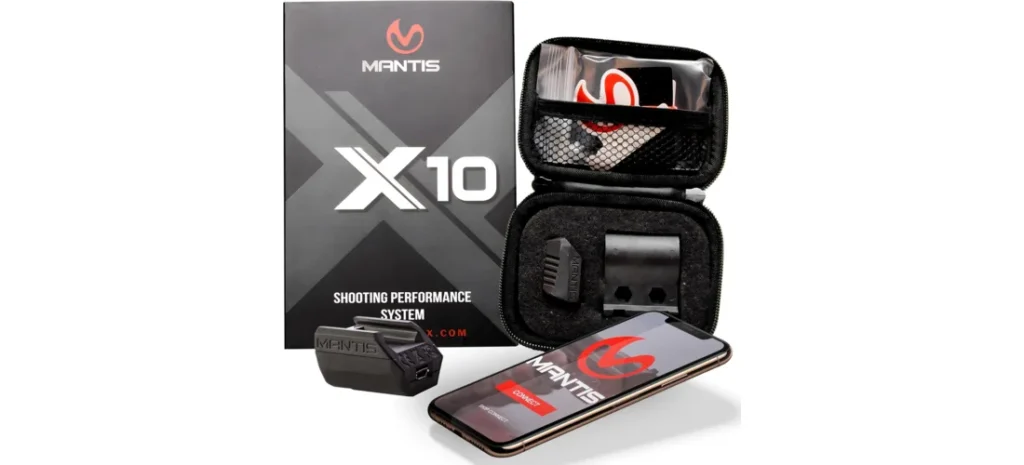
The Mantis X10 Elite is a compact electronic sensor that attaches to a compatible accessory rail or adapter. Instead of detecting a hit on a target, it measures firearm movement before, during, and immediately after the trigger press.
The connected application scores repetitions, displays movement traces, and provides coaching suggestions. It supports dry and live practice with compatible pistols, rifles, and shotguns.
Price: Approximately $250.
Setup time: About 5–15 minutes.
Beginner lesson: Muzzle stability, pressing errors, movement patterns, and shot calling.
For beginners who enjoy measurable progress, its app-based feedback can be highly valuable. It can reveal small disturbances that are difficult to see through the sights and help the shooter connect movement with a specific habit.
It is not the easiest dry fire system to use, however. Scores and traces take time to understand, and a beginner may start chasing higher numbers rather than developing deliberate technique. Some firearms also need a rail or magazine-floorplate adapter.
Pros
- Detailed movement analysis.
- Includes guided drills and coaching.
- Works during both dry and live practice.
- Remains useful as the shooter advances.
Cons
- Expensive for a first purchase.
- Detailed data can initially feel overwhelming.
Best for: Shooters who want detailed movement analytics and long-term performance tracking.
Beginner Dry Fire System Comparison Table
| Product | Type | Price | Setup Difficulty | Feedback Type | Best For |
|---|---|---|---|---|---|
| Mantis Laser Academy Standard | Laser and phone camera | About $159 | Easy | Hit location and scoring | Most new shooters |
| Strikeman | Laser and phone camera | About $100–$125 | Easy | Hit location and grouping | Lower-cost practice |
| SIRT Training Pistol | Dedicated practice pistol | $239–$514 | Very easy | Laser trace and trigger response | Repeated presses |
| Mantis X10 Elite | Rail-mounted motion sensor | About $250 | Moderate | Movement analysis and coaching | Long-term development |
SIRT vs Mantis Laser Academy for Beginners
The Mantis Laser Academy vs SIRT for beginners decision comes down to what the shooter wants to observe. The SIRT provides continuous trigger operation and supports fast repetition. Laser Academy offers real-time shot placement while allowing the shooter to use a compatible personal firearm.
SIRT is stronger for repeated trigger presses and presentation work. Laser Academy is stronger for confirming accuracy with familiar sights, grip dimensions, and controls.
The SIRT can support draw stroke practice without repeatedly handling a functional firearm. Laser Academy may be more relevant when learning a particular defensive handgun, although holster drills should only begin after receiving proper instruction.
Which One Should a First-Time Buyer Choose?
Most first-time buyers should choose Laser Academy. It costs less than many SIRT models, provides structured exercises, and lets the owner practice with the firearm they actually use.
Choose SIRT when rapid repetition and resetting trigger practice are the priorities. It can also make sense for instructors or households that want a dedicated non-firing training device.
How Much Should a Beginner Spend on a Dry Fire System?
Spending more does not automatically produce better practice. The right budget depends on whether the shooter needs basic repetition, visual scoring, or detailed diagnosis.
Under $50 Options: Snap Caps and Free Methods
Under $50, buy quality dummy rounds if the firearm manufacturer recommends them. Pair them with printable targets, a timer, and a written routine.
A phone camera can also record the sights during each press. Slow-motion playback may reveal obvious movement without requiring specialized hardware. This is the most economical form of at-home training.
$100 to $200 Sweet Spot
This range offers the best balance for many new shooters. A dry fire trainer under $150 may include a chamber cartridge, target, phone stand, and basic tracking.
Spending slightly more can purchase a complete dry fire training kit for new shooters with better mounting accessories, more exercises, and fewer separate parts to source.
When It Makes Sense to Spend More
A $200-plus system becomes reasonable when the owner trains consistently, needs a dedicated resetting device, or wants deeper analysis. The X10 Elite makes sense for someone who expects to study performance over time.
Premium equipment should supplement, not replace, professional instruction and range work. Its value depends on consistency and live fire transfer, meaning that the movement developed at home must still work under recoil.
How to Start Dry Fire Training as a Beginner: Step-by-Step
- Choose a separate practice area. Select a room where interruptions are unlikely and where live ammunition is not normally handled.
- Remove all live ammunition. Move magazines, loose cartridges, and loaded firearms completely outside the practice area.
- Unload the firearm. Follow the manufacturer’s unloading instructions. Remove the magazine, open the action, and clear the chamber.
- Verify the condition. Visually and physically inspect the chamber, magazine well, and breech face. Do not rely on memory or assumptions.
- Use a responsible backstop. Aim only in a direction capable of stopping a projectile. A laser target does not function as a ballistic backstop.
- Install the trainer. Insert the correct cartridge or attach the sensor according to its instructions. Confirm caliber and firearm compatibility first.
- Begin with one simple drill. Present the firearm toward the target, establish a stable sight picture, and press slowly without disturbing the sights.
- Evaluate each repetition. Look for movement, hit location, or the system’s score. Correct one issue instead of changing several things simultaneously.
- Keep sessions short. Focused 15-20 minute training sessions are generally more productive than long sessions completed after concentration declines.
- End the session deliberately. Put away the targets and equipment before bringing ammunition back. Say aloud that practice has ended before reloading.
Holster work and concealed carry practice introduce additional risk and should only be performed after receiving appropriate instruction.
Common Beginner Mistakes in Dry Fire Practice
- Skipping the complete safety check because the firearm was “already unloaded”.
- Leaving ammunition or loaded magazines in the room.
- Practicing for too long and reinforcing careless movement.
- Pressing quickly without evaluating the sights.
- Using no drill structure or measurable goal.
- Focusing only on a laser dot instead of the sights.
- Ignoring the feel of the trigger reset.
- Practicing speed before building safe, repeatable technique.
- Treating a high application score as proof of complete shooting ability.
- Never confirming improvement at a supervised range.
Tools such as DryFireMag can reduce the need to cycle certain compatible pistols, but convenience should never take priority over correct technique or safe handling.
Final Verdict
You do not need an expensive system to begin dry fire practice. An unloaded firearm, a safe training area, and a simple routine are enough to get started. However, a good trainer makes practice easier to follow, more engaging, and more consistent. The Mantis Laser Academy Standard Kit is our top choice for beginners. It is easy to set up, provides clear shot feedback, and includes guided drills that make practice more structured.
Choose Strikeman for a lower-cost option, SIRT for repeated trigger practice, or the Mantis X10 Elite for detailed performance tracking. Overall, Laser Academy offers the best balance of simplicity, useful feedback, and value. The best choice is ultimately the system you will use regularly.
FAQs
Mantis Laser Academy Standard is the strongest overall choice for most first-time users. It provides understandable hit feedback, guided exercises, and a relatively short setup process.
No. Many people can begin with a verified unloaded firearm and a structured routine. A training system adds measurable feedback and can make errors easier to recognize.
It is generally acceptable with many modern centerfire firearms, but there are exceptions. Consult the firearm manufacturer and use appropriate protective accessories when recommended.
A new shooter can start for less than $50, while approximately $100–$200 buys a more complete setup. Spend more only when the additional features address a defined training need.
Yes. Beginners can practice a careful press, presentation, and basic firearm manipulation without electronic equipment. Professional instruction remains important for establishing correct technique and safe habits.