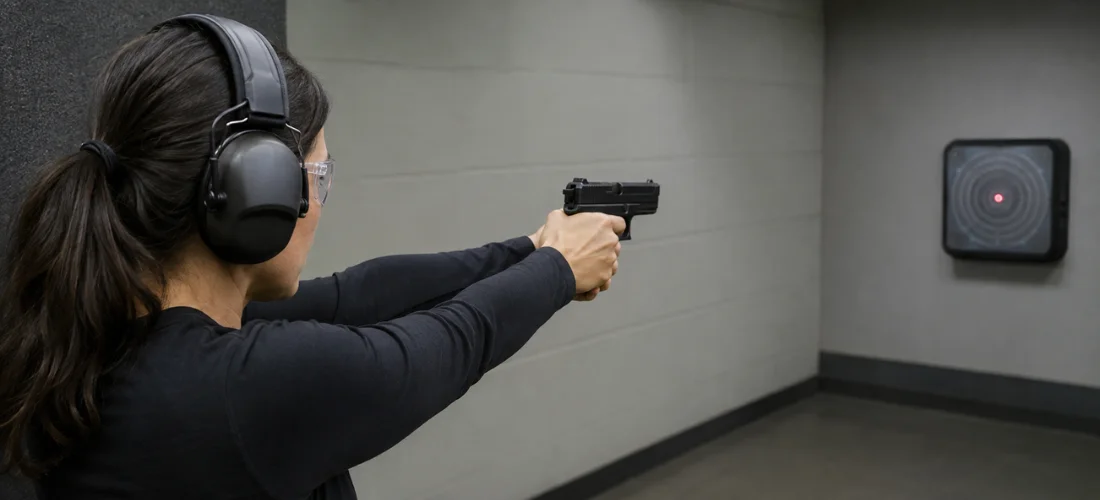
After setting up the LaserLyte trainer in a compatible handgun, the biggest advantage became clear immediately: it lets you practice with your own grip, sights, and trigger. It’s an incredible option for beginners. The laser pulse was easy to track indoors, and repeated shots exposed small aiming and trigger-control errors. Manual trigger resets and weak visibility in bright light were the main drawbacks. Our LaserLyte laser trainer review helps users understand that LaserLyte remains a practical choice for affordable, firearm-specific training at home.
Don’t want to use live ammunition but still want to practice your shooting skills? We’ve got you covered. Dry fire training is a simple practice that various shooters, licensed carriers, governmental officials, etc prefer to improve their shooting skills. However, it is not the best system for every shooter. That’s where the LaserLyte system becomes useful. For this LaserLyte laser trainer review, we focused on the details that matter during regular home practice.
When you combine your dry fire practice with proper safety measures, the LaserLyte Laser trainer is an option worth giving a try. For shooters who want to practice with their actual carry or range firearm, it remains one of the simplest ways to get useful feedback without using ammunition. LaserLyte earns our recommendation for shooters who value simplicity, real-firearm compatibility, and relatively low entry cost.
What Is a LaserLyte Laser Trainer? Quick Answer
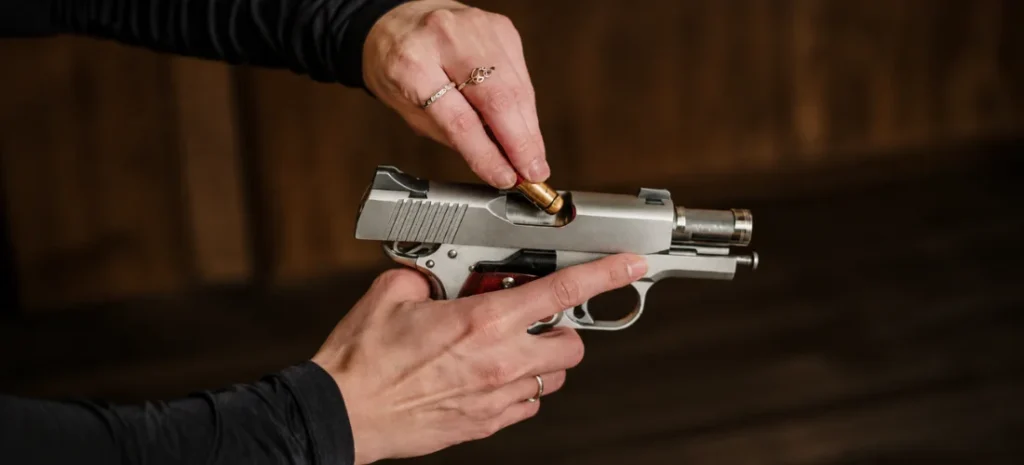
A LaserLyte trainer is an ammunition-free training device that emits a short red laser pulse when a firearm’s firing pin strikes it. The visible dot shows where the muzzle was aligned as the trigger broke, allowing the shooter to evaluate accuracy and movement without firing live ammunition.
The LaserLyte product family has included:
- Caliber-specific pistol training cartridges.
- Rifle cartridges for .223 Remington and 5.56 NATO.
- .22-caliber trainers and muzzle-mounted systems.
- Universal barrel-mounted laser inserts.
- Reaction Tyme target systems.
- Steel Tyme reactive targets.
- Quick Tyme timed targets.
- Score Tyme and older Rumble Tyme training products.
The cartridge can be used with a paper target, but adding an electronic target makes practice more engaging by recording, timing, illuminating, or audibly confirming hits.
How the LaserLyte Laser Trainer System Works
LaserLyte’s basic system consists of a laser unit, a compatible firearm, and a safe target. The shooter clears the firearm, installs the training device, aims, and presses the trigger. A short laser pulse marks the theoretical point of impact.
This arrangement turns an existing firearm into a dry fire laser training system without permanently modifying its sights, trigger, or controls.
Firing-Pin-Activated Cartridges Explained
A firing-pin-activated cartridge contains a pressure-sensitive switch at the rear. When the firing pin contacts the rubber surface, it completes the circuit and briefly activates the laser.
The built-in rubber snap cap cushions the firing pin. LaserLyte’s traditional handgun cartridges use three small button-cell batteries and produce a momentary pulse rather than a continuous beam. One documented version activates for approximately 100 milliseconds and is rated for roughly 3,000 activations.
Because the cartridge is rimless, it normally stays in the chamber when the slide is cycled. That design can support simulated tap rack bang drills and basic malfunction drills, although the user must still follow normal firearm-safety rules throughout the session.
Muzzle/Barrel Insert vs. Chamber Cartridge: Which Should You Choose?
A chamber-fit cartridge is generally the better choice when one is available for your firearm. It aligns with the chamber and bore, does not protrude from the muzzle, and allows you to practice with your normal holster.
A muzzle insert or barrel insert is more versatile because one device may fit several firearms. The tradeoff is additional setup, possible interference with holster work, and a greater need to check alignment.
Choose the chamber model for realistic presentation and first-shot practice. Choose the universal insert when you train with several calibers and want to avoid buying a separate cartridge for every gun.
Neither design should be confused with a laser bore sight. A bore sight normally projects continuously for sight alignment, while a trainer produces a brief pulse when the trigger is pressed.
Compatible Calibers and Firearms
LaserLyte has marketed trainers covering common 9mm/.40/.45 ACP/.223/.22LR caliber compatibility, although current availability varies by retailer.
The traditional centerfire lineup includes 9mm, .40 S&W, and .45 ACP handgun cartridges. A separate .223/5.56 version is intended for compatible rifles. This model identifies as a Class IIIA red-laser cartridge for .223 or 5.56×45mm firearms.
The LaserLyte Trainer 22 review situation is less straightforward. Rimfire firearms differ in chamber design and firing-pin location, and many must be manually cocked between shots. Buyers should confirm the exact model and firearm compatibility rather than assuming a universal .22 trainer will fit every pistol or rifle.
Hands-On Test: LaserLyte Accuracy and Consistency
The most useful way to assess a trainer is to compare the laser strike with the sights over repeated presses. The device should not be judged like a live-fire zero because the laser originates below the sight line and the handgun produces no recoil.
Point-of-Aim Accuracy at 10, 15, and 20 Feet
At 10 feet, a properly seated cartridge should make it easy to identify movement caused by poor trigger control. The dot may sit slightly below the aiming point because of the physical distance between the bore and sights.
At 15 feet, repeatability matters more than perfect coincidence with the sights. A tight, consistent cluster indicates that the cartridge is seated properly and that the shooter is maintaining a stable sight picture.
At 20 feet, small alignment errors become more visible. If every hit is consistently displaced in one direction, rotate or reseat the cartridge and test again. The phrase parallax-free aiming should not be taken literally here. Mechanical bore offset and distance still influence where the projected dot appears.
Laser Visibility in Daylight vs. Low Light
LaserLyte’s current cartridge is a Class IIIA laser with a maximum output of 5mW or less and a 650nm red laser. Those specifications are useful indoors, where the dot is easy to see on light-colored targets.
Visibility drops under bright window light or direct sunlight. Strong ambient light is a weakness of LaserLyte’s electronic targets because it can prevent legitimate hits from registering or occasionally cause false activations.
For the most reliable indoor shooting practice, use normal room lighting, avoid placing the target directly against a sunny window, and keep the distance realistic.
Trigger Feel and Reset Consistency
The cartridge does not change the firearm’s actual trigger. That is valuable because the shooter practices with the same grip, reach, take-up, wall, and break found on the carry or range gun.
The limitation is reset. Most striker-fired pistols require the slide to be cycled before the next trigger press. That interruption makes slow first-shot work realistic but prevents natural rapid strings. Double-action firearms offer a smoother high-repetition experience if their mechanisms allow repeated presses.
LaserLyte Durability and Battery Life Test
Shots-Per-Battery Results
LaserLyte’s handgun cartridges are approximately 3,000 shots from three 377 button-cell batteries. Still, considering battery quality, storage, firing-pin pressure, and whether the internal switch remains partially compressed matters.
Its battery life (shots per battery) estimate is plausible for short training sessions, but users should treat it as an upper-range figure rather than a guarantee. Intermittent or weak pulses often indicate that the batteries need replacement or that their contacts require cleaning.
Some electronic training products use AAA cells or a CR2 battery, but buyers should follow the power specification for their exact LaserLyte model instead of purchasing batteries based on the brand name alone.
Long-Term Wear on the Rubber Snap Cap and O-Rings
The rear rubber pad absorbs repeated firing-pin impacts. Over time, it can become indented, hardened, or uneven. That may cause inconsistent activation even while the laser and batteries remain functional.
The cartridge’s sealing rings center it in the chamber. An incorrect O-ring fit may create excessive resistance, loose seating, or a shifted point of impact. Inspect the rings for flattening, cracking, and cuts whenever the unit becomes difficult to install or remove.
This wear is predictable rather than catastrophic. Replacement rings and careful lubrication with a manufacturer-approved product can extend service life, but oil should never be allowed to contaminate the laser lens or battery contacts.
What Happens When It Fails and LaserLyte’s Warranty?
The most common failure symptoms are a dim pulse, intermittent activation, an enlarged dot, or a consistent shift from the established point of aim. Battery replacement, contact cleaning, and reseating should be checked before assuming the laser has failed.
A warranty (3-year) period identifies that the product is covered through the brand’s support system. Warranty terms can differ by model and seller, so retain the receipt and confirm coverage before purchasing through a third-party marketplace.
LaserLyte Product Line Comparison Table
| Product | Type | Caliber | Price Range | Best For |
|---|---|---|---|---|
| LaserLyte pistol cartridge | Chamber cartridge | 9mm, .40 S&W, .45 ACP | $55–$90 | Training with your own handgun |
| LaserLyte rifle cartridge | Chamber cartridge | .223/5.56 | $60–$100 | AR first-shot practice |
| Universal trainer | Muzzle-mounted insert | Multiple bore sizes | $70–$120 | Owners of several firearms |
| Steel Tyme two-pack | Reactive target | Most red trainers | About $80 | Multiple-target transitions |
| Quick Tyme | Timed electronic target | Most red trainers | $140–$180 | Draw speed and reaction drills |
| Reaction Tyme system | Reactive target set | Most red trainers | $100–$170 | Movement between targets |
This Laserlyte laser trainer cartridge review favors the caliber-specific pistol unit because it preserves the user’s normal grip and trigger while requiring very little setup.
Our LaserLyte laser trainer target review finds Steel Tyme the best-value target option, provided it is used away from harsh ambient light.
A complete LaserLyte Reaction Tyme review must also acknowledge availability: the concept remains useful, but replacement units and parts can be harder to source than newer target ecosystems.
LaserLyte vs. SIRT vs. Pink Rhino vs. Laser Ammo
| System | Accuracy | Typical Price | Durability | Setup | Best Use Case |
|---|---|---|---|---|---|
| LaserLyte | Very good when correctly seated | $55–$180 | Good | Easy | Training with your own firearm |
| SIRT | Very good and adjustable | $239–$514 | Excellent | Very easy | High-volume trigger repetitions |
| Pink Rhino | Good | $35–$50 | Fair to good | Easy | Budget cartridge training |
| Laser Ammo | Excellent | $100–$400+ | Very good | Moderate | Expandable premium training |
| MantisX | Motion-sensor analysis | $100–$300+ | Very good | Moderate | Detailed movement diagnostics |
When LaserLyte Wins
In a direct LaserLyte vs. Pink Rhino comparison, LaserLyte offers the more established target ecosystem and stronger published warranty support. Pink Rhino remains attractive when the lowest possible purchase price matters most.
LaserLyte is also a strong candidate for the best laser trainer for dry fire practice when the goal is to use the shooter’s actual carry gun without involving a phone, camera, or monthly fee.
When a Competitor Is the Better Choice
The LaserLyte vs. SIRT decision comes down to realism versus repetition. LaserLyte provides the real firearm’s grip and trigger, but a SIRT pistol offers an automatically resetting trigger and an inert training platform.
Laser Ammo SureStrike is the better premium choice when a shooter wants caliber adapters, advanced targets, or a larger upgrade path. Laser Ammo’s current catalog includes cartridges, adapters, training guns, recoil-enabled products, and electronic targets.
Pros and Cons of the LaserLyte Laser Trainer
What We Liked
- Uses the shooter’s own firearm, sights, grip, and trigger.
- Installs quickly without permanent modification.
- Provides immediate visual feedback.
- Supports paper and electronic targets.
- Makes short dry fire practice sessions easier to measure.
- Provides useful ammo-free training between range visits.
Where It Falls Short
- Most striker-fired pistols must be manually reset.
- Red-laser visibility weakens in bright conditions.
- Electronic targets may react poorly to strong ambient light.
Who Should Buy the LaserLyte Laser Trainer?
New Shooters and Youth Training
Under qualified adult supervision, the visible dot helps new shooters understand how trigger movement affects muzzle alignment. It should supplement professional instruction, not replace it.
Concealed Carry Holders Practicing Draw-and-Fire
LaserLyte is particularly useful for concealed carry draw practice because a chambered cartridge remains inside the firearm and does not protrude from the muzzle. Train only in a secured area with all live ammunition removed.
Instructors and Range Programs
Instructors can use reactive targets to demonstrate first-shot placement, target transitions, and time pressure. The system is portable and does not require every student to install an app, although cartridges must be matched carefully to each firearm.
A LaserLyte unit is one of the more straightforward options when an instructor needs a reusable laser trainer cartridge for pistol fundamentals classes.
How to Set Up and Use Your LaserLyte Laser Trainer?
- Choose a secure training room with a safe backstop and no interruptions.
- Remove every live cartridge and loaded magazine from the room.
- Unload the firearm and visually and physically inspect the chamber, magazine well, and breech face.
- Install fresh batteries in the correct orientation.
- Insert the compatible training cartridge or mount the universal insert according to its manual.
- Point the firearm in a safe direction and test one activation.
- Place the target where the laser is clearly visible and away from direct sunlight.
- Begin with slow, deliberate trigger presses and watch for movement as the shot breaks.
- Check consistency before adding a timer, draw stroke, or multiple targets.
- Remove the training device after practice and verify that the chamber is empty before storing the firearm.
LaserLyte Laser Trainer Pricing: Is It Worth the Cost?
A cartridge-only setup usually costs less than a dedicated training pistol. It becomes more expensive when you add several calibers and electronic targets, but it still avoids ammunition, range fees, travel, and app subscriptions.
So, is the LaserLyte laser trainer worth it? Yes, for a shooter who practices with one primary firearm and wants immediate first-shot feedback. It offers less value to someone who needs rapid trigger-reset repetitions, detailed analytics, or one device that covers a large collection.
Final Verdict
LaserLyte Laser Trainer is our worthy dry-firing system option. The system is easy to understand, works with the shooter’s real firearm, and provides enough feedback to make short home sessions productive. Its weaknesses are manual trigger resets, consumable parts, and reduced performance in strong light. Buy it if your priority is first-shot accuracy, sight stability, holster presentation, or practice with your actual firearm. Consider SIRT instead if you need thousands of uninterrupted trigger repetitions. Skip it if you expect realistic recoil or reliable outdoor use in bright sunlight.
FAQs
The firing pin contacts a pressure-sensitive rear pad and activates a brief red laser pulse. The dot shows where the muzzle was aligned when the trigger broke.
A correctly fitted cartridge is sufficiently repeatable for short-distance home training. Mechanical bore offset means the laser dot may not perfectly overlap the sights at every distance.
Traditional LaserLyte handgun cartridges are rated for approximately 3,000 activations. Battery quality, storage conditions, and cartridge wear can reduce that figure.
LaserLyte is better when using your real firearm is the priority. SIRT is better for repeated trigger presses because its trigger resets without cycling a slide.
It can be used safely when the firearm is completely unloaded, live ammunition is removed from the room, and a secure direction is maintained. Never point the laser toward people, animals, vehicles, or reflective surfaces.